
I have played Grand Theft Auto: San Andreas, Alan Wake, a little Hitman: Blood Money and Call of Juarez. Put those games into a magazine top ten and it might sound as though somebody has found a list made for me. Then I remember how quickly Alan’s flashlight lost me, how little I liked most of Hitman, and how much the bloody bicycle controls annoyed me in San Andreas.
The “Action-adventurespil” ranking in Dansk PC Gaming World issue 7/2005 puts those games beside Prince of Persia, Lara Croft, street fighting, medieval monsters and tanks. It is a list of expectations from 2005, with release forecasts and short sales pitches. Looking back at it means looking at both the games that eventually arrived and the ones I actually bothered playing.
I think I tried the third Prince of Persia, but never really played it. I do not think I played Tomb Raider: Legend. Condemned is another one I do not remember playing, even though I own it on Steam. Crime Life: Gang Wars, Knights of the Temple II and Panzer Elite Action never got played.
Ten games sharing a very loose category
“Action-adventure” stretches a long way on this page. A stealth assassination game, a Western first-person shooter, a psychological thriller and a tank action game are competing for the same numbered positions. The kind of player who wants to study guards and plan a murder is not automatically looking for the same thing as somebody who wants to drive a tank through a battlefield.
The descriptions do not establish a common test. Some entries sell a famous name. Some sell graphical technology. Alan Wake gets a pointer to the DVD. Prince of Persia gets a quotation about the prince’s mood. A number beside those paragraphs looks much more authoritative than the explanation underneath it.
Eight of the ten PC forecasts were early
| Rank and game | Printed forecast | Original Windows release period |
|---|---|---|
| 1. GTA: San Andreas | 10 June 2005 | 10 June 2005 in Europe |
| 2. Alan Wake | 2006 | February 2012 |
| 3. Hitman: Blood Money | Q3 2005 | May 2006 |
| 4. Prince of Persia 3 | November 2005 | December 2005, as The Two Thrones |
| 5. Tomb Raider: Legend | Q4 2005 | April 2006 |
| 6. Call of Juarez | Q1 2006 | September 2006 in Europe |
| 7. Condemned | Q4 2005 | Spring 2006 |
| 8. Crime Life: Gang Wars | Q2 2005 | November 2005 |
| 9. Knights of the Temple II | Q4 2005 | Late 2005 in several European markets |
| 10. Panzer Elite Action | Q4 2005 | Spring 2006 |
Eight of the ten reached Windows after the month, quarter or year printed here. These are original PC release periods, including European launches; regional dates varied. Later store reissues and console releases are separate. Condemned, for example, reached Xbox 360 in late 2005, while Windows players waited until 2006.
Alan Wake is the biggest gap. The forecast says 2006. The original console game arrived in 2010, and the PC version followed in 2012. The magazine was ranking something that remained years away from its readers’ computers.
Publishers can move a date. A preview cannot promise that development will follow the schedule. But that uncertainty ought to matter when a magazine puts ten unfinished prospects into a confident order. This page tells me what the editors were excited about; it gives me very little basis for treating their order as a verdict on the finished games.
1. GTA: San Andreas: I played it, but the size did not win me over
The first-place paragraph promises “Næsten ubegrænset frihed”: almost unlimited freedom. It adds missions, 85 songs, vehicles and action, then says the PC version is almost finished. The date underneath the title is 10 June 2005. Rockstar’s launch announcement confirms that European PC date. The paragraph catches the game just before its release, even though the issue carries a July cover date.
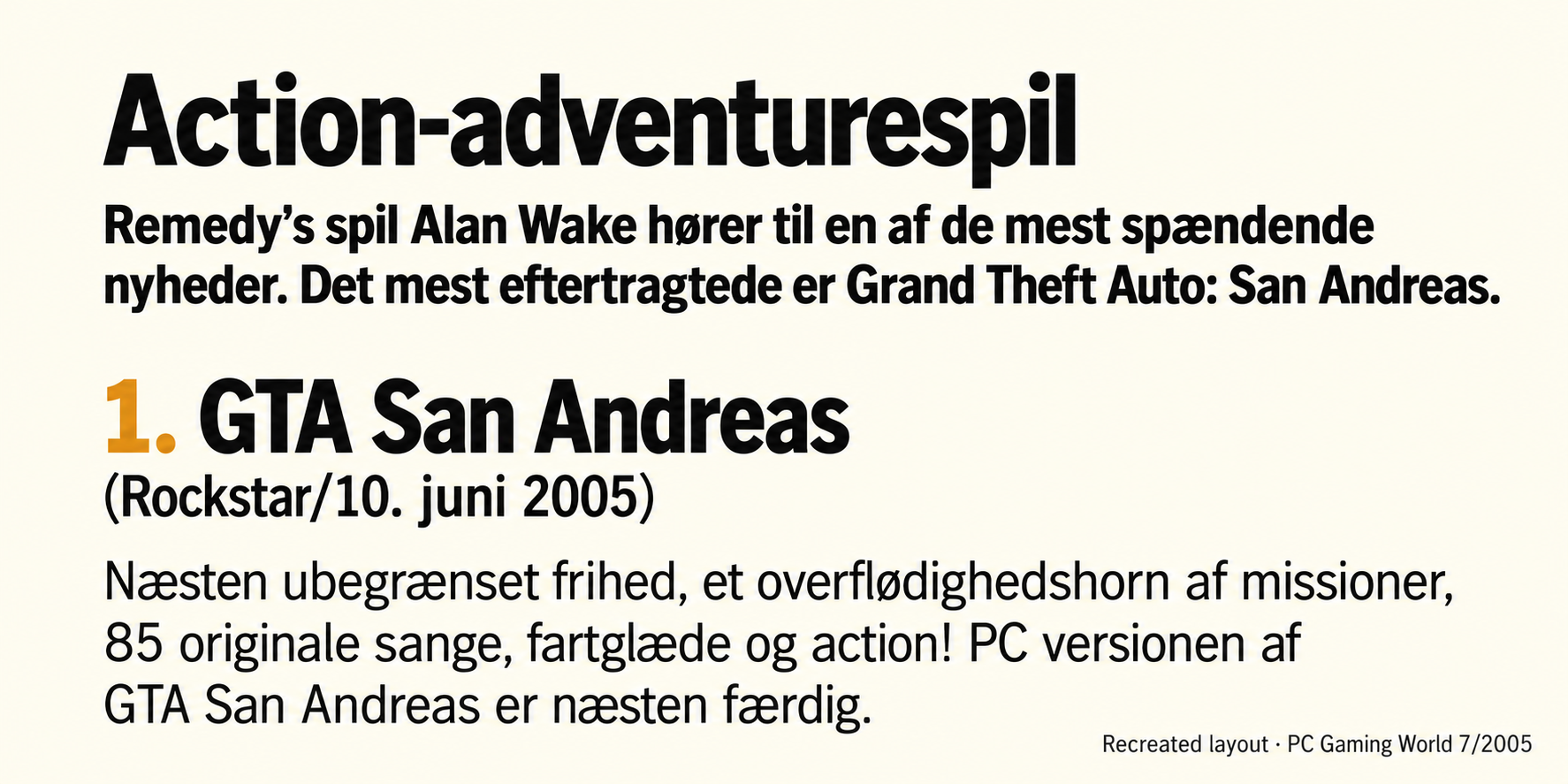
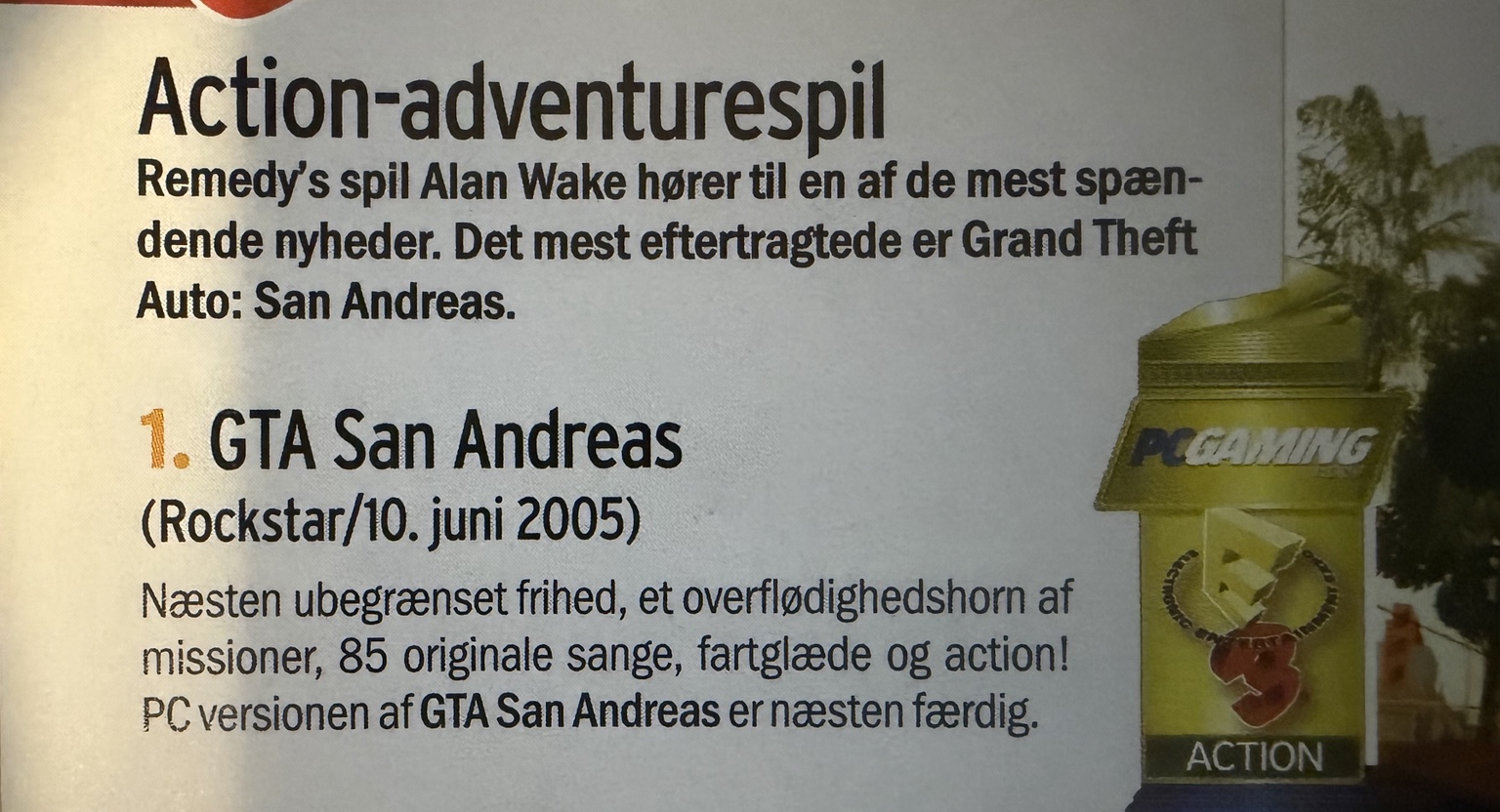
I have played San Andreas, but I do not think I ever completed it. I also own it on Steam. I have most, if not all, of the GTA games that have been released there. That does not mean I am waiting for the next one. I will never play GTA VI.
My attachment to GTA starts with the original on PlayStation. I liked looking down at those tiny cars and heavily pixelated streets. The phone-box missions are one of the clearest things I remember. Hear the phone, take a job and see how much trouble I could cause. There was a mission involving a truck and a building too, although the details are much less clear now.
I had GTA: London on PlayStation as well. Starting it meant putting in the London disc, swapping to the original GTA when asked, then putting London back. That disc-swapping routine stayed in my memory. GTA 2 never appealed to me as much as the first game. The gangs and different presentation did not make it the one I preferred.
Then GTA III arrived and the move into 3D looked ridiculous. I remember reading about it in a PC magazine and trying to understand how the hell a computer was going to handle a whole city around the character. I played the PlayStation 2 version, with its disappearing roads and the times I remember falling through the map. Being able to stand beside the buildings was still an enormous change from looking down at them.
I spent plenty of time causing chaos around the police station, fighting the police and shooting at the helicopter when it turned up. The Rhino tank belongs to those memories too: firing its cannon backwards and getting the thing airborne. Sensible driving was clearly not the attraction. That sort of ridiculous messing about stayed with me far longer than a list of features.
I remember the beach side of Vice City better than many of its individual missions. I played GTA IV too, but did not finish it; I believe a bank robbery was where I got stuck. With GTA V, I completed the story once on Xbox 360 and never finished another run. I have returned to these games without wanting to repeat every campaign.
San Andreas added a lot. Three cities, countryside, character skills, exercise, food and more ways to travel gave Rockstar a huge amount to advertise. I can appreciate that work. The opening bicycle still irritates me. Getting CJ to pedal faster by repeatedly working the control is a poor introduction for somebody who already dislikes that input routine.
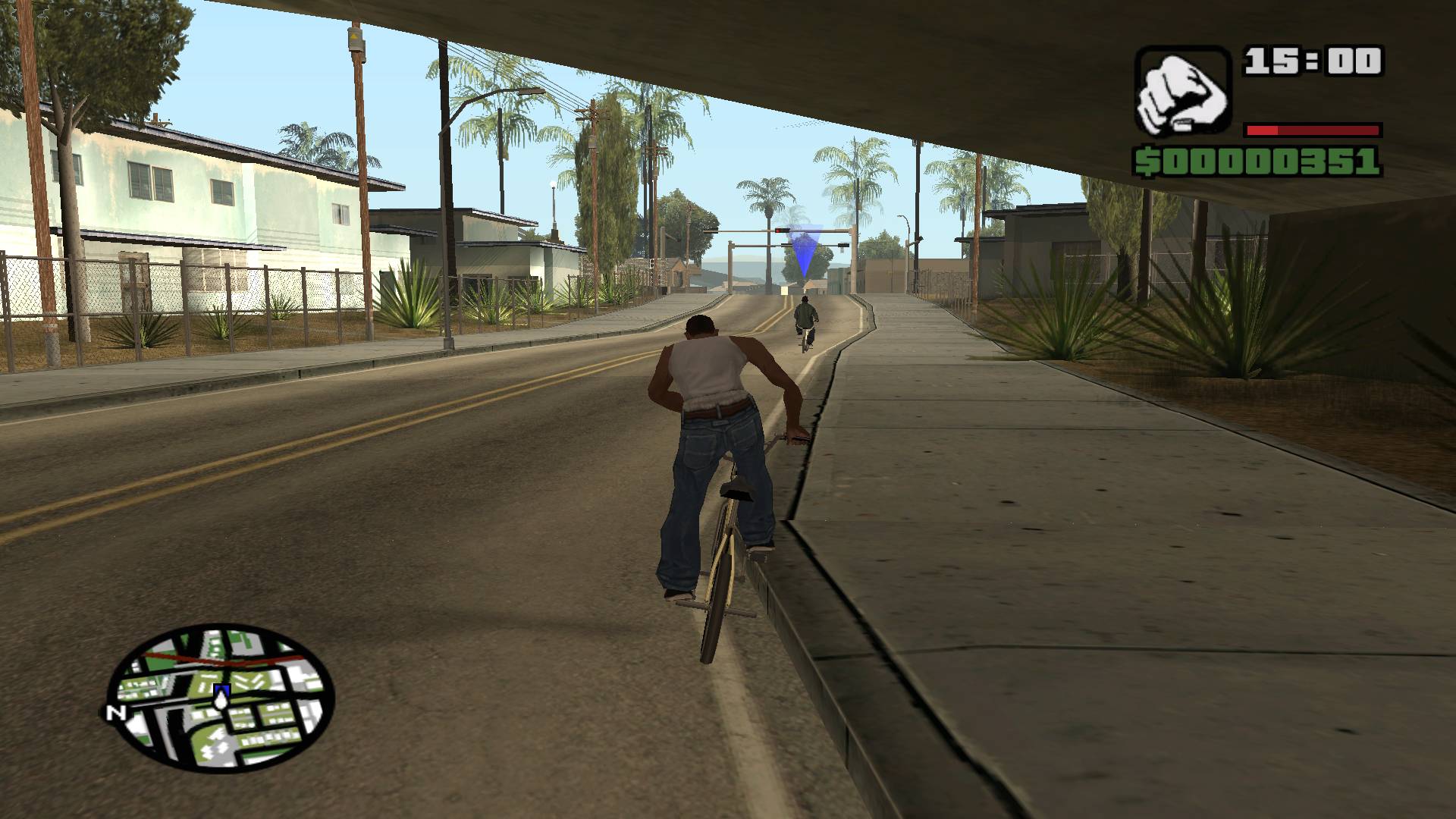
The character systems had a similar problem for me. Food, muscle, stamina and skills made CJ more changeable, but they also gave me more things to maintain or improve through repetition. I did not want every extra system to become another job. The magazine’s “almost unlimited freedom” sounds wonderful until some of that freedom is time spent doing something I find tedious.
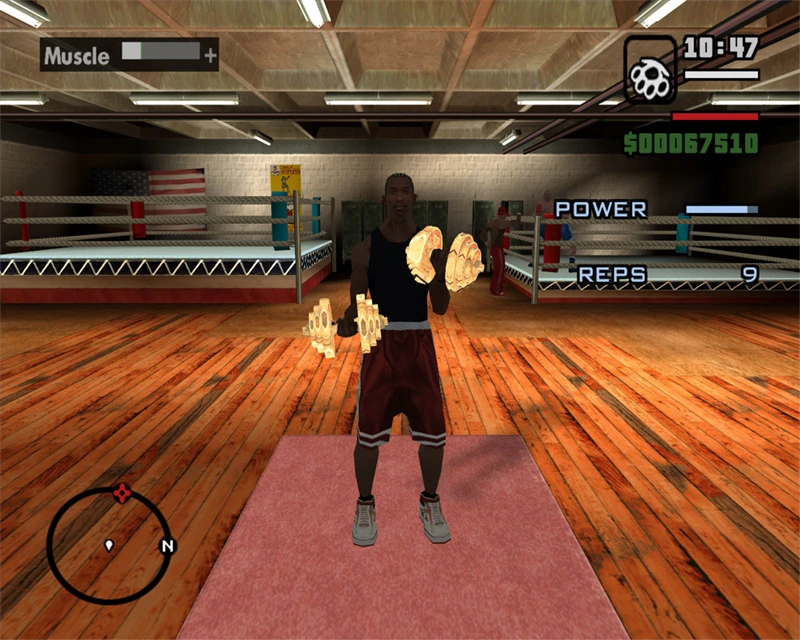

I wrote more about my history with San Andreas and the parts that annoyed me in my separate article. Here is the beginning of my own PC gameplay:
2. Alan Wake: the flashlight lost me
I played Alan Wake, but not much before I stopped. One of the things I dislike is the whole flashlight mechanic. I did not own it on disc when it came out. I own it on Steam now and have never really bothered returning to it. I have never played Alan Wake 2.
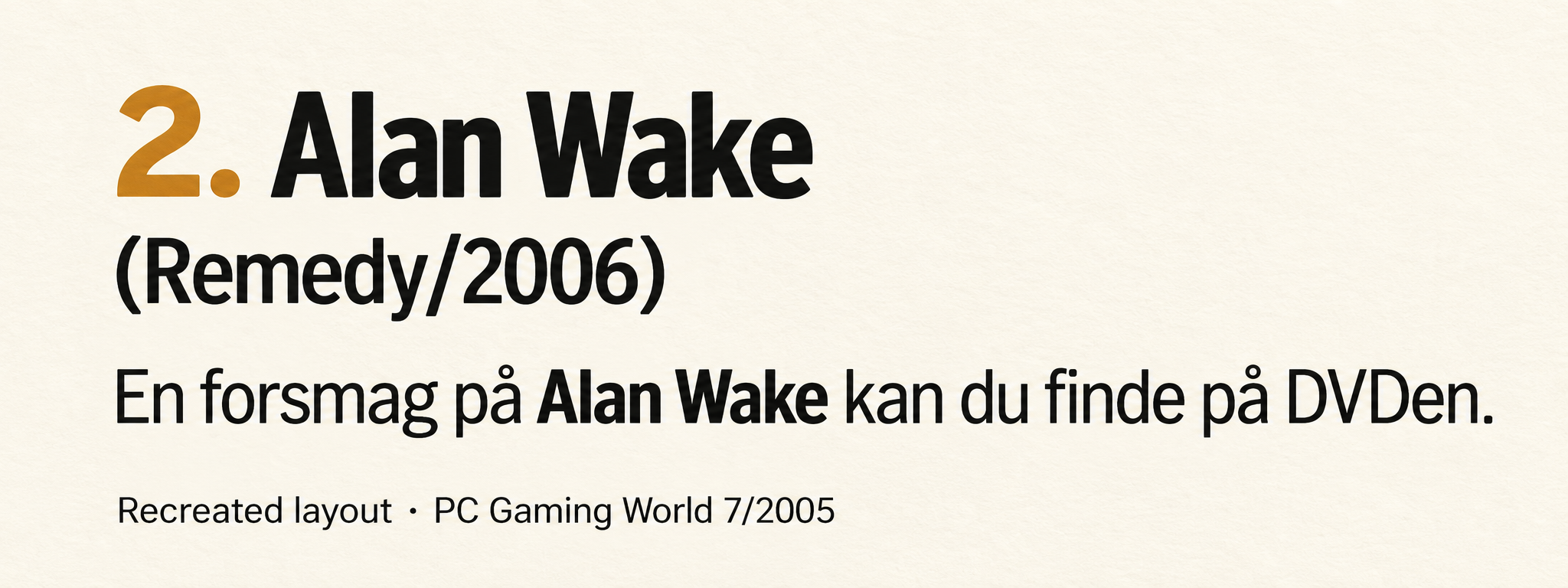
The printed entry is one sentence: a taste of Alan Wake can be found on the DVD. Second place gets no explanation of the combat, the writer, Bright Falls or the structure of the game on this excerpt. The headline calls it one of the most exciting new games, but the paragraph sends me somewhere else for the reasons.

The finished game has a strong premise: a writer’s wife disappears, and pages of a thriller he does not remember writing begin turning up. That is much more interesting than the ranking’s DVD pointer. Remedy’s description of the original game puts the mystery in Bright Falls, with the Dark Presence behind its danger.
Combat keeps bringing me back to the part I did not enjoy. The Taken have a protective darkness that light must burn away before ordinary bullets can hurt them. Focus the flashlight, deal with the protection, shoot and repeat. Battery management becomes part of that sequence. It is central to how the game fights, so disliking it leaves me with a problem that is going to follow me through the game.
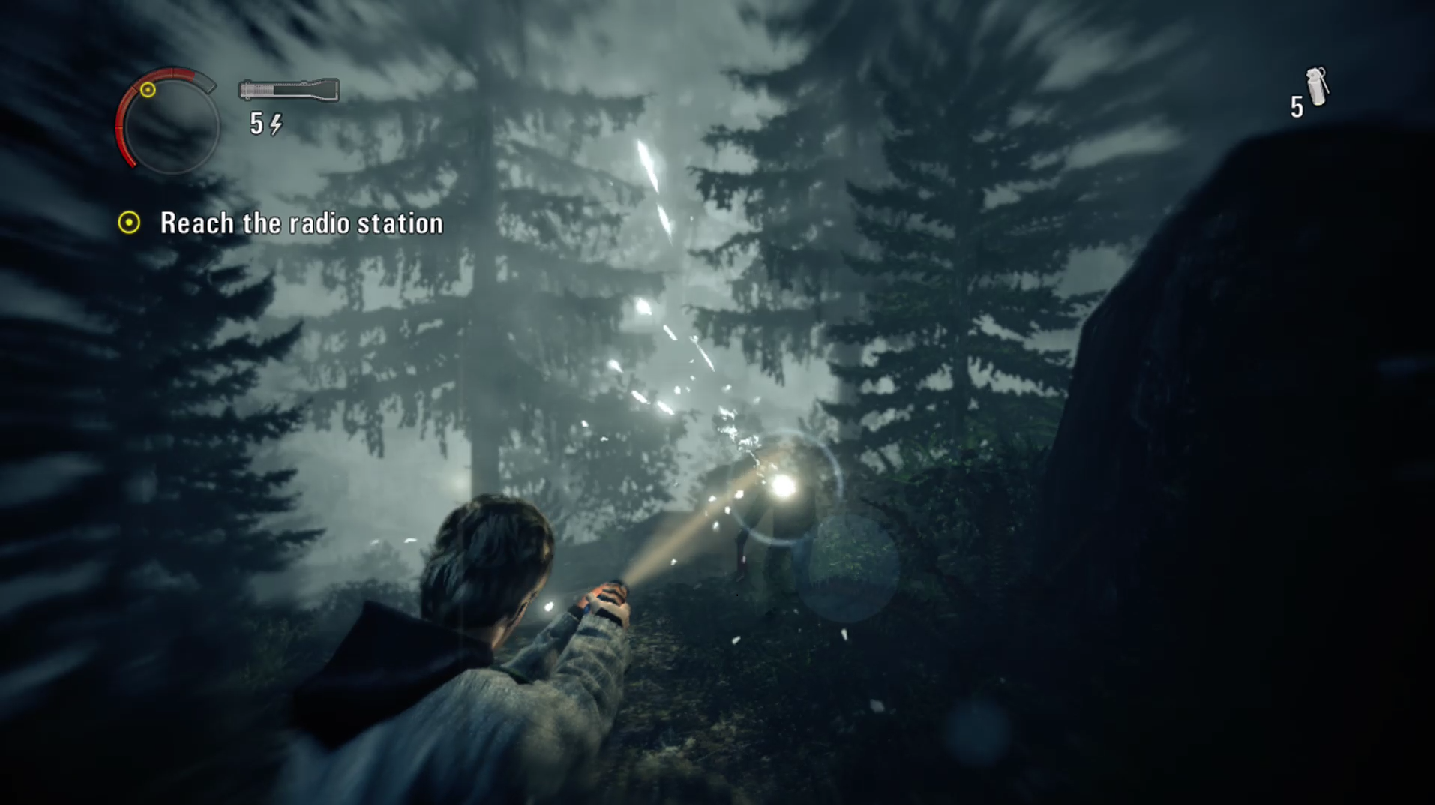
Jon Blyth gave the PC version 86/100 in PC Gamer’s April 2012 review and praised the tense combat. The mechanic he praised is the one that drove me away. A good score was not going to make me enjoy spending the game aiming that bloody light at things.
3. Blood Money: Absolution is the Hitman I liked
I played Hitman: Blood Money a little. I have never been much of a Hitman fan, and I think the series has got worse. The only one I really liked was Hitman: Absolution. I think I own all the Hitman games released on Steam, but collecting them has not changed which one I actually enjoy.
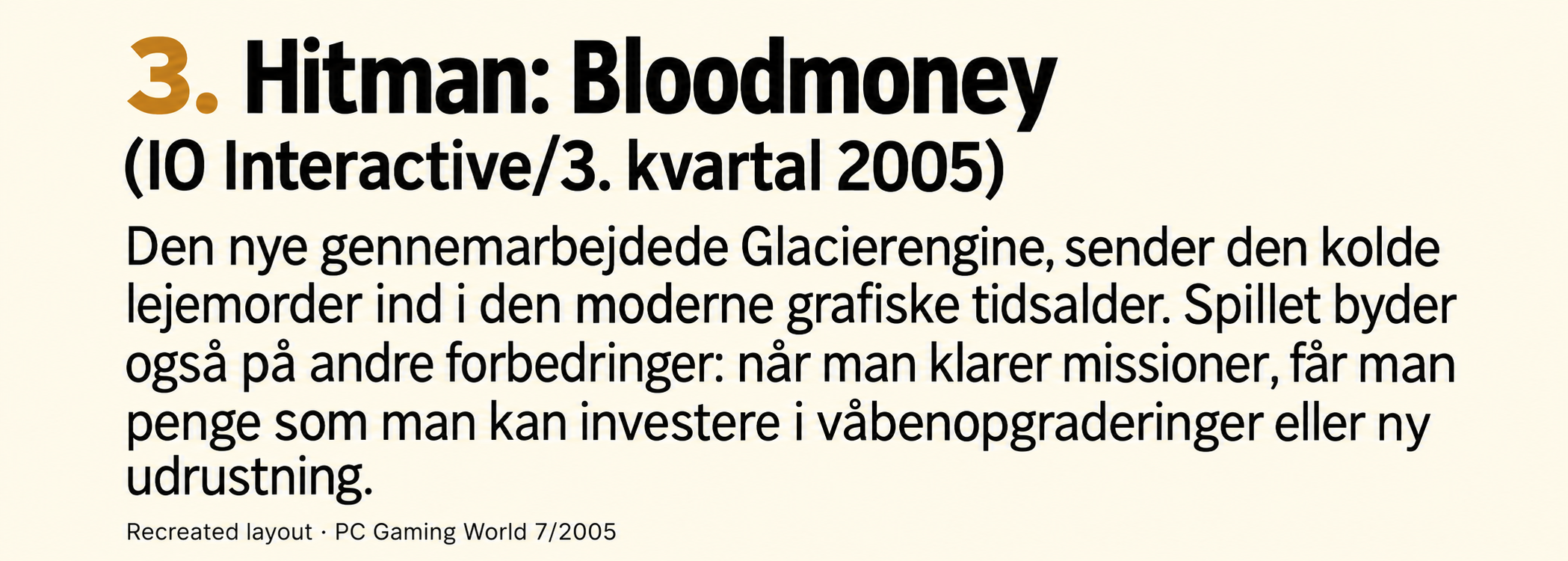
The magazine spends its Blood Money paragraph on the improved Glacier engine and the money earned from missions, which can be spent on weapons and equipment. Those are real features. IO Interactive’s own game history confirms the cash system and the 26 May 2006 release, well after the printed Q3 2005 forecast.

The more substantial part of the game is how a location reacts to 47. Disguises, witnesses, guards, accidents and hiding bodies give the player several ways to arrange a kill and get out. Being recognised matters to the notoriety system. The magazine’s equipment economy gives me one part of that design, but “modern graphics” tells me very little about the decisions I will be making.
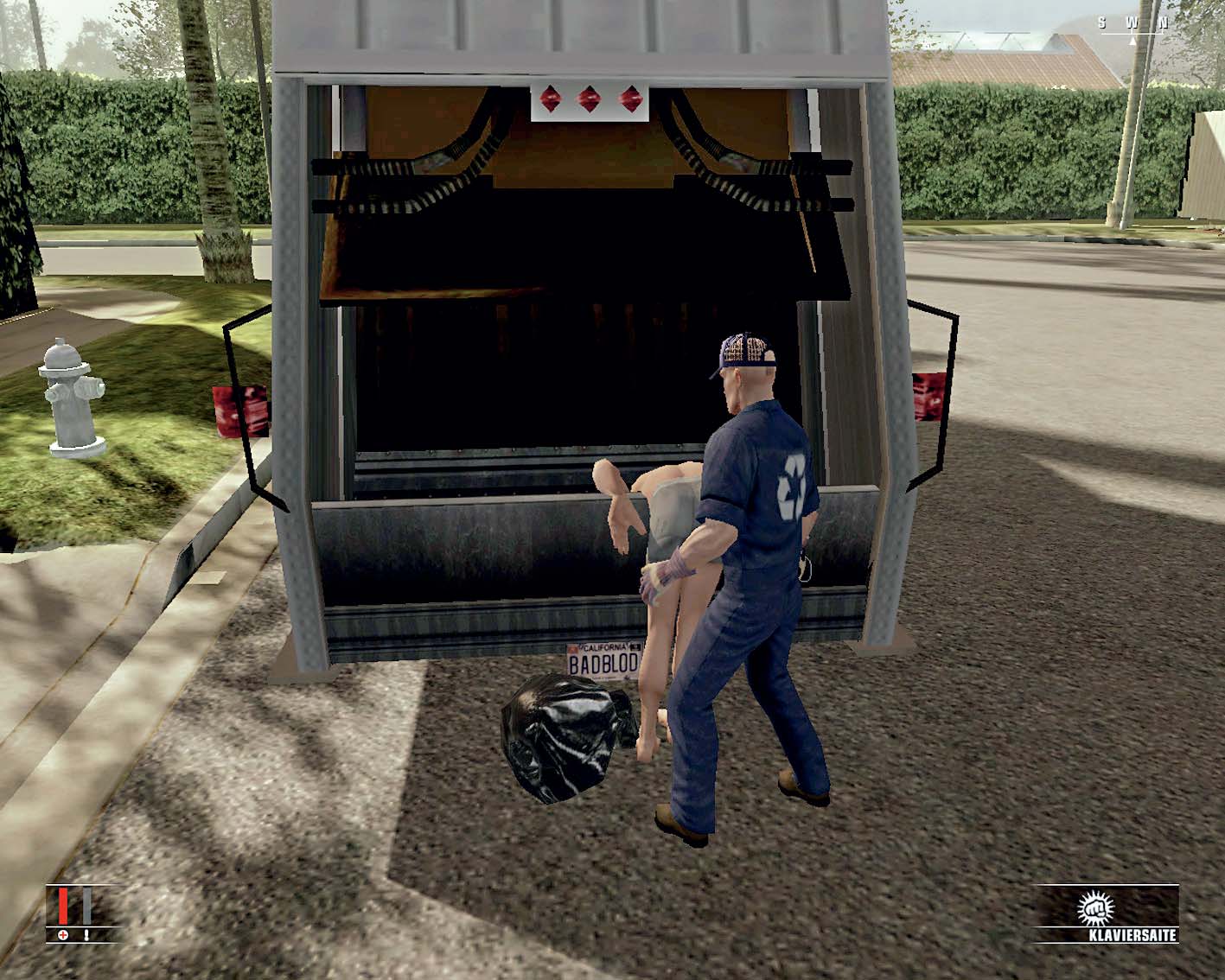
That contemporary review gave the PC game 80/100. It praised the levels and different ways to solve missions while also criticising the AI’s serious lapses. That is much more informative than being told an engine is moving the assassin into a new graphical age. It discusses what works and what gets in the player’s way.
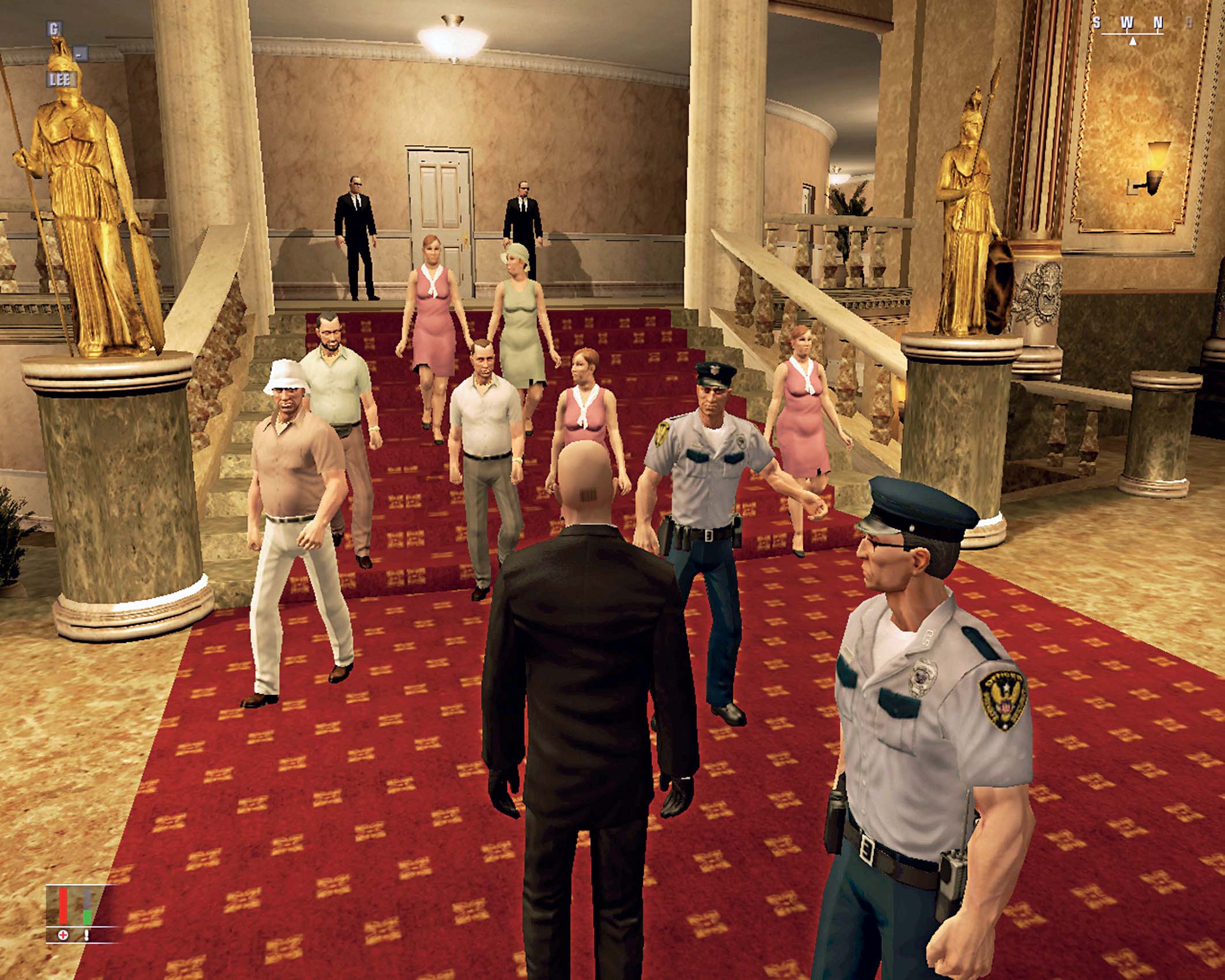
Absolution is the one I want to play. Its stronger cinematic direction and more immediate progression suited me better. I liked that game and did not get the same enjoyment from the others.
The last one I played was HITMAN World of Assassination. My reaction was: “Nope. This is shit.” The game brings together locations and campaigns from the modern trilogy and sells its replayable assassination spaces as freedom. I disliked the structure and the emphasis on working through the same places repeatedly. It also ran badly for me. Nothing about that experience encouraged me to keep playing.
4. Prince of Persia 3: my memory is the school floppy
I am fairly sure I tried Prince of Persia 3, but I never really played it. The game on this page became Prince of Persia: The Two Thrones. I own a physical PC copy now. That is about as far as my connection with this particular entry goes.
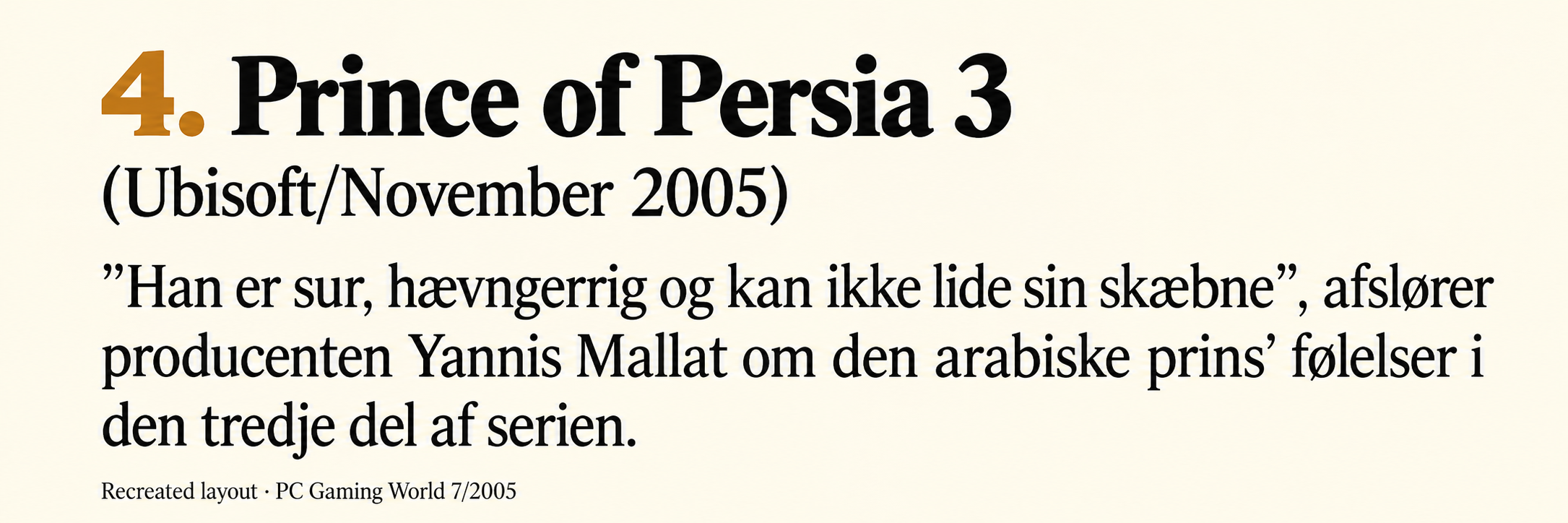
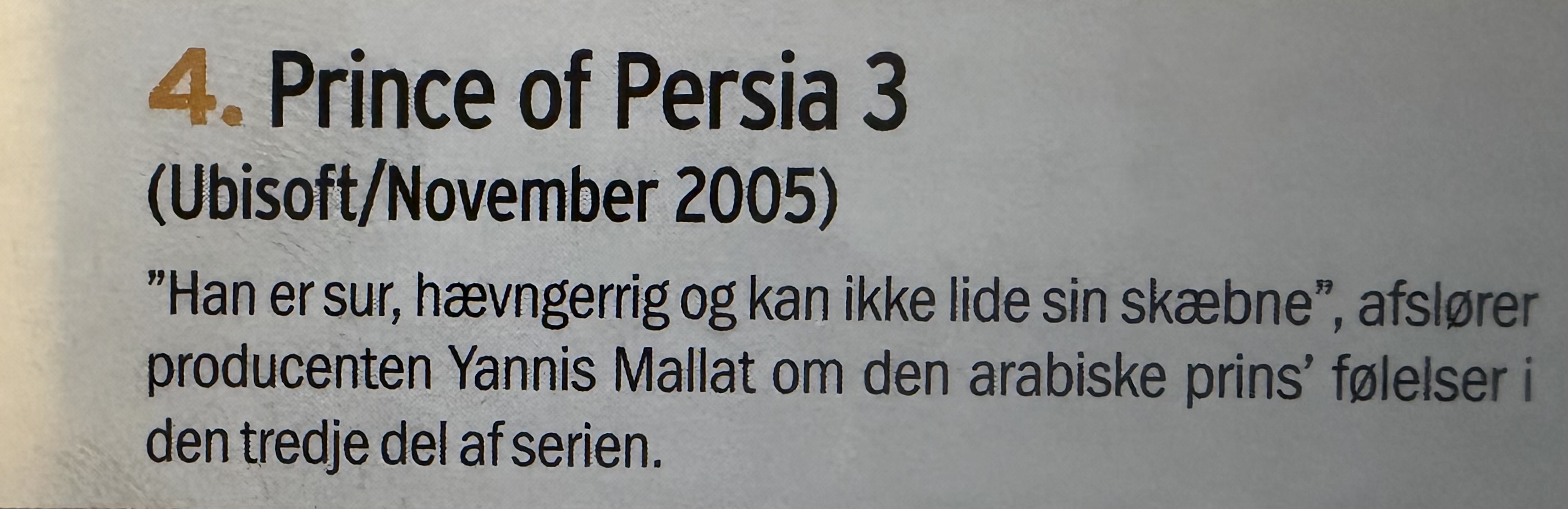
The magazine quotes producer Yannis Mallat describing the prince as angry, vengeful and unhappy with his fate. That tells me his mood. It tells me nothing about how the game plays. The finished Two Thrones combines the prince’s acrobatic traversal and sword fighting with the Dark Prince and stealth-oriented Speed Kills. There was considerably more to explain than an angry character.
My stronger memory is the original Prince of Persia on a school PC in the 1990s, on a 3½-inch floppy disk. It was hard as fuck. From what I remember, I never got past the first level. I remember trying to get through it much more clearly than I remember any session with the third Sands-era game.
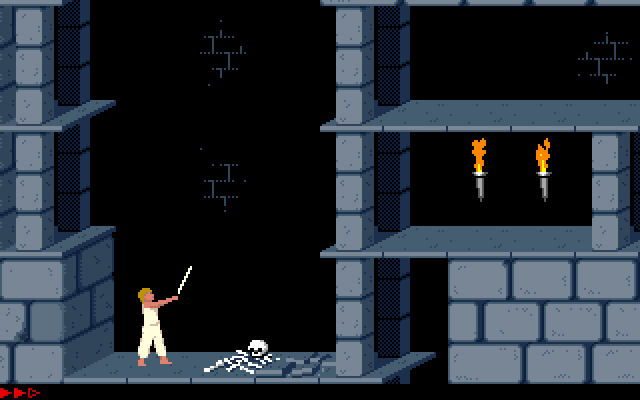

The first game made timing and position matter immediately. A ledge, a trap or a jump could stop me before I had made much progress at all. That is the Prince of Persia experience that stayed with me: an old school computer and a first level I could not beat.
5. Tomb Raider: Legend: owned on Steam, probably never played
I do not think I ever played Tomb Raider: Legend. I own it on Steam with twelve other Tomb Raider games, so thirteen altogether. I do not know whether that covers every one released on Steam.
My early Tomb Raider memories belong to the first two PlayStation games. They were hard as hell, and I never completed them. Large quiet spaces, ledges, dangerous animals and jumps I could not reliably make were a big part of the experience. I have tried returning to the old controls and camera, but I find them awkward now.
Lining Lara up, stepping back, taking a run-up and remembering to grab became its own little routine. I can remember why those games impressed me without wanting to fight their movement system again. There is also Croft Manor and Winston in the walk-in freezer, one of those ridiculous things the second game let players do.
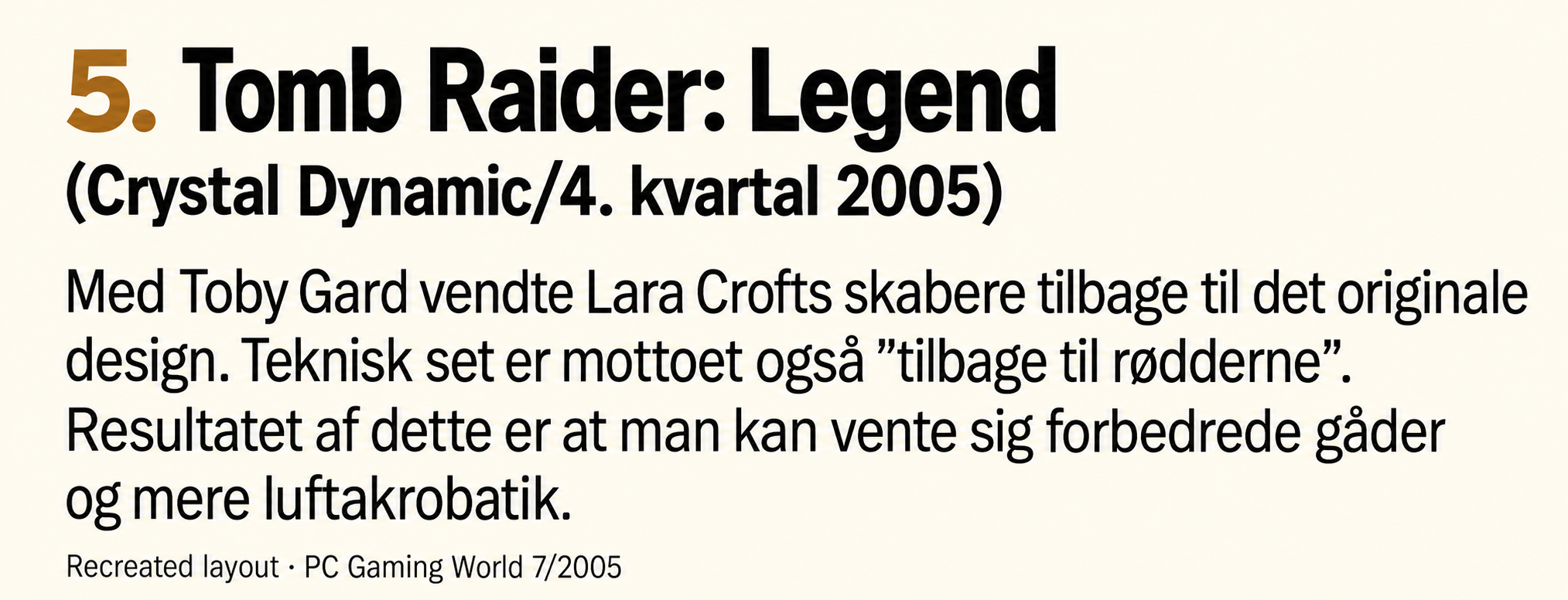

The magazine promises a return to the roots, better puzzles and more acrobatics with Toby Gard’s involvement. The official Legend page records the 7 April 2006 release and Crystal Dynamics as developer. Its promise of a return arrived in a new studio’s interpretation of Lara, with redesigned movement and traversal.
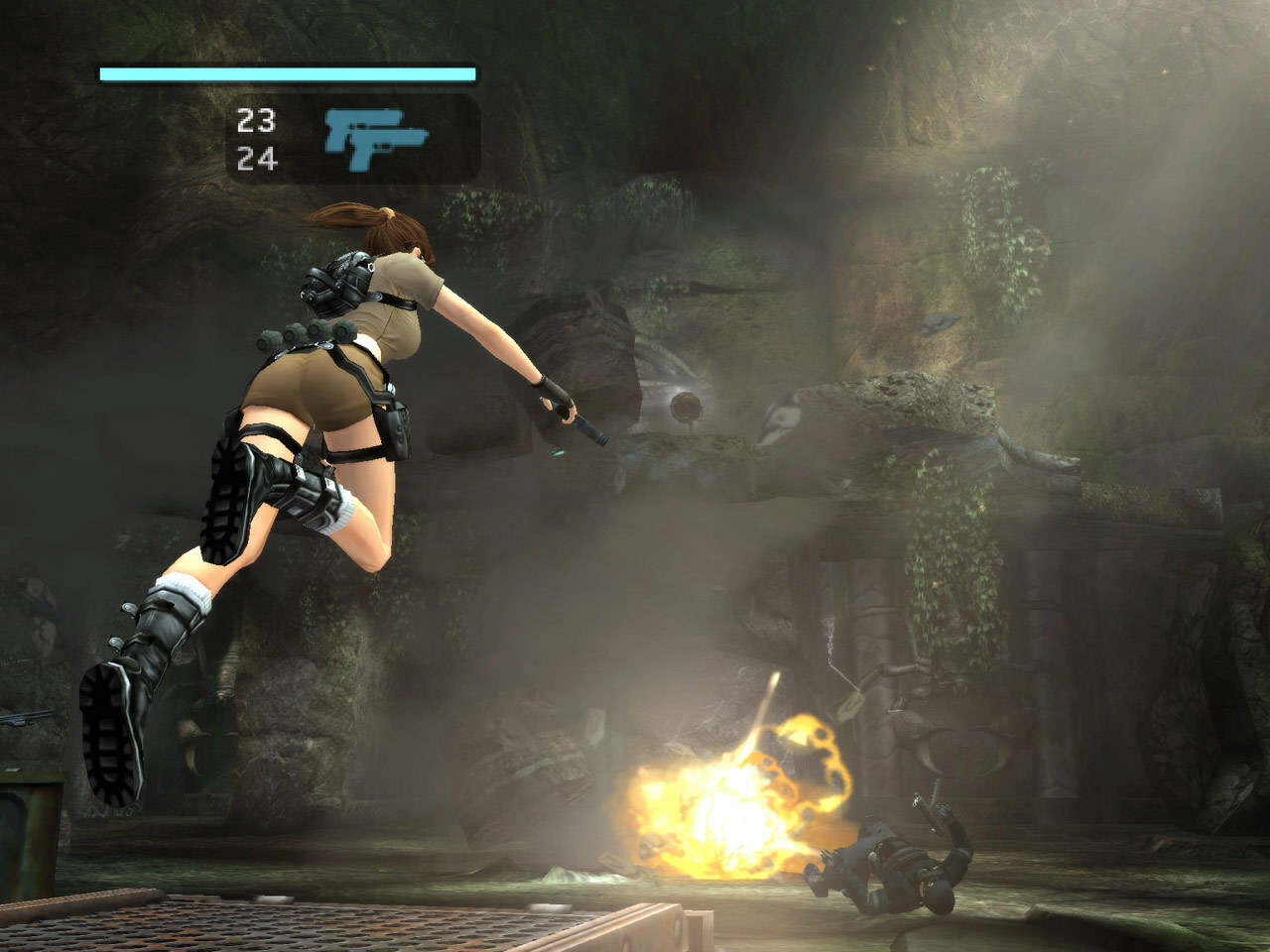
I have played later Tomb Raider games and find them fine. They are easier for me to control, but they have not given me the same attachment as the early ones. Legend is sitting in my Steam collection, and I do not remember playing it.
6. Call of Juarez: I eventually got the prequel working in Wine
I have played Call of Juarez and own three games from the series on Steam. I also have a livestream of Call of Juarez: Bound in Blood, where I tried to get it working in Wine and eventually succeeded. That is a much more direct connection for me than the graphics-engine pitch in this magazine.
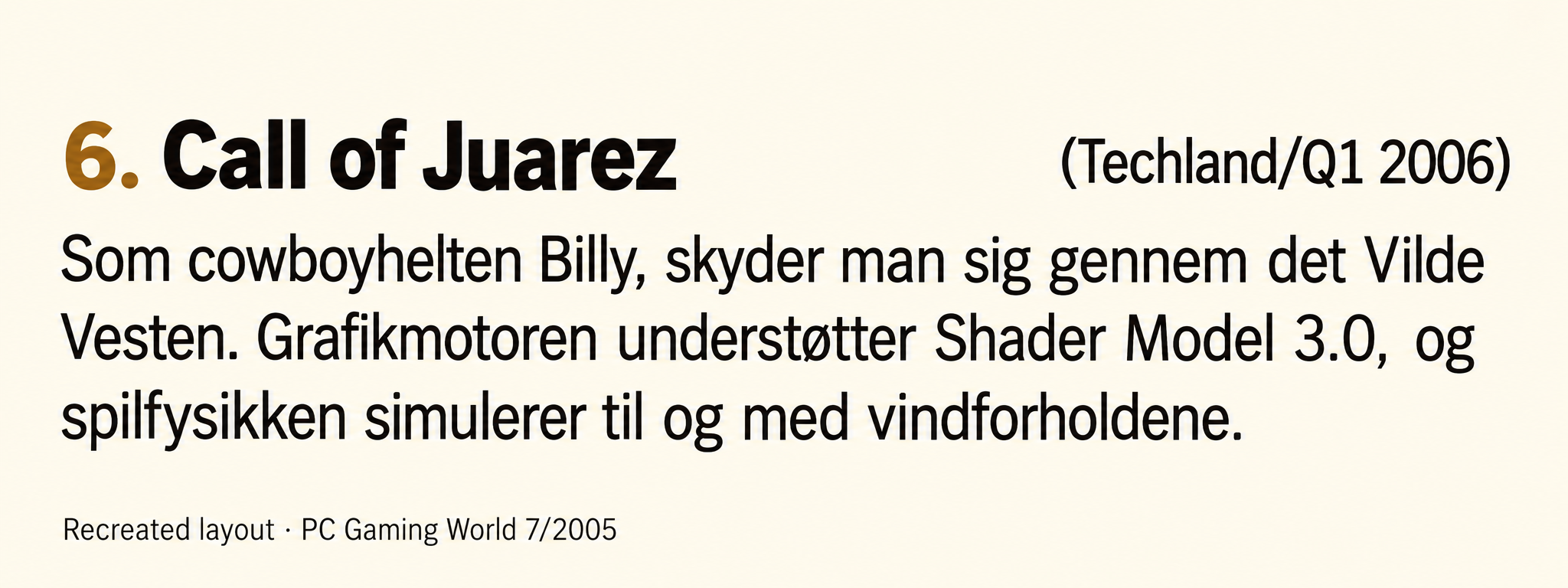
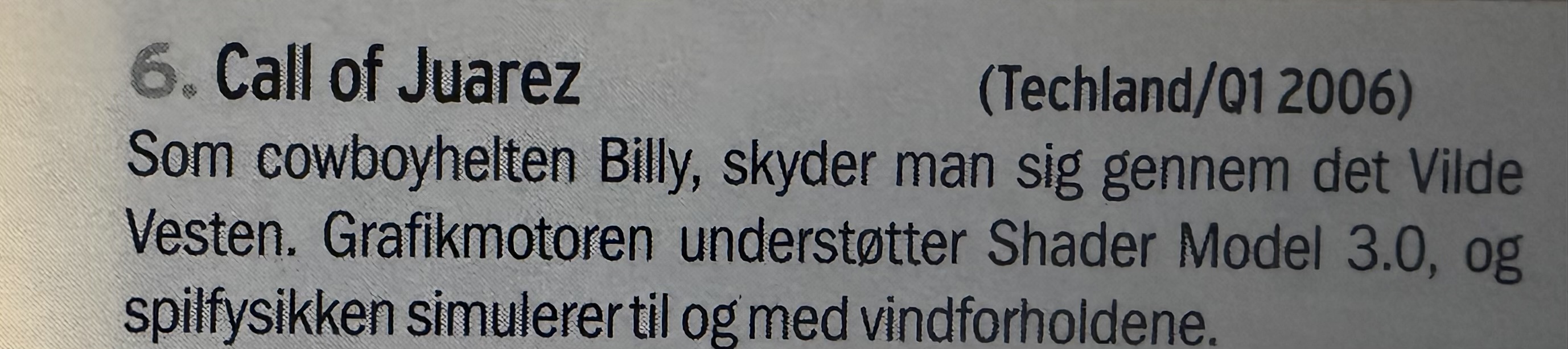
The printed description introduces cowboy Billy, Shader Model 3.0 and simulated wind. PC readers had a reason to care about graphical features, but this paragraph barely explains the Western. The finished game alternates between Billy Candle and Reverend Ray, with deliberately different abilities and ways of handling danger. The official game description explains that contrast much more clearly.
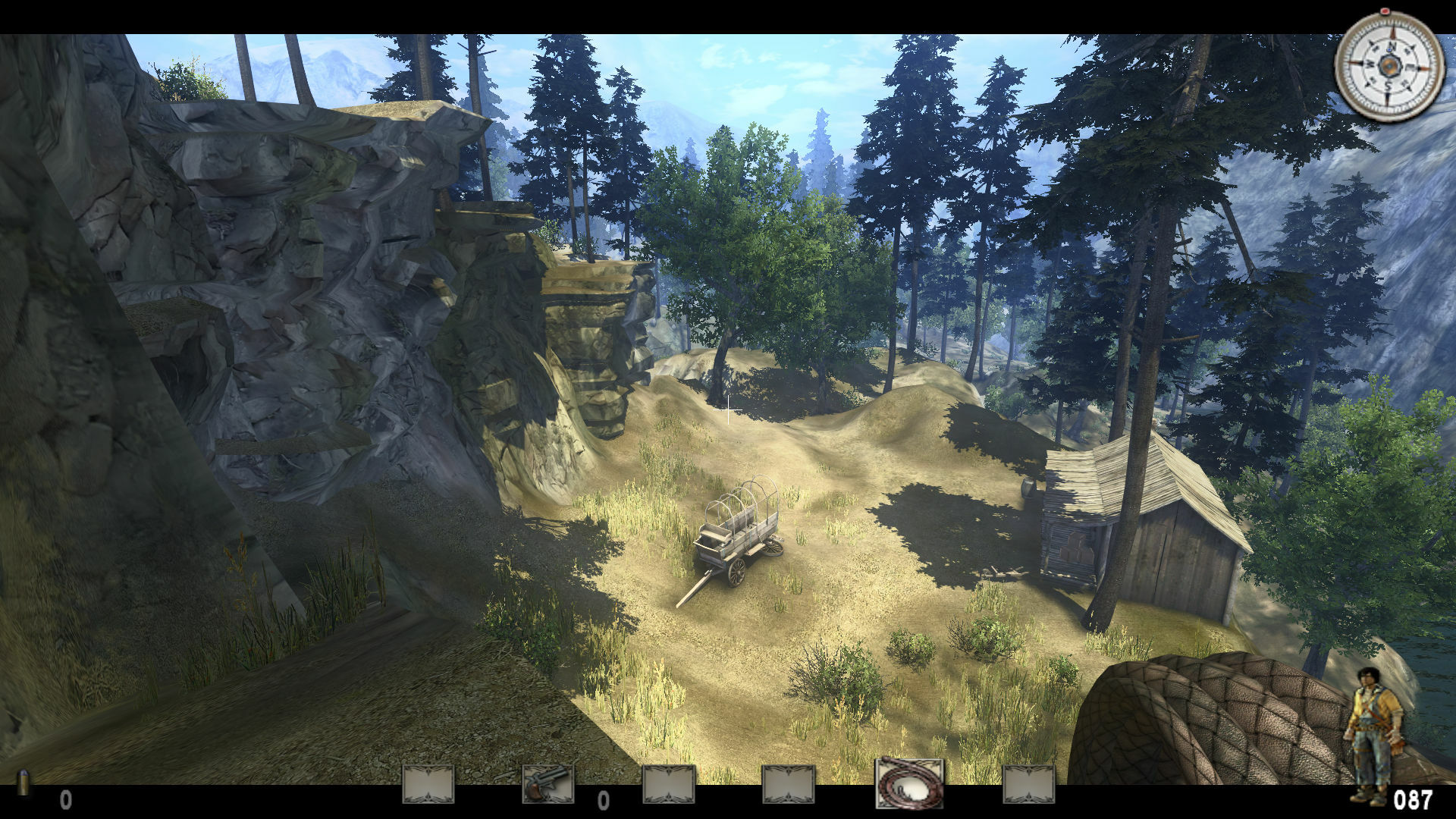
Billy’s stealth and agility sit alongside Ray’s much more heavily armed approach. Switching between the hunted man and his pursuer gives the game a structure beyond simply shooting cowboys. That matters more to explaining the game than whether the wind simulation sounded impressive in 2005.
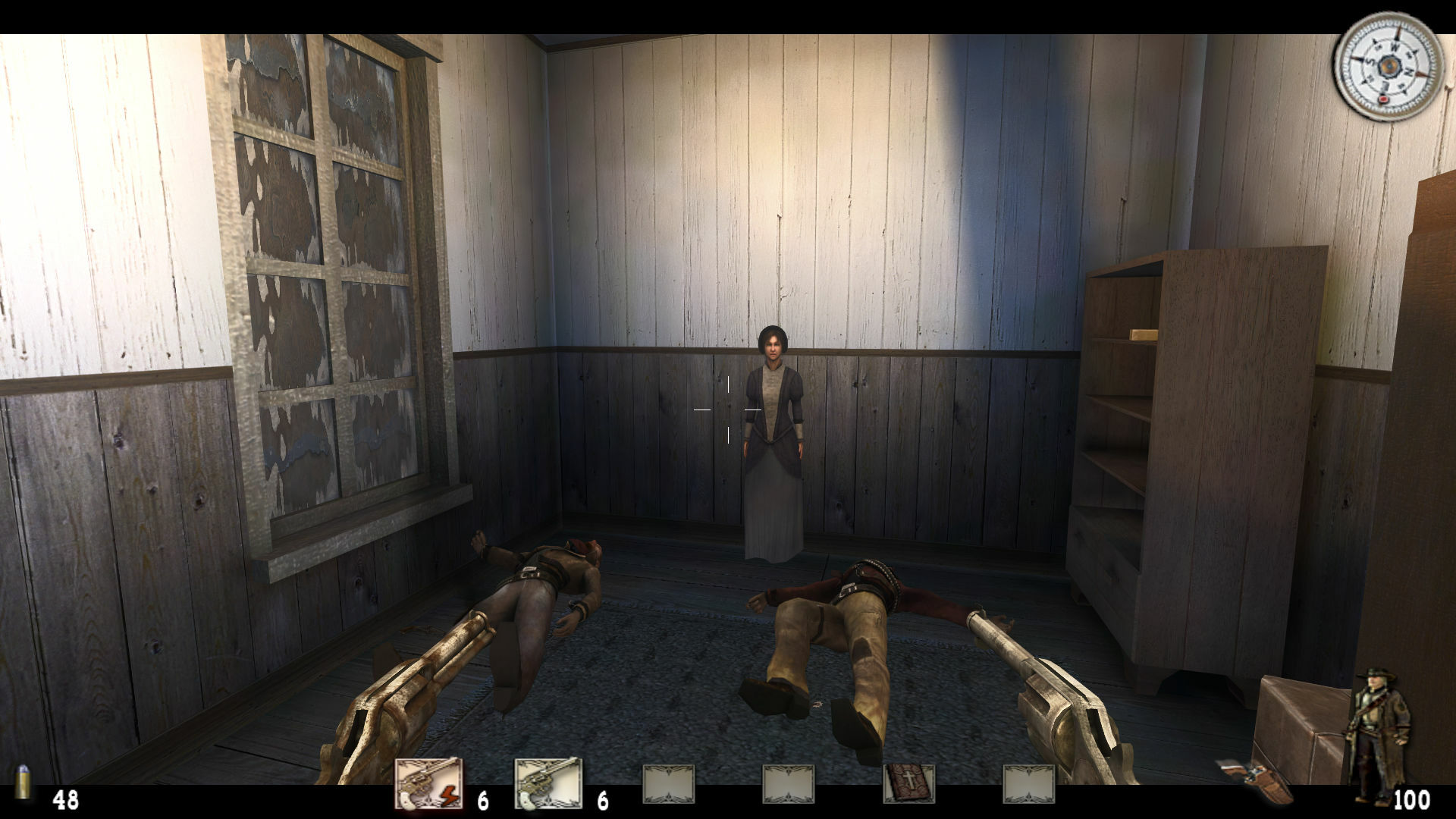
The magazine expected Q1 2006. The original European PC release was in September 2006; North America followed in 2007. That later regional date is why a current Steam listing can show 2007 for a game that first reached European PC players in 2006.
My stream below is Bound in Blood, the later prequel. The magazine ranked the original Call of Juarez. In this stream I worked on getting the prequel running in Wine and eventually got it working.
7. Condemned: I own it, but do not remember playing it
As far as I remember, I have not played Condemned: Criminal Origins. I own it on Steam. The magazine calls it Monolith’s other horror shooter and reduces its pitch to too many enemies and too little ammunition.
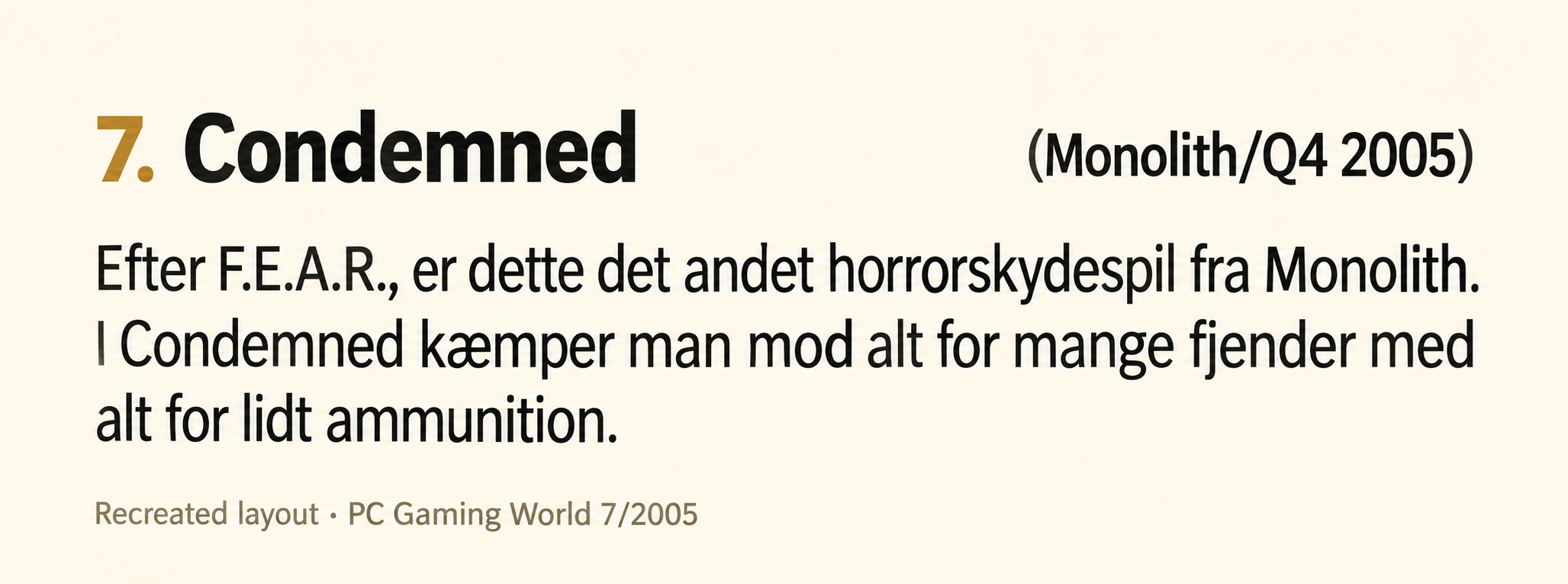

Limited ammunition is part of the game, but it does not explain the importance of first-person melee or the forensic work. Ethan Thomas investigates crime scenes while dealing with attackers at unpleasantly close range. The contemporary PC review describes its hand-to-hand combat and oppressive atmosphere. Those give me a much clearer idea of its identity than calling it another shooter.
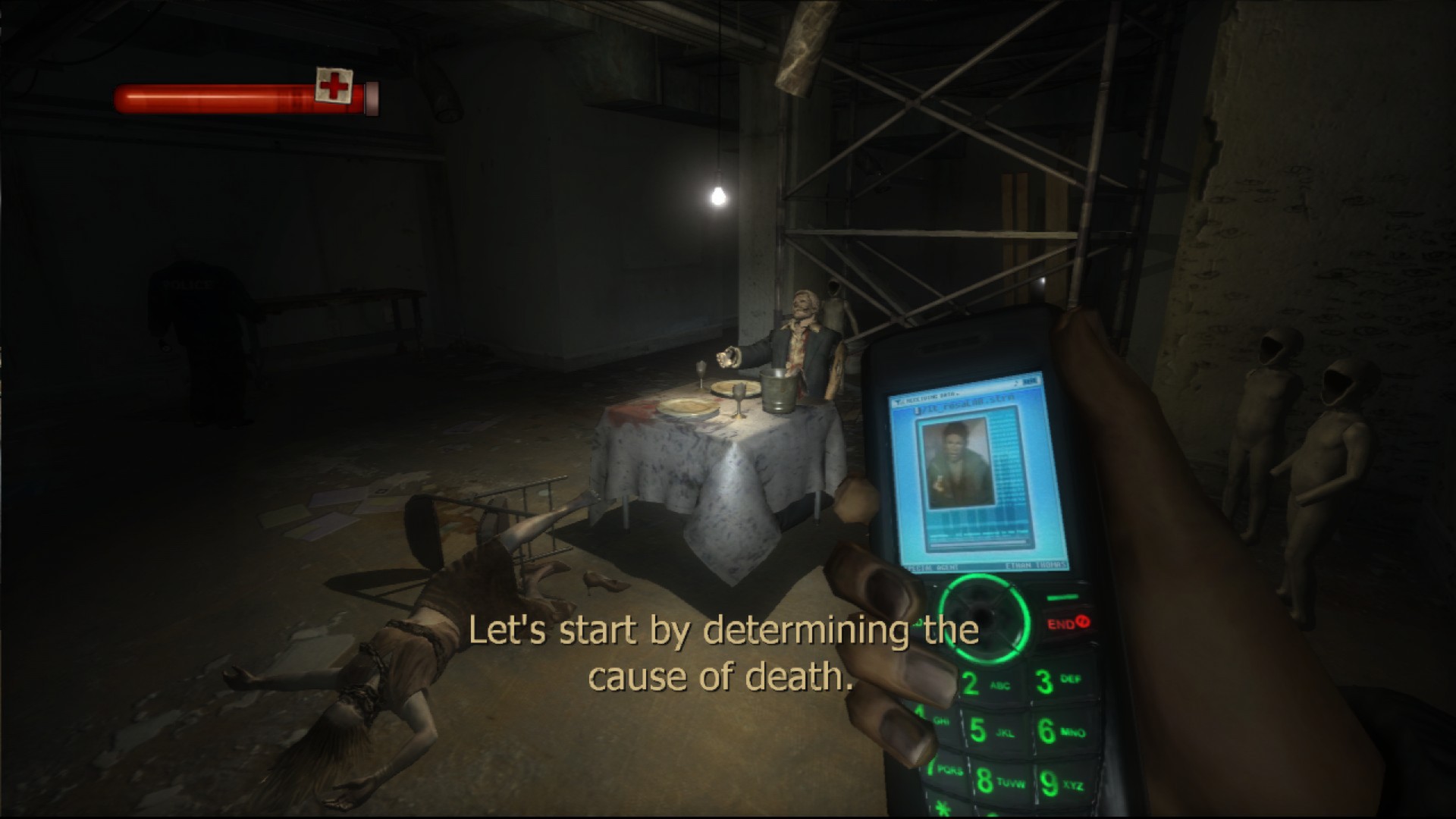
Its original Xbox 360 release belongs to late 2005, while the PC version followed in spring 2006. The printed Q4 forecast therefore needs a platform attached to it.
8. Crime Life: Gang Wars: a brawler sold as street domination
I have never played Crime Life: Gang Wars. The magazine says I can hand out as many beatings as I want and rise from nothing to king of the street. That is a fantasy of domination, with almost no explanation of what would keep the fighting enjoyable.
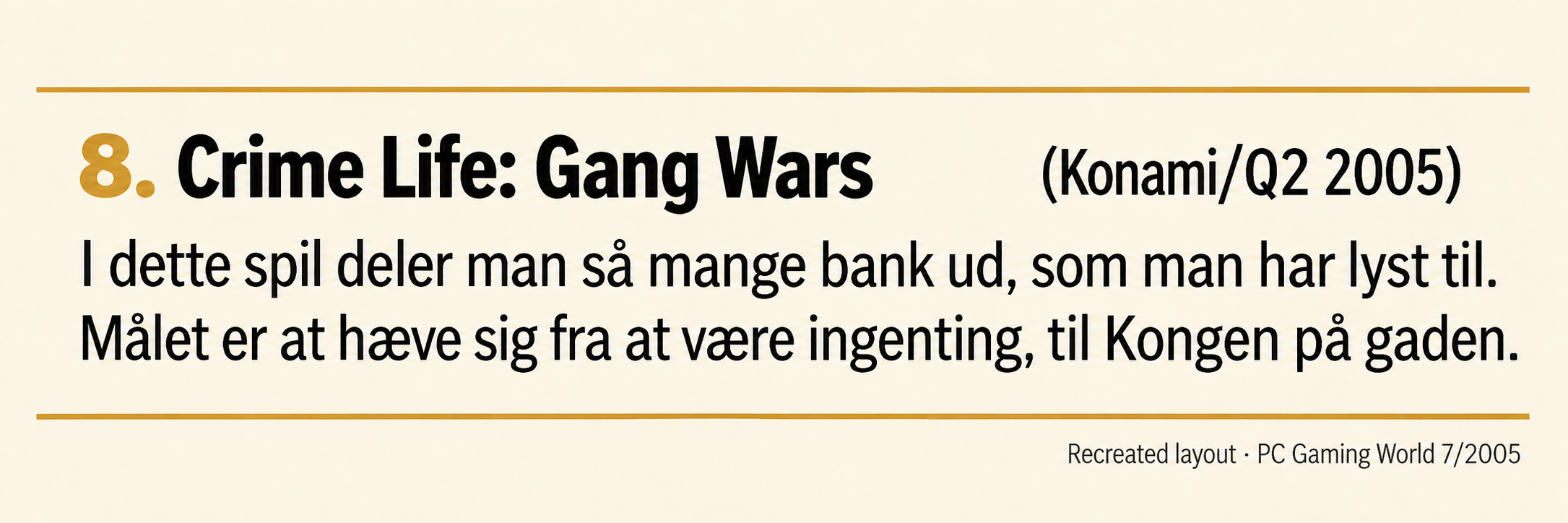

Konami’s November 2005 launch announcement describes a free-roaming beat-’em-up centred on Tre and his gang, with combos, special moves and D12’s music, voices and likenesses. It scheduled the American PC DVD release for 29 November. The magazine’s Q2 2005 window was a long way off.
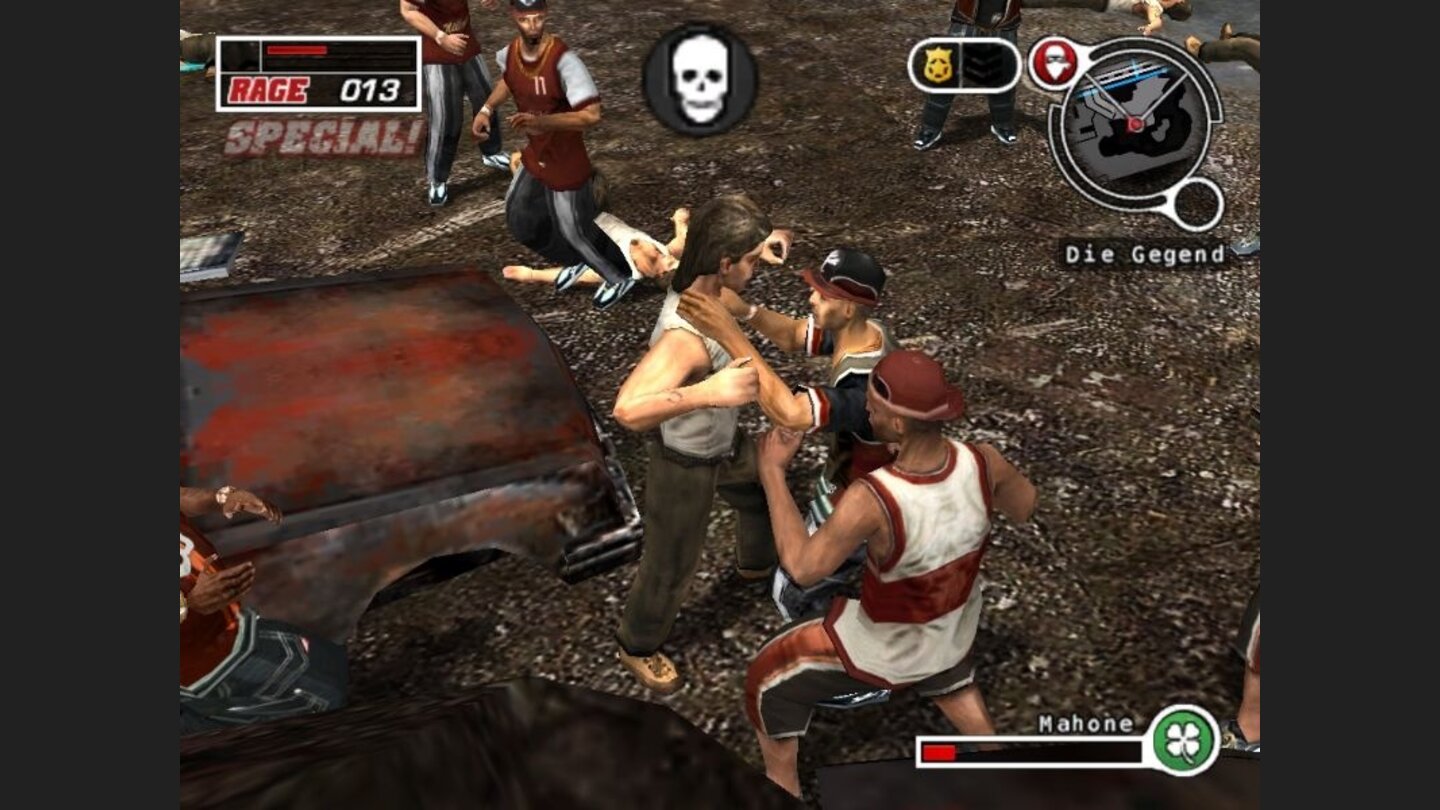
That at least explains what I would be doing. The magazine’s paragraph does not tell me much beyond beating people up and gaining status. Neither its eighth place nor the gang setting gives me a personal reason to rate a game I never played.
9. Knights of the Temple II: freedom needs more explanation
I have never played Knights of the Temple II. Its entry follows Paul de Raque swinging a sword at monsters and promises a free choice of tasks. It is another very short description carrying a numbered position.
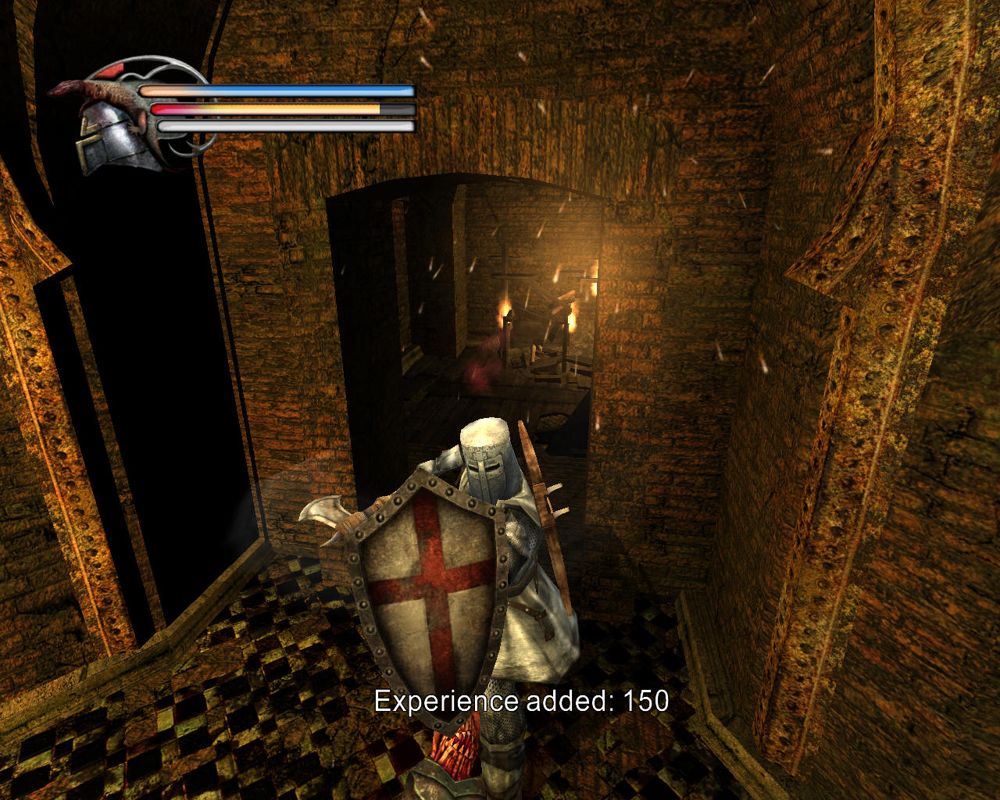
The finished game added side quests, dialogue, equipment and character development to its sword fighting. WorthPlaying’s PC review found more ambition in the structure than the magazine’s few lines show, alongside problems with the fighting and presentation. Choosing a task freely and enjoying the task are separate questions.

Its late-2005 Windows releases in several European countries do fit the printed Q4 window. Other regional releases came later. This is one of the forecasts on the page that did not have to become a 2006 game for those first PC buyers.
10. Panzer Elite Action: tanks were never my thing
I have never played Panzer Elite Action, and I have never been a fan of games like it. Being the commander of a tank is not a pitch that is likely to drag me in on its own.

The magazine does give a useful warning: this has little to do with the earlier game carrying the Panzer Elite name. Action: Fields of Glory puts the emphasis on direct tank combat. The original PC demo analysis describes commanding a platoon, firing the cannon and machine gun, and directing the other tanks. It records the 2006 release rather than the printed Q4 2005 forecast.
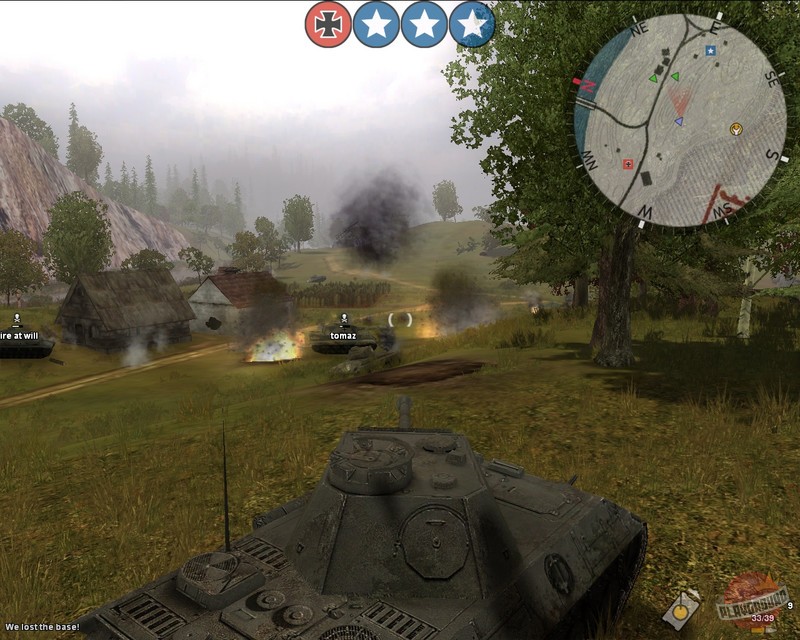
Warning readers about the change of emphasis is better than simply letting an established name do the selling. It still leaves this tank game beside a writer’s thriller, Lara’s platforming and 47’s assassination planning. Tenth place does not explain why I should want any of them for the same reasons.
What I own and what I actually played
| Game | My play history | My copies |
|---|---|---|
| San Andreas | Played; I do not think I completed it. | Steam. |
| Alan Wake | Played briefly; disliked the flashlight. No Alan Wake 2. | Steam; I did not own the release-era disc. |
| Blood Money | Played a little. Absolution is my preferred Hitman. | A physical PC copy appears in my catalogue. |
| The Two Thrones | Fairly sure I tried it, but never really played it. | Physical PC copy. |
| Legend | I do not think I played it. | Steam, alongside twelve other Tomb Raider games. |
| Call of Juarez | Played; streamed Bound in Blood and got it working in Wine. | Three Call of Juarez games on Steam. |
| Condemned | Not played as far as I remember. | Steam. |
| Crime Life | Never played. | — |
| Knights of the Temple II | Never played. | — |
| Panzer Elite Action | Never played; this type of game does not appeal to me. | — |
The physical catalogue also contains GTA II and Vice City, several older Hitman boxes, and the boxed PC version of Absolution. That last box is marked as requiring Steam. A Steam platform entry in this catalogue refers to a boxed copy’s restriction; it does not establish a separate digital purchase or tell me whether its key has been redeemed.
A box can still come with an account wall
Absolution is the obvious example here. It is the Hitman I like most, and the physical PC edition in my catalogue is Steam-bound. The packaging gives me something to collect, but the activation still depends on the platform. That is exactly the sort of restriction I hate.
My Steam licences also come under Valve’s Subscriber Agreement. It calls the software licensed rather than sold and generally prohibits transferring accounts and subscriptions unless Valve specifically permits it. Those are restrictions on what I paid for, even when an individual game can run offline.
I think we should stop buying account-locked digital games. I want control over a collection I paid for, including continued access and the ordinary ability to pass a physical copy on. A logo on a box does not solve that when the game still needs an account-bound activation. Publishers and platforms deserve criticism for keeping that control.
There are official offline alternatives for several games in this article. These are specific editions, checked on 14 October 2026. A store account used to buy and download an installer is different from compulsory account activation of the installed single-player game.
| Game | Verified account-independent single-player release |
|---|---|
| Alan Wake | The original PC game on GOG; DRM-free offline installer and play. |
| Blood Money and Absolution | Blood Money and Absolution on GOG; these are separate releases from the Steam editions. |
| The Two Thrones | GOG’s PC release; DRM-free, with Galaxy optional. |
| Tomb Raider: Legend | GOG’s original Legend release; DRM-free offline installation and play. |
| Call of Juarez and Bound in Blood | The original and the prequel on GOG; offline single-player installation and play. |
GOG supplies offline installers for these games and does not require Galaxy for their single-player campaigns. That is a real difference in continued access. It does not make buying a digital licence equivalent to owning a freely resellable box, and paying for the same game again is still another purchase.
Consumers have made a store reverse course before
There is a documented Hitman example. GOG announced HITMAN (2016): Game of the Year Edition on 22 September 2021. On 8 October, after customers challenged the release, a GOG staff member announced its removal and wrote: “we shouldn’t have released it in its current form.” Both the announcement and the staff response remain in GOG’s release thread.
Sixteen days separated the announcement and the withdrawal. GOG apologised and explicitly thanked customers for bringing the problem to it. Customers pushed back and the store withdrew the release.
We still control the next purchase, preorder, subscription or paid extra. We keep being reminded of that and then behave as though we have forgotten it. If I dislike a company’s restrictions, paying it again is not much of a demand for change. Companies and shareholders can chase higher returns; they are not entitled to my money.