
In 2024, after my dad died, I wanted to start photographing again. I looked around for a new camera and eventually bought a Nikon D7500. It was a lot of money, and I spent some time hesitating before going ahead with it.
I have had it for a little over two years now, and I love it. These are my unboxing photos, along with later pictures of the camera and the setups I have used. The lens I first put on it was the Nikkor 55–300mm I had already owned since 2013.

The D5100, the D3300 and a brief try with the R50
I already had a D5100 that I had owned since 2012. By 2024, it was getting worn out and felt slow. Some of that might also have been me getting used to how newer cameras respond, but it was an old camera by then.
Then there was the D3300. I hated that camera. It is the worst camera I have owned, and I have never understood the enthusiasm for the D3000 series. The way I had to deal with ISO drove me crazy. It felt as though I needed to decide the setting beforehand and then work around the camera when I wanted to change things.
I also preferred the results I got from the D5100 in automatic mode. The D3300 felt caught between automatic and manual shooting: it seemed to want me to use manual controls, but I did not like how those controls worked. I barely used it. For me, that was a lot of wasted money.
I briefly tried a friend’s Canon EOS R50 while looking at what to buy. I did not know much about mirrorless cameras, and that short try became most of what I was judging them by. The R50 felt laggy to me, and I did not get on with the way it operated or the touchscreen controls. I decided mirrorless could wait and started looking for a DSLR I would actually enjoy using.
What I paid in August 2024
My Foto/C order is dated 10 August 2024. The D7500 body cost 7,950 DKK including VAT, with free delivery. I bought it on a payment plan through Sparxpres.
| Invoice item | DKK | Approx. US$ | Approx. EUR | Approx. GBP |
|---|---|---|---|---|
| Body, excluding VAT | 6,360 | 930 | 852 | 730 |
| 25% VAT | 1,590 | 233 | 213 | 183 |
| Body, including VAT | 7,950 | 1,163 | 1,065 | 913 |
Approximate conversions use the Eurosystem reference rates for 9 August 2024, the business day before the order: €1 = 7.4622 DKK, US$1.0917 and £0.85708.
Opening the box
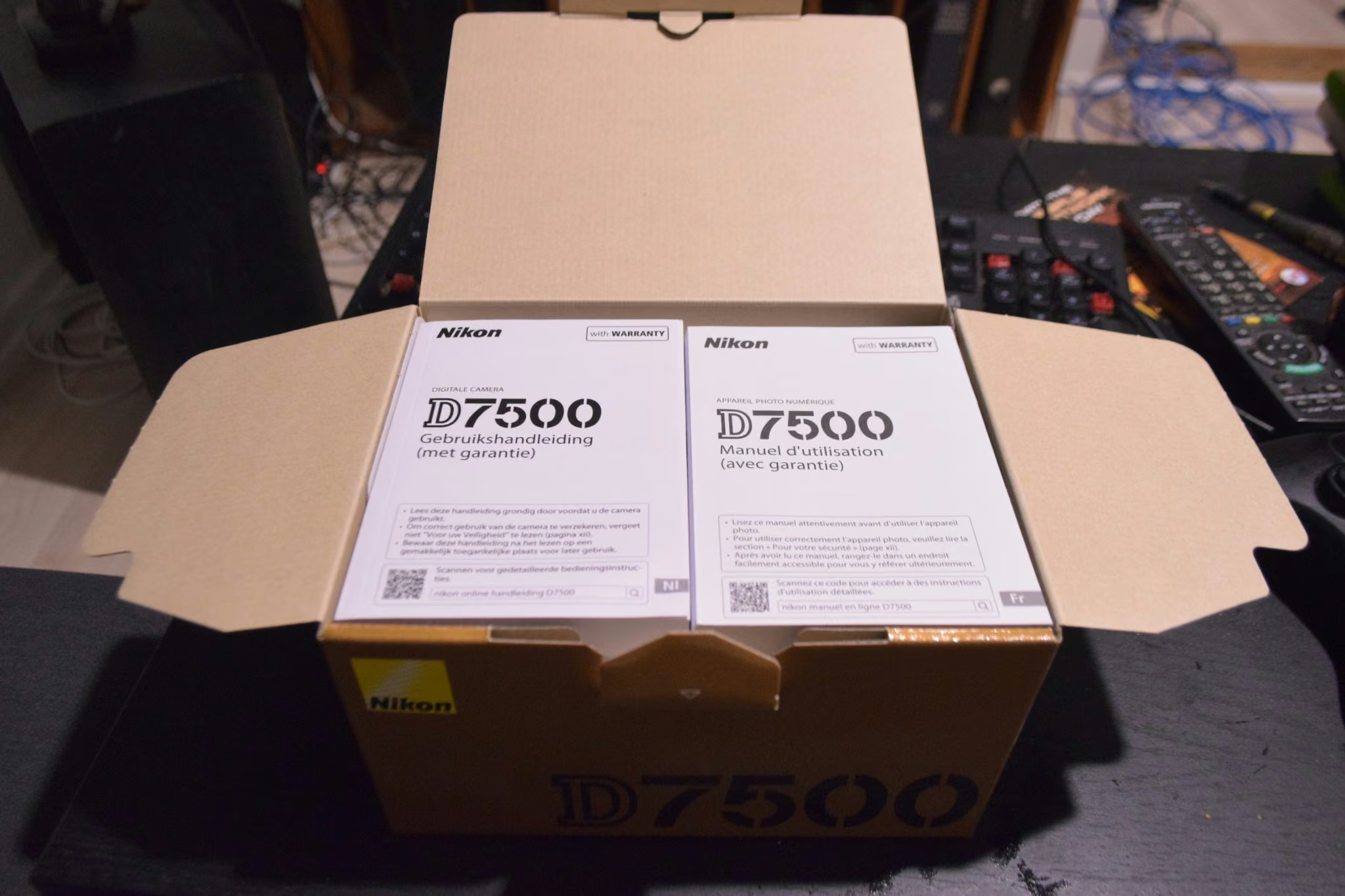
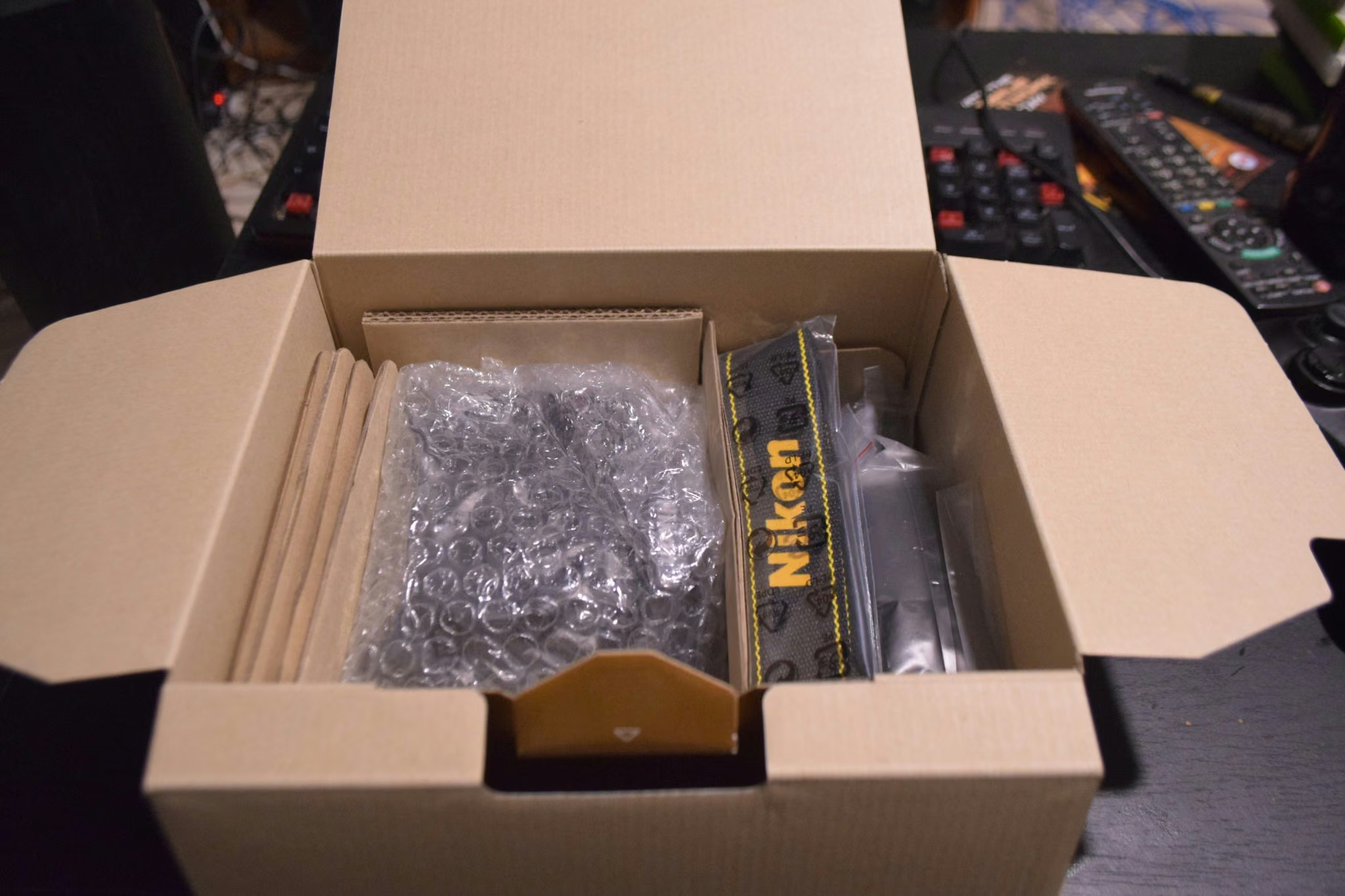
The manuals were on top, with the wrapped camera underneath and the accessories packed beside it. My photos follow it from the closed box to the body, battery, charger, strap and cables laid out on the desk.
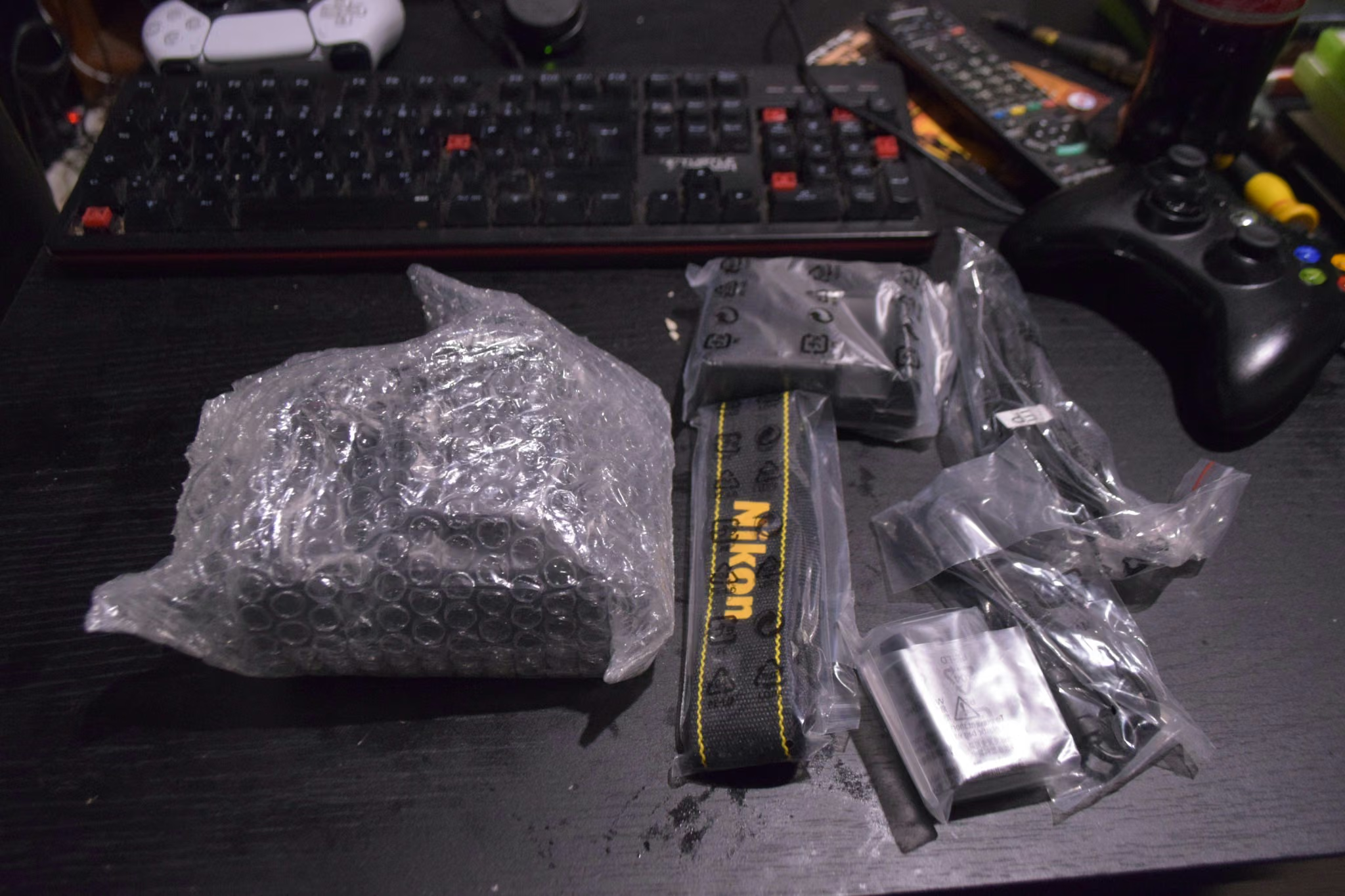

I bought the body on its own. The 55–300mm in the next photograph was my existing lens, which went straight onto the new camera.
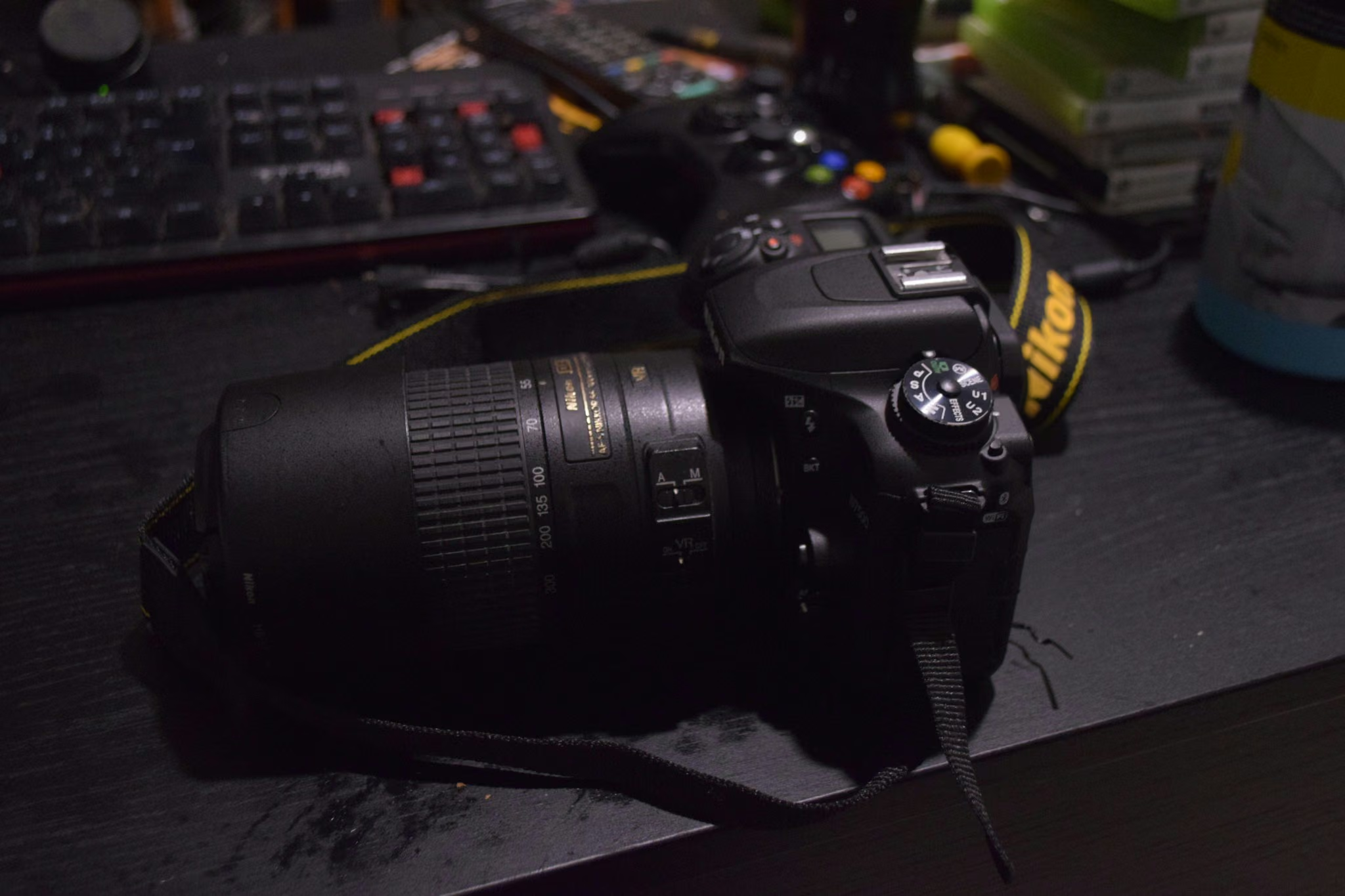
Where the D7500 fits in Nikon’s DSLR line
The D7000 family began in September 2010 as Nikon’s new mid-class DX DSLR line. Nikon announced the D7500 on 12 April 2017, following the D7200 and borrowing the D500’s 20.9-megapixel sensor and EXPEED 5 processor.
It was already an established model when I bought mine. Nikon introduced the full-frame D780 and professional D6 in 2020; the D7500 occupies the enthusiast DX part of that DSLR range.
| Feature | Nikon D7500 |
|---|---|
| Sensor | 20.9 MP DX / APS-C CMOS, 23.5 × 15.7 mm |
| Processor | EXPEED 5 |
| Lens mount | Nikon F |
| Viewfinder autofocus | 51 points, including 15 cross-type points |
| Continuous shooting | Up to approximately 8 fps under Nikon’s specified conditions |
| Standard ISO range | 100–51,200 |
| Viewfinder | Optical pentaprism, approximately 100% coverage in DX mode |
| Rear screen | 3.2-inch tilting touchscreen |
| Storage | One SD card slot; UHS-I support |
| Video | 4K UHD up to 30p; Full HD up to 60p |
| Weight | Approximately 720 g with battery and memory card |
Specifications: Nikon D7500 product information and the official manual.
The controls made me go fully manual
The best thing about this body is how easy it is to change settings while using it. The important buttons are right at my fingertips. I can adjust things on the fly instead of feeling as though I have to prepare the camera for every change.
This is the camera that made me move to fully manual exposure, while keeping autofocus. I set shutter speed, aperture and ISO myself.


In the default manual-mode layout, the rear command dial changes shutter speed and the front sub-command dial changes aperture. To adjust ISO, hold the dedicated ISO button and turn the rear dial. Those are the three exposure settings I want to get at quickly, and the D7500 puts them under my fingers.
The D7500 has a touchscreen too, but I can use the physical controls for the way I normally shoot. That is what I wanted from a camera.
The 55–300mm I have used since 2013
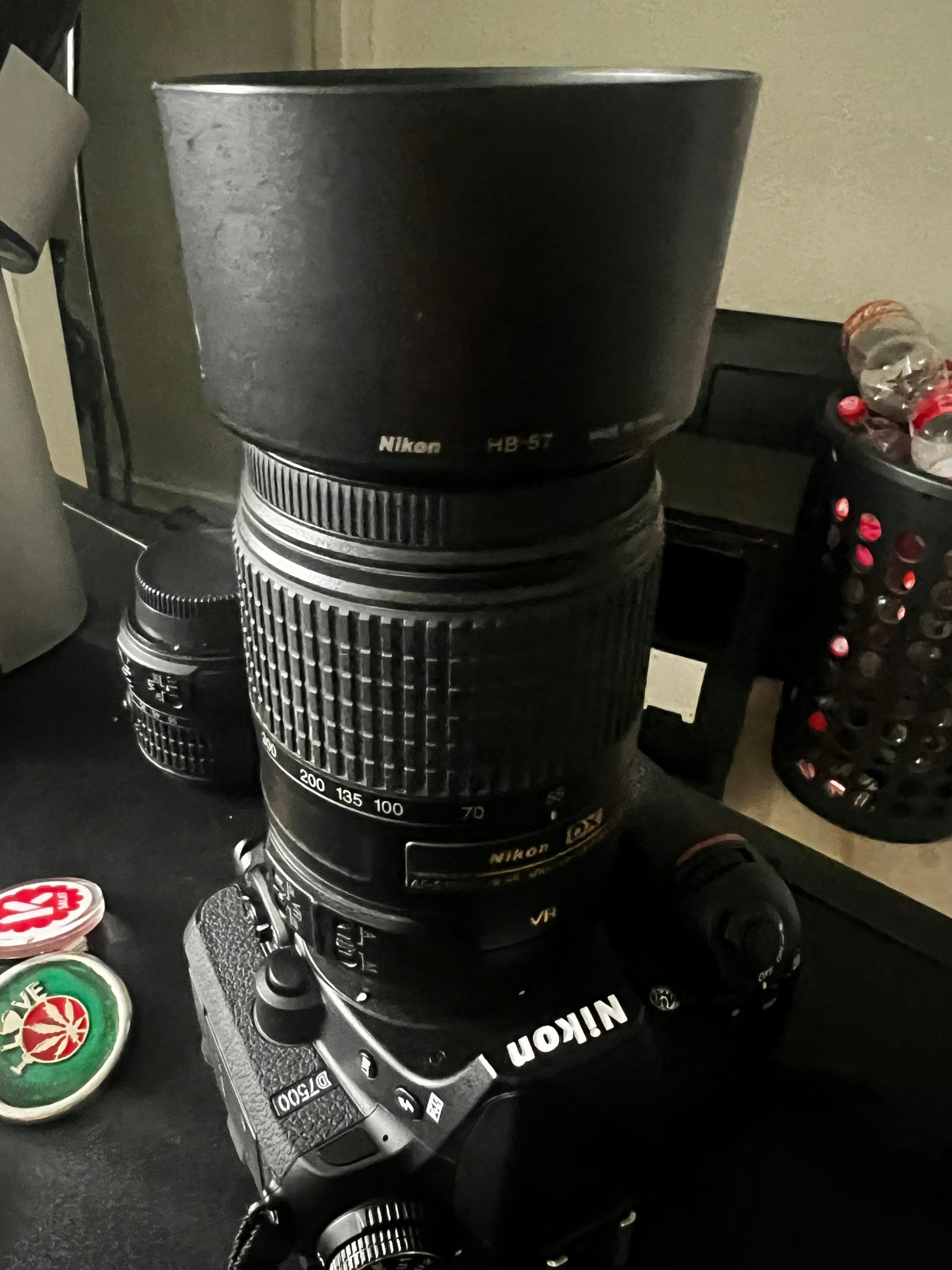
My AF-S DX Nikkor 55–300mm f/4.5–5.6G ED VR has been my main lens since 2013. That is about thirteen years by the time I am writing this. For most of that time, it was practically the only lens I used.


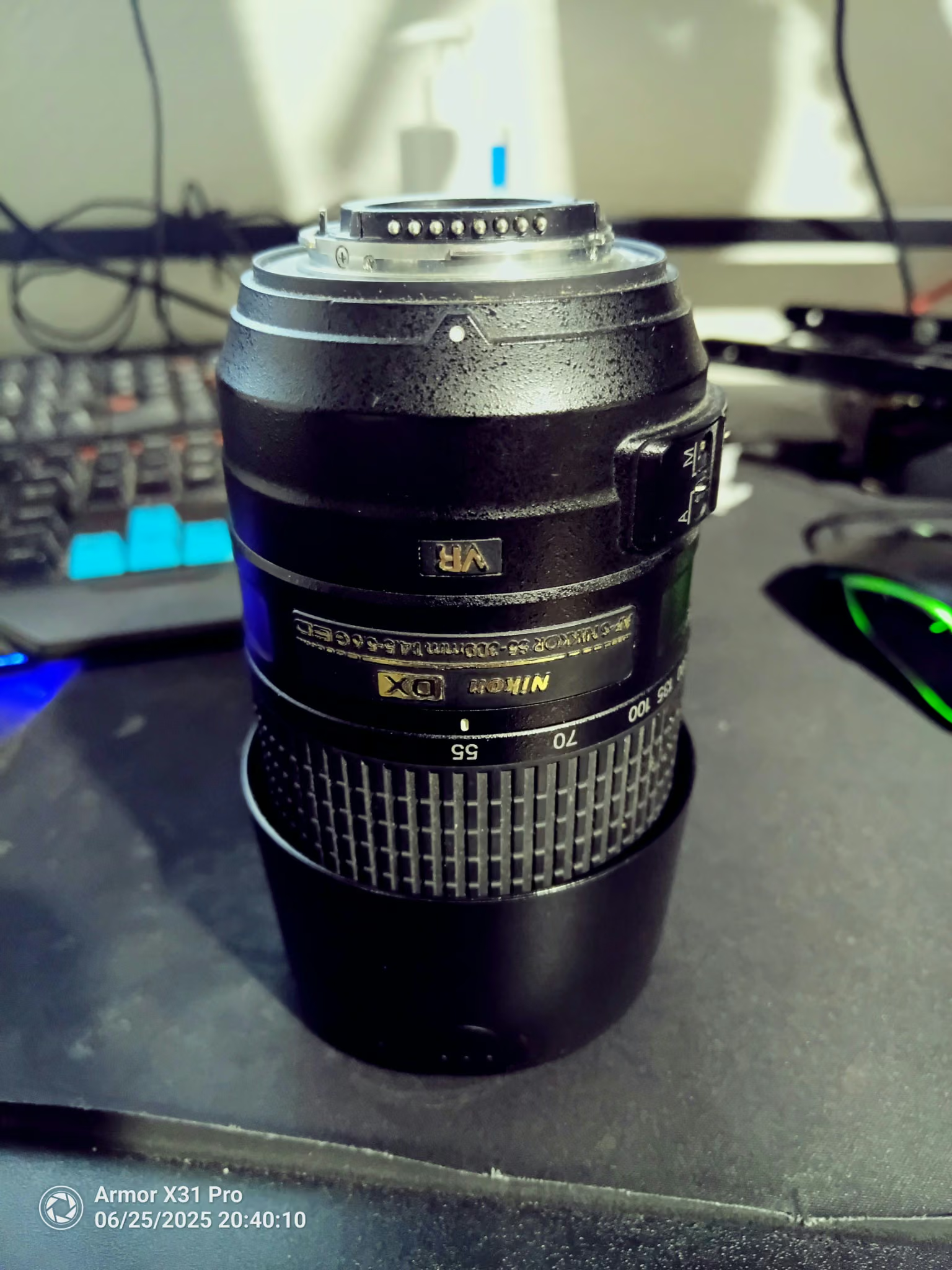
Nikon announced this lens in August 2010. It combines a Silent Wave autofocus motor, ED glass and optical vibration reduction. On the D7500’s DX sensor, its field of view is comparable to approximately 82.5–450mm on a 35mm camera.
Mine still looks remarkably good considering how much it has been used. Some of the gold lettering has rubbed off, and there is a tiny scratch on the glass that I have not seen affect my photographs. The autofocus is a little slow now. I suspect its age and years of use play a part in that.
I have not exactly babied it. It has usually travelled attached to a camera body in an ordinary backpack, rather than in a dedicated padded camera bag. It has had plenty of knocks over the years and still works. It is one of the best lenses I have owned, and it is a big reason I keep buying Nikon lenses.
Battery life is one reason I am staying with it
The battery difference was something I came to appreciate later, after choosing the D7500. I can almost get through a whole six-day trip on one battery, shooting a lot each day. On a trip with my friend, he was changing batteries in his mirrorless camera and was nearly out of power again before getting home.
My normal routine helps. I use the optical viewfinder most of the time. After a shot, I look at the brief image preview, judge the exposure, change a setting if needed and take another. When I am finished, I switch the camera off. I am not leaving live view running while I walk around.
For reference, Nikon rates the D7500 at approximately 950 photographs under its CIPA test with an EN-EL15a battery and no live view. Canon lists approximately 310 shots using the R50’s electronic viewfinder or 440 using its LCD at 23°C. A mirrorless camera powers the sensor and an electronic display to provide its viewing image; the D7500’s optical finder lets me compose without running live view.
I later bought two third-party spare batteries for the Nikon as well. Having spares is useful, but I like how little attention this camera needs from me when I am away.
The camera in use
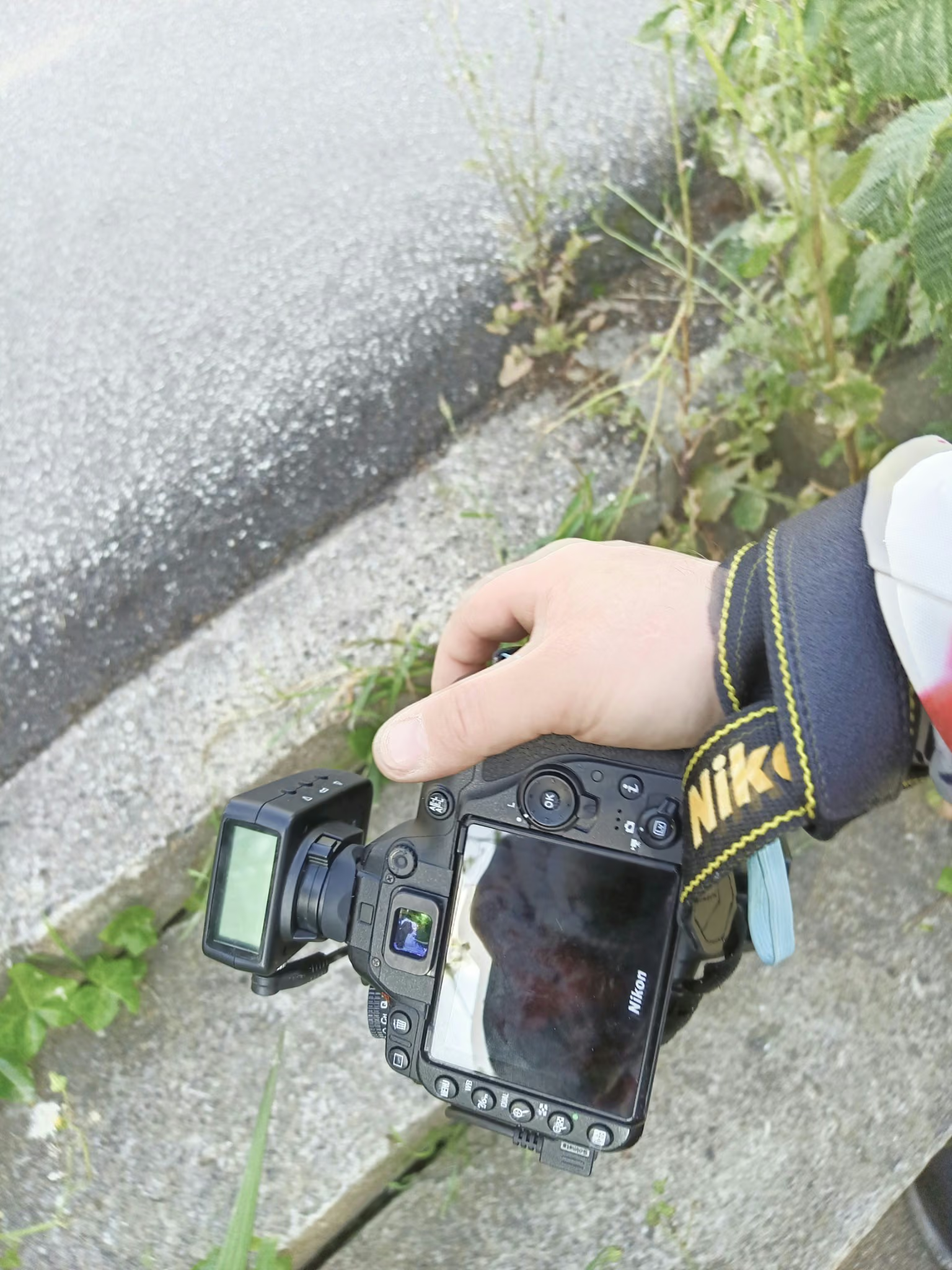
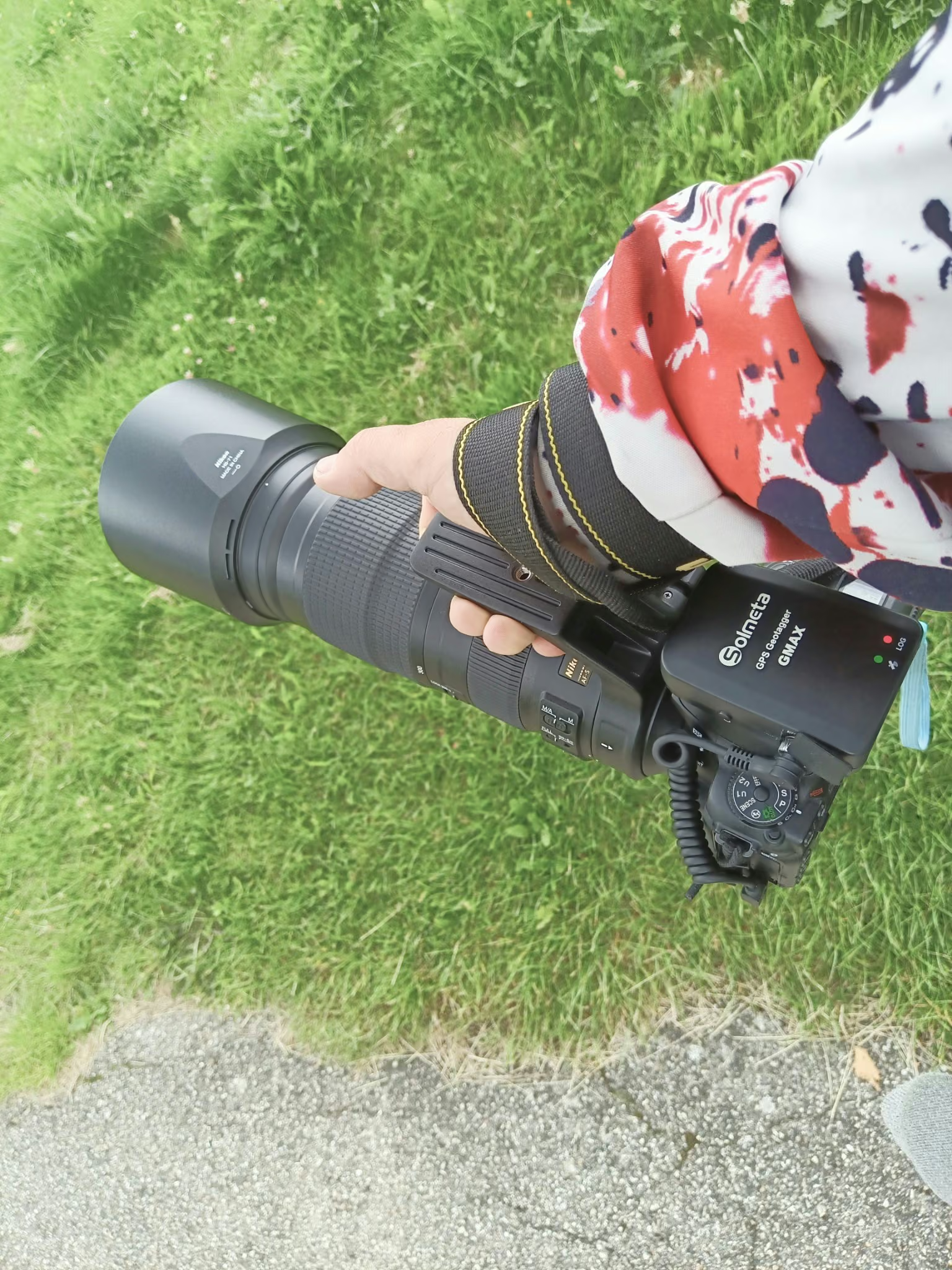
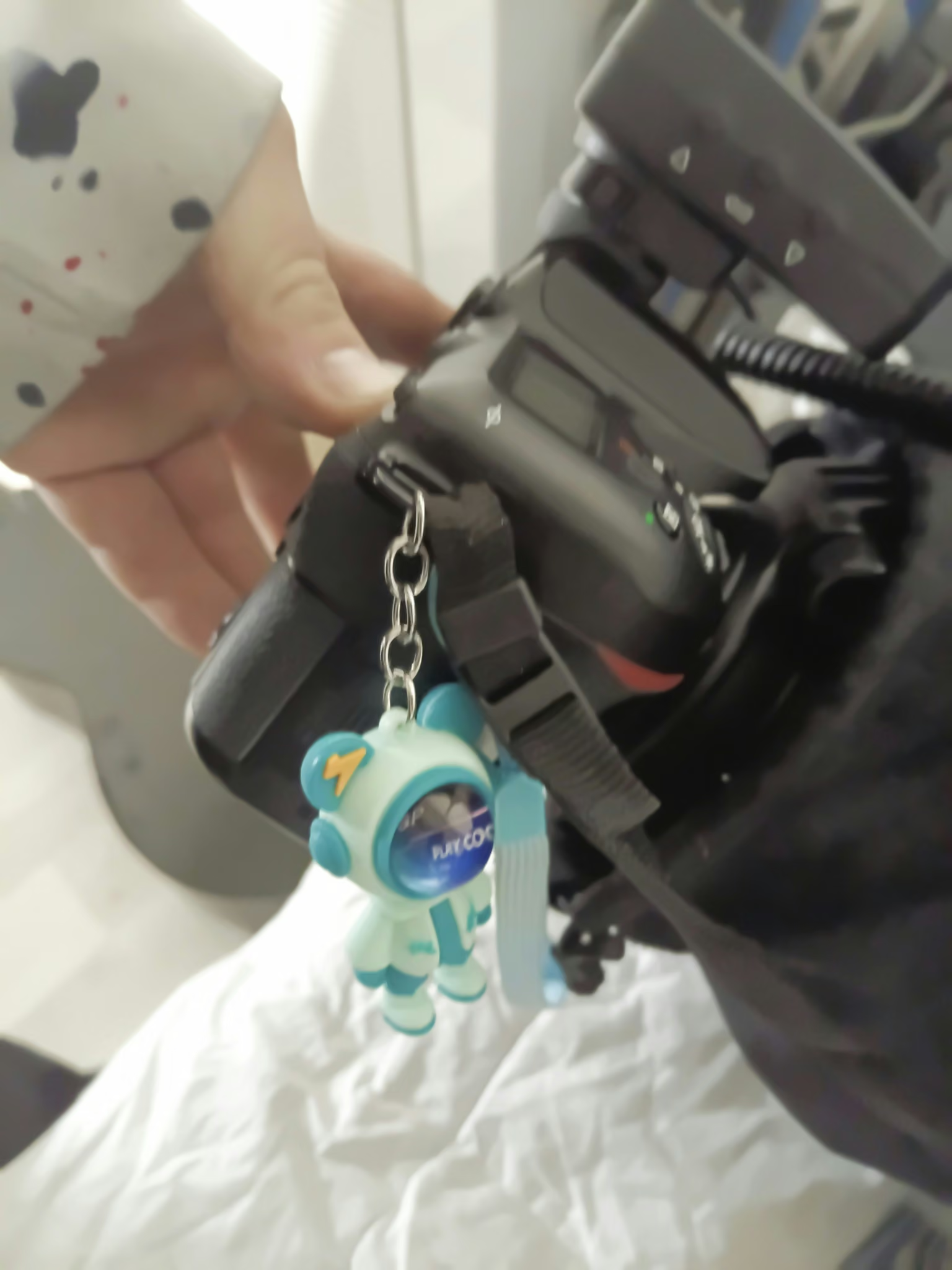
The later pictures show it with remote-release equipment, on a tripod outdoors and carried in my hand. They also show how the setup has changed since the unboxing.

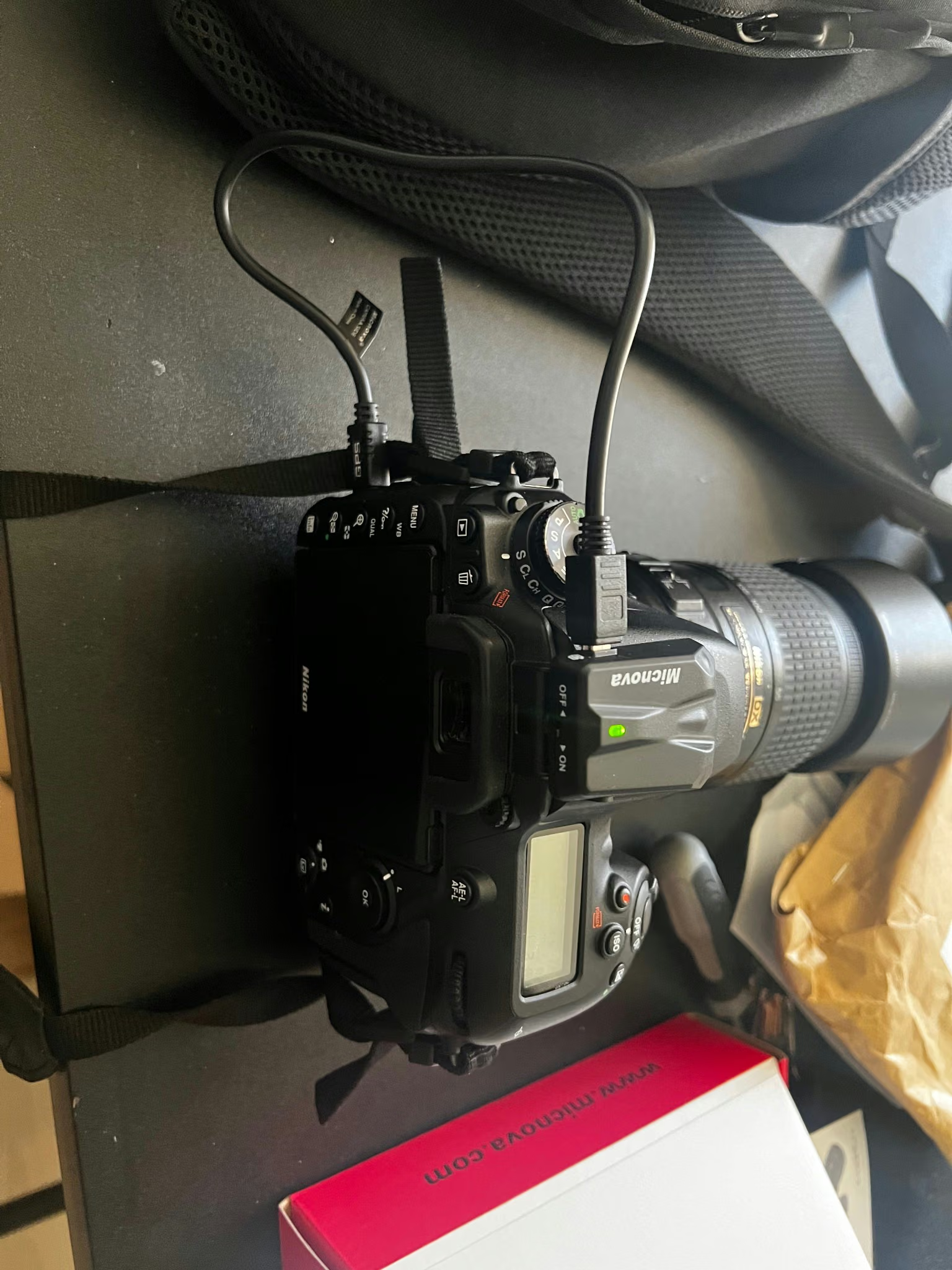

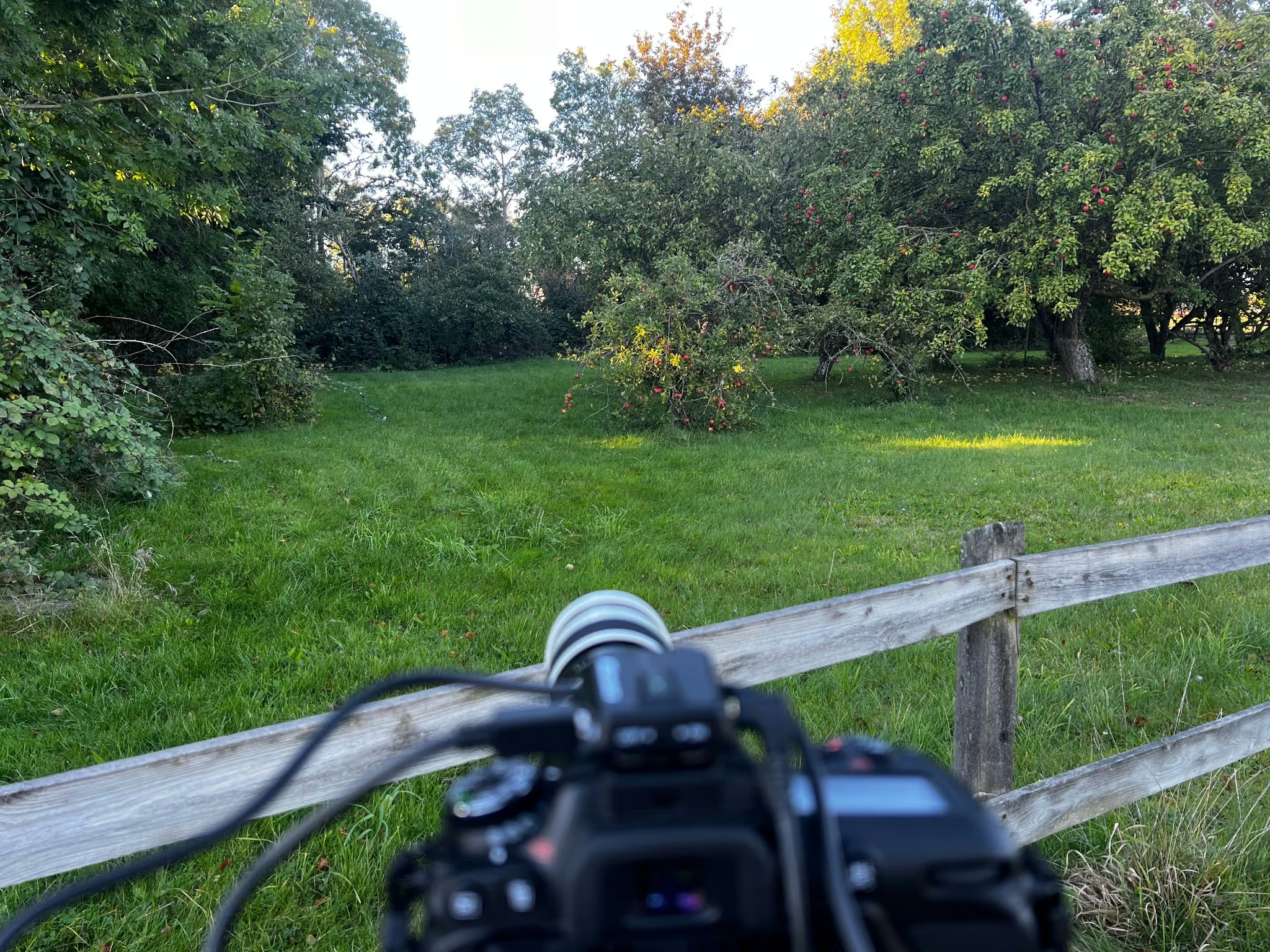
I have added two more lenses since buying the body. The later photographs include the D7500 fitted with a Nikon 70–200mm f/2.8E FL ED VR, as well as a GPS geotagger attached to the camera.

The limitations and later support
There are practical limitations worth knowing before buying one. Its single card slot cannot make an in-camera second-card backup. Viewfinder shooting uses phase-detection autofocus, while live view uses contrast detection. Its 4K recording uses a smaller sensor crop, narrowing the field of view by about another 1.5× compared with normal DX framing. It records 4K up to 30p.
Lens compatibility also depends on the lens. Nikon’s compatibility guide explains that supported non-CPU AI lenses work in manual mode without the camera’s exposure metering. My AF-S 55–300mm is a different kind of lens, with electronic communication and its own autofocus motor.
The contemporary DPReview review from July 2017 praised the handling, autofocus and buffer, while criticising the single card slot, cropped 4K and video focusing. Amateur Photographer’s review, updated in 2025, likewise liked the controls and viewfinder autofocus but found live-view focusing slow.
As of 26 October 2026, Nikon’s download centre lists C firmware 1.12, released on 25 April 2024. Its change log covers the default connection password shown after a reset and reversed left/right audio-level indicators during HDMI movie live view. Earlier updates addressed flash-related issues and SnapBridge connectivity.
The DSLR I would recommend
After a little over two years, it is still one of the best DSLRs I have used. I love being able to change settings quickly, I love the battery life, and I am comfortable shooting manual exposure with it. If someone wants a DSLR, the D7500 is the camera I would recommend.