Issue 7/2005 of Dansk PC Gaming World put Age of Empires III first on its list of eight historical strategy games. Looking through the page now, I recognise several games I own and a few I have tried, but the magazine’s enthusiasm rarely matches my own. I recently got hold of Age of Empires III, although I had played it before. I still think it is a shit game. Civilization IV is in my collection too, and The Guild still leaves me wondering what I am supposed to be doing.
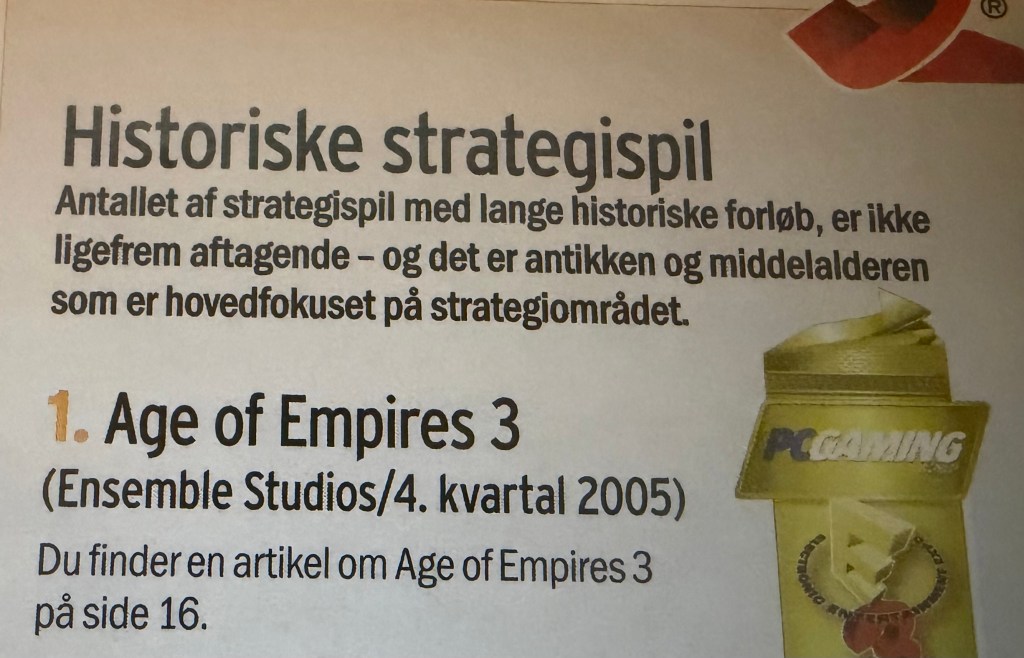
The magazine introduced the category by saying that historical strategy games were not disappearing and that antiquity and the Middle Ages were the main focus of the genre. Even that description was already rather loose. Age of Empires III covers the early-modern and colonial eras, Anno 1701 is built around the seventeenth century, and Civilization IV carries humanity far beyond either antiquity or the Middle Ages. The list was less a tightly defined genre ranking than a collection of historically themed strategy projects that happened to be attracting attention around E3 2005.
The eight games were:
- Age of Empires III
- Civilization IV
- Rise & Fall: Civilizations at War
- Anno 1701
- The Guild 2
- Heart of Empire: Rome
- Sparta: Ancient Wars
- Rome: Total War – Barbarian Invasion
The page numbers the games from one to eight without explaining how the order was decided. Most were unfinished. Several were more than a year from release, and one would never come out. I read this as a list of the projects the editors were excited about around E3 2005. The printed release windows and promises are much more useful than treating those numbers as review scores.
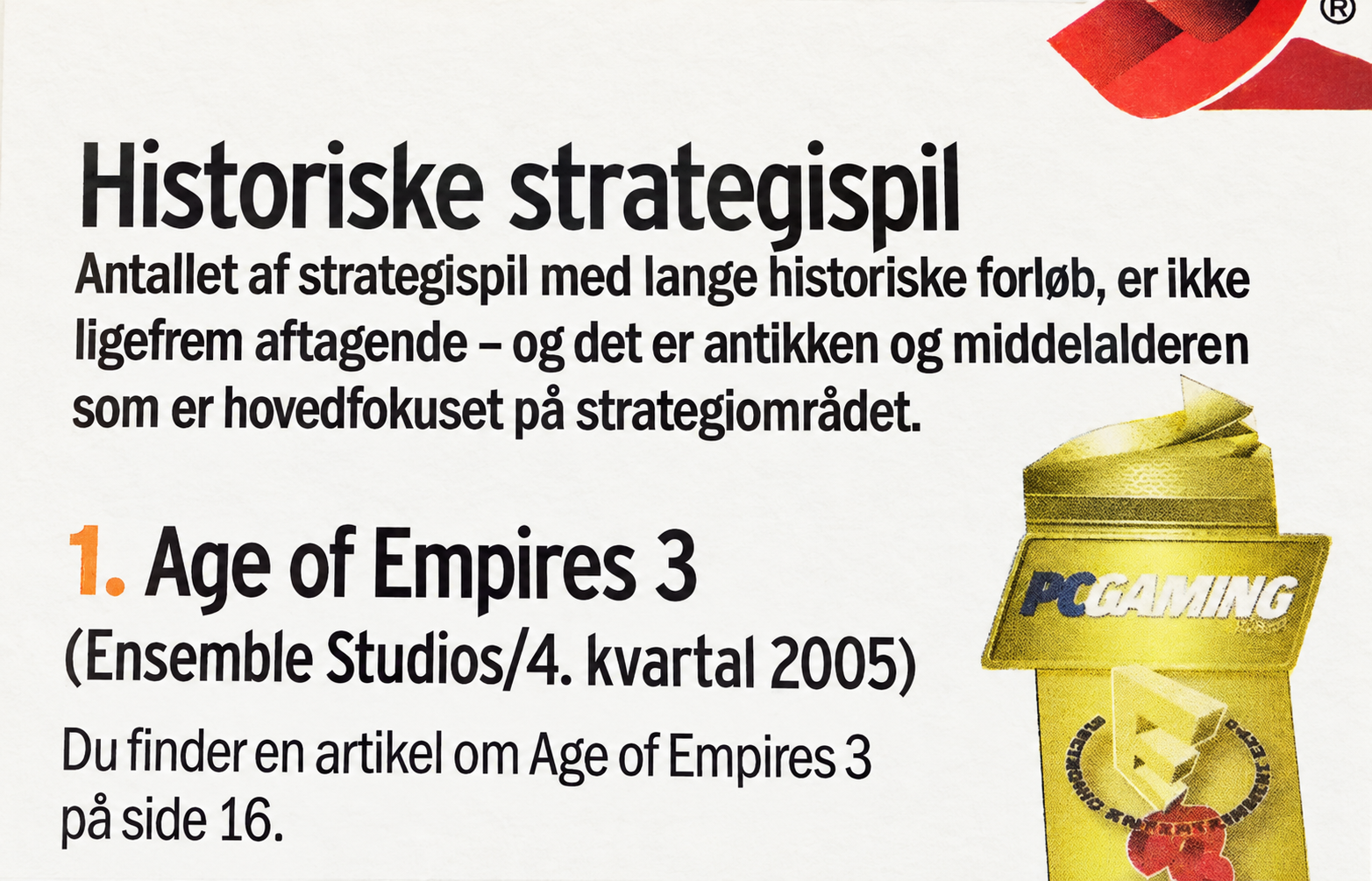
1. Age of Empires III
The list offers almost no argument for putting Age of Empires III first. It directs readers to the main article beginning on page 16, which runs for four pages. The game had far more room to impress readers than anything else in this ranking. Its first-place entry barely needed a description because the issue had already devoted a substantial feature to it.
Those pages make the source of the excitement obvious. The headline presents Ensemble Studios’ conquest of America as a new era for PC strategy, defined by luxurious graphics and a world governed by physics. The article describes reflective and flowing water, wind that controls the direction of smoke, detailed snowy landscapes, bump mapping, dynamic shadows and a DirectX 9 presentation that looked extraordinary in 2005. It recounts a demonstration in which a cannonball travels through a forest, breaks trees, bounces onwards, strikes a settlement and sends soldiers and pieces of architecture flying. Other sections discuss formations, hundreds of units, trading posts, alliances with Indigenous peoples and the persistent Home City system, through which experience earned during missions or multiplayer matches unlocks new opportunities. This is not a four-page assessment of artificial intelligence, economic balance, pacing or campaign quality. It is a four-page guided tour through Ensemble’s technology and feature list.
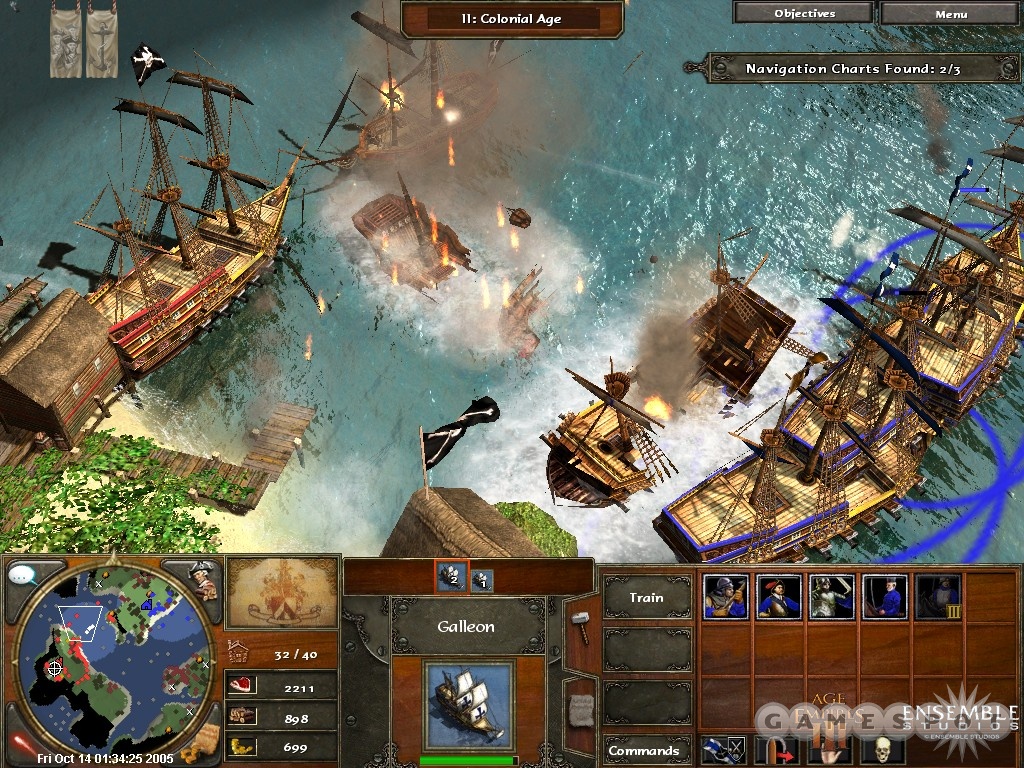
The editor’s closing comment shows how much he was looking forward to it. He expected 2005 to be a great year for strategy fans and placed Age of Empires III high on his personal list. He acknowledged all the talk about the graphics, then pointed to role-playing elements and tactical combat as reasons the familiar series would feel refreshed. That was the expectation before the finished game reached players.
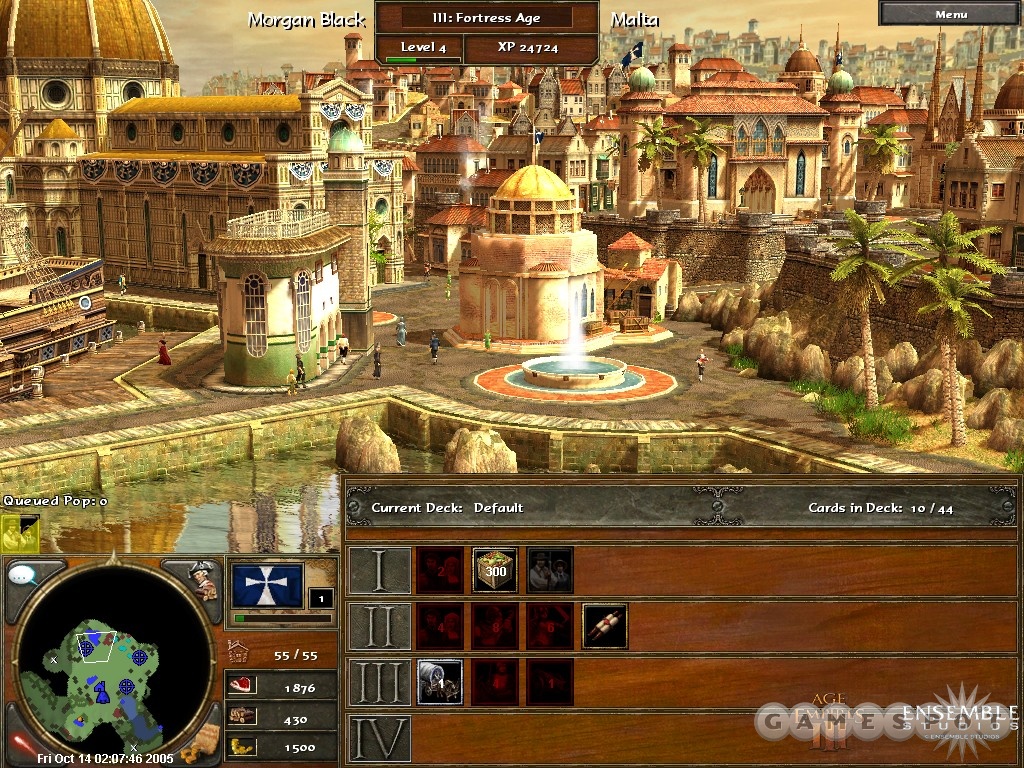
The finished Windows game reached North American shops on 18 October 2005. GameSpot awarded it 8.2/10, and its Metacritic average is 81. It was well received, although GameSpot also criticised awkward unit behaviour and drops in frame rate. The impressive presentation survived into the release; that did not make every part of the game equally convincing.
My own judgement is much harsher. I grew up with Age of Empires, and the original remains one of my favourite PC games. I loved its ancient setting, music and atmosphere, and the progression from a primitive settlement to an organised civilisation. Age of Empires II is not a bad game, but I never found it as likeable as the first. It feels more defensive and more dependent on build orders and micromanagement. The extra complexity did not give me the same enjoyment.
The original game’s economy uses Food, Wood and Coin. Settlers can gather from mines, while Plantations offer a continuing source of Coin after the natural deposits run out. Mills supply renewable Food, and the Dutch have Banks that generate Coin automatically. The original Microsoft manual explains those buildings.
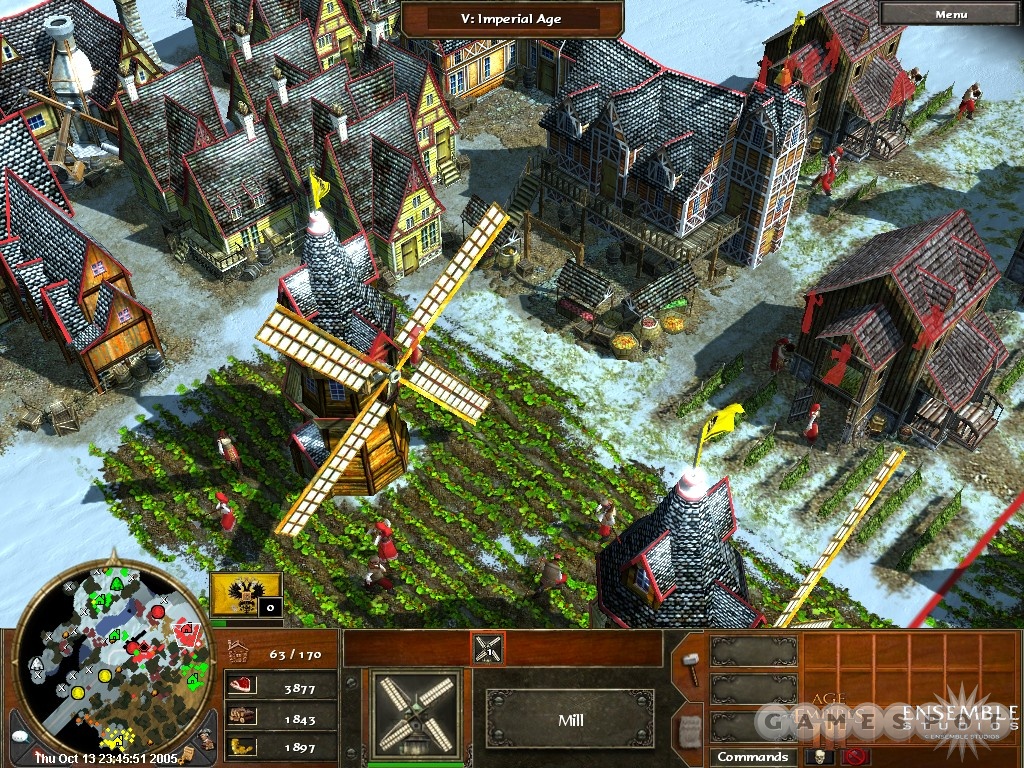
I own Age of Empires III now, having only recently got hold of it, but this was not my first encounter with the game. I had played it before. My verdict is still that it was dog shit. I hated the way it felt divided up into separate areas, and I hated assigning people to buildings to keep money coming in. The Home City, cards and shipments did not make it feel like the continuation I wanted either. Water reflections and flying bits of scenery could look impressive, but they did nothing to make me enjoy the game.
2. Civilization IV
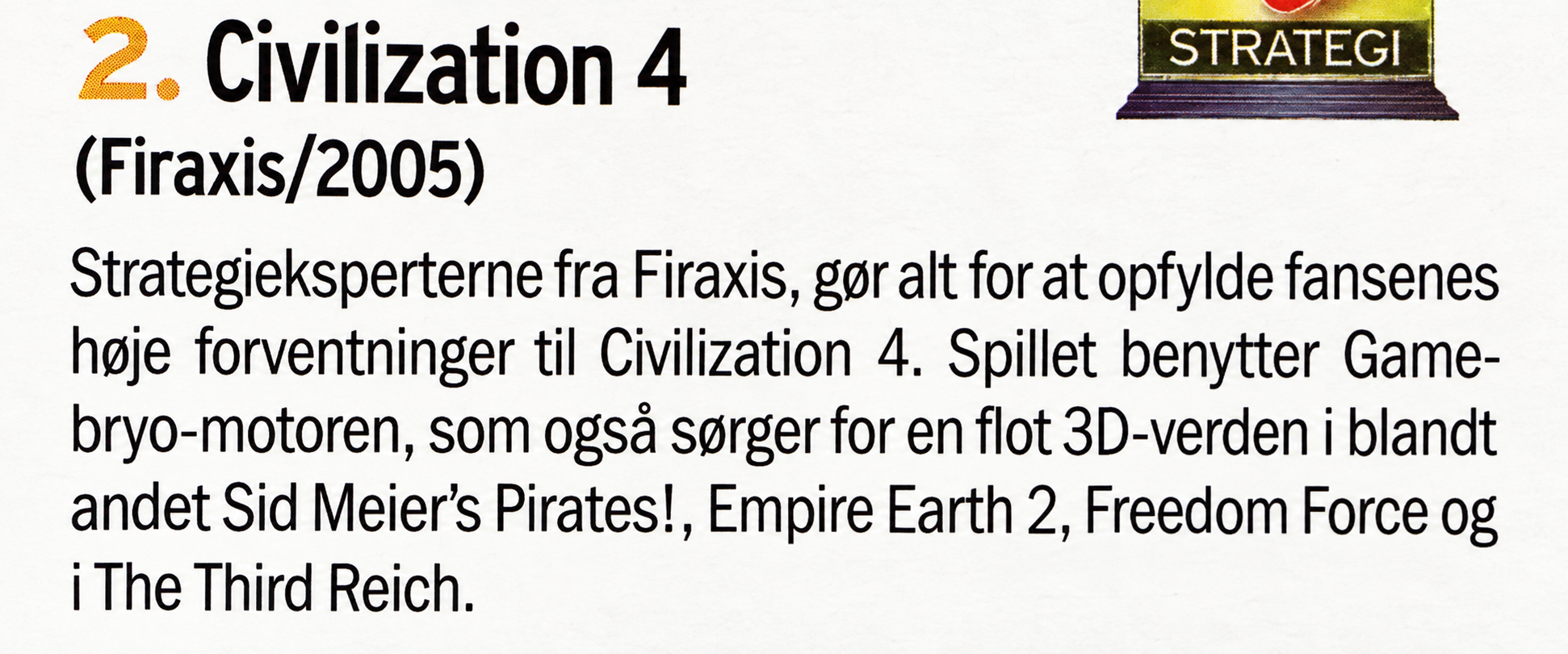
Second place went to Civilization IV. Its short paragraph says Firaxis was working to fulfil fans’ expectations, then spends much of its space on the Gamebryo engine and other games using it. The magazine could fill four pages with Age of Empires III’s visual demonstrations, while this entry gave very little room to the decisions that would occupy a Civilization player.
In hindsight, that trust was more justified than the larger campaign of excitement above it. Civilization IV launched on 25 October 2005 and became the critical giant of the list. GameSpot records a Metacritic average of 94, placing it in the territory of universal acclaim. Its turn-based 4X design, flexible technology tree, multiple routes to victory, diplomacy, moddability and enormous replay value made it one of the defining PC strategy games of its period. If this page were reconstructed according to the reception of the finished products, Civilization IV would be the obvious number-one choice.
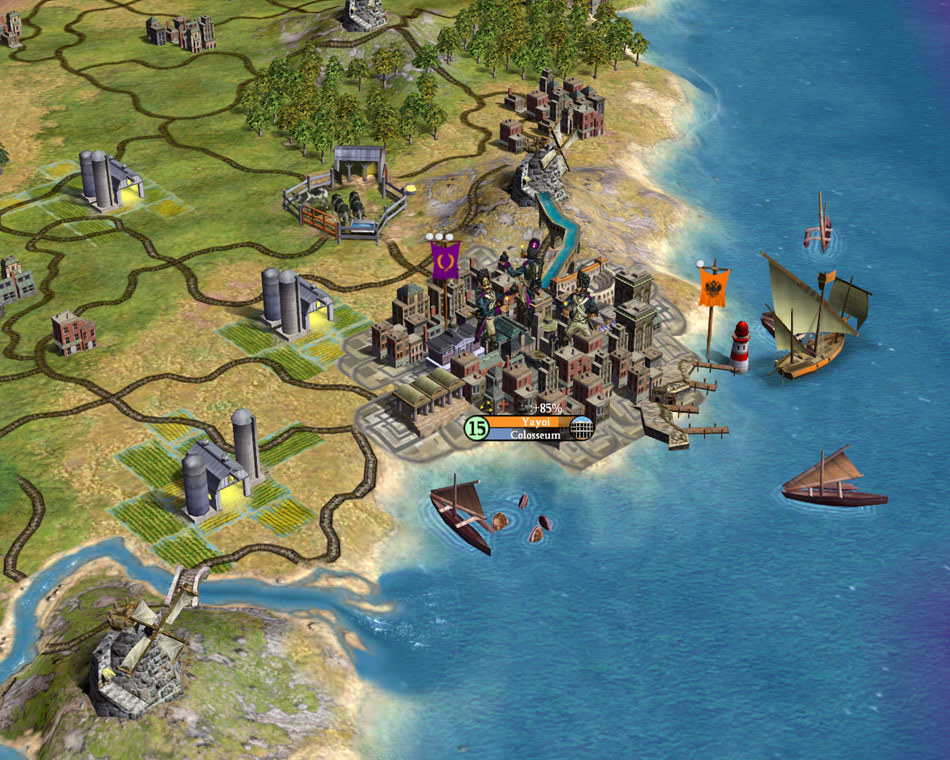
I own Civilization IV. It is not my kind of game, and it has never become a favourite of mine.
Second place looks too low when comparing the finished games’ reception. The magazine gave much more space to the sequel that could immediately show off its technology. The appeal of Civilization IV depended on systems that a short engine description barely touched.
3. Rise & Fall: Civilizations at War
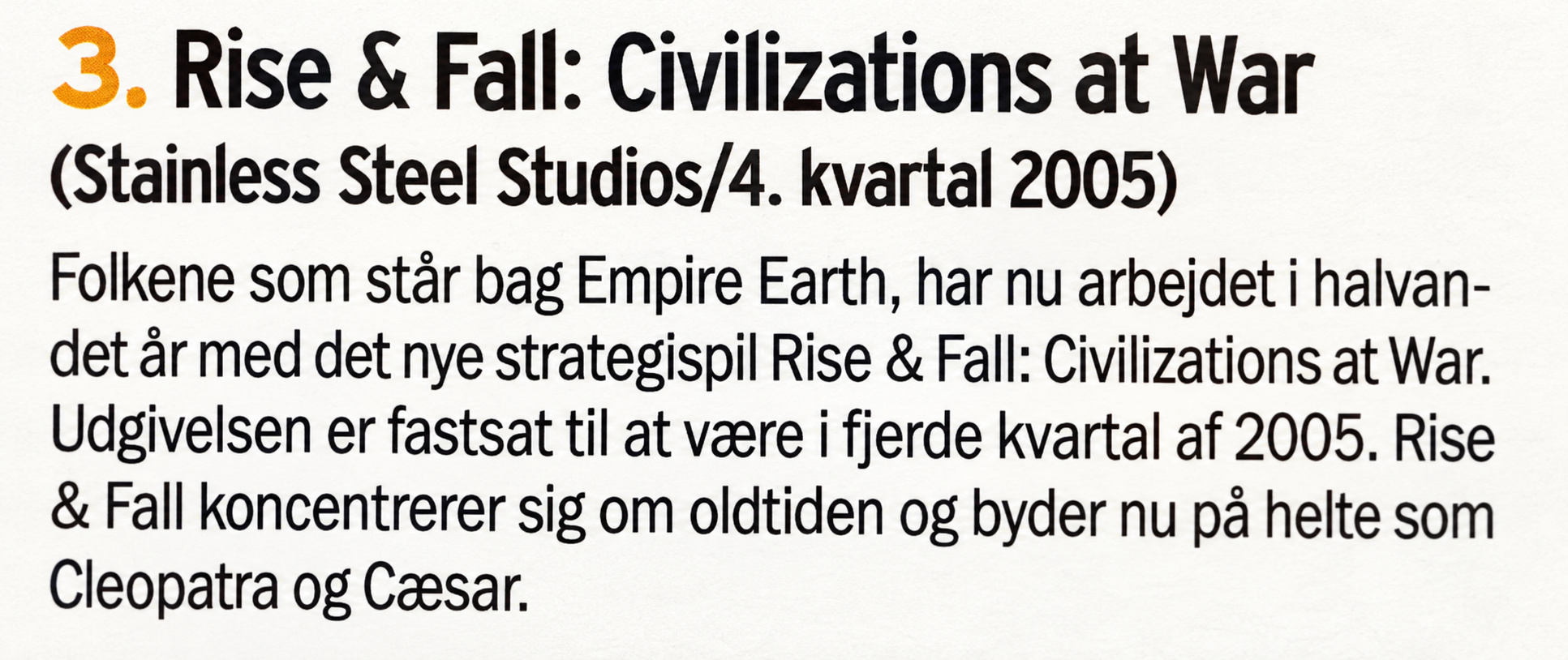
At number three, the magazine selected Rise & Fall: Civilizations at War. Its paragraph leans heavily on pedigree: the people behind Empire Earth had spent roughly a year and a half developing a new strategy game focused on antiquity, now featuring famous figures such as Cleopatra and Caesar. The expected release was the fourth quarter of 2005. Once again, the placement was based on names, ambition and an unfinished project rather than a product that could be reviewed.
The idea was certainly easy to sell. Rise & Fall attempted to combine a conventional large-scale real-time strategy game with direct third-person control of heroic characters. Instead of only directing armies from above, the player could enter a battle personally as a historical hero, fight enemies and turn a strategy game temporarily into an action game. Naval battles, large armies and the reputation of Empire Earth gave the project enough material for an exciting demonstration. On paper, it looked like a title capable of changing the genre.
Development became far less triumphant. Stainless Steel Studios closed in late 2005, and Midway San Diego took over the nearly finished project, delaying it until June 2006. GameSpot’s contemporary report described both the studio closure and the handover to Midway’s internal team. The eventual game received a GameSpot score of 6.6 and a Metacritic average of 64. Critics often admired the attempt to blend action with strategy but found that neither side of the design reached its full potential. The magazine’s third place was therefore a ranking of what Rise & Fall might become, frozen before the development crisis and the more ordinary finished result.
I knew of Rise & Fall, but I never played it. The mixture of hero action and large historical battles was not really my kind of strategy game.
4. Anno 1701
The fourth game had been known during development as Anno 3, but the magazine already called it Anno 1701. The magazine described it as a “best of” the historical ideas from Anno 1602 and Anno 1503, with simplified controls and new construction options. Unlike several projects on the page, this preview was reasonably close to the finished reality. Anno 1701 arrived in late 2006 and was positively received, earning a Metacritic average of 79. Critics praised its attractive presentation, accessibility and detailed production chains, even when they found parts of its economy demanding or slow.
Fourth place looks sensible. Anno 1701 came from an established series, arrived in the printed late-2006 window and earned a favourable response. Related Designs built it around settling islands, meeting the population’s needs, organising production and moving goods between settlements. There was a working economic game behind the attractive towns.
I only briefly tried one of the later Anno games, not Anno 1701. The series never became an important part of my gaming history. I can follow the appeal of constructing settlements and balancing production chains across islands, but I did not stick with the entry I tried.

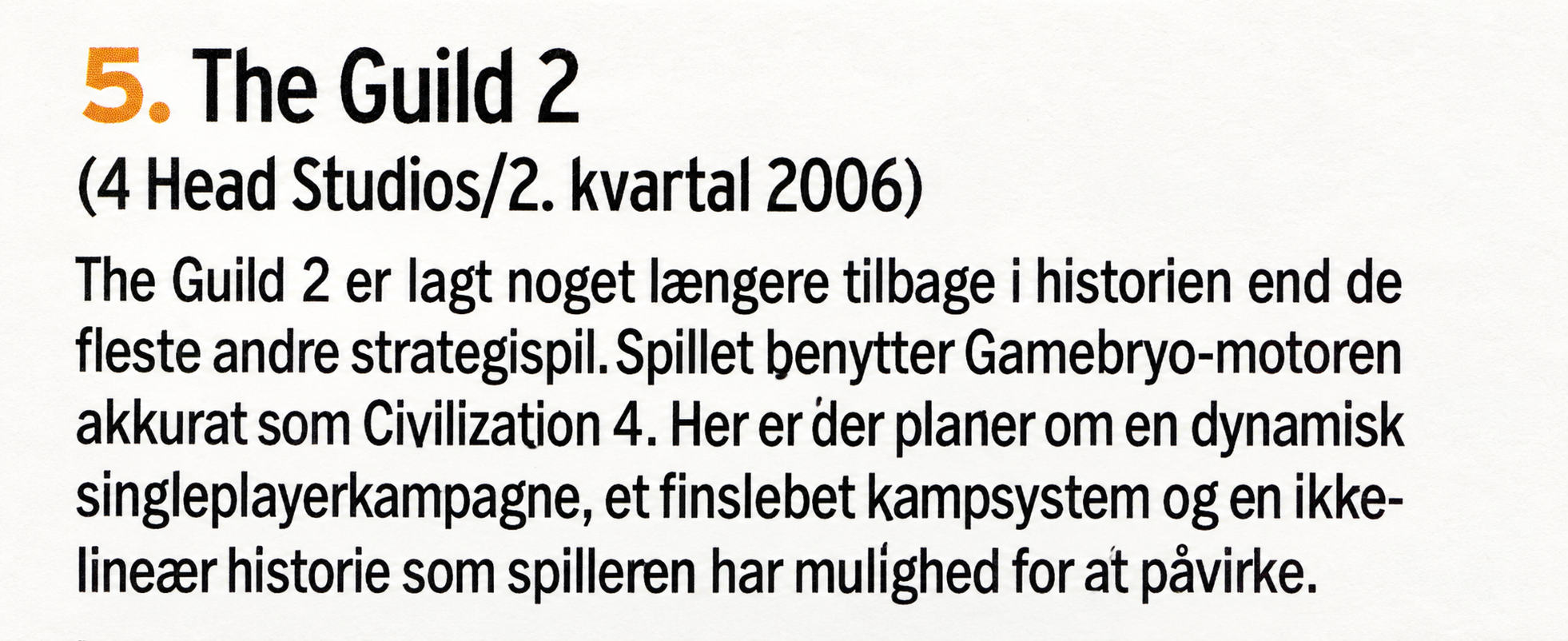
5. The Guild 2
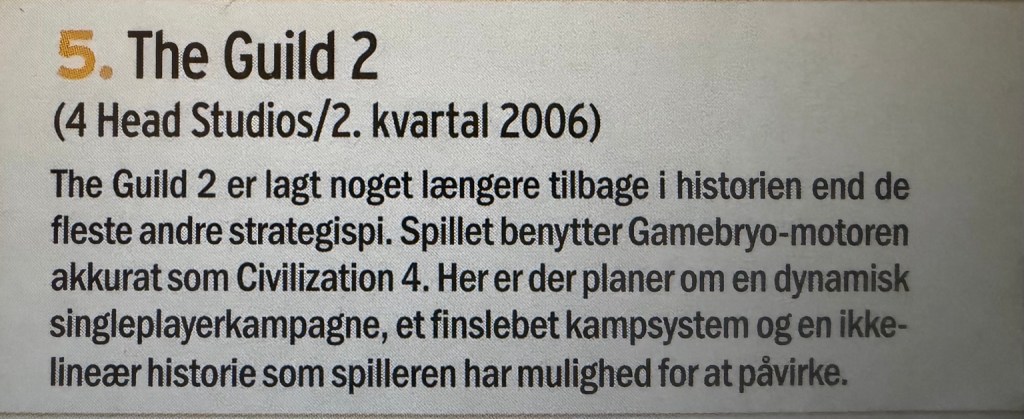
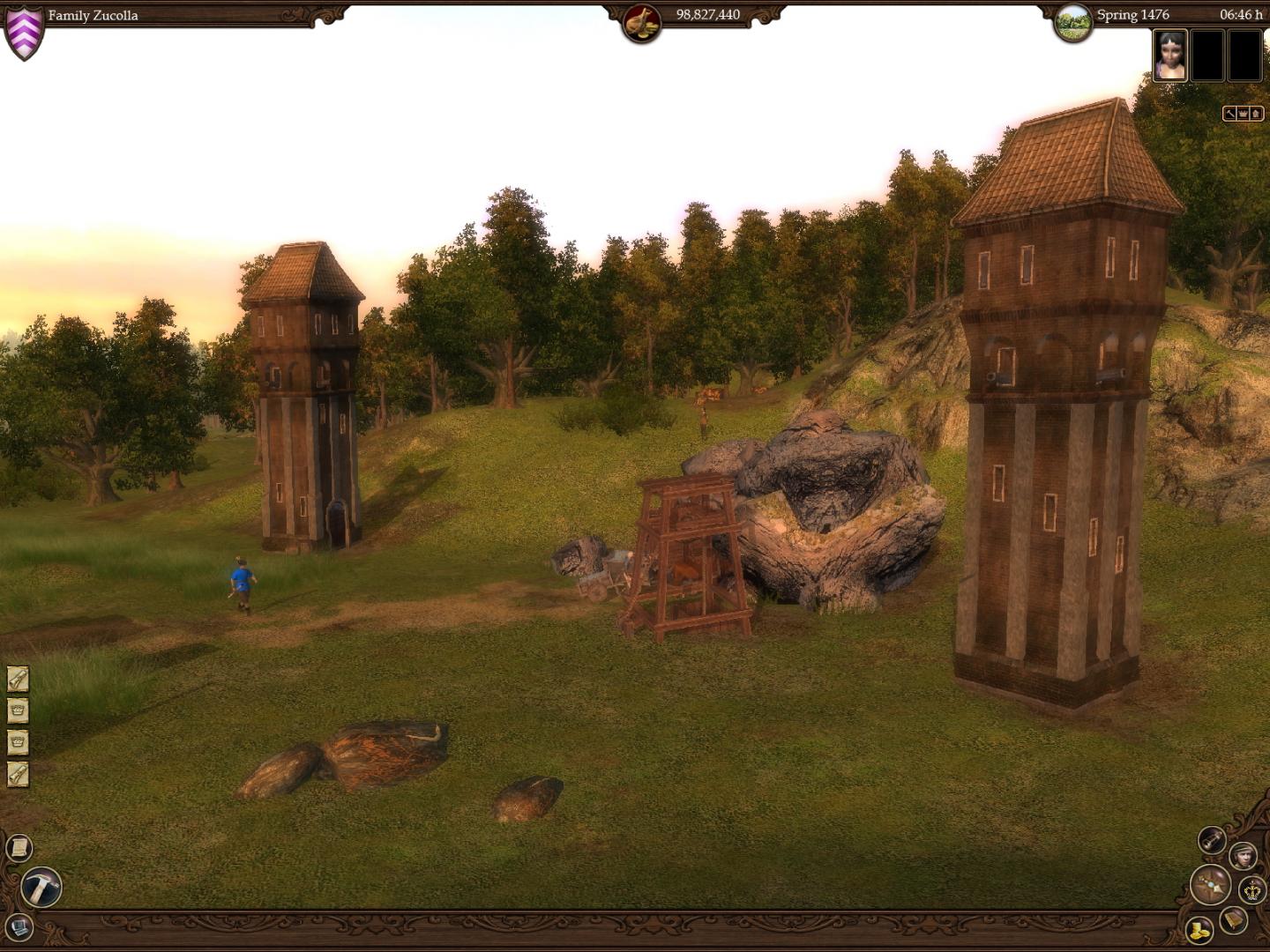
The magazine placed The Guild 2 fifth and described plans for a dynamic single-player campaign, a polished combat system and a nonlinear history that the player could influence. It also noted that the game used Gamebryo, the same engine mentioned in the Civilization IV entry. The wording matters: there were “plans” for these things. Nothing in the paragraph could establish whether the campaign was genuinely dynamic, whether the combat felt polished or whether the many interacting systems created freedom rather than confusion.
The magazine predicted the second quarter of 2006. The North American Windows release followed in October, with 12 October recorded by the publisher. The game combined business management, family dynasties, politics, crime and role-playing in a simulated town. Its Metascore was 61, with contemporary criticism including bugs, slow pacing, repetition and heavy micromanagement. The promised polished combat system was an especially optimistic thing to print before release.
I own The Guild: Complete Collection and have tried both The Guild 1 and The Guild 2. I still do not entirely understand what I am supposed to do. Something about getting married and building up a guild or a business, then finding a way forward through all the other systems. That is about how clear it has felt to me during the few times I have played them. I remember being confused much more clearly than I remember making progress.
The underlying aim is to establish a dynasty: earn money through a profession and businesses, improve the family’s position and have heirs who can continue it. Marriage therefore matters to the simulation rather than being a separate side activity. The publisher’s description puts family, personal development and growing power at the centre of the game. Knowing that broad goal still has not made the individual steps clear to me when I play.
6. Heart of Empire: Rome
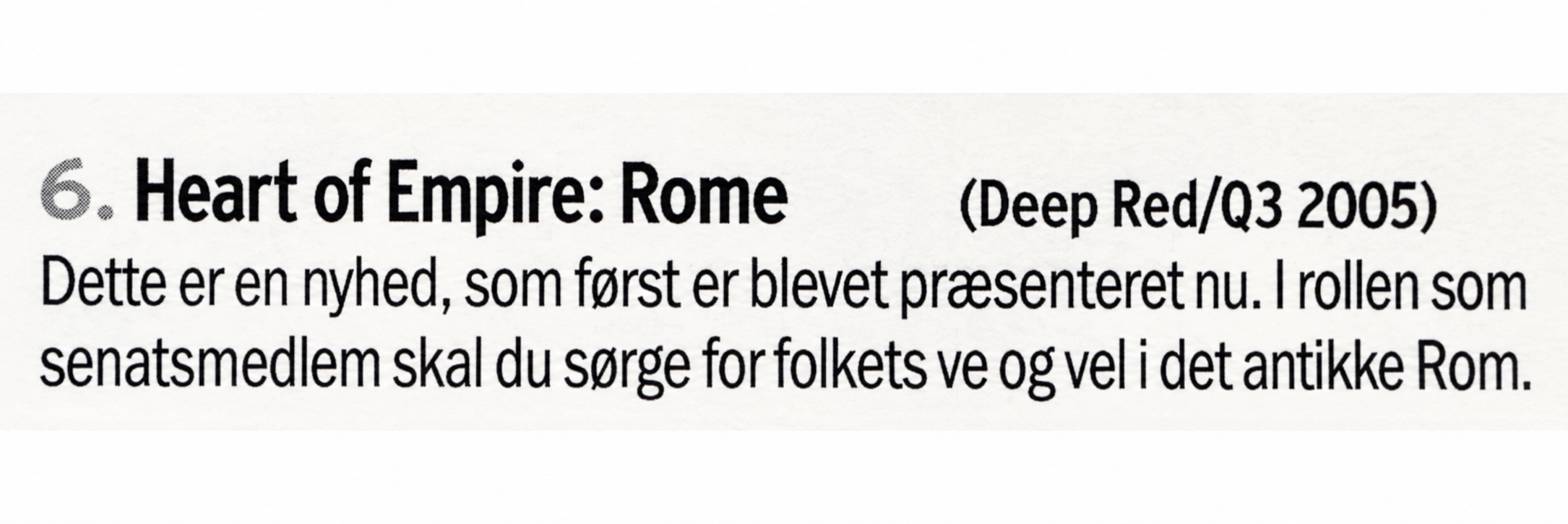
Sixth place went to Heart of Empire: Rome, a newly presented project with a third-quarter 2005 release forecast. Its tiny description casts the player as a Roman senator responsible for the population’s welfare. That was enough to place it above Sparta: Ancient Wars and Rome: Total War – Barbarian Invasion.
The game was intended to be a large Roman city-building and political simulation from Deep Red Games, the studio behind Tycoon City: New York from the magazine’s separate building-and-life-simulator list. Players would construct Rome, manage supplies and different social classes, sponsor gladiatorial events and chariot races, gain influence with the Senate and move from a distant overview down into detailed city streets.
It never came out. The project was cancelled in February 2007. WorthPlaying’s cancellation report reproduces Paradox’s statement that the title would not be released, alongside the proposed features. The magazine’s 2005 release forecast ended up attached to a game that readers could never buy.
There is no finished game to compare with sixth place. The entry records what had been announced, including an ambitious release schedule, and shows why the list needs to be read as a preview page. Putting a number beside the project did not make its development any more certain.
7. Sparta: Ancient Wars
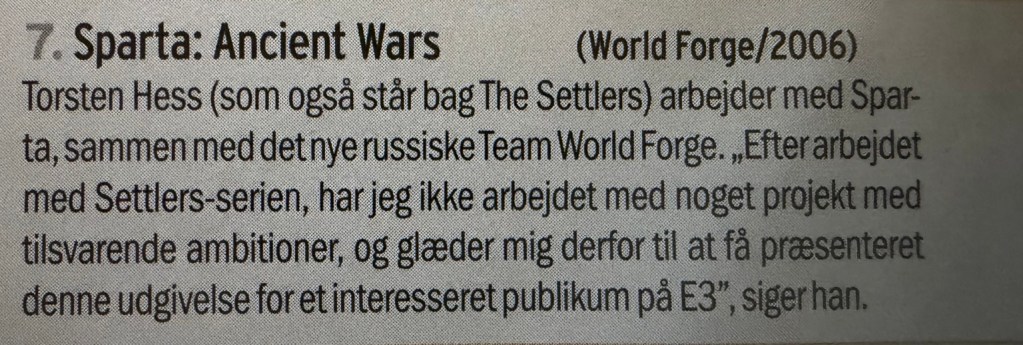
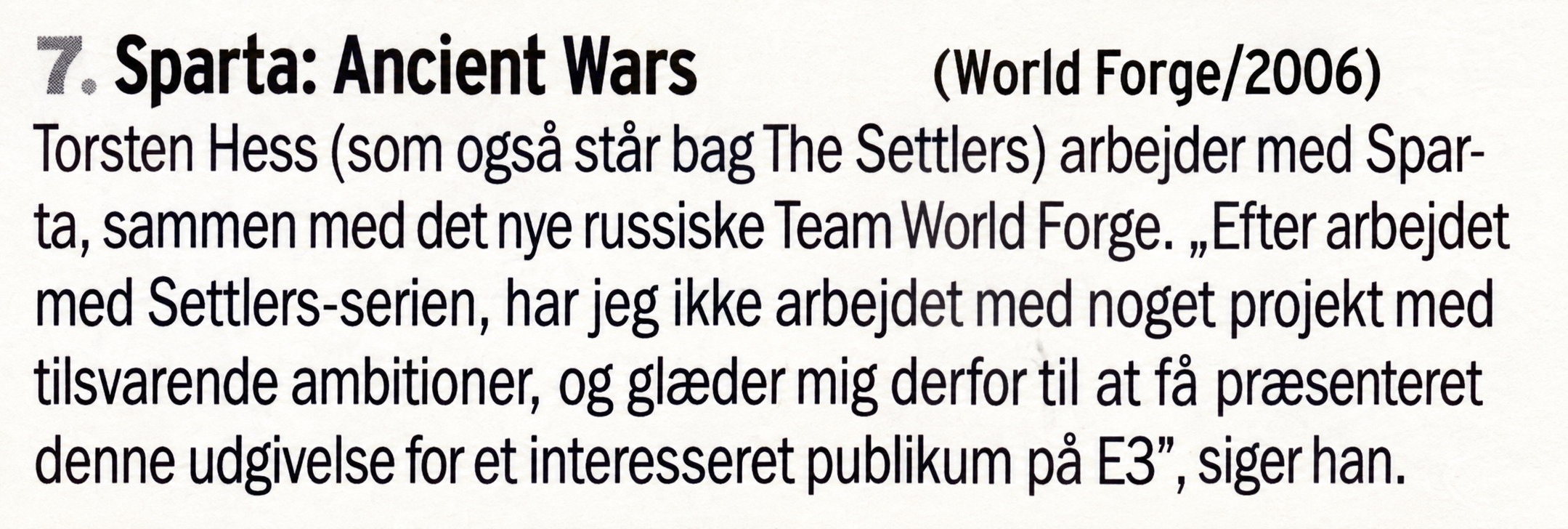
At number seven, the magazine used the development title Sparta: Ancient Wars, while the finished game became better known as Ancient Wars: Sparta. Its paragraph is hardly an editorial assessment. Most of it consists of a quotation from Torsten Hess, described as someone associated with The Settlers, saying that he had not worked on another project with comparable ambition and looked forward to presenting it to an interested audience at E3. In other words, the evidence for including the game was the producer explaining that his own game was ambitious.
The finished release arrived much later than the printed “2006” estimate, reaching PC in April 2007. It allowed players to command Spartans, Persians and Egyptians, customise warriors with collected equipment and fight through historically inspired real-time campaigns. The result earned a GameSpot score of 6.3 and a Metacritic average of 59. Reviews commonly found moments of tactical interest beneath a slow, generic or derivative RTS structure. The historical setting and equipment ideas were not enough to make it a major new competitor to the established giants.
I never played Ancient Wars: Sparta. Its eventual reception makes a low position understandable, but the magazine’s paragraph gives little reason for choosing seventh place. It mainly reports the producer’s confidence in what he intended to show at E3.
8. Rome: Total War – Barbarian Invasion
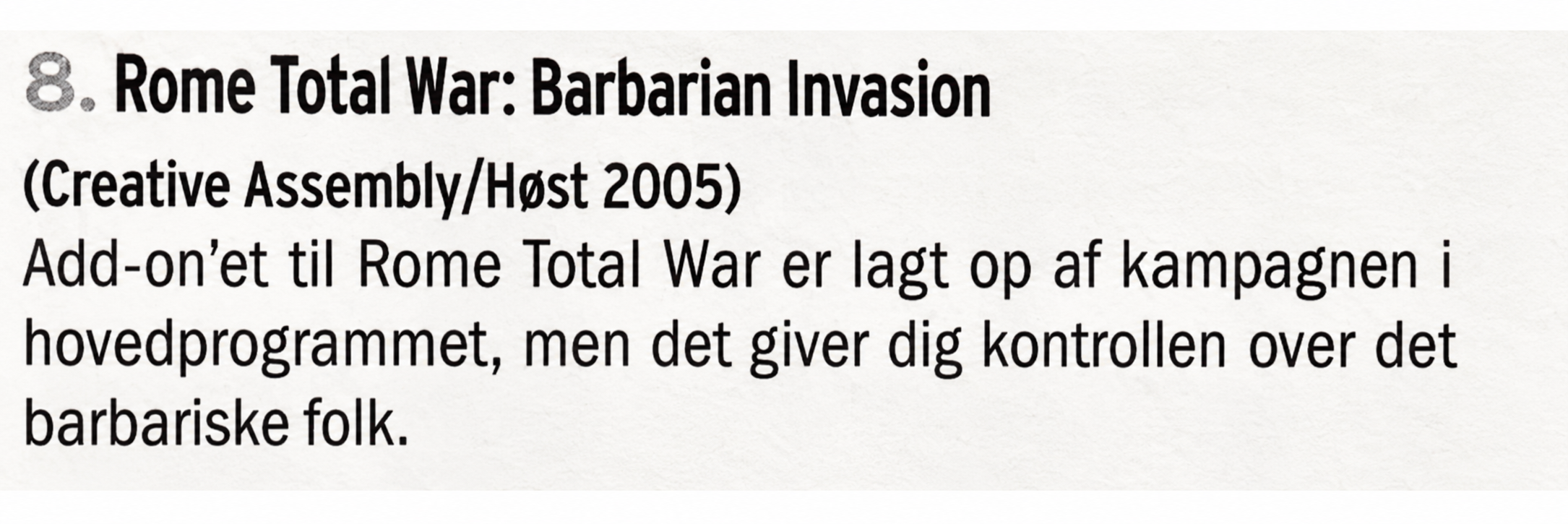
The final position belongs to Rome: Total War – Barbarian Invasion. The magazine gives the expansion one brief description: it follows the main game’s campaign structure but lets the player control the barbarian peoples. After all the ambitious new projects above it, an expansion to an existing game received very little space.
That lack of novelty made it one of the safest products on the page. Rome: Total War had already established an exceptional foundation, and Barbarian Invasion expanded it with a later historical period, new factions, new units, religion, night battles and the challenge of either defending the divided Roman Empire or bringing it down. It launched in September 2005 and earned a Metacritic average of 82, making it the second-highest-rated finished release on the list behind Civilization IV.
I own Rome: Total War and Rome: Total War – Alexander, with Barbarian Invasion as well. I have not played them. This is not my kind of strategy game. Looking at contemporary reception, however, I would still put Barbarian Invasion much higher than eighth. An expansion that actually delivered was left below delayed, troubled and cancelled projects.
Was the Magazine’s Ranking Correct?
If the page is interpreted as a list of the most exciting E3-era prospects, its order is understandable. Age of Empires III had the famous name, the four-page feature and the technological spectacle. Civilization IV carried the authority of Firaxis. Rise & Fall had the Empire Earth connection and an unusual action-strategy hybrid. The lower positions contained more specialised games, an expansion and projects with less visible marketing power.
If the list is interpreted as a prediction of finished quality, hindsight produces a very different order. Aggregate scores are not objective truth, especially when comparing turn-based 4X strategy, real-time warfare, economic city-building and an expansion pack, but they provide a useful record of how the releases were actually received.
| Magazine Rank | Game | What Eventually Happened | Retrospective View |
|---|---|---|---|
| 1 | Age of Empires III | Released October 2005; Metacritic 81 | A strong critical success and understandable headline choice, but its first place was driven heavily by graphics, physics, pedigree and a four-page preview. Personally, I thought it was dog shit. |
| 2 | Civilization IV | Released October 2005; Metacritic 94 | The critical winner and strongest retrospective number one. I own it, but it is not my kind of game. |
| 3 | Rise & Fall: Civilizations at War | Delayed to June 2006; original studio closed; Metacritic 64 | Far too high in hindsight. Its ambition survived more clearly than its polish. I knew of it but never played it. |
| 4 | Anno 1701 | Released late 2006; Metacritic 79 | A fair prediction. It broadly delivered the polished economic strategy experience that had been promised. |
| 5 | The Guild 2 | Released October 2006; Metacritic 61 | Released later than forecast, with bugs and demanding management. I own the Complete Collection and have tried the first two games, but still feel confused. |
| 6 | Heart of Empire: Rome | Repeatedly delayed and cancelled in 2007 | Impossible to rank as a finished game because no finished game was released. The strongest proof that this was a hype list. |
| 7 | Ancient Wars: Sparta | Released April 2007; Metacritic 59 | The weakest reviewed completed game, although the magazine’s paragraph offered almost no evidence beyond developer ambition. |
| 8 | Rome: Total War – Barbarian Invasion | Released September 2005; Metacritic 82 | Much too low by eventual reception. I own it alongside Rome and Alexander, but have not played them. |
Based only on contemporary critical reception, a rough retrospective ordering would place Civilization IV first, Barbarian Invasion second, Age of Empires III third and Anno 1701 fourth. Rise & Fall, The Guild 2 and Ancient Wars: Sparta would occupy the lower positions, while Heart of Empire: Rome could only be listed last as a cancelled project. That reordered list is not my personal ranking—I have not played most of these games—but it demonstrates how little the magazine’s ordering corresponded with eventual results.
Four Pages of Age of Empires III, One Sentence for Barbarian Invasion
The imbalance in coverage may be more revealing than the numbers themselves. Age of Empires III received four pages filled with screenshots, technology explanations and carefully staged examples. Readers were shown water, smoke, snow, physics, formations, Home Cities and alliances. The main feature framed the game as a new age for strategy before the finished version could be tested. Barbarian Invasion, which would become the second-best-reviewed release on the page, received one small sentence.
A major Ensemble Studios sequel supplied plenty for a magazine feature: a famous series, dramatic screenshots, a presentation and new technology that could be demonstrated immediately. The Barbarian Invasion expansion had an existing foundation and a much shorter pitch. I think the difference in coverage helps explain the ordering. It also leaves me questioning how much useful judgement those numbers contained.
The irony is that those four pages now document the wrong question. They ask how realistically smoke moves, whether cannonballs destroy trees and how impressive the water looks. They do not ask whether the new systems preserve the character of Age of Empires, whether the Home City improves long-term strategy or whether the campaign remains memorable after the novelty has faded. For someone like me, who loved the atmosphere and direct design of the original Age of Empires, those missing questions were the important ones.
A Historical Strategy List That Barely Matches My History
This page intersects with my gaming life more than the magazine’s separate list of building games and life simulators, but not by much. Age of Empires is deeply important to me, yet the specific sequel placed at number one is the entry I reject most strongly. Age of Empires I remains one of my top games. Age of Empires II is respected rather than loved: not bad, but more defensive and micro-focused than I ever found equally likeable. Age of Empires III moved so far from the things I valued that its technical achievements could not rescue it.
I own Civilization IV, The Guild: Complete Collection and the Rome: Total War games, but they have very different places in my gaming history. Civilization IV is not my type of game. I have only tried the first two Guild games a few times and still feel lost in them. I have not played Rome, Alexander or Barbarian Invasion. I knew of Rise & Fall without playing it, briefly tried a later Anno and never played Ancient Wars: Sparta.
That is why this page feels strange to me. Some of the games are now in my collection, but collecting them did not turn the editors’ excitement into my own. The game at number one is the one I reject most strongly, and the first two Guild games still leave me wondering what I am meant to do.
The Preview I Would Have Questioned
I would have wanted more about how these games actually played. Four pages could explain the new economy and Home City in detail, and ask whether they made Age of Empires III a better game to spend time with. A few more lines could have explained why Barbarian Invasion belonged below projects that had barely been demonstrated. The answers would have been more interesting to me than another description of smoke and water.
The finished games gave the ranking plenty to answer for: Civilization IV’s 94, a respected expansion in last place, several missed release windows and one cancellation. My own experience adds a much less flattering verdict on the first choice. I have a copy of Age of Empires III in my collection now. I still would not put it anywhere near first place.
Magazine source: Dansk PC Gaming World, issue 7/2005. Magazine photographs: Kiba Snowpaw. The eight clippings have been restored with AI for readability. Untouched original photographs: 1, 2, 3, 4, 5, 6, 7, 8. Gameplay image credits appear beneath the individual screenshots.