
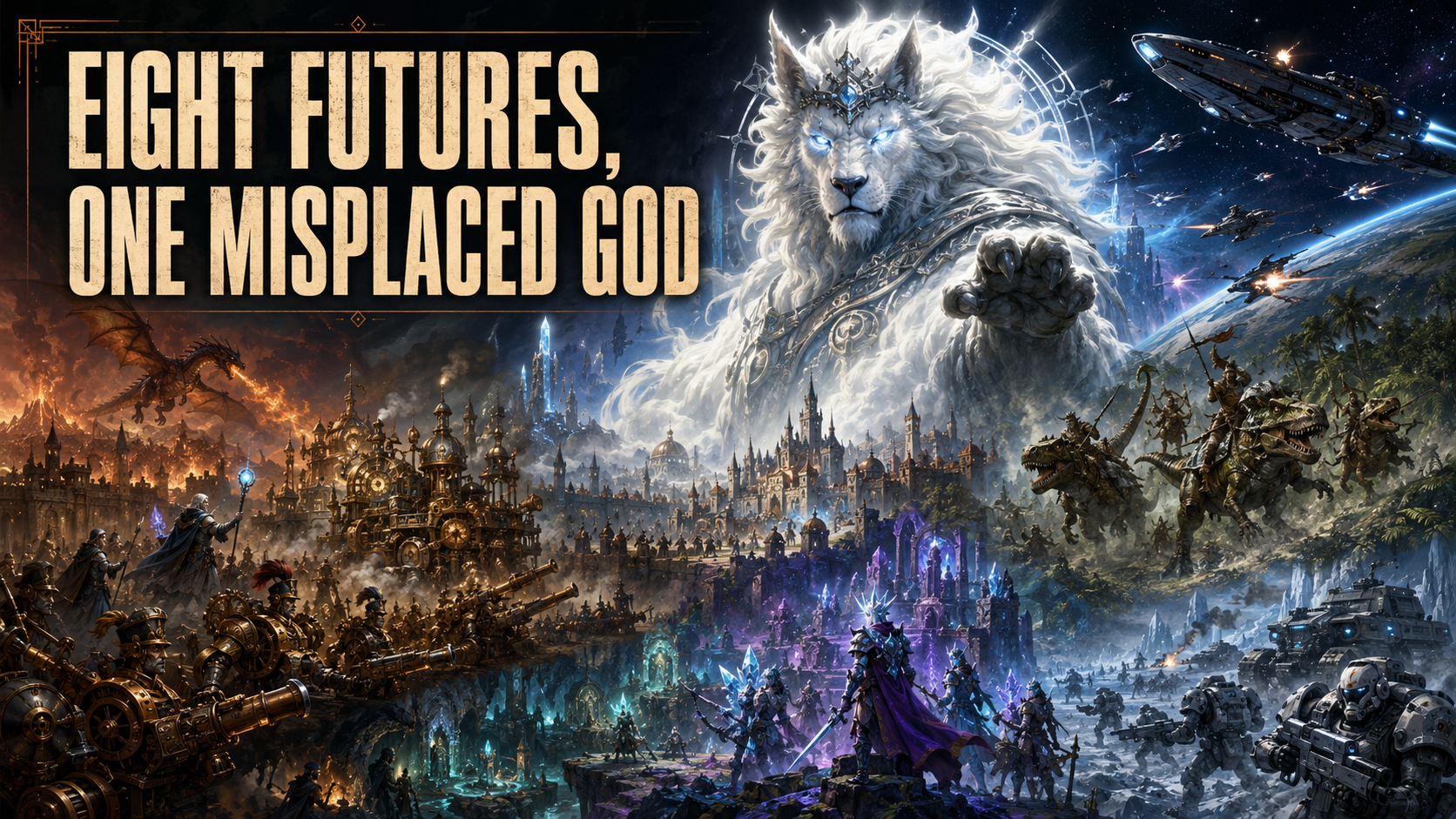
Dansk PC Gaming World issue 7/2005 put eight games in its “Fantasy & Science Fiction” strategy ranking. There were space fleets, dinosaurs, fantasy armies, role-playing elements and a giant creature helping you play god. Looking at the list now, I understand why it sounded exciting. I also know how quickly some of these games can lose me.
I played Star Wars: Empire at War with my friend Shilka, tried Heroes of Might & Magic V a little, and really liked Black & White 2. I cannot remember whether I ever played SpellForce 2. Rise of Legends, ParaWorld and Dragonshard never got played. I tried one Warhammer 40,000 game, but I do not think it was Winter Assault.
For me, the strongest game here is Black & White 2. I never completed it, and I found it a little too hard. Make it more user friendly, push its good and evil paths much further, and give its creatures more variety and meaning, and I think it could be the best game ever.
Eight games, eight forecasts
This was a preview ranking. The printed positions judged games that were still coming, rather than eight finished campaigns the magazine had already reviewed. That matters when a short paragraph promises something extraordinary without explaining how it will work.
| Rank and game | Printed release window | Original PC release period |
|---|---|---|
| 1. SpellForce 2: Shadow Wars | Q4 2005 | Spring 2006 |
| 2. Star Wars: Empire at War | Q4 2005 | February 2006 |
| 3. Black & White 2 | Q4 2005 | October 2005 |
| 4. Rise of Legends | Q1 2006 | May 2006 |
| 5. ParaWorld | Q4 2005 | September 2006 |
| 6. Heroes of Might & Magic V | Q1 2006 | May 2006 |
| 7. Dragonshard | Q4 2005 | Autumn 2005 |
| 8. Dawn of War: Winter Assault | Q3 2005 | September 2005 |
Regional launch dates varied; these are the original 2005–2006 PC releases, rather than later storefront release dates. Five of the eight games arrived after the quarter printed in the magazine. ParaWorld moved from late 2005 to September 2006. The first-place SpellForce 2 also became a 2006 game.
A delay does not tell me whether a game is good. It does show how much uncertainty sat behind this confident-looking list. A numbered preview can make excitement look settled when the release schedule alone is still moving.
1. SpellForce 2: a hybrid I cannot place in my memory
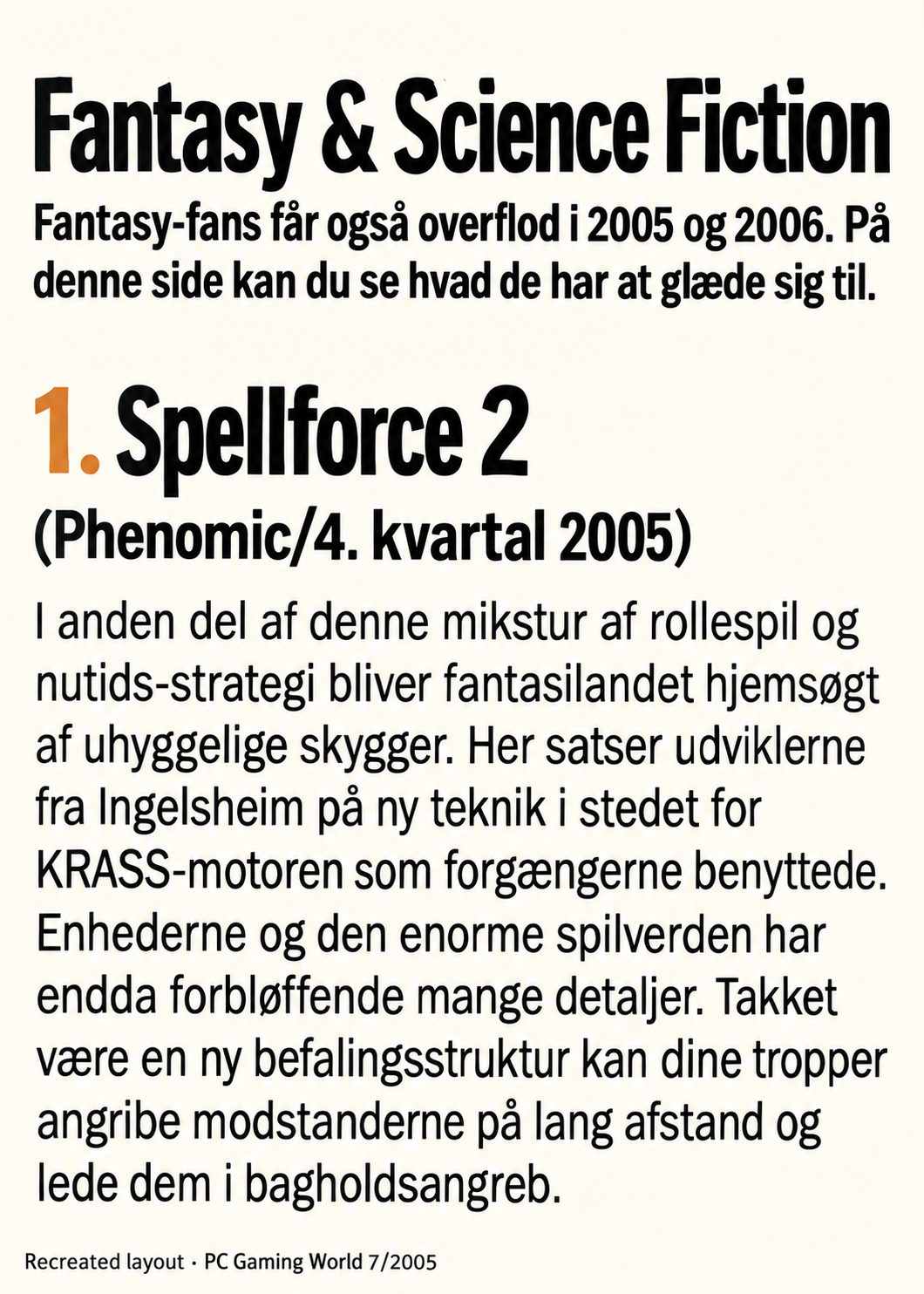
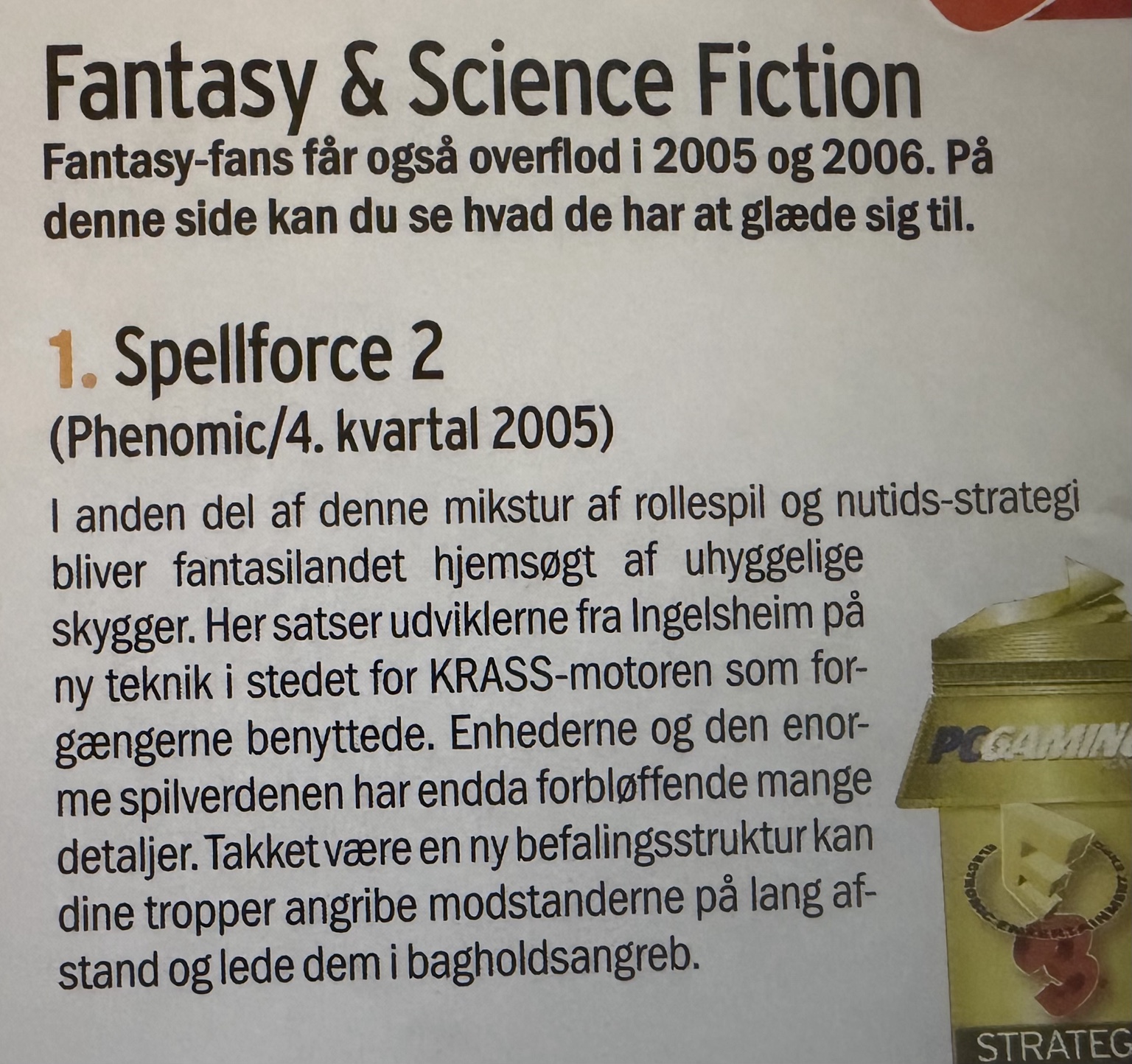
The magazine put SpellForce 2 first. Its paragraph describes a mixture of role-playing and real-time strategy, then spends much of its space on new technology, a detailed world and a revised command system. At least the hybrid identity comes through: heroes and their development share a game with resources, buildings and armies.
The official Anniversary Edition description still identifies that RPG/RTS mixture as the series’ core. It packages Shadow Wars with Dragon Storm. The original Shadow Wars received a PC Metascore of 80, so the magazine’s first choice became a well-received game.
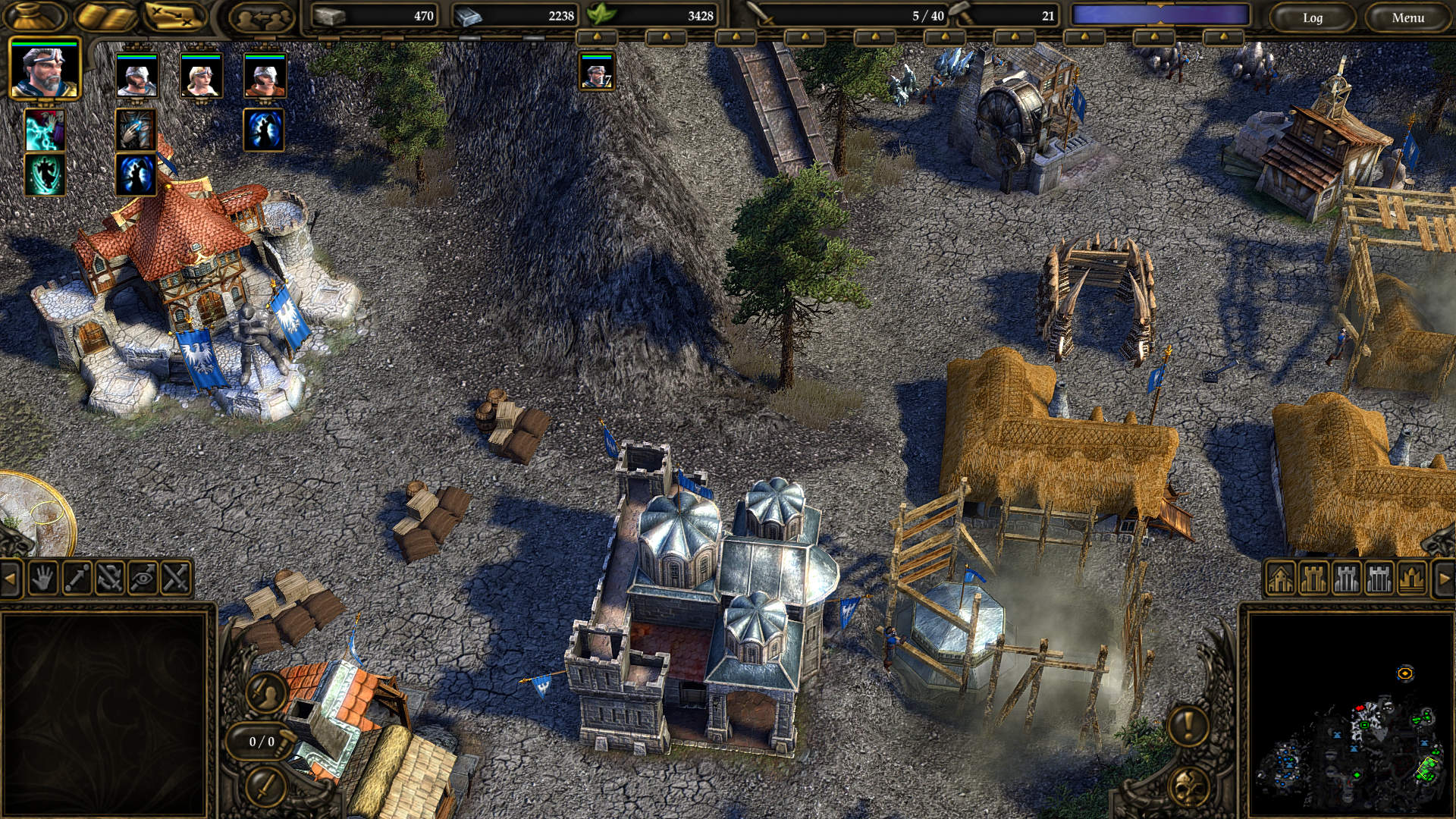
I have SpellForce games on Steam, but I cannot remember whether I ever played SpellForce 2.
2. Empire at War: Shilka liked this sort of game
I played Star Wars: Empire at War with Shilka. He likes this kind of game. I usually find it too slow. If I can fall asleep while playing, it is way too slow for me. That is why I more or less leave these kinds of strategy games alone.
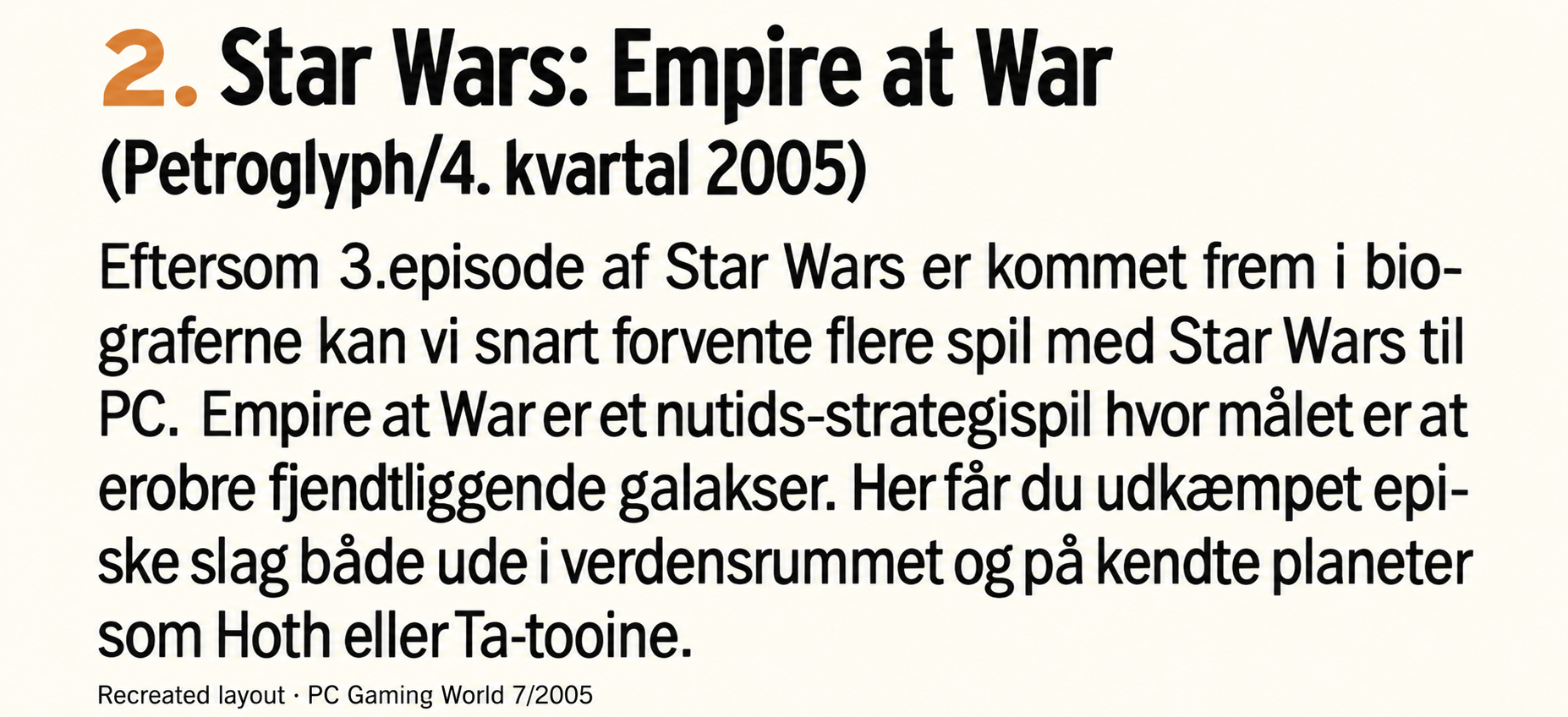
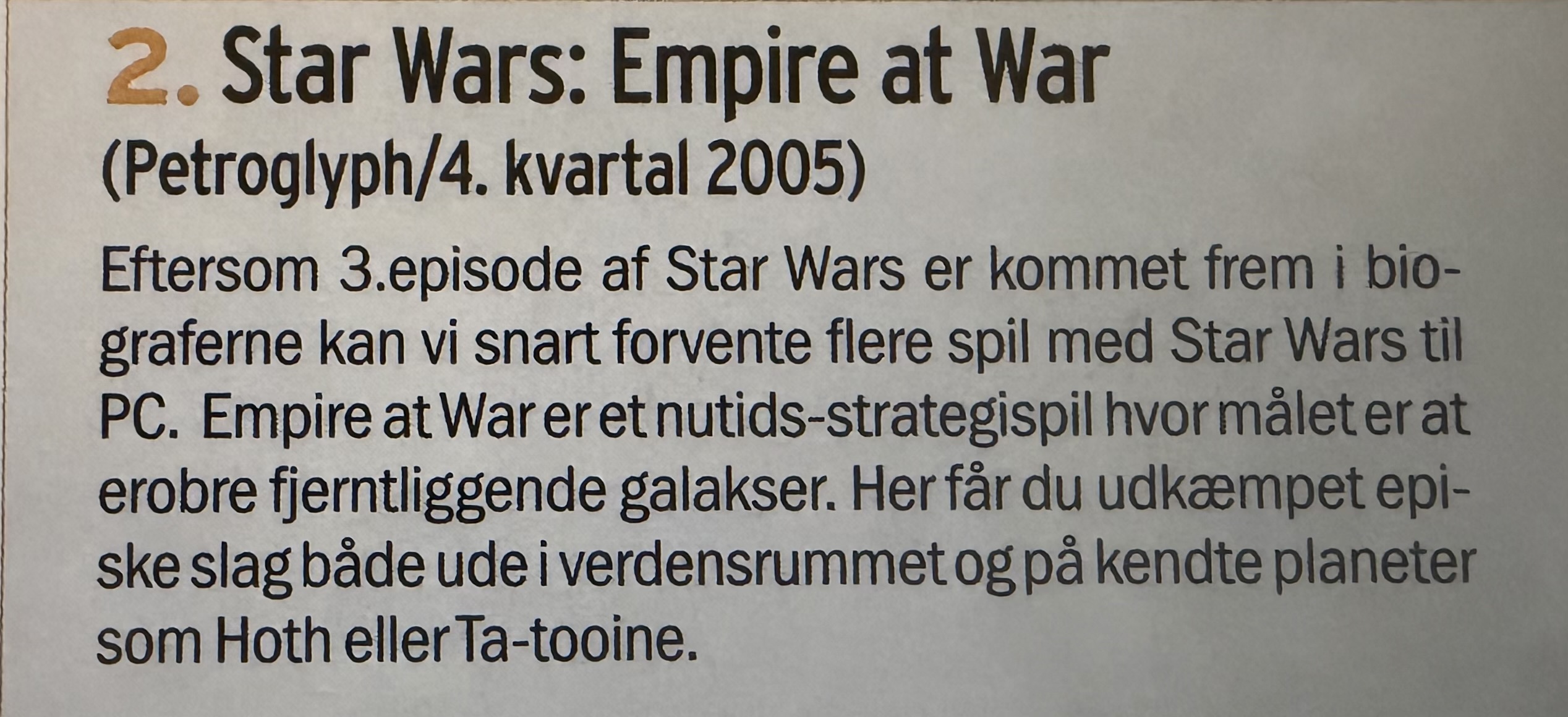
The magazine leads with Episode III having reached cinemas, then offers space battles and familiar planets such as Hoth and Tatooine. The licence does most of the selling. The interesting design question is how commanding a galaxy, fighting over a planet and directing a fleet fit together.
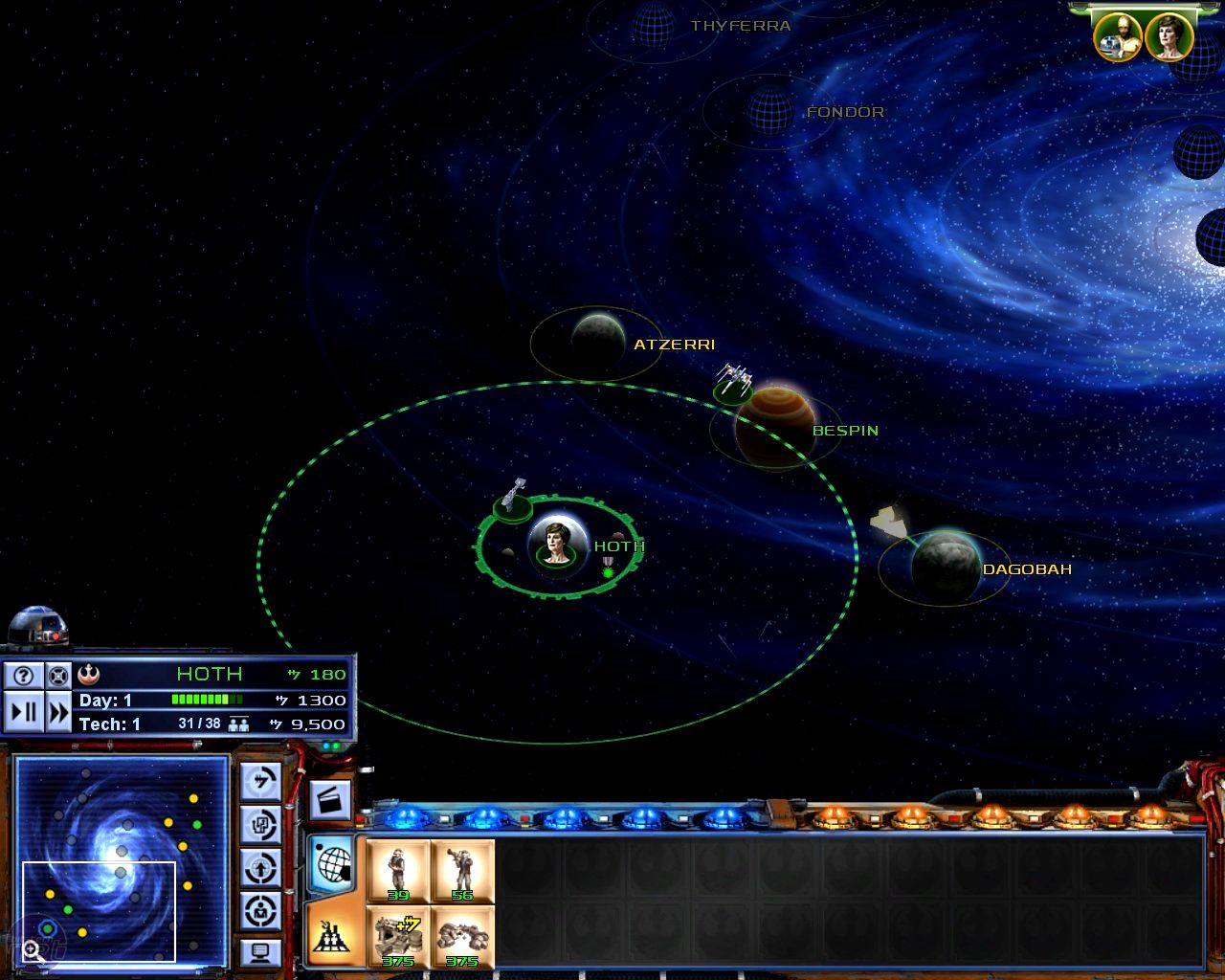
Petroglyph’s game reached PC in February 2006 and received a Metascore of 79. Its separate strategic and tactical layers gave the Star Wars setting something substantial to do. They still asked for a pace and patience that did not suit me.
3. Black & White 2: the one I really liked
I really like Black & White 2. I never finished it. My main problem is that it is a little too hard, and I wanted the experience to be more user friendly. The idea is so good that I kept wanting a version that made it easier to enjoy everything it offered.
Its combination makes much more sense to me as a god game and city-building hybrid than as another fantasy army game. You build settlements, look after their inhabitants, train a giant creature and decide how to gain control. An impressive city can attract people peacefully; an army can take territory by force. That is already a much more interesting starting point than simply choosing an army colour.
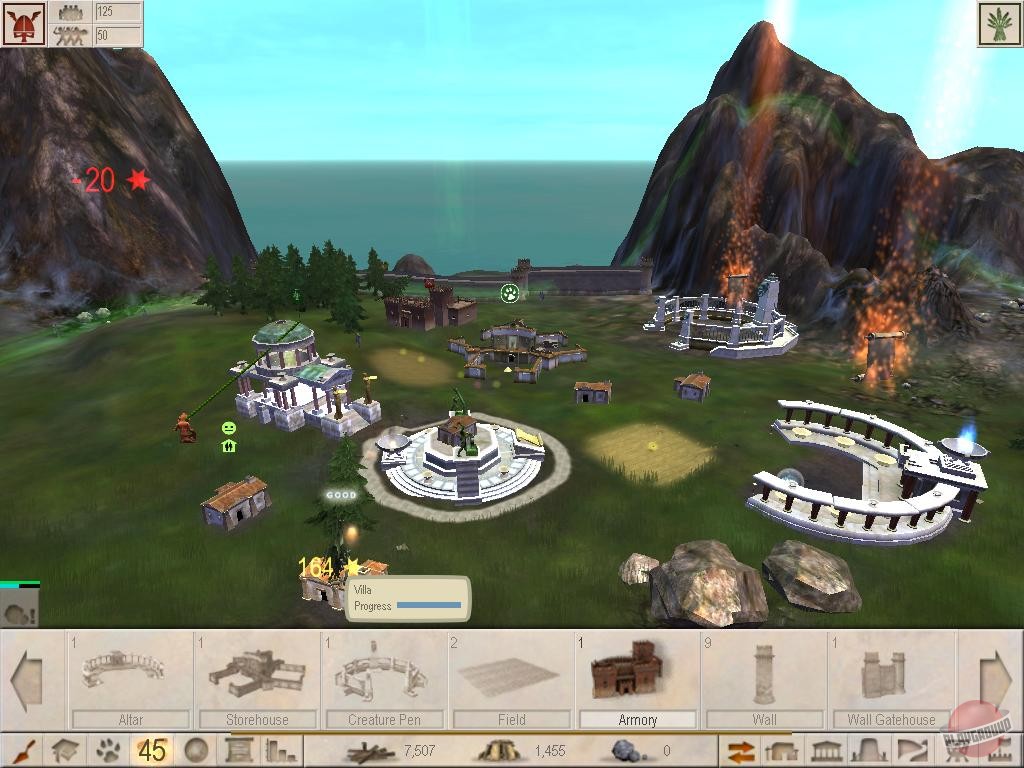
Here is the beginning of my own playthrough, Part I: Black & White 2! Will the Ice Wolf Choose Good or Evil?
The magazine introduces Peter Molyneux through his creative ideas and unreliable release timing. Then it promises “handlingsfrihed som aldrig før er set”: freedom of action never seen before, in my translation. Its explanation amounts to choosing good or evil through the treatment and recruitment of followers.

That is an enormous claim for such a thin explanation. The original Windows manual describes defined objectives, a limited area of divine influence, creature roles and a reward-and-punishment system. Those are interesting systems with rules and boundaries. “Freedom never seen before” explains none of them. The magazine oversells the scale of the freedom while barely explaining what makes the game worth playing.
I wanted good and evil to go all the way
The morality system is the part I wanted pushed much harder. If I choose evil, I want to become the devil himself. If I choose good, I want to be a pink little angel casting flowers over my people. I like the direction Black & White 2 takes, but I want both ends to be much more extreme.
I also want those choices to change how the world works. An evil god’s army could be stronger because that society is built around killing and domination. A good god could have better farmers and stronger civilian production because looking after people actually pays off. Then I would have a real choice about the sort of civilisation I wanted to build.
| The path I would want | The advantage I would give it |
|---|---|
| Evil | Stronger armies and a society built for aggression and conquest. |
| Good | Better farming and civilian production, with prosperity rewarding the care of followers. |
Those are the changes I wanted. The game already gives you attraction and conquest, along with good and evil behaviour. I wanted a deeper balance between the two paths, with advantages that made morality matter to the economy and the battlefield. Give me a reason to commit, beyond how frightening or beautiful my world looks.
Creature choice should mean more
I wanted more creatures as well. A creature should have a distinct starting temperament. I would make a cow gentler at the beginning, so turning it evil would take more work. A wolf or tiger could begin more aggressive, giving me a different training challenge when I wanted to make it good.
I would still want the freedom to take any creature in either direction. The point is that the choice should affect the journey. Turning a gentle creature into a monster should feel different from teaching an aggressive one to protect people.
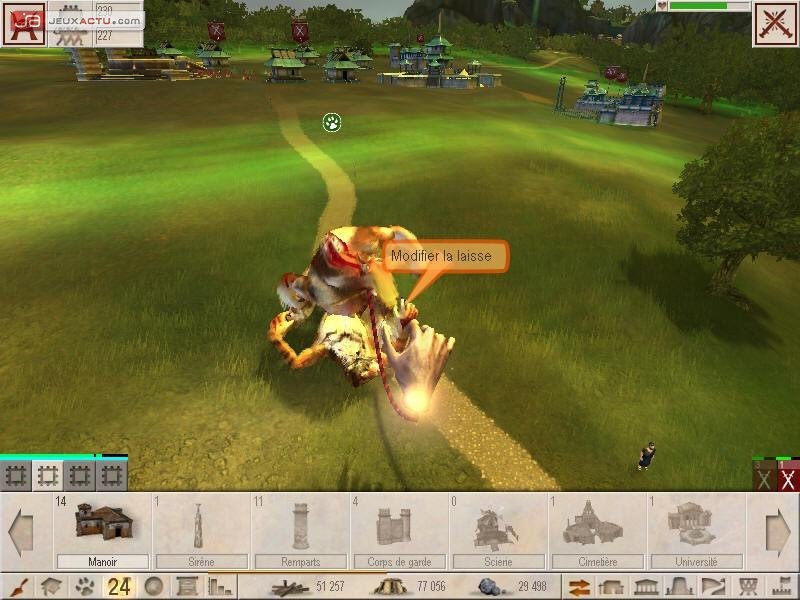
The existing training system already lets you encourage and discourage behaviour, and assign roles such as building, gathering or fighting. I wanted that foundation to develop into a much richer relationship with a wider range of creatures. I know I am asking a lot of a game from 2005, especially when it comes to independent creature behaviour. I still wanted more.
The game’s PC Metascore is 75. That is lower than several games here that I never played. For me, it remains the one with the strongest idea. With a little less difficulty, better usability and those more extreme paths, I think it could have been my best game ever.
My Black & White 2 gameplay, Part V:
4. Rise of Legends: the preview sent me to page 20
I never played Rise of Legends. Its ranking entry scarcely describes it at all; it sends readers to the preview on page 20. That gives it another place in the issue to make its case, while Black & White 2 gets its grand promise compressed into the paragraph on this page.
Big Huge Games moved from the historical setting of Rise of Nations into a fantasy world with three very different factions: the technological Vinci, magical Alin and alien-powered Cuotl. The machines and magic gave the game a much more distinctive appearance than another row of familiar historical armies.
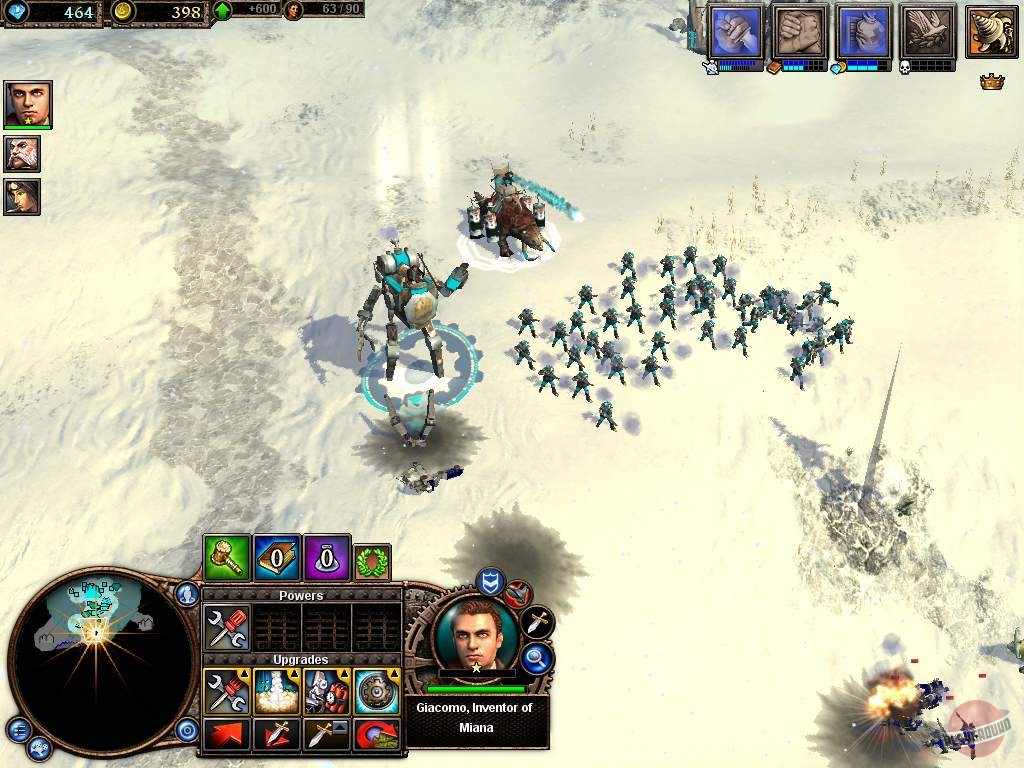
It released in May 2006 and received a PC Metascore of 84. That was one of the stronger critical results on this page, above both the first-place SpellForce 2 and my favourite, Black & White 2.

5. ParaWorld: dinosaurs looked cool
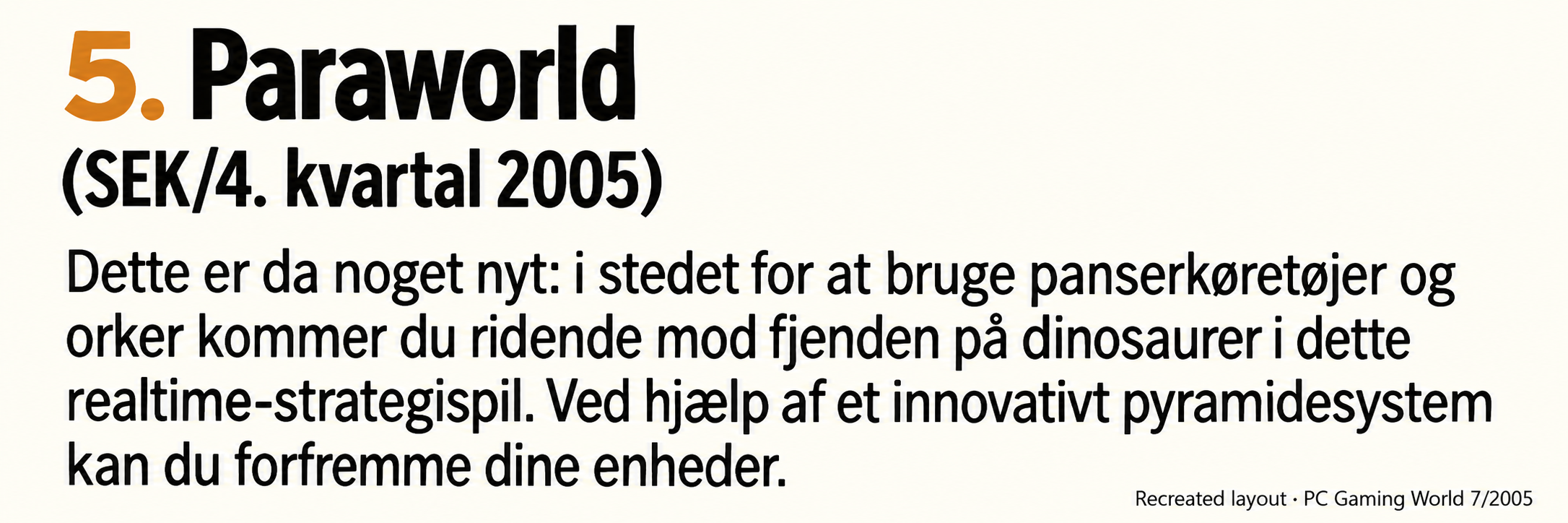
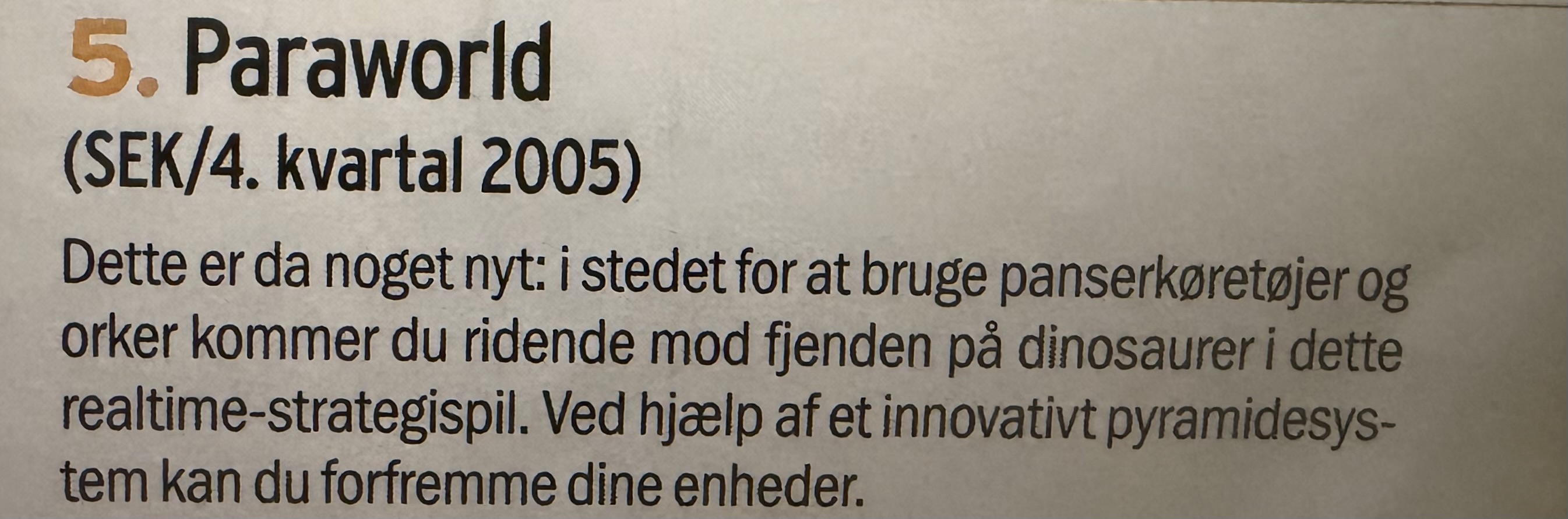
I never played ParaWorld, but it looks cool. Riding dinosaurs into battle is an easy idea to like. The magazine’s paragraph gets straight to that hook, then mentions a pyramid system for promoting units.
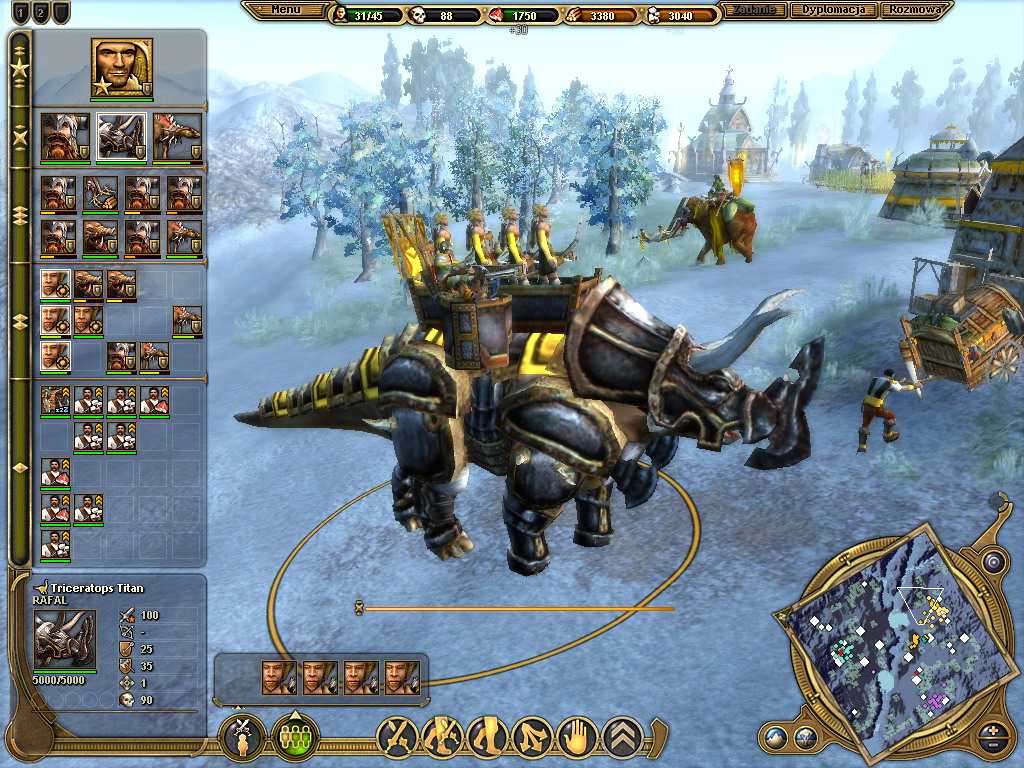
That system is more interesting than the dinosaur pitch alone. The Army Controller puts the force into limited slots at different levels, so promotion and army composition compete for space. The impressive creature on screen still has to fit into a controlled army structure.
The finished game arrived in September 2006 and received a Metascore of 71. The commercial outcome was worse than the publisher expected. In January 2007, Sunflowers president Adi Boiko said it was “lagging far behind the sales expectations.” SEK closed, and the announced booster pack’s release was uncertain at that point. The dinosaur idea did not give the studio a secure future.
6. Heroes V: it becomes boring and grindy too quickly
I have played Heroes of Might & Magic V a little. I like the game and think it is cool, but I have never really been a fan of the experience as a whole. It gets boring and grindy too quickly for me, and I also find it hard.
Exploring a colourful map, collecting resources, developing a town and recruiting creatures can look very inviting. The game keeps demanding more planning as the army and map develop. I lose interest when that steady accumulation becomes a job.
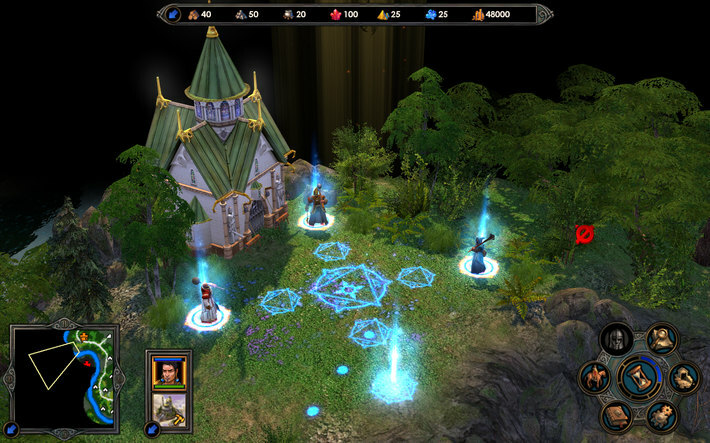
The magazine mentions turn-based battles, fantasy creatures and very good 3D graphics. That covers what the page looks like much better than what a long campaign feels like. The graphics do not tell me how much patience a game will demand.
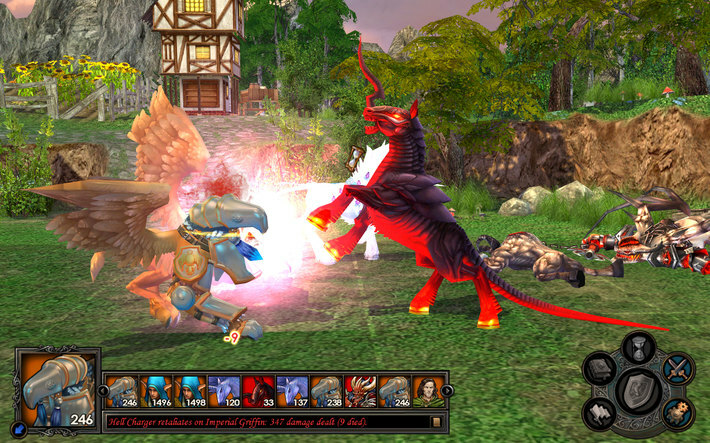
Nival’s game released in May 2006 and received a PC Metascore of 77. I own it physically; my catalogue contains two copies with Gold Edition cover art.
7. Dragonshard: interesting, but never played
I never played Dragonshard. It looks interesting. The magazine gives it one sentence about mixing role-playing with real-time strategy, and an artefact that can change Eberron’s fate.
Liquid Entertainment’s Dungeons & Dragons game combines surface-level RTS activity with underground adventuring. Armies and construction share the game with characters, equipment and experience. That split between the surface and the dungeon is a much clearer explanation of the hybrid than the magazine’s sentence gives me.
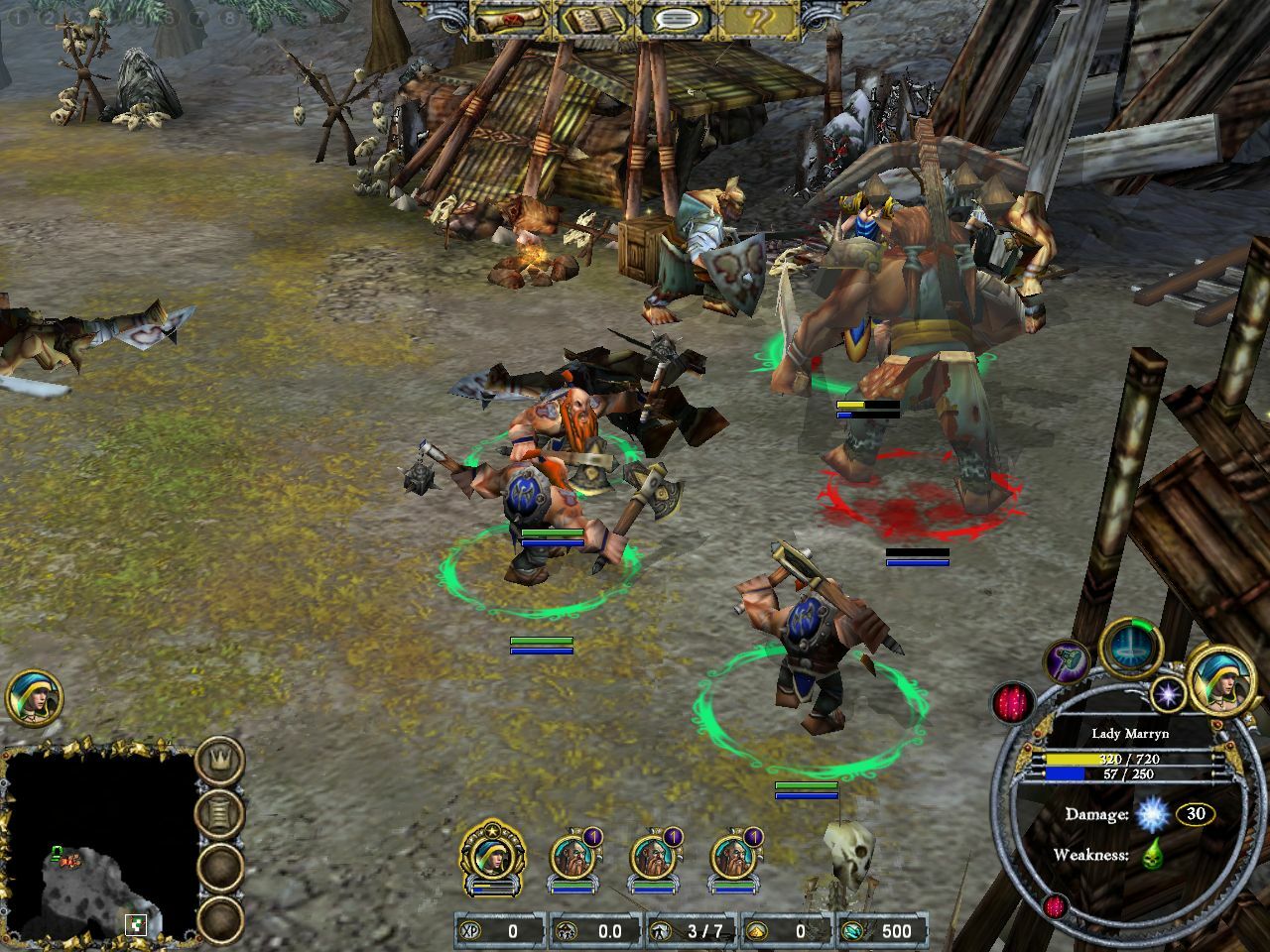
Its PC Metascore of 80 puts it level with the first-place SpellForce 2 in this particular comparison. Seventh place certainly was not a prediction that it would become a poor game. It was a game getting very little explanation on this ranking page.
8. Winter Assault: the expansion at the bottom
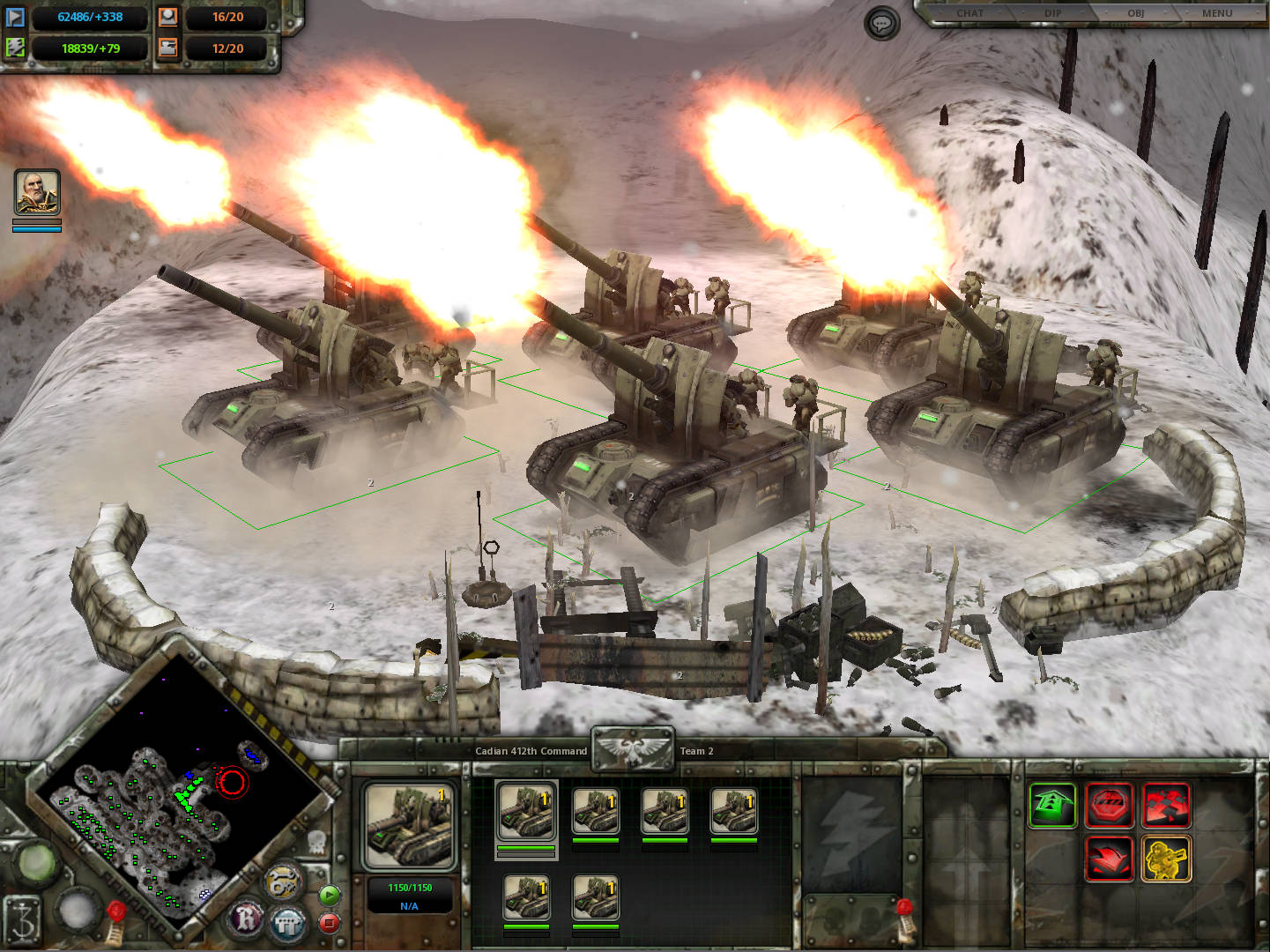
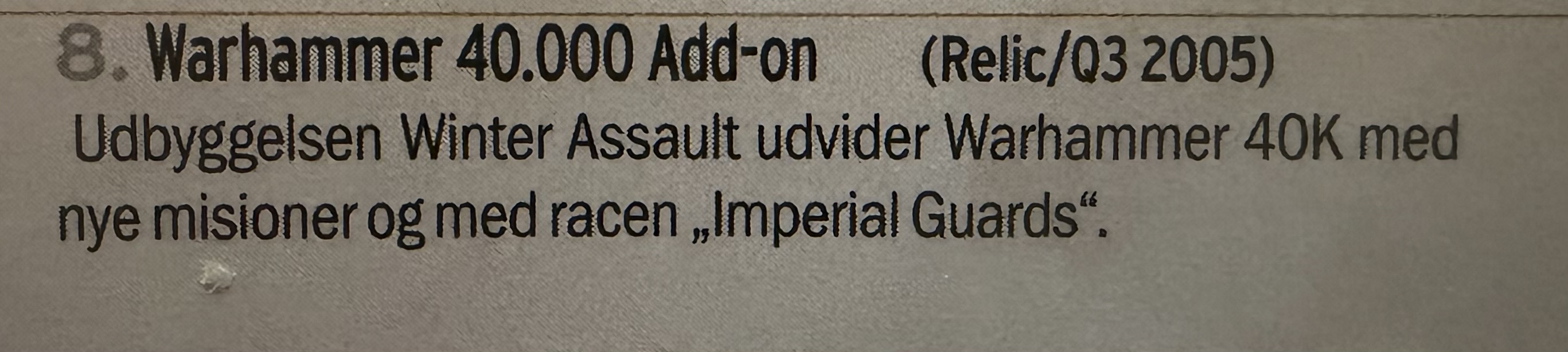
The last entry is Warhammer 40,000: Dawn of War – Winter Assault, an expansion rather than a new series starting from scratch. The magazine mentions new missions and the Imperial Guard. That is a small description for what became the highest-scoring entry in this comparison.
It released in September 2005 and received a PC Metascore of 85. That puts the eighth-place expansion above every full game in this list on Metacritic’s original PC critic aggregate.
I own a handful of Warhammer 40,000 games on Steam because I picked up a cheap bundle once. I tried one game and never bothered playing the others. I do not think the one I tried was Winter Assault. My physical catalogue also contains Dawn of War, with a Game of the Year cover.
The magazine’s order and the critic scores
These are Metacritic’s aggregates for the original PC games, checked on 14 October 2026. They combine different sets of reviews, and Winter Assault is an expansion. They give a reception comparison, rather than a new verdict on which game I should enjoy.
| Magazine rank and game | PC Metascore / 100 | My experience |
|---|---|---|
| 1. SpellForce 2 | 80 | Cannot remember whether I played it. |
| 2. Empire at War | 79 | Played with Shilka; too slow for me. |
| 3. Black & White 2 | 75 | Really liked it; unfinished and a little too hard. |
| 4. Rise of Legends | 84 | Never played. |
| 5. ParaWorld | 71 | Never played; looks cool. |
| 6. Heroes V | 77 | Played a little; boring, grindy and hard too quickly. |
| 7. Dragonshard | 80 | Never played; looks interesting. |
| 8. Winter Assault | 85 | Tried an unidentified Warhammer 40,000 game, probably a different one. |
The game ranked eighth finished with the highest PC critic aggregate; my favourite here scored 75. That is why I will not treat the magazine’s anticipation, a review aggregate and my own enjoyment as interchangeable. Neither a big licence nor a high score can make a slow or grindy game hold my attention.
My two Black & White 2 copies, and what the catalogue leaves out
I own Black & White 2 twice. Only one copy appears in this catalogue because the other is in the pile I need to sell. I moved the manual from the spare to the copy I am keeping, so that copy does have a manual now. The disc has some light scratches, but they have not been a problem.
I also own the original Black & White, shown in the catalogue as an EA Classics release. Black & White 2 has the Danish PC DVD cover.
The 2005 Windows manual for Black & White 2 describes a disc installation using the serial printed on the manual, followed by starting the game with the disc. It describes no compulsory online-account activation. Having the manual with the copy I keep is therefore a worthwhile part of putting the package together.
My second-hand collecting has included a main group of 279 games for 1,906 DKK, another 16 mint-condition games for 129 DKK, and a group of The Sims games for 382 DKK. The first two groups total 295 games, with the Sims group bought separately.
| Purchase group | Original amount | Approx. USD | Approx. EUR | Approx. GBP |
|---|---|---|---|---|
| Main group: 279 games | 1,906 DKK | US$295.57 | €254.96 | £217.99 |
| Sixteen mint-condition games | 129 DKK | US$20.00 | €17.26 | £14.75 |
| The Sims group | 382 DKK | US$59.24 | €51.10 | £43.69 |
| Total of the three groups | 2,417 DKK | US$374.82 | €323.31 | £276.43 |
Conversions use the 17 August 2026 rates reproduced from Danmarks Nationalbank: US$1 = 6.4485 DKK, €1 = 7.4758 DKK and £1 = 8.7436 DKK. This is a stated conversion reference, not a claim about the date of every purchase or foreign retail prices.
An account licence changes what I can do with a game
A Steam or Ubisoft entry in my physical catalogue identifies a restriction on a boxed edition. It does not turn the box into a digital purchase, prove that I redeemed its key, or add another game to my Steam account. A disc and its activation requirements have to be considered together.
My Steam games come under Valve’s Subscriber Agreement, which describes the software as licensed and generally prohibits transferring accounts and subscriptions except where Valve expressly permits it. Ordinary offline play after activation does not give me a freely transferable, account-independent edition.
I think we should stop buying account-locked digital games. The platform keeps control, while the customer loses the ordinary ability to pass on a paid copy. That corporate greed for control deserves criticism even when the game itself is good. I own Steam games; I still dislike the terms under which the platform lets me use them.
Official alternatives exist for several games here. They need to be named accurately, because buying an installer through an account is different from requiring that account to activate and play the installed single-player game.
| Game | Verified official account-independent alternative |
|---|---|
| SpellForce 2 | Anniversary Edition on GOG: Shadow Wars and Dragon Storm; DRM-free offline installation and play. |
| Heroes V | GOG’s bundle: the base game, Hammers of Fate and Tribes of the East; DRM-free offline installation and play. |
| Dawn of War and Winter Assault | The newer Definitive Edition on GOG includes the original campaign and all three expansions. Single-player is DRM-free; GOG Galaxy is required for multiplayer. |
GOG supplies offline installers for these single-player games, with Galaxy optional for that use. The Dawn of War alternative is a newer, revised edition, and its multiplayer has the separate Galaxy requirement. It is possible to offer a campaign that works independently of a compulsory account.
For Black & White and its sequel, GOG’s pages are still Dreamlist requests for the original and for Black & White 2, rather than ordinary game-store listings. That is a poor situation for a series with ideas I still want to see developed.
Shilka once brought Joint Task Force home from the USA on a stack of CDs. When he later got the DVD edition, he gave me the CDs. I no longer have them. That is the sort of exchange I remember: a friend passing a physical game to another friend. I wrote more about that game in my look at the magazine’s military-strategy ranking.
We still control the next purchase, preorder or bundle we pay for. If we keep paying companies for restrictions we object to, we keep financing those restrictions. An official release that works without compulsory account binding is a real alternative. Paying for everything again should never be the price of getting control over a collection.