
I love The Elder Scrolls IV: Oblivion. I have completed it hundreds of times, going back to the Xbox 360 version when it came out. I also own it on Steam. This review comes from returning to my original PC disc, with a lot of mods installed through Vortex under Wine.
Cyrodiil is enormous, but walking from one city to another too often leaves me feeling that very little is happening. I love the lore, but parts of the journey are boring.
For this playthrough I mostly followed the main quest. I did some guild missions, got expelled from the Mages Guild, and then concentrated on finishing the story. I completed this return on 4 October 2026.
My original disc copy
| Detail | Recorded information |
|---|---|
| Edition played | Original PC retail base game, without the official expansions; modded under Wine |
| Bought | 21 July 2026, at Kræftens Bekæmpelse in Denmark |
| Paid | DKK 6.67 — approximately US$1.02 / €0.89 / £0.76 |
| Condition / CLZ index | Good / #315 |
| Completed | 4 October 2026 |
| CLZ value estimate | DKK 143.42 — approximately US$21.91 / €19.19 / £16.35 |
The valuation is CLZ’s recorded estimate. Currency conversions use ECB reference rates for 21 July 2026, the purchase date, rounded to two decimals.
My disc-version gameplay
The playlist contains eight recordings from my modded original-game playthrough. The sessions are listed below in their playlist order.
Watch my Oblivion disc playthrough — all eight recordings
- Recording 1 — 2:29:31. Play here · Open on YouTube
- Recording 2 — 3:42. Play here · Open on YouTube
- Recording 3 — 2:08:49. Play here · Open on YouTube
- Recording 4 — 3:24:20. Play here · Open on YouTube
- Recording 5 — 1:48:49. Play here · Open on YouTube
- Recording 6 — 1:05:12. Play here · Open on YouTube
- Recording 7 — 51:51. Play here · Open on YouTube
- Recording 8 — 1:29:25. Play here · Open on YouTube
How Bethesda built the next Elder Scrolls
Oblivion followed Arena, Daggerfall and Morrowind as the fourth main Elder Scrolls game. Work began in 2002, after Morrowind. Bethesda’s 22 October 2004 announcement described a project intended to bring the series’ freedom into a new generation of hardware: a large explorable province, fully spoken dialogue and people with routines of their own.
The setting moved to Cyrodiil, the Imperial province at the heart of Tamriel. Its central crisis was already present in that announcement: the Emperor is assassinated, the throne is left without its recognised heir, and gates to Oblivion begin opening. Finding the surviving heir gives the player a route through a world they can otherwise explore at their own pace.
Producer Gavin Carter told bit-tech in November 2005 that PC and Xbox 360 development had proceeded together from the start. The technology combined Gamebryo with Havok physics, both credited in the original game’s manual.
Carter described physics, AI, loading, audio and rendering work being distributed across threads, and environmental details such as moving grass and changing weather.
The game missed the Xbox 360 launch window. In a statement reproduced alongside the interview, Pete Hines said the team still needed time to optimise, test and balance it. Bethesda announced it had gone gold on 2 March 2006, with PC and Xbox 360 shipping beginning on 20 March. The European release followed on 24 March; the PlayStation 3 version arrived in 2007.
The launch was a major commercial success. In its 10 April 2006 press release, Bethesda reported more than 1.7 million copies shipped across PC and Xbox 360.
A huge province can still feel empty
The size is part of the appeal, but it is also my main problem with Oblivion. I can set off between cities and spend too much of that journey waiting for something interesting to happen. There is a lot of land. That does not automatically give me a lot to care about while crossing it.
Bethesda’s answer to making its inhabitants more convincing was Radiant AI. The 2004 announcement described characters deciding where to eat, sleeping, visiting places and reacting according to their individual traits.
This is a recurring problem I have with large open-world RPGs. The walk between cities needs to hold my attention too. It should not just be the distance I have to cover before the next mission.
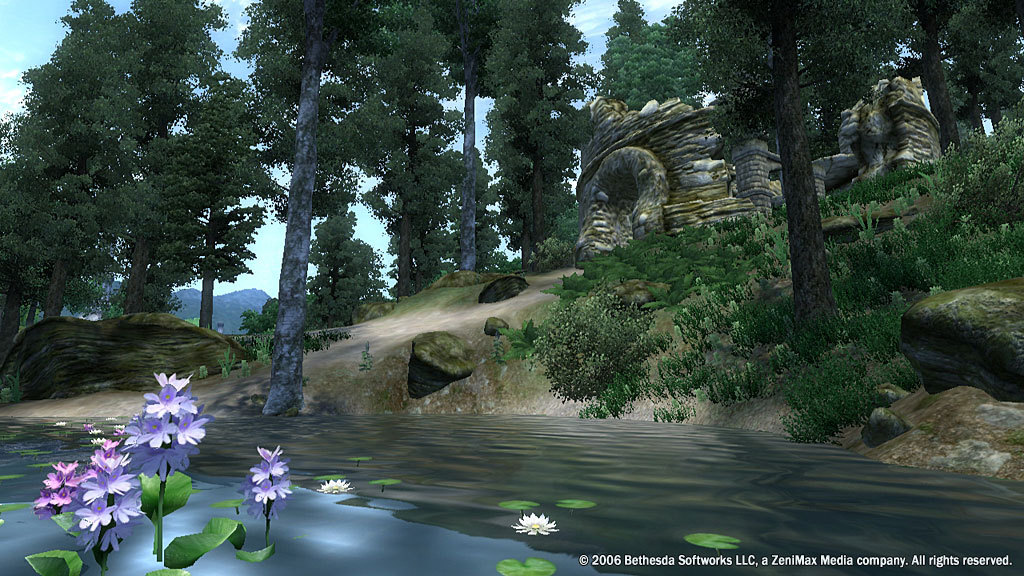
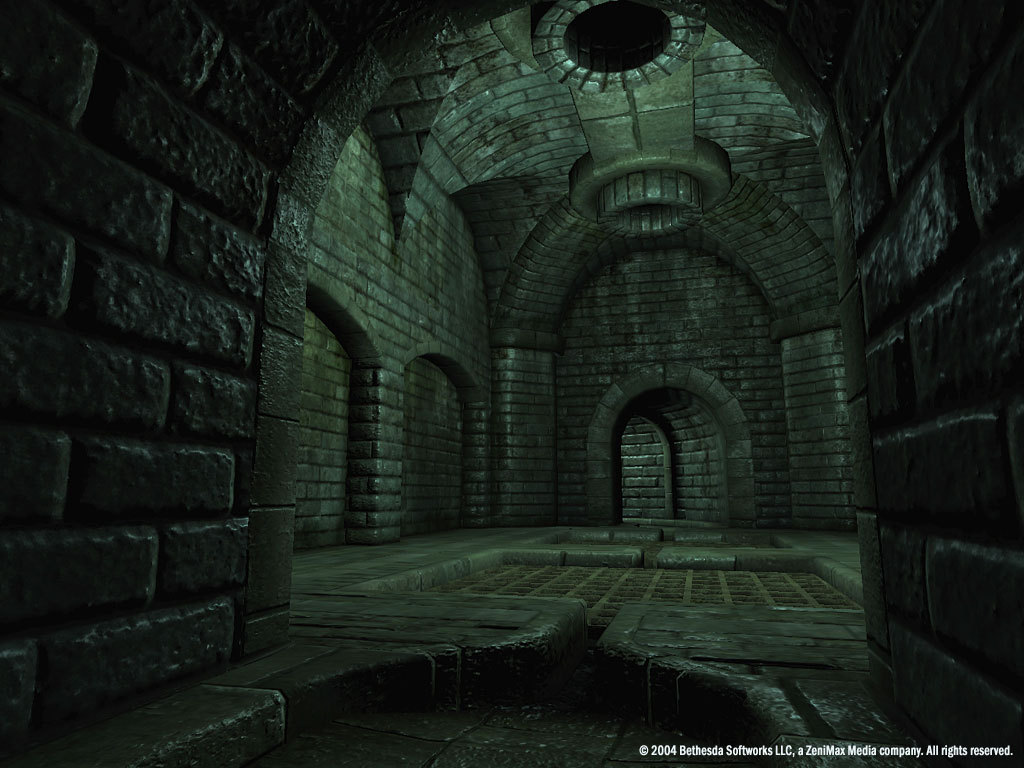
There is plenty of content once you start pursuing it. The Fighters Guild, Mages Guild, Thieves Guild and Dark Brotherhood have their own questlines, alongside the Arena and the other side quests. In his E3 interview, Todd Howard described the aim of giving each major guild a complete story and its own rise through the ranks.
I love the lore; the ending happens too quickly
The history and lore are a large part of why I keep returning. There is a whole world behind the immediate mission: the Empire, the Septim line, the Daedric Princes and the religious importance of the Dragonfires.
You begin as a prisoner, meet Emperor Uriel Septim VII, and become involved in finding and protecting Martin. Jauffre and the Blades help tie that search to the wider crisis.
Ending spoilers follow.
Martin’s final act makes sense within the lore. He breaks the Amulet of Kings and sacrifices himself to become the avatar of Akatosh, defeating Mehrunes Dagon and ending the invasion. The original main-quest walkthrough describes that sequence and the world remaining open afterward.
After everything leading up to it, the resolution is over too quickly. The final transformation happens and suddenly the main crisis is finished. It leaves me with a bit of a “what the fuck?” feeling at the end of a story I otherwise like.
Too many people sound like the same person
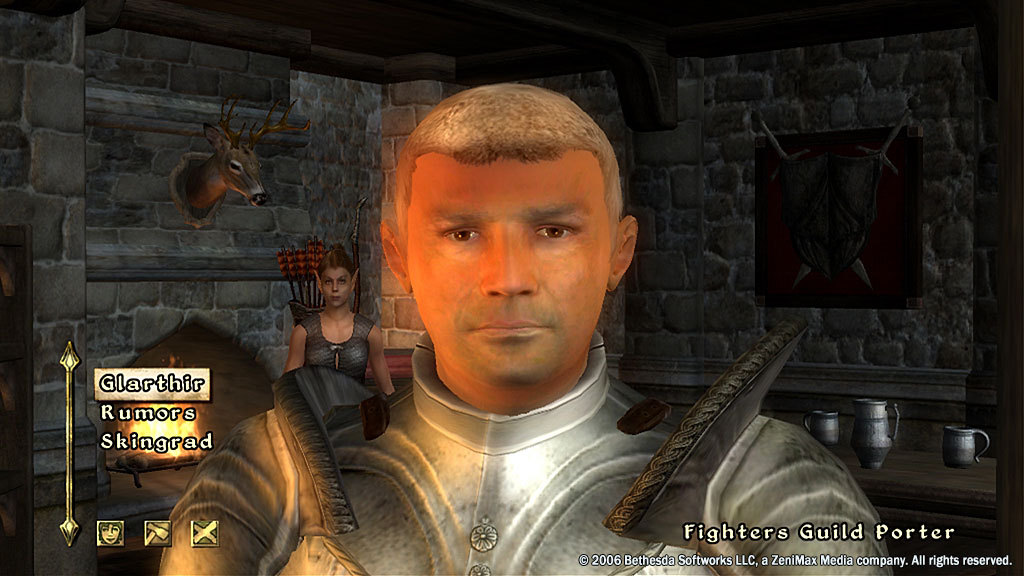
The repeated voices are another weakness. In a game this large, hearing the same small group of voices across so many people makes the population feel smaller. The characters may have different names and jobs, but my ears keep recognising the same people.
The important story characters deserve particular care. Uriel Septim has Patrick Stewart’s voice, and Martin has Sean Bean’s. Bethesda’s September 2005 casting announcement says those parts were written with the actors in mind. Terence Stamp also joined the cast as the antagonist Mankar Camoran.
I would have liked that separation extended to Jauffre. His actor, Ralph Cosham, also voiced the game’s other male Bretons. When somebody is that important to the main story, I want his voice to belong to him.
I know recording more actors costs money. I still would have liked more variety. Fully voiced dialogue was a big step for the series, but the repetition is easy to hear over a long game.
The armour I remember stretching from a shelf to the floor
I would not describe my old Xbox experience as one endless bug fest, but there were definitely bugs. One that stayed with me was a piece of leather armour in the Blades’ castle, Cloud Ruler Temple.
It was on a shelf and on the floor at the same time. A corner seemed stuck down on the floor, stretching the armour into a long line from the shelf. It looked ridiculous. I recorded it with my phone at the time, but that recording disappeared over the years.
The PC 1.1.511 update released on 6 June 2006 addressed crashes, collision problems, exploits and quests.
| Area | What Bethesda addressed |
|---|---|
| Crashes | Going to jail while equipped with bound armour or weapons; certain save-loading failures |
| Collision and controls | Falling through collision in Fort Wooden Hand; remapping problems in several localised versions |
| Items and exploits | Infinite gold on some corpses; bow-related item duplication; repeated sales of equipped items while mounted |
| Quest progression | Mannimarco stopping during a scripted encounter; problems advancing particular guild and main quests |
| Mages Guild | Access to guild buildings after permanent expulsion |
The later 1.2.0416 update fixed problems with FormIDs, the identifiers the engine uses for game objects, including disappearing objects and crashes. Bethesda’s official downloads page dates the North American English base-game updater to 30 April 2007 and the UK/European/Australian English updater to 7 May.
Community work continued far beyond those official updates. The Unofficial Oblivion Patch began in 2006 and is still maintained. My Vortex screenshot shows version 3.5.9 enabled in this installation.
Getting used to F5 again
One habit I need to rebuild is saving regularly. I have become so used to checkpoints and automatic saves that I forget to make my own. On PC, F5 is Oblivion’s quicksave key; Bethesda also documents saving through the pause menu in its saving instructions.
Oblivion has automatic saves too. The manual lists options for saving on rest, waiting and travel. What I need to get back into is making a save when I decide it is a sensible point to do it, instead of expecting one of those events to cover me.
I prefer having that responsibility. It teaches me to think about when I should save. A checkpoint chooses for me, and after enough games doing that, I start treating it as somebody else’s job. Then I return to an older game and have to learn the habit again.
Vortex, Wine and the level-up freeze
I was working on this Linux installation on 20 September 2026. I installed the original base game from disc and managed the mods with Vortex running under Wine. The crash reports from that troubleshooting show Wine 11.0 Staging, a 32-bit game process, X11 support and DXVK activity.
Oblivion XP Update gave me trouble when levelling. The game would freeze when I slept after earning a level-up. I disabled the mod, and that stopped the problem for me.
The original progression system normally increases skills through use. Ten increases across your major skills make a level-up available, which you then take by sleeping. That process is explained in the manual’s levelling section. Oblivion XP replaces the progression system, so it also brings its own scripts and menus into that part of the game.
The Oblivion XP Update author’s page lists OBSE and MenuQue as requirements. Its 4.5 changelog specifically includes NorthernUI menu compatibility and a Vortex installation script.
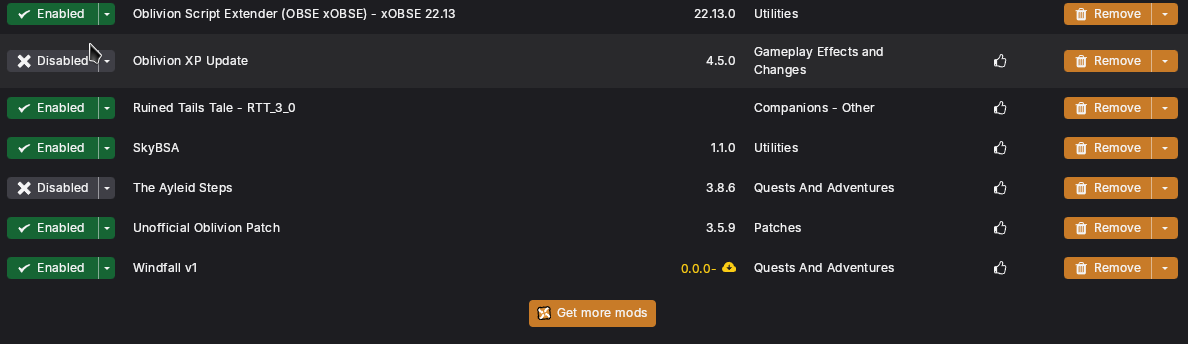
I also used Maskar’s Oblivion Overhaul 5.0.7. Its author describes a configurable overhaul whose default 5.x scaling depends on distance from cities, rather than simply following the player’s level. This playthrough used that overhaul alongside companion, quest and engine mods.
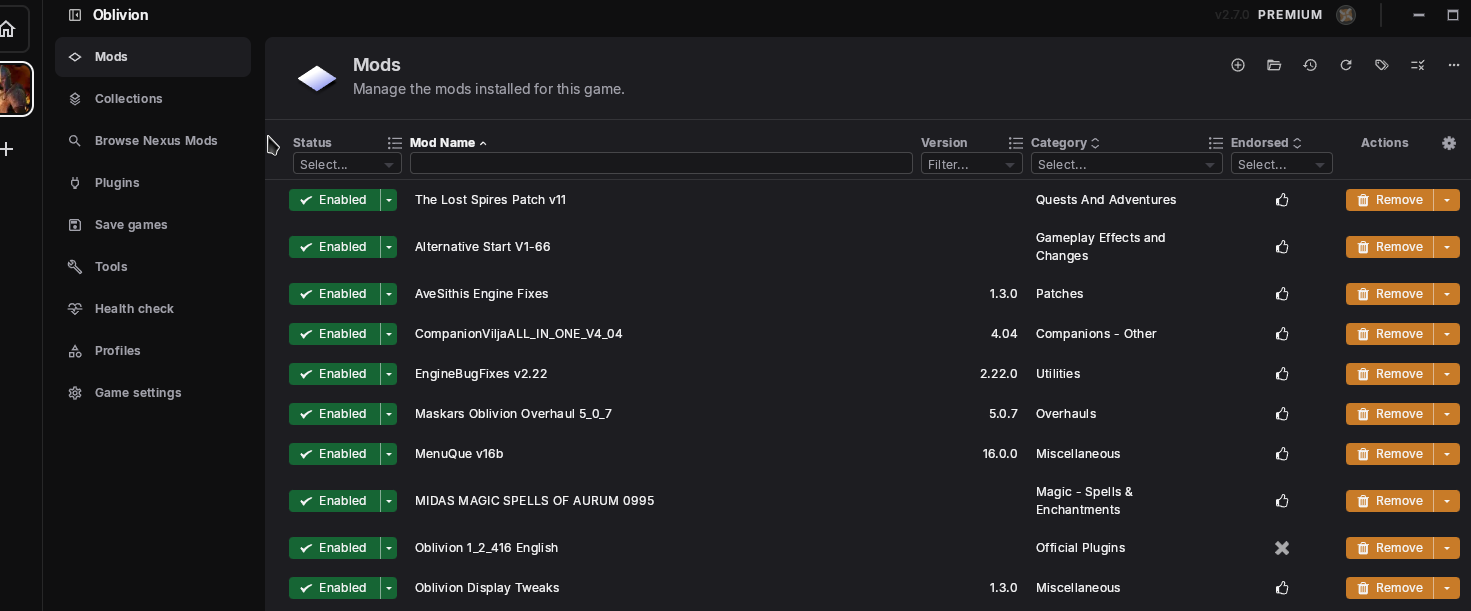
Mods and packages visible in my Vortex screenshots
- The Lost Spires Patch v11 — enabled
- Alternative Start V1-66 — enabled
- AveSithis Engine Fixes 1.3.0 — enabled
- CompanionViljaALL_IN_ONE_V4_04, version 4.04 — enabled
- EngineBugFixes v2.22 — enabled
- Maskar’s Oblivion Overhaul 5.0.7 — enabled
- MenuQue v16b — enabled
- MIDAS MAGIC SPELLS OF AURUM 0995 — enabled
- Oblivion 1_2_416 English update package — enabled
- Oblivion Display Tweaks 1.3.0 — enabled
- Oblivion Script Extender, xOBSE 22.13 — enabled
- Oblivion XP Update 4.5.0 — disabled
- Ruined Tails Tale – RTT_3_0 — enabled
- SkyBSA 1.1.0 — enabled
- The Ayleid Steps 3.8.6 — disabled
- Unofficial Oblivion Patch 3.5.9 — enabled
- Windfall v1 — enabled
The menu files that stayed behind
There were other problems during installation. The official updater initially had trouble matching the installed game. Bethesda provides separate regional and language packages, plus a separate Shivering Isles updater. For an English European retail base game, the relevant official download is Oblivion_v1.2.0416UK.exe.
The mod list includes a package named Oblivion 1_2_416 English, and the crash logs loaded obse_1_2_416. For retail installations, the xOBSE project’s instructions use obse_loader.exe in the game directory, with the extender files installed alongside the game.
One earlier crash was a divide-by-zero exception inside l3codecx.ax, an MP3 audio decoder. A later crash was a null-address read inside Oblivion itself, with NorthernUI-related menu fragments in the stack.
I had removed NorthernUI and DarNified UI because of a mod conflict, but searching the installation still found NorthernUI references in the level-up menu, the main HUD and files under Data/menus/prefabs/ObXP. Some of those XML files still expected NorthernUI fonts, graphics and prefabs.
From the game directory, this is a useful read-only check for that particular kind of leftover reference:
grep -RIn --binary-files=without-match 'NorthernUI' Data/menusNorthernUI’s author describes it as XML, graphics and an OBSE plugin working together. Removing an entry in the manager had left me with menu files that still referred to parts of that interface.
The expansions, horse armour and the Steam release
Oblivion’s release history also includes the notorious horse armour. By early April 2006, Bethesda was already answering complaints about charging for the add-on. In a contemporary interview, Pete Hines compared the proposed value with Xbox themes and other Marketplace extras. Xbox’s own Major Nelson acknowledged the debate on 5 April.
The larger additions were Knights of the Nine in 2006 and Shivering Isles in 2007. Bethesda and 2K’s 27 March 2007 release announcement put Shivering Isles on North American PC retail shelves and brought its new realm to Xbox Live. Those official expansions were not installed for this base-game disc playthrough.
The Game of the Year packages bundled the base game with Knights of the Nine and Shivering Isles. Valve’s 16 June 2009 announcement brought Oblivion GOTY and an English-only Deluxe package with the additional DLC to Steam.
A disc I can keep separate from a Steam account
The retail PC game installs independently of Steam. Bethesda’s Anthology installation support also confirms that its retail-based Oblivion GOTY discs do not require Steam activation.
The retail startup instructions in Bethesda’s manual tell you to have the game disc in the drive. That is still a restriction, but it does not tie the copy to somebody’s Steam account. It makes a meaningful difference when I buy a second-hand game and want to install the copy I actually brought home.
For an official downloadable alternative, GOG’s original Oblivion GOTY Deluxe is sold DRM-free, with offline installers and no online activation needed to play. A store account is used to obtain those installers; Galaxy is optional.
Where the 2025 remaster fits
Oblivion Remastered arrived on 22 April 2025. Bethesda’s launch message says work with Virtuos began in 2021, with new visuals, revised progression and additional voice recordings alongside the original performances.
The original’s mod community is a major part of its continued life. Bethesda’s current support guidance says mods are not officially supported for Remastered.
Gameplay playlist and Vortex screenshots: Kiba Snowpaw. Other inline game images and the suggested featured image are original-game promotional media from Bethesda’s Steam gallery. The Elder Scrolls IV: Oblivion © Bethesda Softworks / ZeniMax Media.