
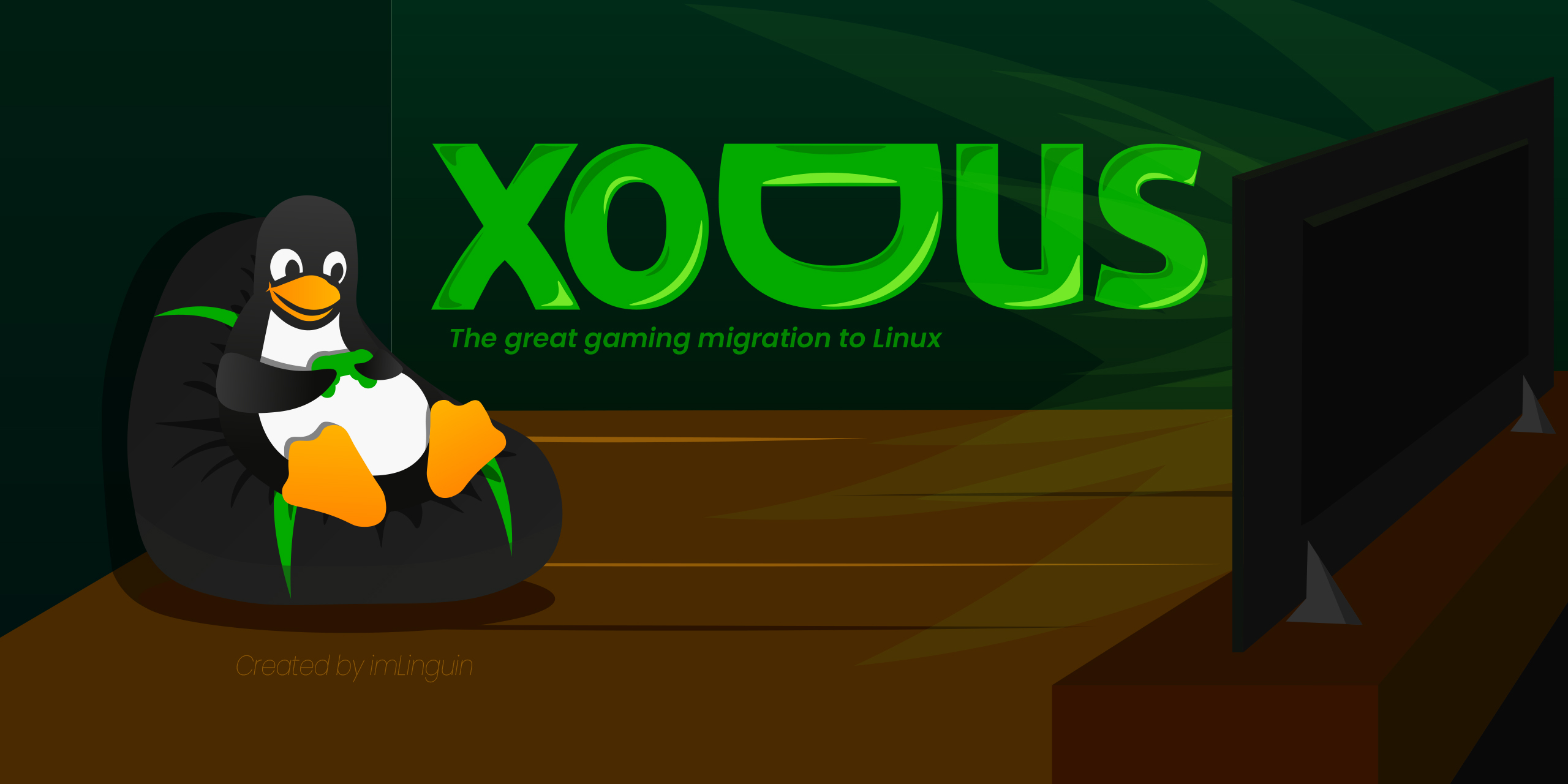
Xodus is a pretty damn impressive project. An open-source attempt to bring Xbox PC games to Linux, working on the pieces Microsoft has never provided there. I like seeing developers take something that supposedly needs Windows and start pulling that requirement apart.
I have spent stupid amounts of time getting Windows software working through Wine because one tiny piece was missing. I understand the appeal. Getting a game to start after hours of messing around can feel better than actually playing the bloody thing.
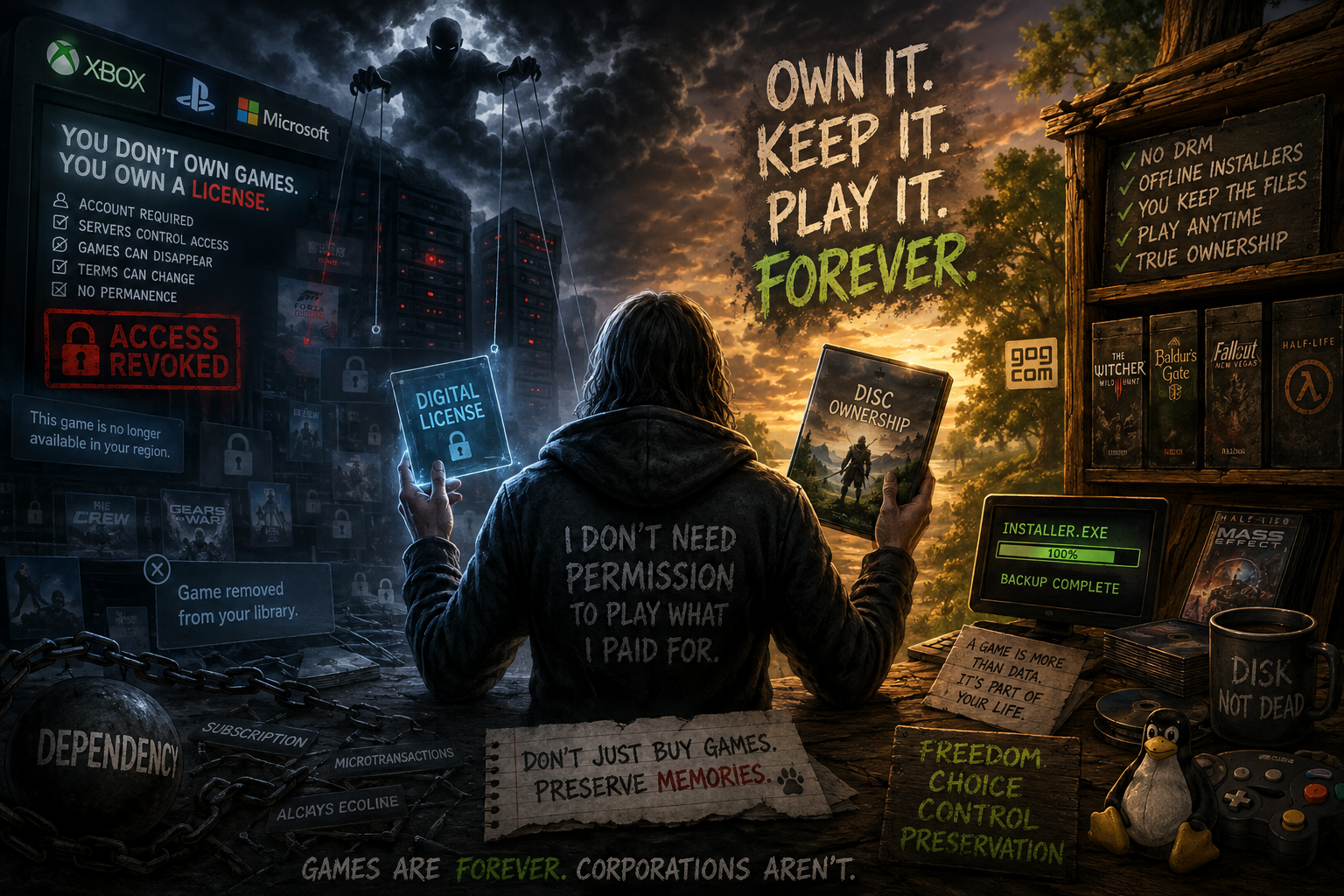
But reading about Xodus also brought me back to something that increasingly bothers me about gaming: I can get rid of Windows and still end up depending on Microsoft to let me use the games I paid for.
I have been gaming since the late eighties and early nineties. I remember the machines, the rooms, the controllers, the hardware problems and who I was sitting beside. Games are attached to whole periods of my life. My main Steam account, KibaAngelSnowpaw, was created on 2 July 2008 and showed 2,338 games on 12 October 2026. I have eight Steam accounts altogether. I bought into digital gaming for years, and I still use it.
Over time, though, I have become less comfortable with how much of that collection depends on somebody else’s systems. I have lived with depression and anxiety for decades, and routines and small things I can control help me keep my head functioning. Losing my father made permanence and memory feel different too. When a company tells me something is safely in my library, I find myself wondering how long that promise lasts.
Xodus is clever. Microsoft still supplies the games.
The first thing I wanted to understand was where the game actually comes from. Xodus is working with Xbox PC distribution, not reading an Xbox console disc or magically converting every console game into a PC release.
As checked on 13 October 2026, the project’s README reports working login, package downloads and licence acquisition. It lists device and user login, Xbox authorisation, MSIXVC downloads, on-demand executable decryption and MSIXVC2 support among its current work. It also says the pieces are still scattered and more Wine-side Xbox service support is needed.
Its stated target is GDK games packaged as MSIXVC. The README specifically lists Gears of War 4 as unsupported for now. Getting past login and downloading a package does not establish that the entire Game Pass catalogue is playable.
The package-selection code looks for a Windows Desktop package, obtains account and device tokens and asks Xbox’s package service for the content. If no package comes back, its error message asks whether the user owns it. The downloader then retrieves selected files from the supplied CDN addresses.
Microsoft is still involved in the transaction. Xodus replaces parts of the client-side machinery; it does not turn a subscription or an account entitlement into an independent copy of the game.
The repository also describes a service integrating with xgameruntime.dll, part of the runtime problem these games present. There is real engineering here, and I respect it. I have not tested Xodus myself, so this is my reaction to the project and its design, not a report that I got particular games running.
If Windows itself is the part driving you insane, this could become extremely useful. Keeping an existing Xbox PC library usable while moving to Linux would save people from maintaining Windows just for those games.
My frustration goes further than the operating system. I can replace the Xbox app and run Windows code through a compatibility layer, but the downloads, account and licences still come through Microsoft. I want less dependence on those services. A different client cannot give me that by itself.
The store says Buy. The agreement says licence.
The button says Buy. The receipt looks like a purchase. The store calls it my library. I can spend the price of a full game, add DLC and keep building a collection for years. Then access becomes a problem and suddenly the important word is licence.
Microsoft’s Services Agreement describes software as licensed rather than sold and limits rights in digital goods through its terms, copyright law and usage rules. It also allows service changes and says re-downloads or replacements are not guaranteed except where applicable law requires them. Those conditions matter if the only copy I can reinstall is the one their service agrees to provide.
Sony uses the same basic language. Section 13.5 of its Danish PlayStation terms says a digital purchase gives a personal licence to use the product. Closing or suspending the purchasing account can affect access, and a linked third-party account can add another dependency.
I hate how much the shopfront and the agreement can feel like two different conversations. One encourages me to build a collection. The other describes the conditions under which I am allowed to use it.
Danish consumer rules cover digital content and services, with specific provisions introduced in 2022. Sellers have obligations concerning defects, necessary updates and changes to ongoing services. Certain changes that negatively affect use beyond a minor degree can give a right to terminate the agreement. A licence agreement does not erase mandatory consumer protection.
That still leaves a practical problem. If access disappears, having grounds for a complaint is not the same as having a working installer. I do not want preserving a game to mean contacting customer service and arguing about the conditions of a purchase from years ago. I want to be able to install it.
That dependence reminds me of the NFT rug-pull era: people feeling they possess something valuable, then discovering how much of its usefulness depended on whoever controlled the infrastructure. I mean the feeling of losing control, not an accusation that game stores are committing the same fraud. Watching something I paid for become inaccessible would leave me asking much the same question: what did I actually keep?
Game Pass is easier to understand. It is a subscription with a changing catalogue. Xbox’s own catalogue announcements list departing games and suggest purchasing them to continue playing. I can understand renting access when it is presented as renting access. What bothers me is paying separately for a game and finding that my ability to keep it still depends on a service.
This is why I started buying discs again
I have almost 400 games on disc now. I enjoy being able to turn around, pick a box off the shelf and open it. The game, the paper cover and sometimes the manual are there in front of me. Scratches and damaged covers can be bloody annoying, but at least I have the thing to inspect.
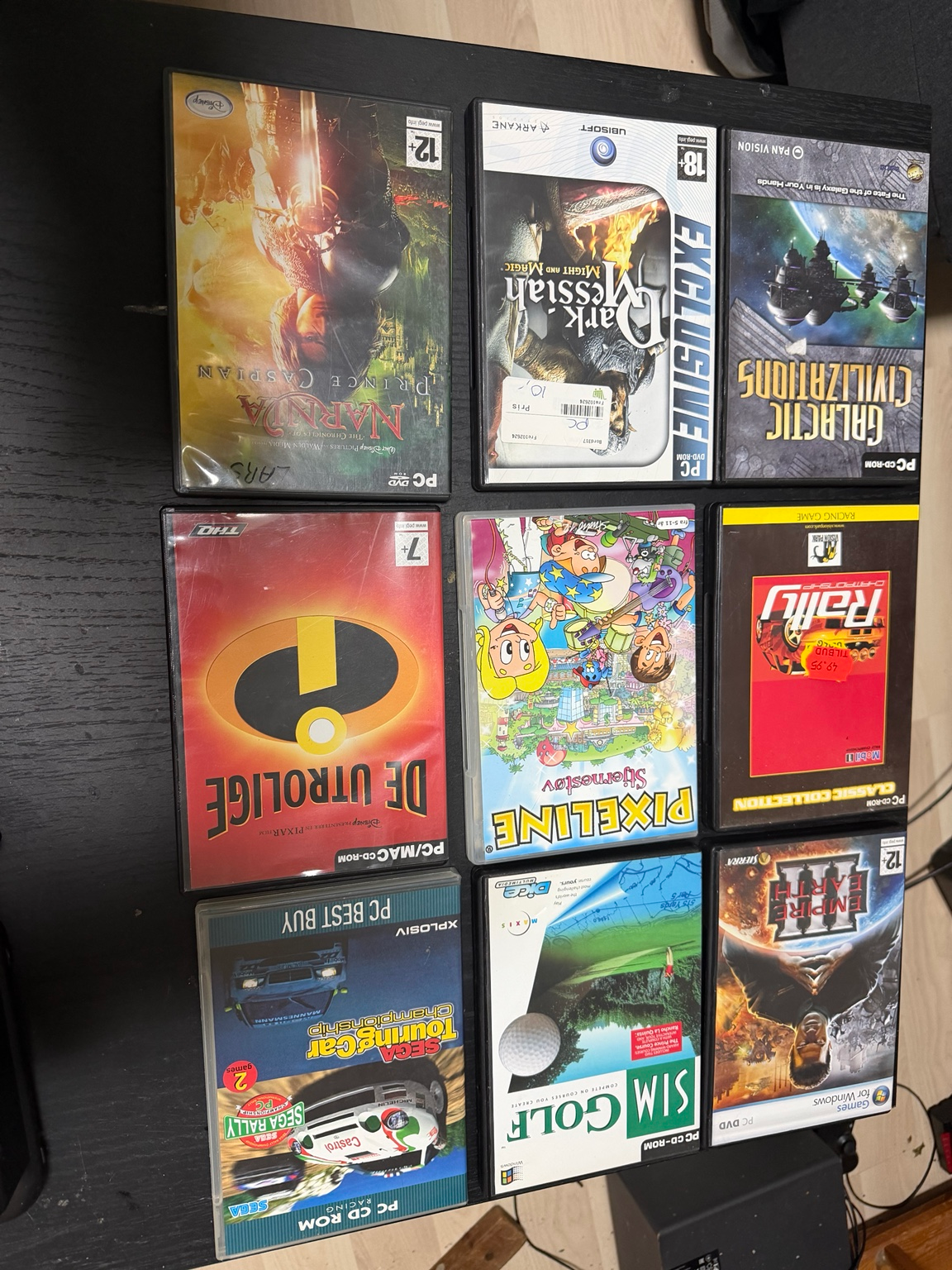
The copies that interest me most are old PC releases with the installer on the CD or DVD and no mandatory online activation. I can keep the disc, the patches and the documentation together. If I have a suitable computer, or can get the game running through Wine, I do not need the original shop to approve another download.
That is a much more useful kind of permanence to me than a library entry. I remember PCs struggling with games they had no business trying to run. I remember fixes and hardware problems years later. I want to be able to return to those games without discovering that the company behind an account system has decided the infrastructure is no longer worth maintaining.
A box alone does not guarantee that. Some PC discs still need an activation key tied to an account. Some need downloads to complete installation. An online-only game still needs its servers, however nice the cover looks on the shelf. Buying the physical release only helps with preservation when the contents and the game’s requirements actually let me keep a usable copy.
Sony’s software terms explicitly allow online and network functions to end with reasonable notice. They describe continued access to supplied offline modes, but also say those modes are not guaranteed and may change or end. I am interested in what a particular game can do after the services stop, not simply whether it came in a case.
GOG gives me the installer
This is why GOG appeals to me. I am perfectly happy to receive a game digitally if I can download an installer and keep it myself.
GOG’s developer documentation says Galaxy is optional and that a game’s single-player and offline functions should remain available when the client is absent or the player is logged out. Its download instructions provide an offline-installer route as well as installation through Galaxy.
I still need GOG to deliver the files initially. Once I have the complete installer backed up, though, reinstalling its offline game does not require Galaxy to authenticate me. If GOG disappeared, that installer would not suddenly smell a dead corporation and commit suicide.
Keeping all the files matters. Leaving the game in an account library and assuming I will download it later puts me back in the same position: I am relying on a website being available when I need it. I want the installer, its required data files and any patches stored somewhere I control.
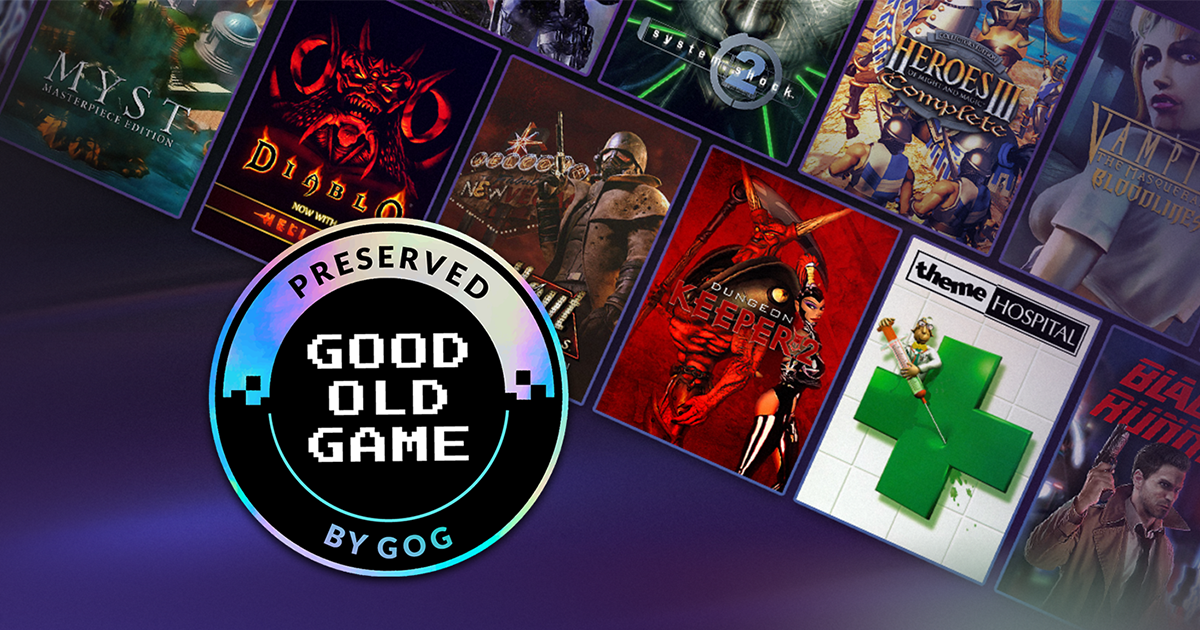
The GOG Preservation Program connects work on compatibility and more complete releases with access to offline installers that players can safeguard themselves. That is a direction I want to see more publishers take. A backed-up installer still needs compatible hardware or software to run, but the store does not have to remain open for me to attempt it.
Keeping a usable copy does not give me the copyright. Buying a game never meant I could sell thousands of copies from my kitchen. But copyright and mandatory authentication are separate issues. A publisher can retain its rights while selling a version that does not need continued permission from its servers for basic offline play.
I can put a DVD movie into a player without somebody at Warner Bros. checking my account first. I want that same practical independence from an offline PC game. Digital delivery is convenient. Making the delivered copy permanently dependent on the seller is the part I increasingly hate.
My PS5 mostly sits unused
I own a PS5 and more or less never use it. The hardware can do plenty. I just have less and less interest in the ecosystem around it.

PSN feels like clutter to me. Every additional account, entitlement check, subscription layer or store dependency between me and pressing Play makes me less interested. I already have enough systems to manage without turning every gaming session into another relationship with a service.
The account conditions in Sony’s terms are part of that feeling. I have paid for hardware and games, but parts of the experience remain controlled elsewhere. I would rather put more of my money into copies I can preserve.
Xbox is not becoming more attractive to me either. Game Pass may suit someone who wants access to a lot of games for a monthly payment. Microsoft announced on 21 April 2026 that the advertised US PC Game Pass price would fall from $16.49 to $13.99 a month, with regional prices varying. The same announcement moved future Call of Duty releases away from day-one inclusion to the following holiday season. That changes what a subscriber gets for the money. It does not change my interest in keeping the games.
Give me the disc when it contains a usable game. Give me a DRM-free installer. Give me a version I can put away and return to in fifteen years without hoping an authentication service still answers. If that means buying an older game instead of whatever appeared this week, I can live with that. I have enough games to last multiple lifetimes anyway.
Linux gives me control over the system
One of the things I like about Linux is being able to change the system. I can choose the desktop, replace components, investigate a problem and refuse defaults I do not want. I can still use commercial services, but there is more room to decide how my own computer works.
Heroic is a good example: an open-source launcher for Epic, GOG and Amazon games, using separate tools to handle those libraries. It gives people another way to access games they already have. That is useful, even though the original stores still control initial delivery and account-based entitlements.
I also think Proton is one of the best things that has happened to desktop Linux gaming. Valve’s compatibility tool uses Wine to run Windows games on Linux, with components such as DXVK and vkd3d-proton helping with graphics. Getting rid of the requirement to run Windows is a substantial improvement.
It just does not settle what happens to the game licence. Translating a graphics call and receiving permission from an account service are different jobs. The game can be technically capable of running on my computer and still require something outside my computer before it will let me play.
That is the frustration Xodus brings into focus for me. Developers can do an enormous amount of work replacing missing Windows functionality, and the game can still depend on a company’s answer to an authentication request. I admire the work. I hate how much access can remain outside the player’s control after all of it.
There is a legal distinction here too. Sections 36 and 37 of the Danish Copyright Act provide conditional rights for authorised users to study a program and obtain information necessary for interoperability. Section 37 limits who can perform the work, when the information may be obtained, which parts of the program may be examined and how the resulting information can be used. Those provisions cannot simply be excluded by contract.
That matters for compatibility work, but it is not a blanket judgment that every method Xodus might use is lawful. Authentication, service access, copying and interoperability raise different questions. Microsoft’s agreement itself recognises exceptions where copyright law expressly permits reverse engineering. Xodus describes itself as unofficial and unaffiliated with Microsoft. I am not treating that disclaimer, or the existence of interoperability rights, as a legal clearance for the whole project.
Live-service games can fail even when I have the files
With an online-only game, downloading the package can leave me with only part of what makes it function.
The executable may run. The graphics may work. Then it needs a publisher account, a valid entitlement, matchmaking, an anti-cheat system or the server that runs the game world. Which dependencies matter varies by game. Getting the Windows code running under Linux cannot replace a required service that no longer exists.
That is why a hundred-gigabyte folder can be almost useless after a shutdown. I have the client, but the part it needs to talk to is gone. An installer is enough for a self-contained offline game. It cannot, by itself, preserve an entire online service.
I think publishers should plan for that before they shut things down. Remove mandatory authentication where practical. Release server software where they can. Leave LAN or offline play working where the game’s design allows it. There will be technical and licensing limits, but I want a serious attempt to leave players something usable.
If a game is expected to work only while a particular service exists, put that clearly beside the price. Call a rental a rental. Call a subscription a subscription. Stop relying on pages of terms to explain why something sold through a Buy button may eventually stop functioning.
I may still decide to pay for a temporary experience. At least I would know what I was paying for.
I still want Xodus to succeed
I hope Xodus works out. If it lets people use their existing Xbox PC games on Linux and stop keeping a Windows installation just for that purpose, that is a worthwhile result. Giving players more choices about their operating system deserves support.
What I would like to see eventually is a straightforward interface: sign in, see the games the account can access, install one and run it through the necessary compatibility tools. That is what I want from the project’s future, not something I am claiming it already delivers.
My own buying habits are moving elsewhere. I spent years filling digital libraries. Now I am more interested in used discs, old PC games, preservation projects and DRM-free installers. I want copies I can keep, along with the files and information needed to make them work.
I can admire Xodus and still be tired of how much work is needed just to maintain access to a game I paid for. Escaping Windows is useful. Having a copy I can reinstall without the original company is what I want when I buy something to keep.
That is why I increasingly appreciate an old disc or a backed-up offline installer. It does not know my password. It does not care whether my store account is suspended. I may still have to fight with compatibility, but I can do that with the copy in front of me.