
Diablo II is the one I preferred to the original, and the one I completed several times. I think a large part of that comes down to difficulty. Diablo I was too hard for me. I kept dying to the Butcher, that big demon you meet early on, while Diablo II was a game I could actually get through and enjoy enough to finish again.
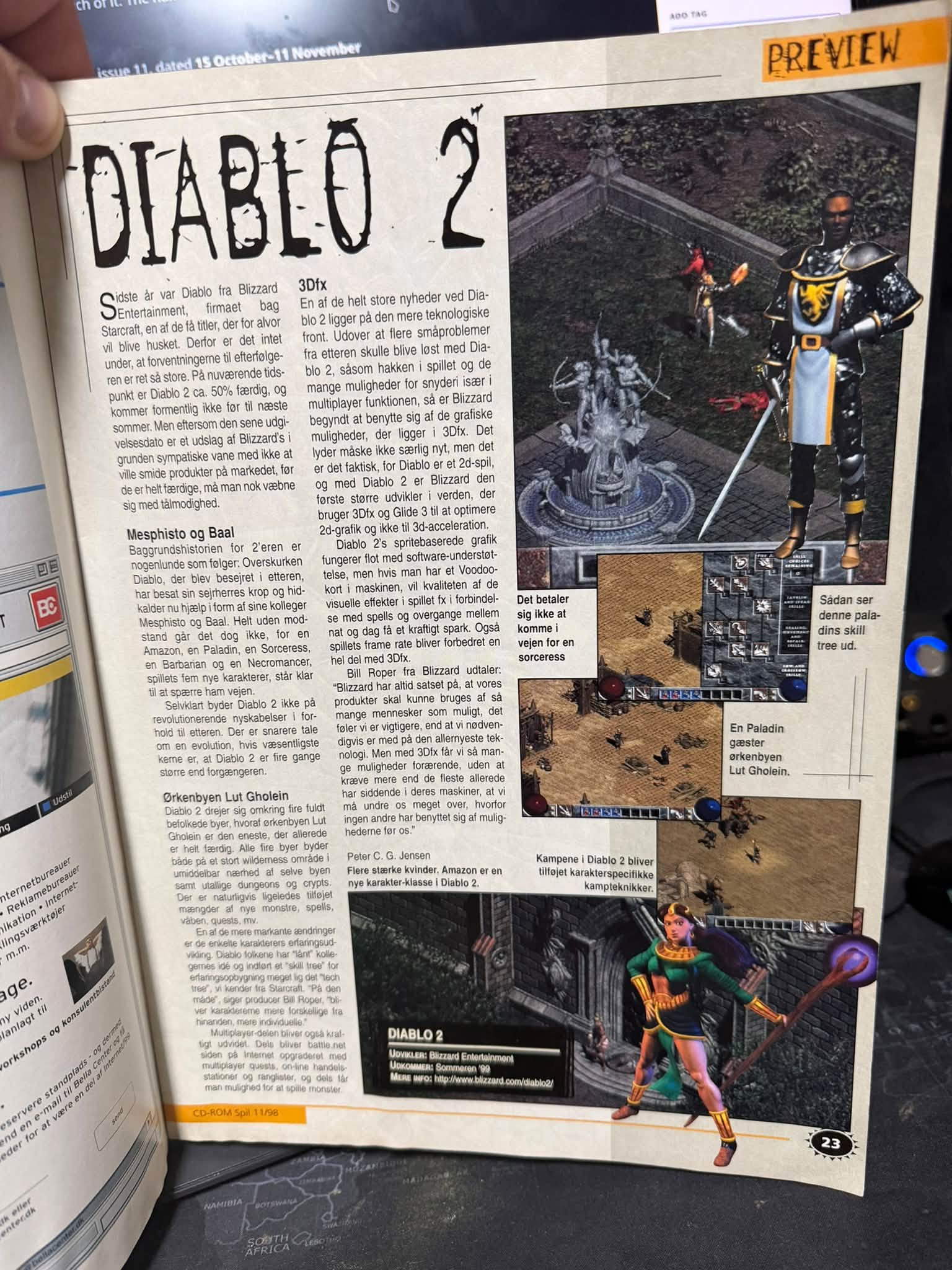
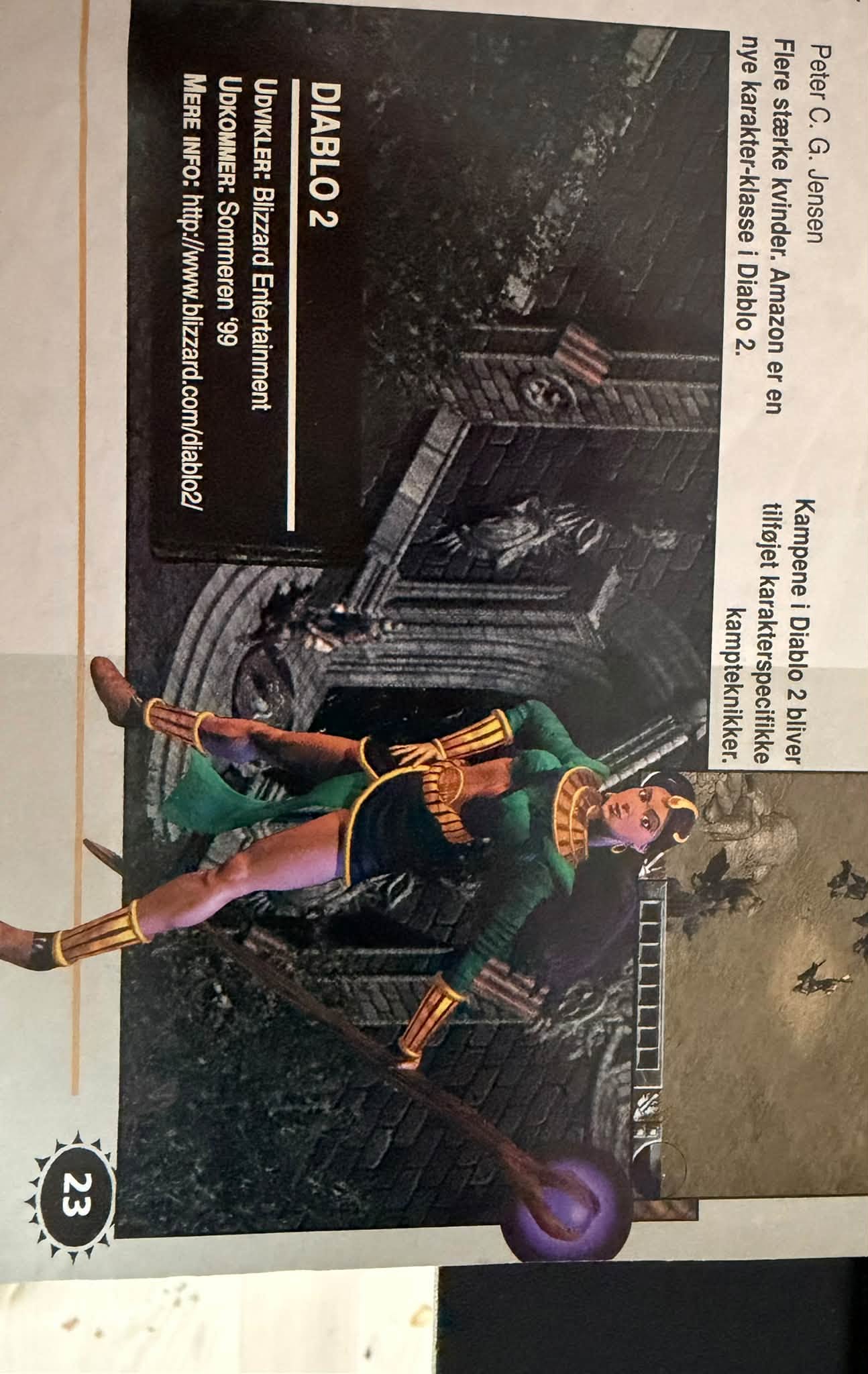
Looking at this old preview brings that history back. It is from CD-ROM Spil, third year, issue 11, dated 15 October–11 November 1998. The Diablo II article is on page 23, written by Peter C. G. Jensen. I was almost twelve when this issue came out. The page is marked PREVIEW, and it has no review score.
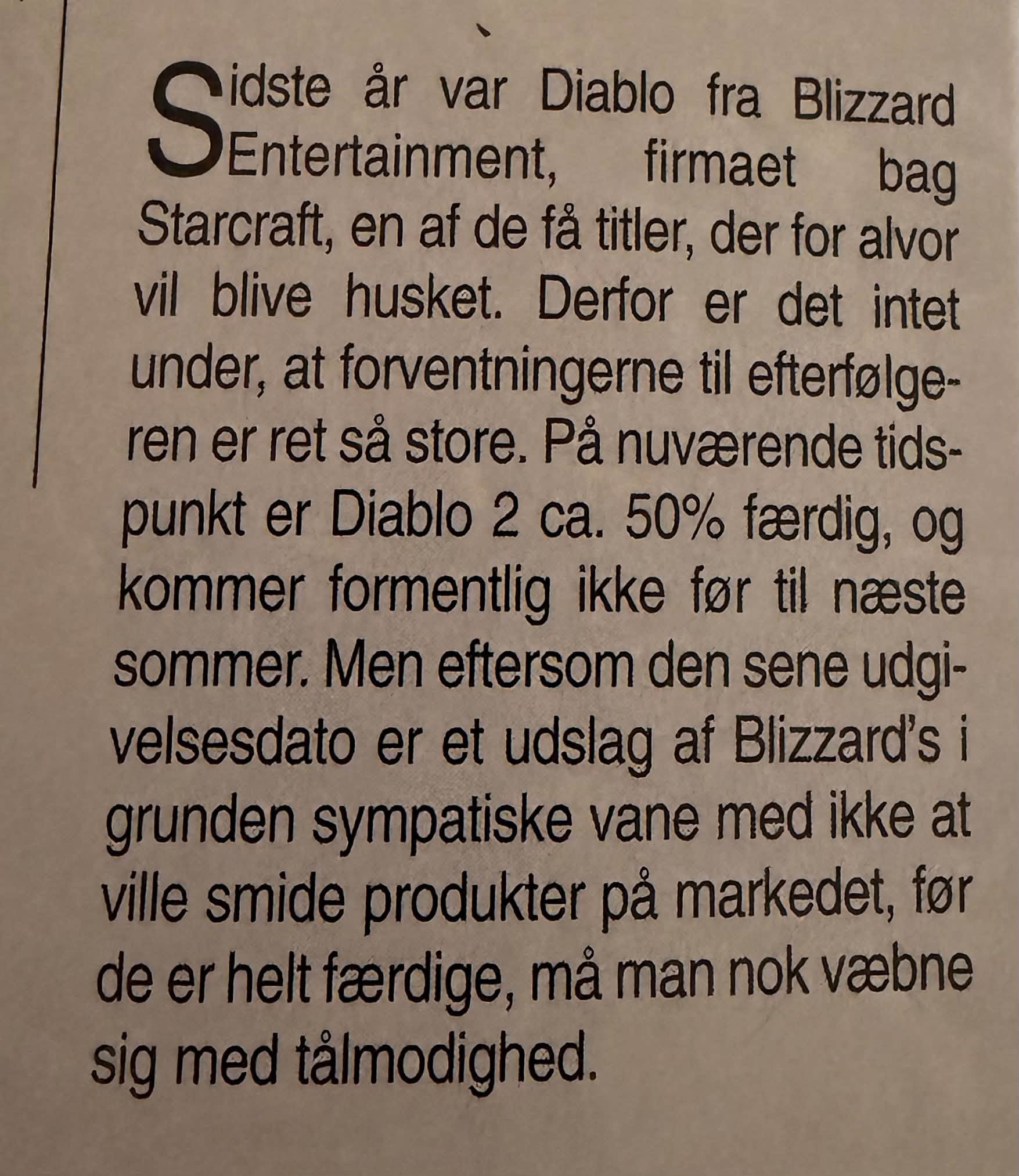
Its opening treats the first Diablo as a game people would remember for years. That part certainly happened. But remembering a game and preferring to play it are different things. I have played the whole Diablo series, and my experience with the sequels has become steadily less enthusiastic.
Summer 1999, fifty percent finished, and a lot of faith in Blizzard
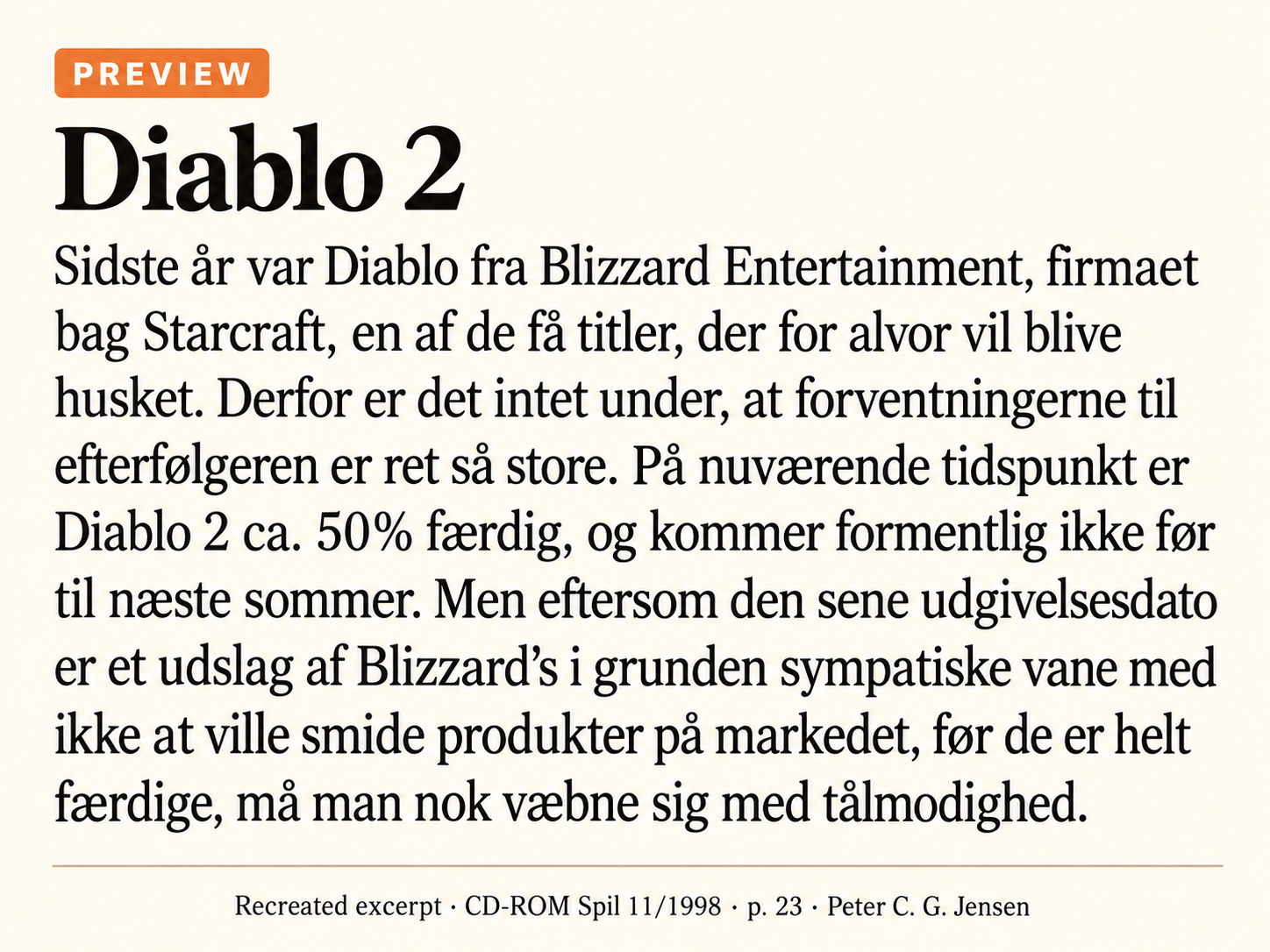
The preview describes Diablo II as approximately 50% finished and suggests that it probably will not arrive until the following summer. Its information box is more definite: summer 1999. The released game arrived in June 2000, about a year beyond that forecast.
The magazine explains the wait by praising Blizzard’s habit of holding back products until they are completely finished. Waiting for a game to be ready is a principle I can support. Treating a company’s reputation as a guarantee of the finished product is much harder to swallow.
Blizzard North’s own October 2000 development postmortem, written by Erich Schaefer, describes problems that appeared when the online service faced its launch audience. He reports more than 100,000 Realm beta testers and more than one million customers in three weeks. Those are different groups, not equivalent player counts. The larger launch exposed bugs that the beta had not reproduced. Even this celebrated older Blizzard release needed work after launch.
That is far too much trust to put in a company before the finished game is available. I want praise to rest on what the game delivers, and the launch record shows why.
Five classes, four acts, and the promise of a much larger game
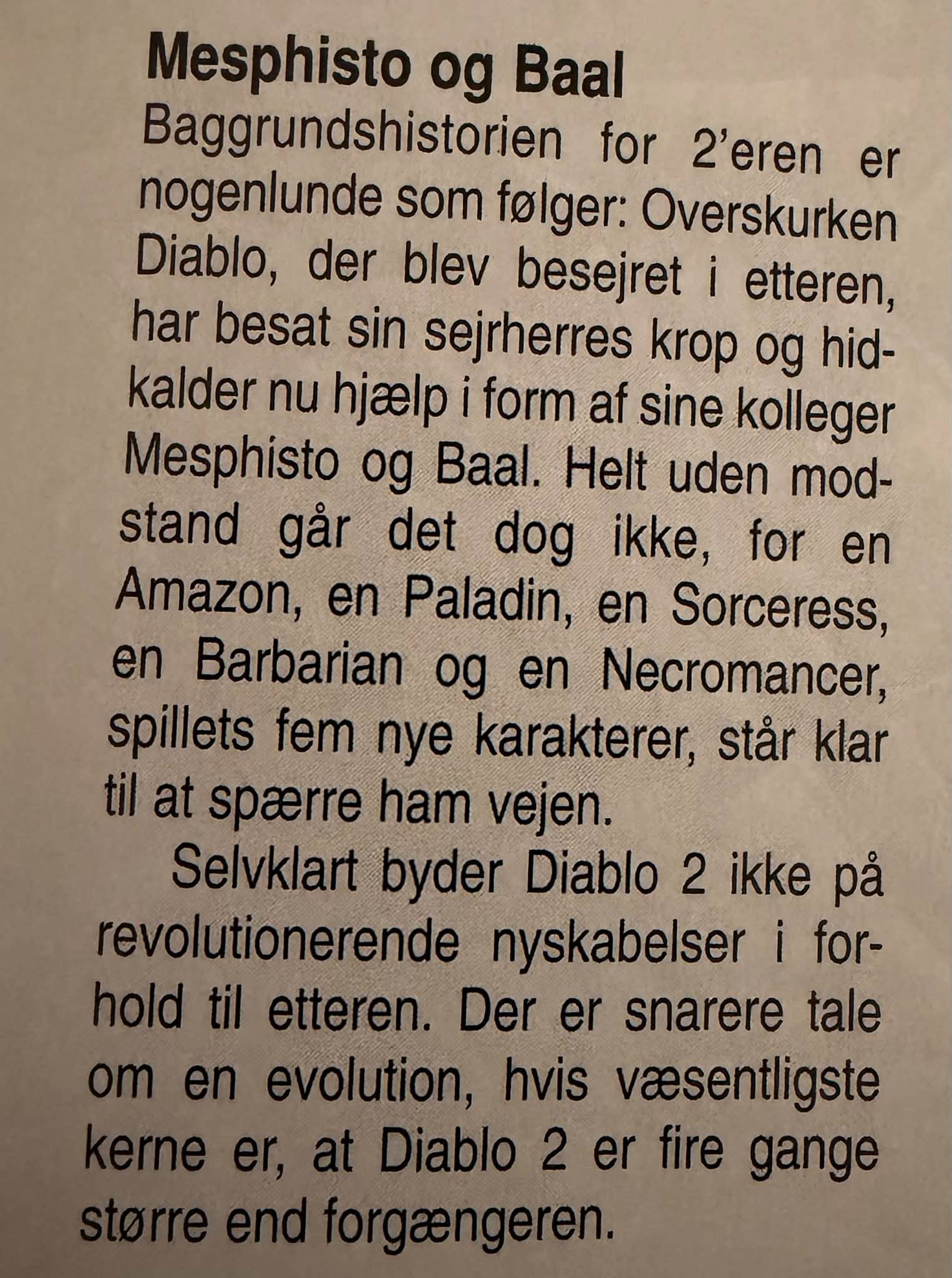
The story section introduces Diablo’s possession of the hero who defeated him, with Mephisto and Baal drawn into the sequel’s conflict. It names the Amazon, Paladin, Sorceress, Barbarian and Necromancer. Those are the five classes in the original Diablo II, rather than the larger roster from its expansion or later releases.
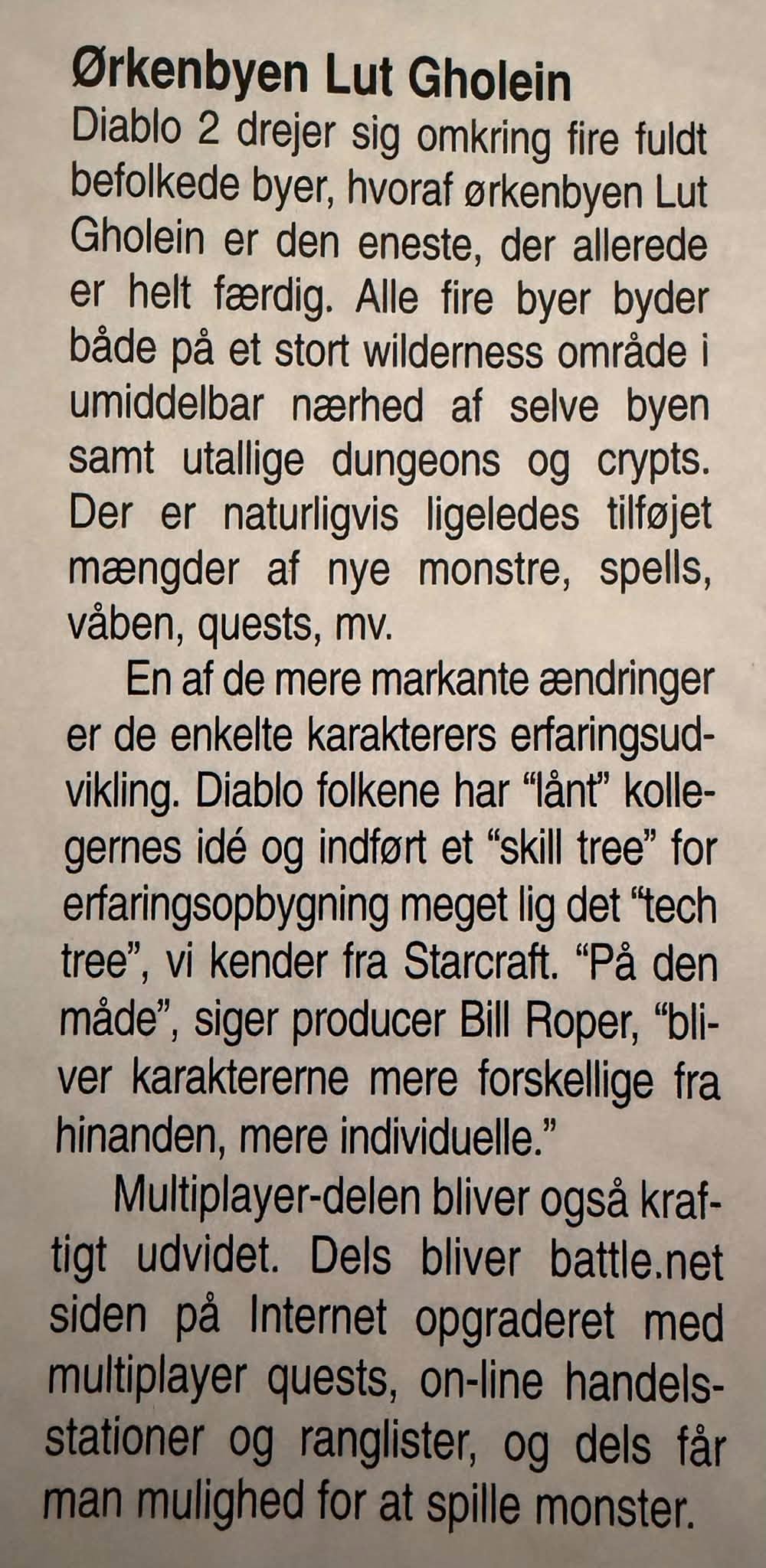
The preview describes four populated towns, each with surrounding wilderness and dungeons, and says Lut Gholein is the only town already finished. That last claim describes development in 1998. In the released game, the four acts take you through the Rogue Encampment, Lut Gholein, Kurast and the Pandemonium Fortress. Calling all four ordinary cities makes the preview sound tidier than the actual mix of camps, settlements and a fortress.
It also calls Diablo II four times larger than its predecessor. The page does not define that figure as map area, quest count, playing time or anything else. Four acts help explain the ambition, but they do not prove that every part of the game grew by exactly four times. A memorable number still needs a meaningful unit.
The original Diablo II manual documents the four-act structure and original classes. Lord of Destruction’s 2001 manual adds the Assassin and Druid, and a fifth act with Baal. I own the original game on disc and the expansion. Those are the games I am remembering, rather than Diablo II: Resurrected, which I have not bought or played.
The skill trees arrived; every multiplayer promise did not
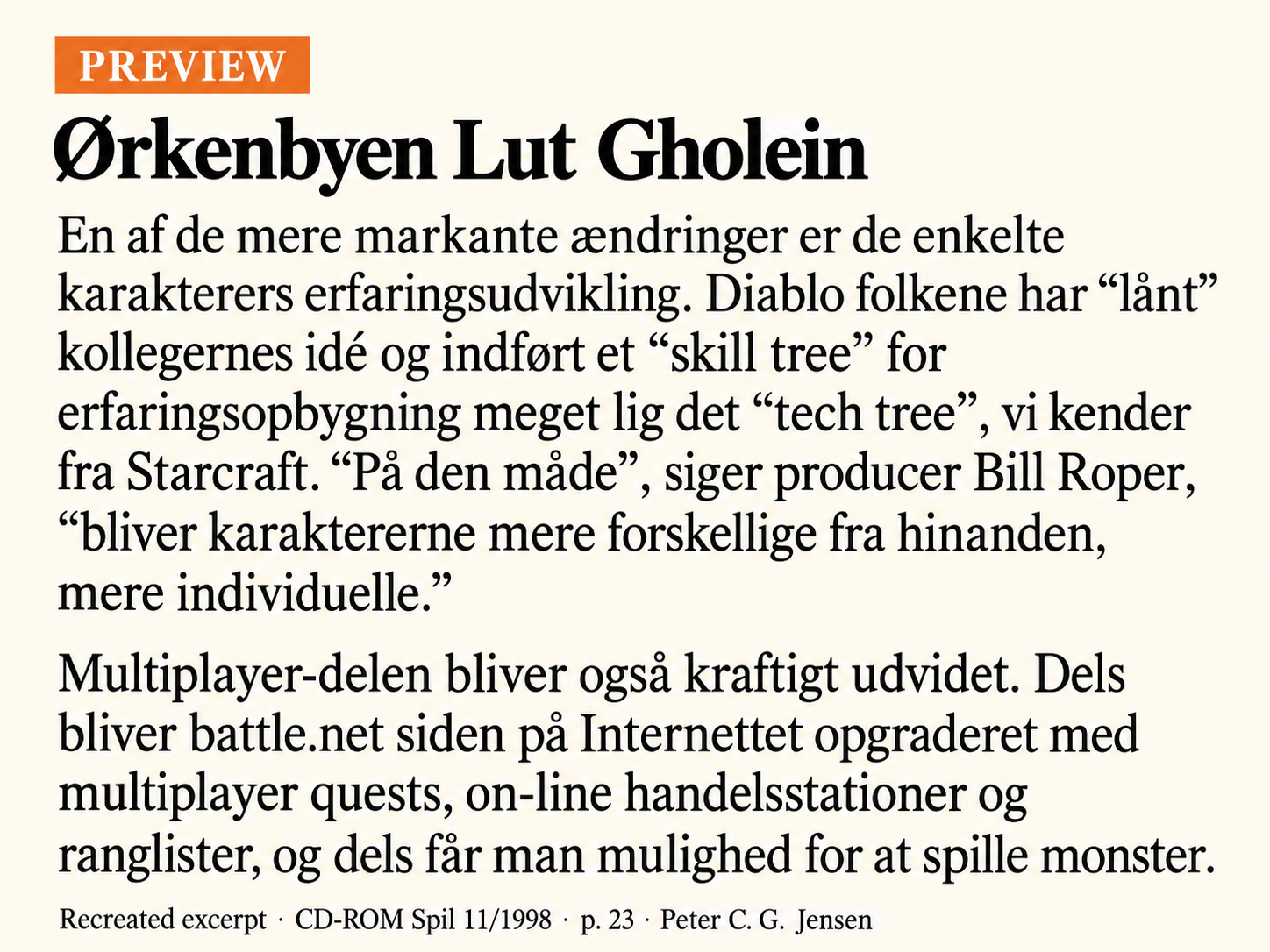
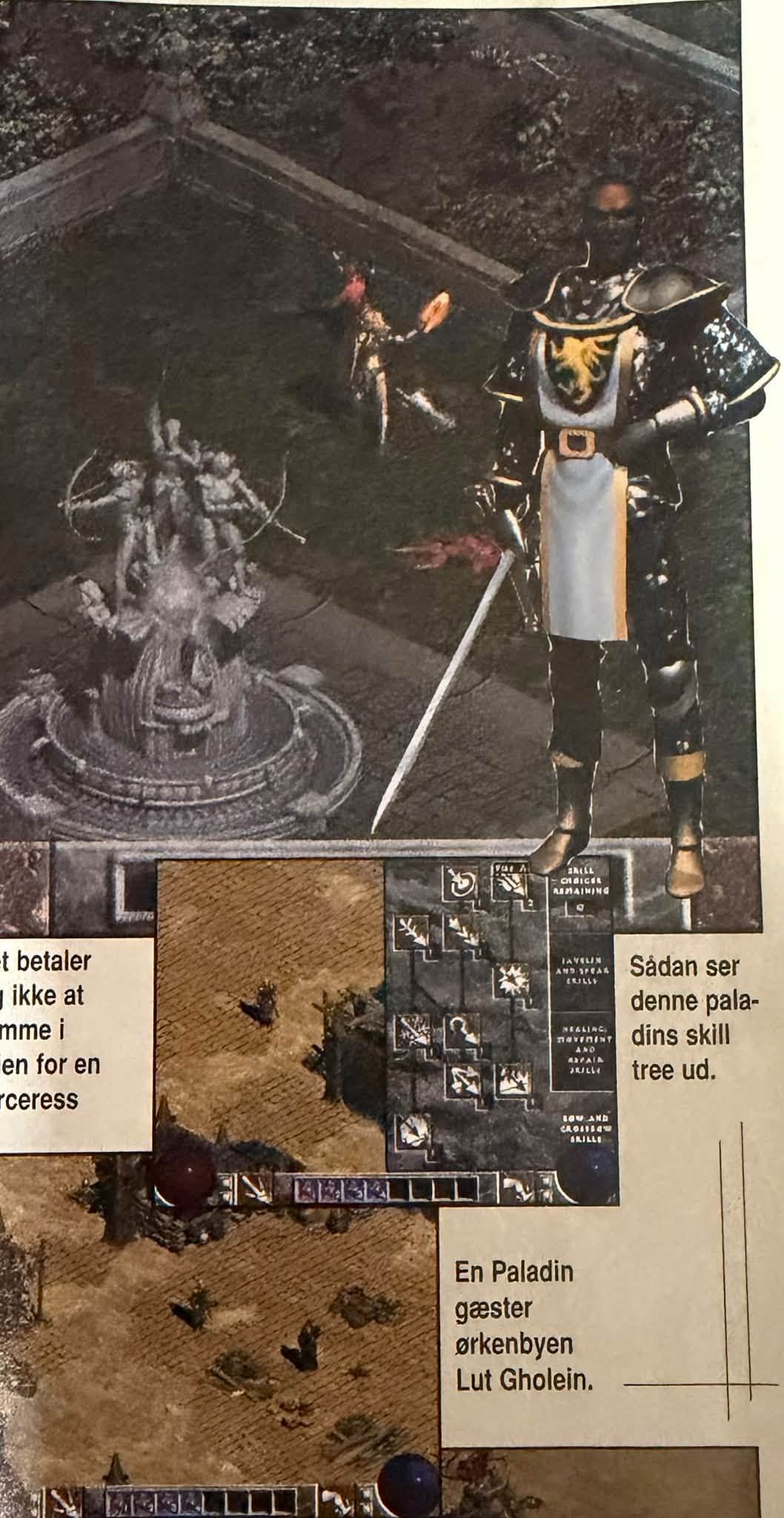
The preview compares the new skill trees with the technology trees in StarCraft. Bill Roper is quoted describing characters becoming more individual. That is a concrete change worth talking about: choosing prerequisites and deciding where to spend points gives characters of the same class different abilities.
Blizzard’s Arreat Summit character guide explains the released system: a level gives you one skill point, with available skills restricted by level and prerequisites, across three tabs. You can improve an existing ability or work towards another branch. The magazine’s skill-tree illustration is an early preview interface, so its appearance should not be mistaken for the final layout.
The multiplayer paragraph is much less dependable. It promises multiplayer quests, online trading stations, rankings and the ability to play as a monster. The shipped game provided cooperative play, trading and rankings. Blizzard’s published trading instructions describe a player-to-player trade window, trade games and chat channels. That is a more specific system than the preview’s vague trading-station language.
A general playable-monster mode was not part of the original release. The five character classes were the playable choices. The Druid’s later shapeshifting in Lord of Destruction belongs to that expansion and does not turn the earlier sentence into an accurate description of the original game.
The skill trees became a major part of Diablo II. The playable-monster claim remained unfulfilled. The magazine presented that feature as something players would get, even though it did not reach the original release.
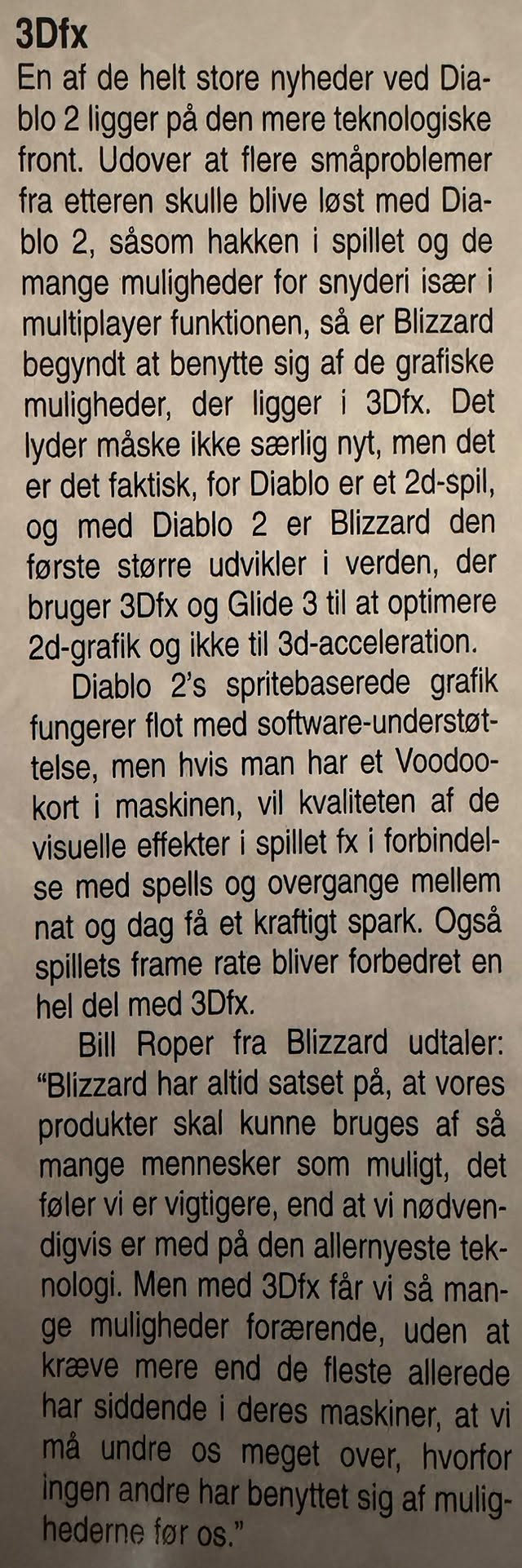
3Dfx acceleration did not turn Diablo II into a fully 3D game
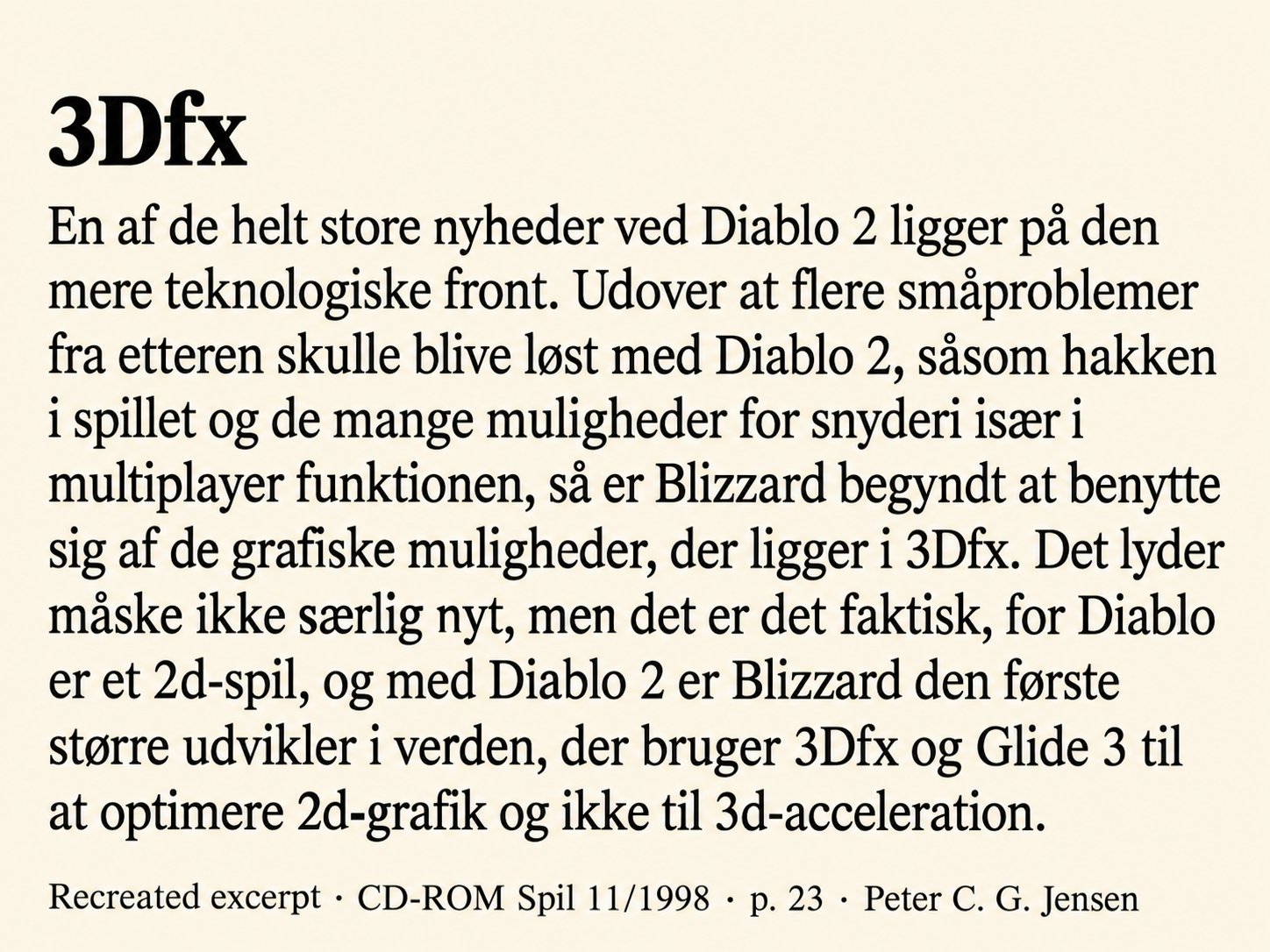
The technical section promises fewer performance problems, better visual effects and an improved frame rate through 3Dfx. It singles out spell effects and transitions between night and day. Roper’s accompanying quotation emphasises reaching as many players as possible rather than demanding the newest hardware.
There was real graphics technology behind that discussion. The PC manual lists DirectDraw support and enhanced features through Direct3D or Glide. Its perspective option adds parallax scrolling for a greater sense of depth. The game still presents its characters and environments as sprites and tiles; a supported 3D accelerator does not make the whole scene a freely viewed 3D world.
Schaefer’s postmortem explains the decision to retain 640 × 480 gameplay and acknowledges criticism of its resolution. The preview’s claim that Blizzard was the first major developer in the world to use 3Dfx and Glide 3 this way is much harder to substantiate. It offers no comparison or benchmark. I would not repeat that claim as an established world first, or turn its promised frame-rate improvement into a measured performance figure.
Diablo I, the Butcher, and Hellfire
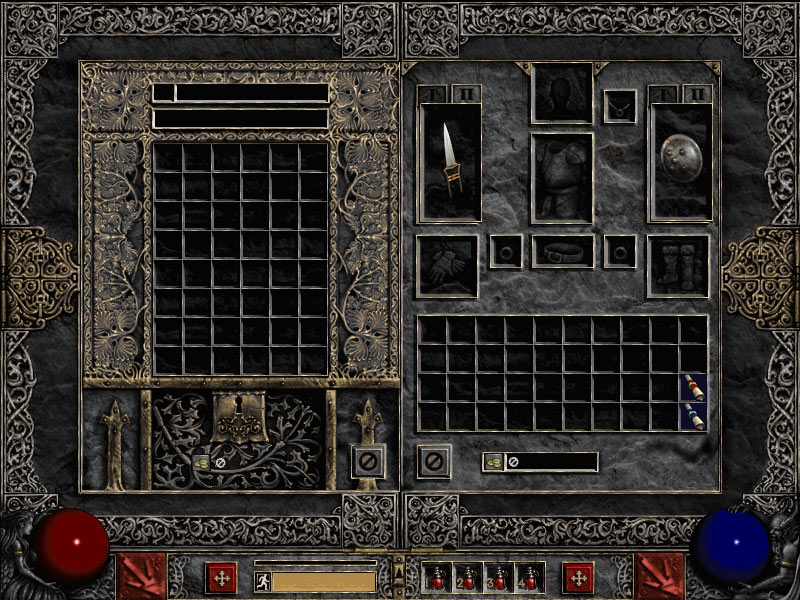
For me, difficulty mattered more than a technical promise. I can appreciate what the original Diablo did, but getting killed by the Butcher repeatedly did not make me prefer it. Diablo II suited me better, and I finished it multiple times.
The original gives you the Warrior, Rogue and Sorcerer. Hellfire adds the Monk and a separate storyline involving Na-Krul. It was developed by Synergistic Software and released in 1997, rather than being Blizzard North’s next numbered Diablo. The current GOG release includes Diablo and Hellfire with offline installers and no required Galaxy launcher or online activation for local play.
Diablo III became a grind I stopped enjoying
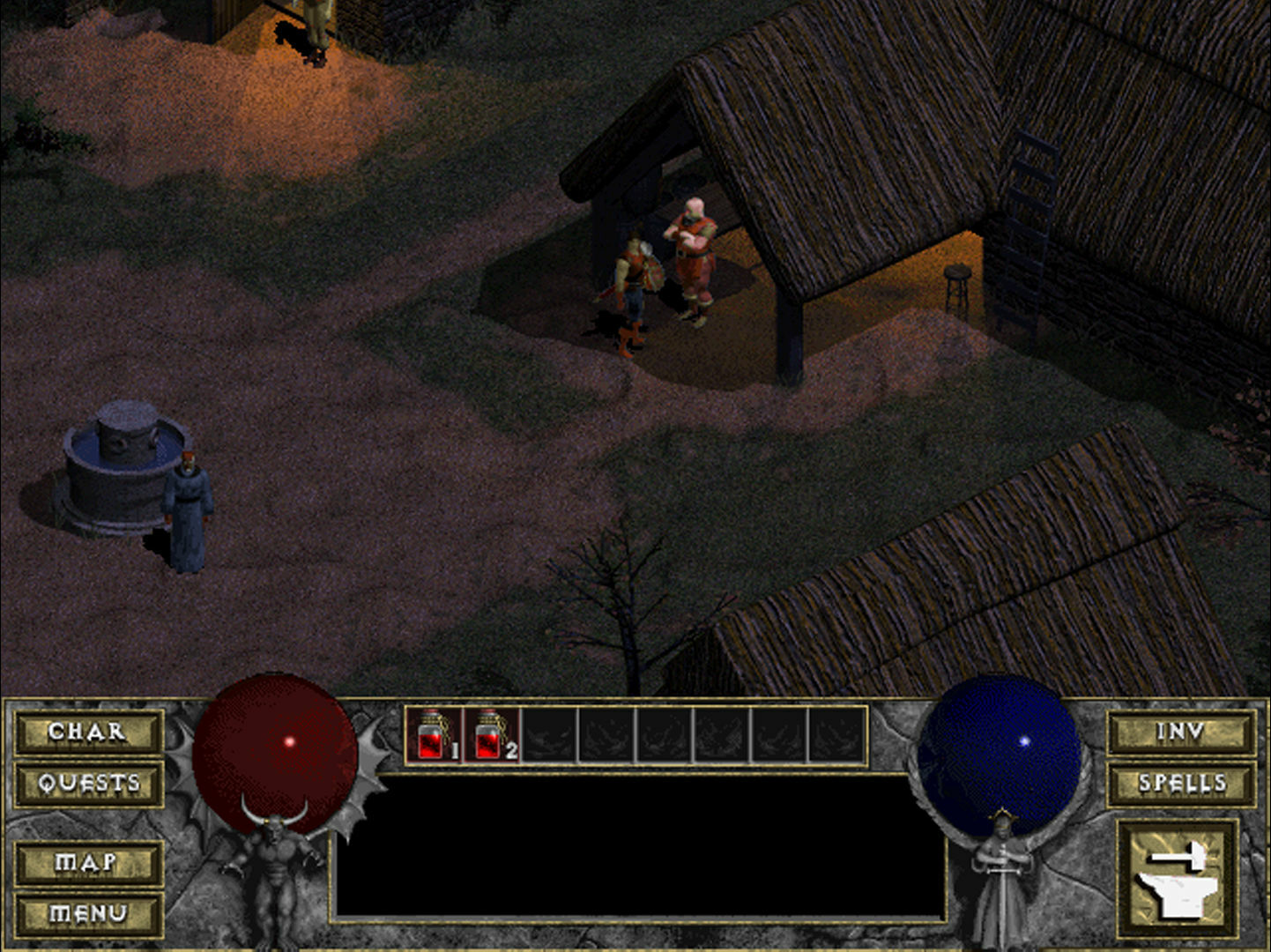
Diablo III was okay for me at first. Then the repeated dungeon and map runs became the part I disliked: grind gear, grind levels, run another map, repeat. It started feeling like the same sort of routine that MMO dungeons push you into. Diablo III became shittier in my eyes after that change.
The systems have names and dates. Reaper of Souls launched for PC and Mac on 25 March 2014, bringing Adventure Mode, bounties and Nephalem Rifts. Patch 2.1.0 added Greater Rifts in August 2014, along with Seasons and leaderboards. These changes arrived after the original 2012 game.
Blizzard’s 2014 Greater Rift explanation describes a timed run: kill enough monsters, face the Rift Guardian, and earn access to a higher rank if you finish quickly enough. The initial system gave you fifteen minutes to spawn and defeat the Guardian. That structure makes improving your equipment and clearing the next difficulty a repeated goal.
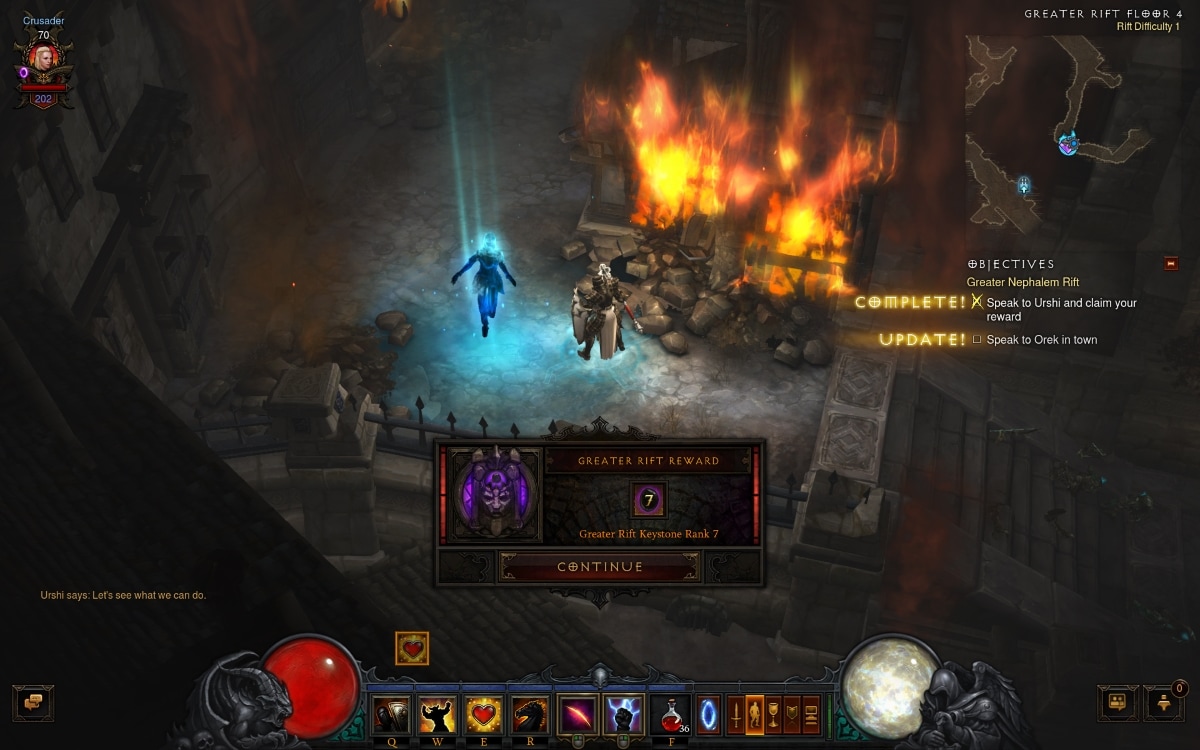
The campaign remained available, and Adventure Mode was another mode to choose. My problem was the increasing emphasis on repeatable runs and equipment progression. Calling that endless replayability did not make it enjoyable for me. I wanted to keep playing because I liked what I was doing, and that loop stopped giving me enough reason.
There was clearly a large audience for the expansion. Blizzard reported more than 2.7 million copies sold through worldwide in its first week, across online sales and retailers, in its April 2014 release announcement. That is a launch sales figure, not a satisfaction score or a count of people still playing today. Commercial success never made the Rift grind less boring for me.
Diablo IV did not persuade me to finish; I played Immortal too
Diablo IV was worse for me. I did not even bother completing it.
And yes, I played Diablo Immortal, the mobile entry, too. I have even called it “the Diablo IV we should have had.” That comparison still does not make its monetisation something I want Blizzard to carry further into the series.
In its 17 December 2020 explanation of Immortal’s monetisation plans, Blizzard described Crests for Elder Rifts that could be earned or bought, paid reforging materials, and free and paid Battle Pass tracks. Reward systems and paid consumables were being designed together before release. I hate that direction. Putting more opportunities to pay inside the progression loop does not improve my reason to play.
There is a platform distinction here too. Blizzard’s launch instructions allow a guest account on mobile, while PC play and carrying progress between PC and mobile use a Battle.net account. Mobile guest play does not make Immortal a self-contained offline game.
The discs I own, and the control Blizzard keeps
My physical-game catalogue lists two Diablo II copies, a separate Lord of Destruction expansion, and a Diablo III PC box. The Diablo III entry explicitly identifies Battle.net account locking on that physical copy.
The original Diablo II manual takes you straight from the installed game to Single Player and local characters. Battle.net is a separate multiplayer choice with its own login. The original release also had a Play Disc requirement. Disc checks and compulsory account binding are different restrictions. I have not tested these collected copies on my current Linux setup.
| Edition | Account and offline distinction |
|---|---|
| Diablo II and Lord of Destruction, classic PC discs | The original releases support local single-player. Battle.net login is for its online modes. The old disc requirement is not a modern account-activation requirement. |
| Diablo III, my PC box | The game licence is attached to Battle.net and PC play depends on the online service. Possessing a second-hand disc does not establish that its activation code can be redeemed. |
| Diablo III: Eternal Collection, physical Nintendo Switch release | An official alternative on another platform, supporting offline local play. The PC edition remains dependent on Battle.net. |
| Diablo II: Resurrected, PC | Offline characters are supported, but Blizzard documents online validation lasting thirty days. This is a separate account-bound purchase from the classic discs. |
| Diablo + Hellfire, GOG | An official DRM-free PC alternative: download an offline installer, then install and play locally without Galaxy or online activation. |
For Diablo III, Blizzard’s 2012 launch guide requires a BattleTag and describes logging into the game service. The boxed PC release is part of that account system. Once a game key has been redeemed, selling the plastic disc does not give a new owner a fresh licence. I do not know the redemption status of the key in my collected box.
There are real alternatives worth distinguishing. Nintendo’s publisher-supplied description of Diablo III: Eternal Collection explicitly offers local play without an internet connection. On PC, Blizzard ties the game to Battle.net and the online service. I should not have to change platforms to get offline local play from a game already capable of offering it.
For Resurrected on PC, Blizzard customer support explains the thirty-day validation window. Offline characters do not remove that periodic permission check. Diablo IV’s publisher-supplied PC requirements likewise require a Battle.net account and internet connection. Playing alone still depends on the company letting you in.
The StarCraft comparison on the magazine page concerns the original game, which is also in my disc collection. Its original PC manual provides local single-player and treats Battle.net as an online multiplayer option. That older disc release should not be confused with the modern Remastered account system.
I am sick of corporate greed being dressed up as extra value for players. Paid progression consumables and account-bound access are choices about money and control. A box on my shelf is much less useful when the company’s account system decides whether I can use the game inside it.
We still have power through what we buy, but we keep acting as though we have forgotten it. Paying for the next release, the next paid extra and another version of a game we already own keeps financing the treatment we complain about. I want consumers to stop buying digital games and stop pretending an account-locked box solves the problem. My own decision here was to refuse to buy Resurrected.
The game missing from my gameplay recordings
The funny part is that I have gameplay recordings of Diablo I, Hellfire, Diablo III, Immortal and Diablo IV, but apparently none of Diablo II, the one I completed repeatedly.
I think that happened because I could not get the original Diablo II to run on Windows when I tried to return to it. I am not completely sure about the attempt or exactly when it happened. I do not think I have properly played it since Diablo III came out. I did not want to buy Blizzard’s rerelease, and I still own the original discs and Lord of Destruction.
I have not tried those discs on Linux yet. I should give them a go. I would rather try the copy I already own than buy the game again.
Magazine photographs and sources
The three clean text panels are labelled recreations of excerpts from Peter C. G. Jensen’s Diablo II preview, CD-ROM Spil 11/1998, p. 23. The original Paladin photograph appears above. The remaining original photographs are available below; their printed text, artwork and early screenshots are untouched. All five videos are my supplied gameplay recordings. External gameplay images are credited in their captions.
Original page and close-up photographs
Background sources: Blizzard’s original Diablo II manual, archived by the Museum of Computer Adventure Game History; Erich Schaefer’s October 2000 postmortem; Blizzard’s Arreat Summit; and the publisher documentation linked beside the relevant claims. Archived original StarCraft PC manual. Edition and account information checked on 14 October 2026.