
I still think Fallout 1 and 2 are the best Fallout games when I look at the games as a whole and their quality. They were also extremely hard for me. I played both back in the day, struggled to work out what I was supposed to do, and never got very far. I have never been much of a fan of turn-based combat, either. Those things made it difficult to enjoy actually playing games that I otherwise liked.
My personal favourite is Fallout: New Vegas, followed by Fallout 3. Fallout 4 moved away from what made Fallout great for me, and Fallout 76 is the worst of the lot. I have played all the Fallout games, but putting them in order is more complicated than naming the one I most enjoy.
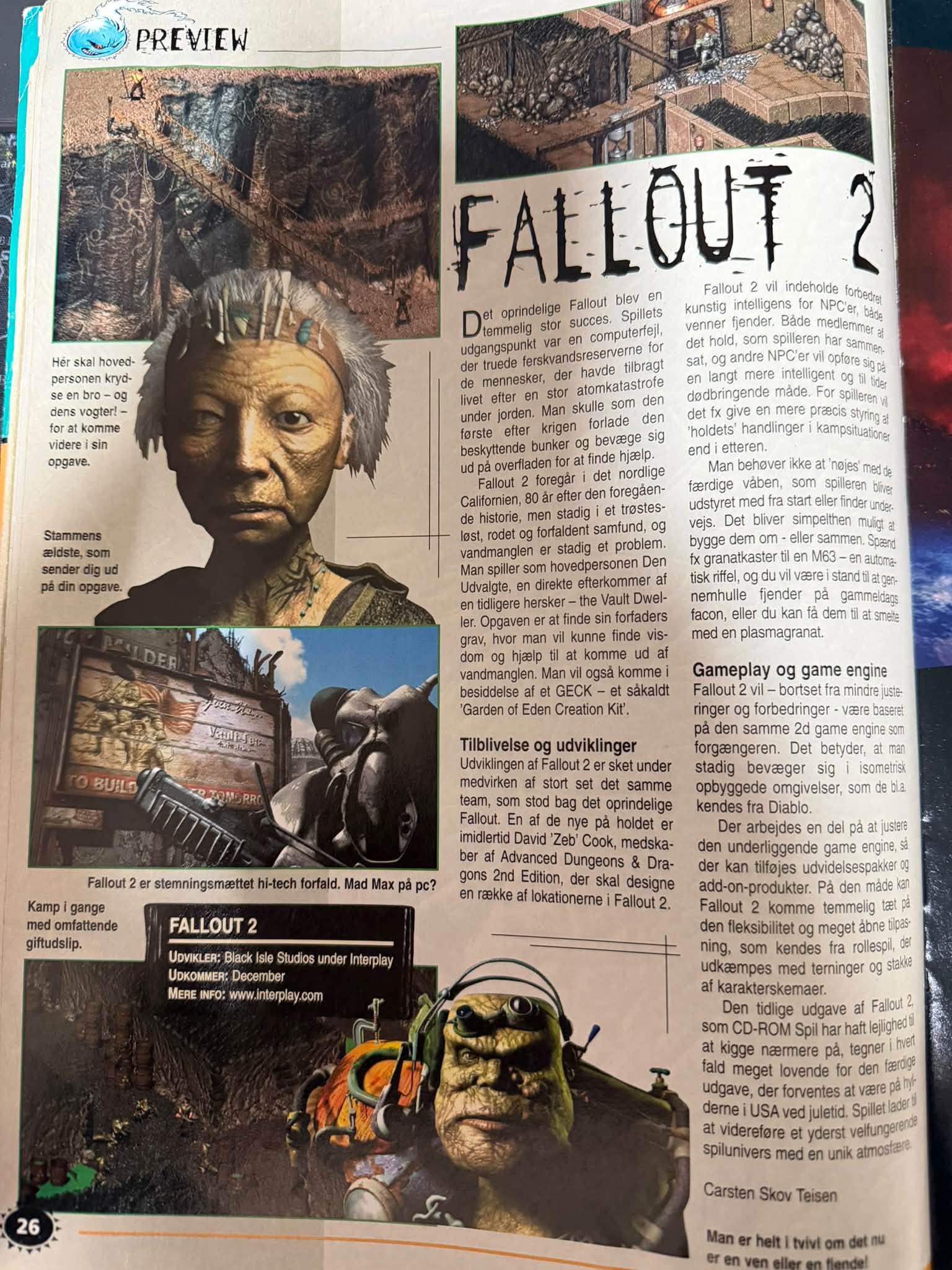
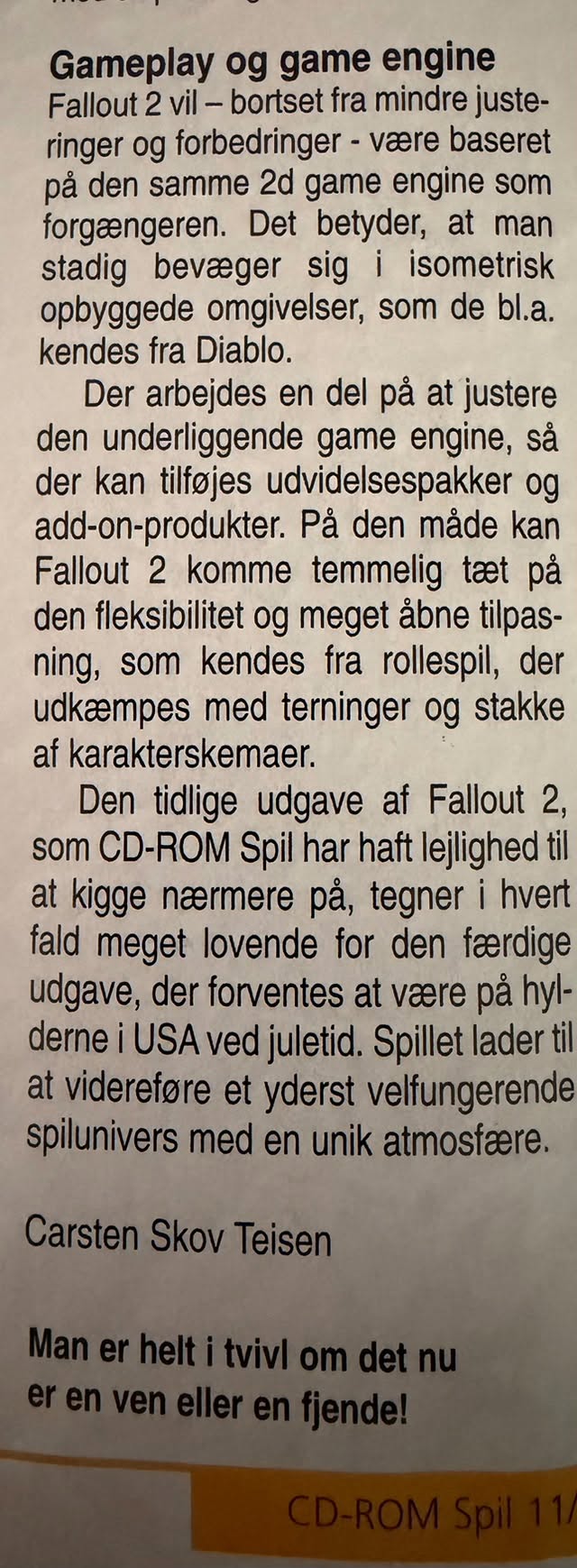
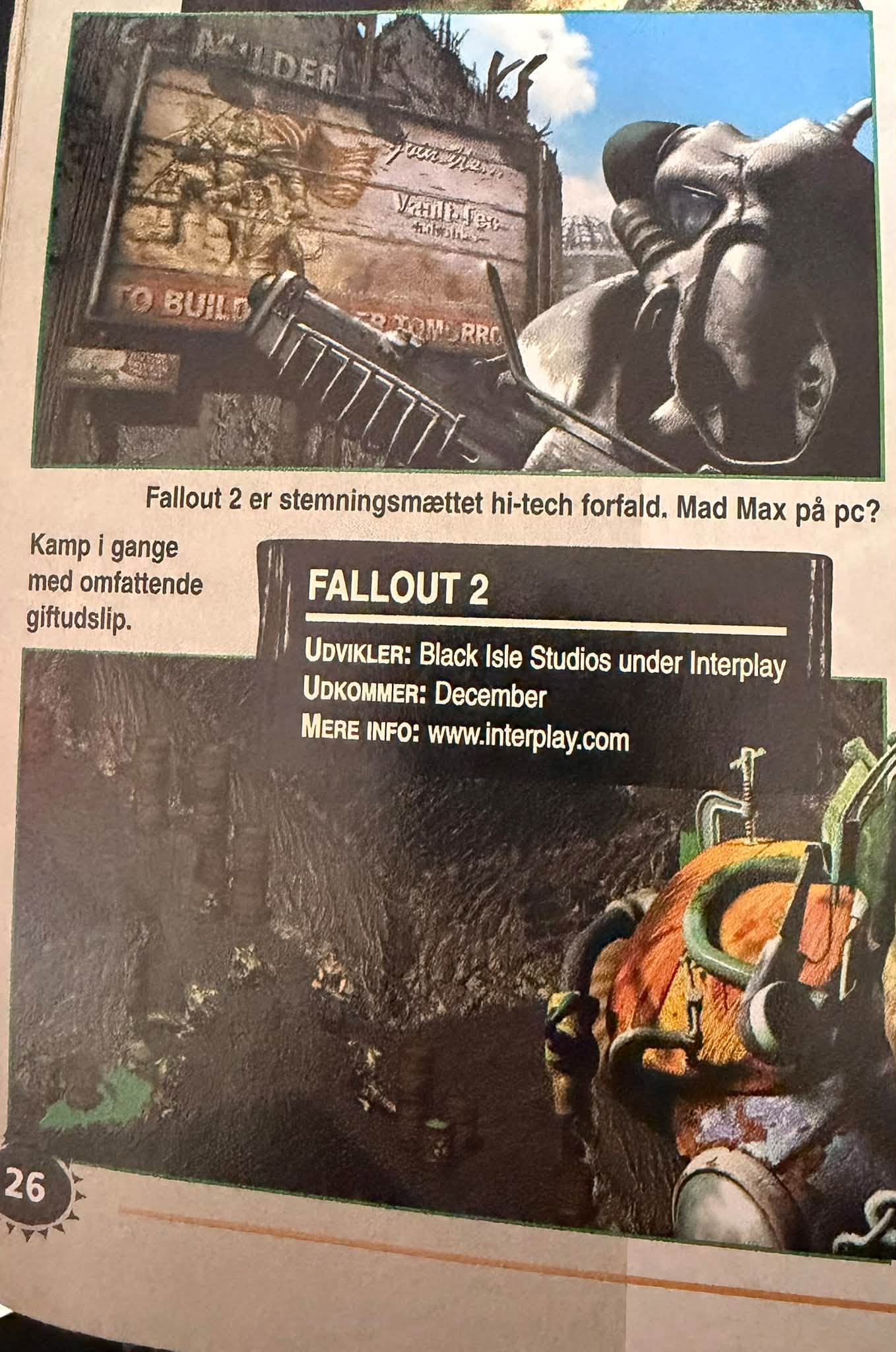
This old Fallout 2 preview brings me back to the beginning. It is from CD-ROM Spil 11/1998, page 26, written by Carsten Skov Teisen. The issue is dated 15 October–11 November 1998. There is no review score here: this is the magazine looking ahead to the sequel, with some very specific expectations about its story, companions and weapons.
View the complete original magazine page
The water chip, the rope and a deadline I did not understand
The first Fallout starts with Vault 13 needing a replacement water chip. You have 150 in-game days before its water runs out. But the problem for me was knowing what to do with that time. Being told that something is urgent does not help much when you are still trying to understand the game.
The deadline is explained at the beginning, and the Pip-Boy tracks the remaining days. The original manual even describes the note counting down the Vault’s water supply. I still remember feeling lost. I wanted to explore and find my way through it, while the game was also expecting me to save everyone before the clock ran out.
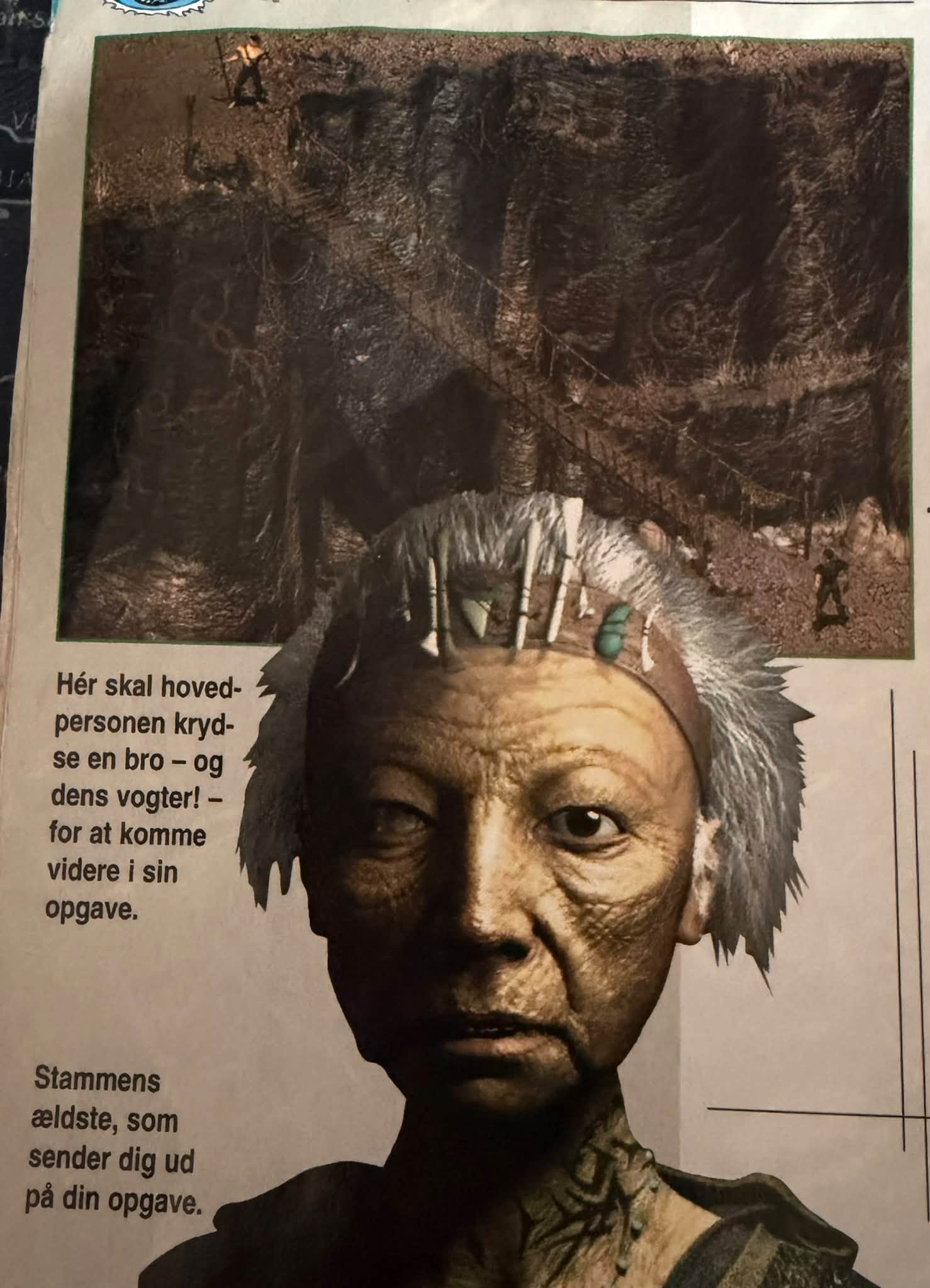
The rope-and-abandoned-vault sequence I remember fits Vault 15. Its damaged elevator shafts require ropes to reach the lower levels. Getting down there does not solve the water problem: the replacement chip is found in Vault 12 beneath Necropolis. Vault 15 is an early lead that does not produce the thing you need. The water-chip walkthrough lays out those separate steps.
Getting past the rope obstacle does not stop the water-chip countdown. Returning the chip to Vault 13 resolves that initial deadline. It was only much later, after I had played Fallout 3 or possibly Fallout 4, that I got past the early point I had been stuck at.
Fallout 2 has a different opening problem. Arroyo is suffering from drought and needs a G.E.C.K., the Garden of Eden Creation Kit. It is not another 150-day hunt for Vault 13’s water chip.
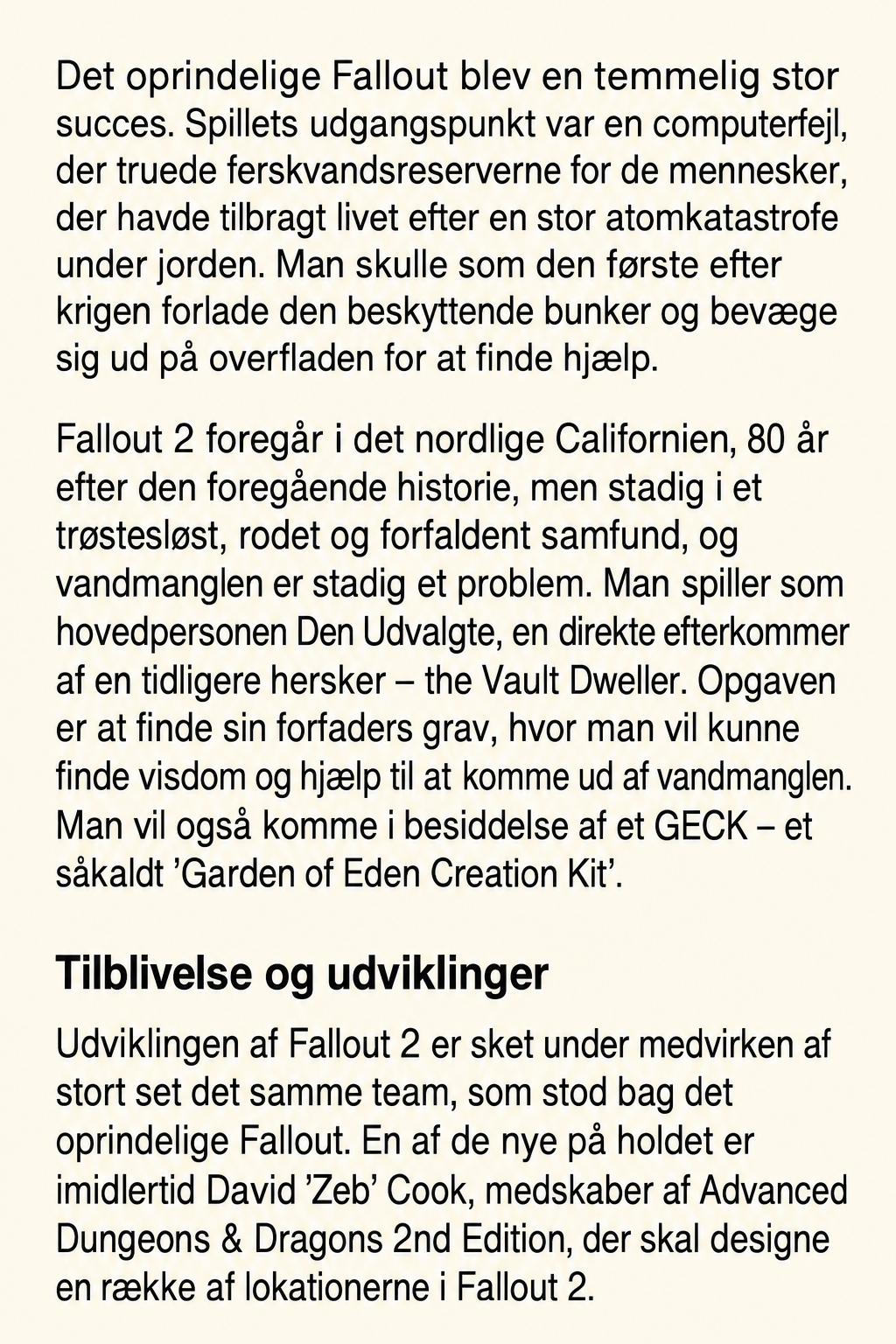
Compare with the untouched opening photograph
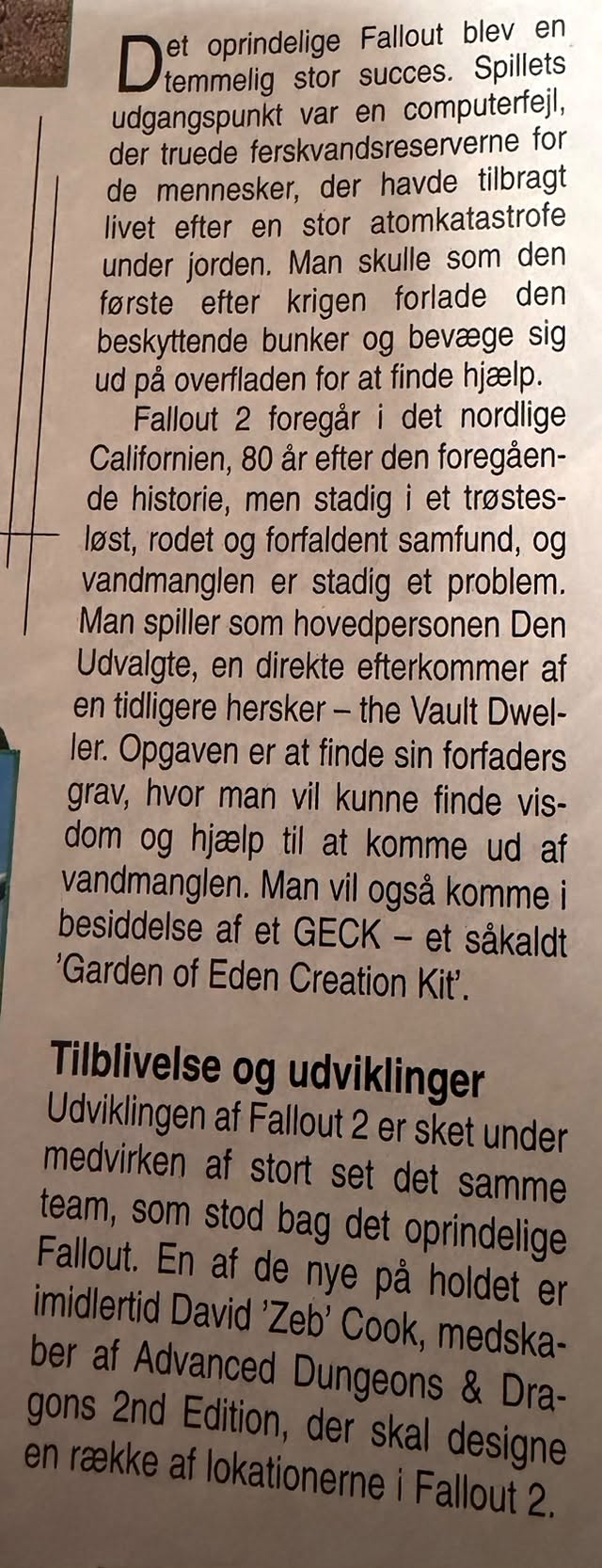
What the Fallout 2 preview actually promised
The preview puts Fallout 2 in northern California, eighty years after the first game. That broad setting is right: Bethesda’s series timeline places Fallout in 2161 and Fallout 2 in 2241. The sequel’s Chosen One belongs to the community founded by the original Vault Dweller.
Its description of the mission is less helpful. The magazine says the task is to find the ancestor’s grave, where wisdom and help with the water shortage can be found, and that the player will also obtain a G.E.C.K. The released game sends the Chosen One to find a G.E.C.K. to save Arroyo. The Elder’s instructions in Matthew J. Norton’s official strategy guide make that purpose clear. Describing it as a search for a grave gives readers the wrong account of the opening quest.
The development paragraph introduces David “Zeb” Cook as a new member of the team. He does appear among the designers in the finished game’s manual credits. The information box identifies Black Isle Studios under Interplay, lists the expected release as December, and points readers to Interplay’s website. The closing paragraph likewise expects the game on American shelves around Christmas.
There is a more concrete improvement in the section on companions. The magazine promises better behaviour and more precise control over party members. Fallout 2’s manual documents a Combat Control panel for setting their behaviour and equipment preferences. You can influence things such as aggression, distance and burst-fire caution. That is useful control, although companions still act for themselves during combat.
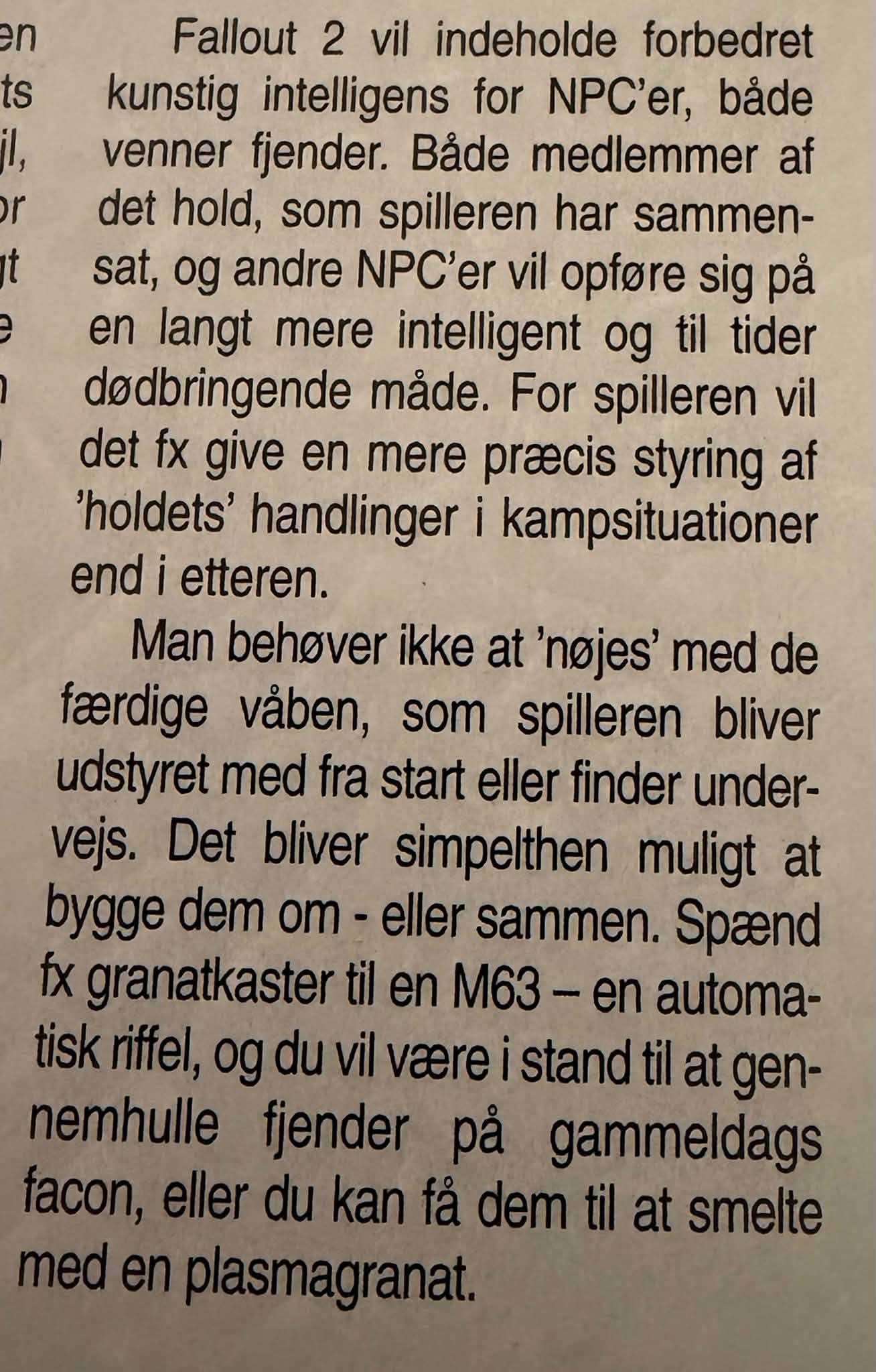
The weapon paragraph goes much further. It says weapons can be rebuilt or combined, giving the example of attaching a grenade launcher to an “M63” automatic rifle, then switching between shooting enemies full of holes and melting them with a plasma grenade. That is an inaccurate description of the released game’s weapon-upgrade system.
Fallout 2 has specific upgraded weapon variants, with NPC technicians performing particular conversions. The official guide describes, for example, the conversion from a Plasma Rifle to a Turbo Plasma Rifle. That is a much narrower system than the assembly example printed here. Upgrading a weapon is not the same feature as freely combining weapons. The preview makes the second sound like something players should expect.
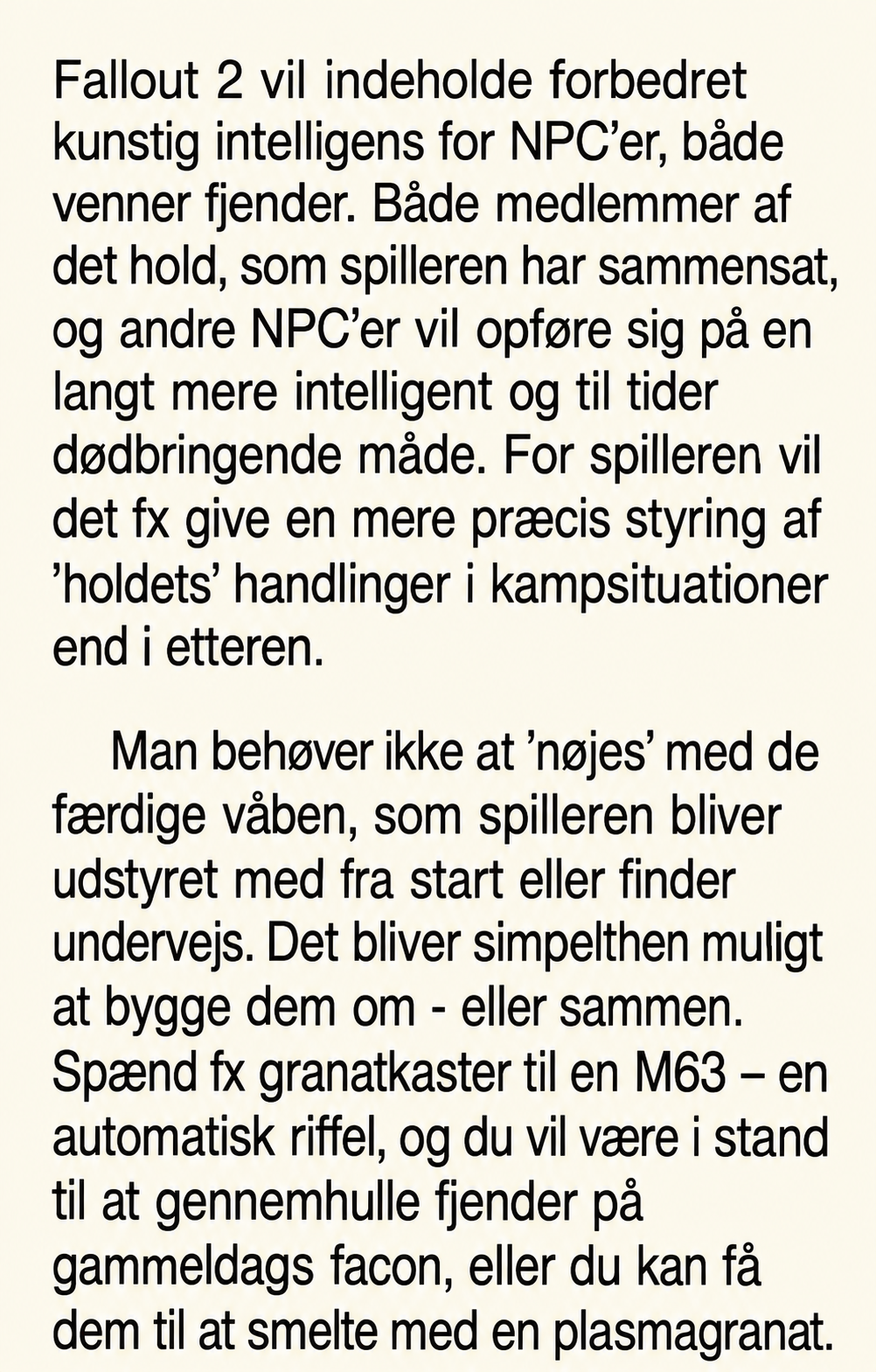
Read the original AI and weapon-combining passage
The engine section expects the same basic 2D, isometric presentation with adjustments and improvements. It also talks about preparing the engine for expansions and add-ons, reaching towards the flexibility of tabletop role-playing. That is an ambitious forecast. The page describes plans to accommodate those future products.
Its final judgment is very positive about the atmosphere and the continuation of the game world. On the quality of those early Fallout games, I agree with the enthusiasm. The weapon-combining example still should not have been presented so confidently. A preview can discuss plans while making clear which features have actually been demonstrated.
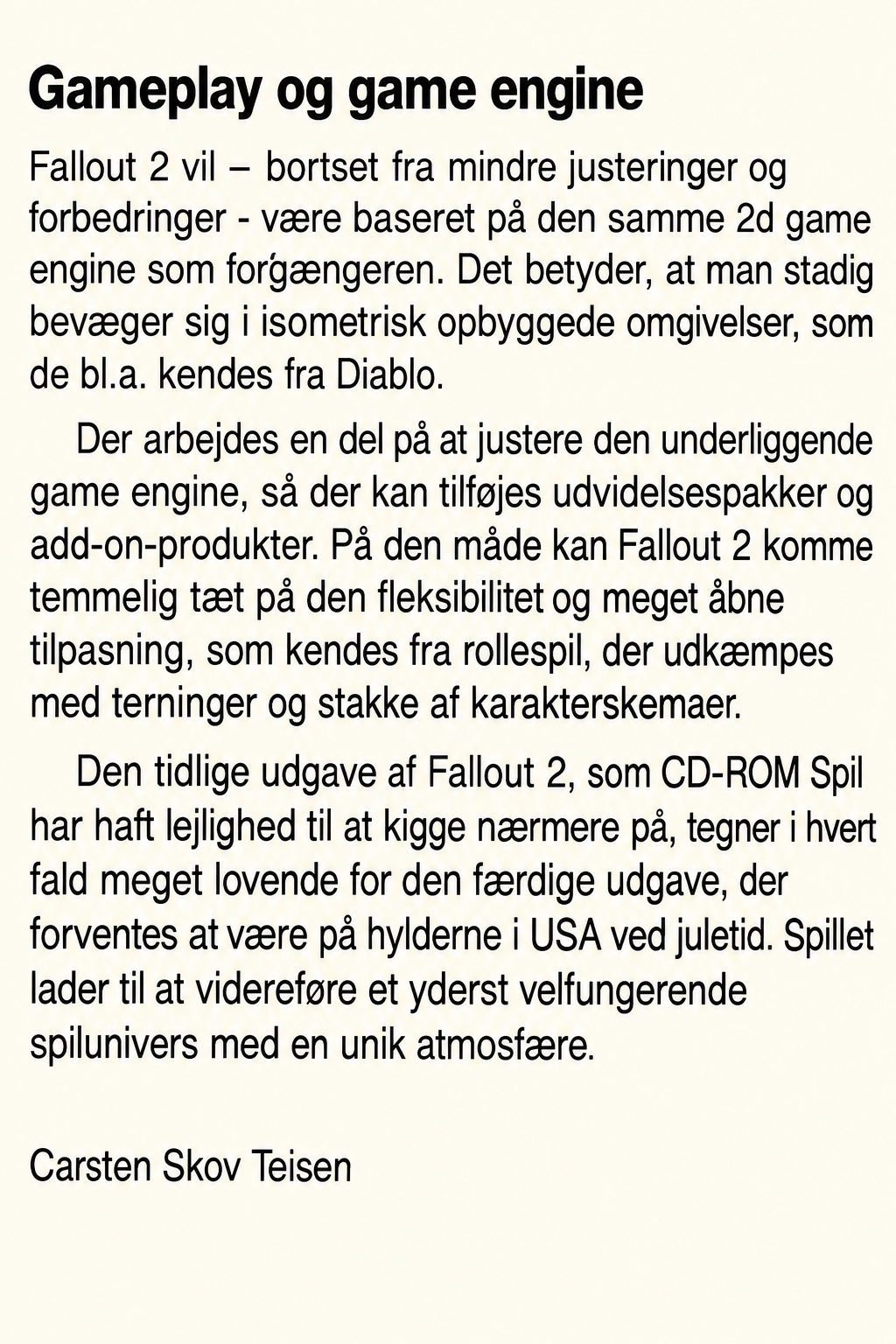
View the original verdict and information-box photographs
Turn-based combat could make a fleeing enemy exhausting
One of the things that annoyed me most was enemies running away once I became too strong for them. In a turn-based game, chasing something that keeps retreating can become a long sequence of moving, ending the turn, waiting and doing it again. I remember that happening while enemies were still on the screen, and it became really frustrating in the long run.
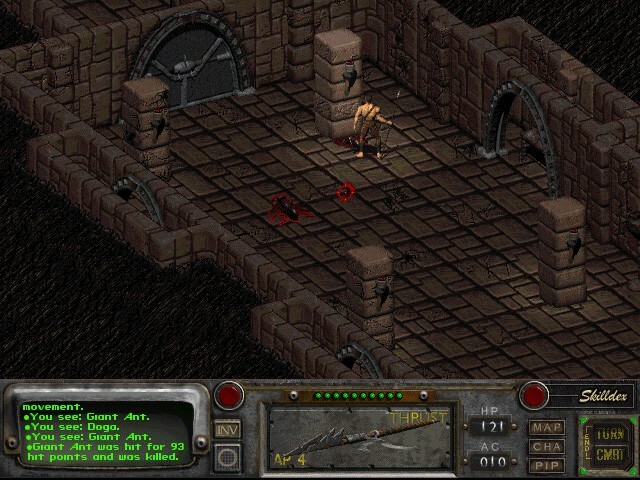
The originals budget combat through action points, so moving after someone competes with the actions you could otherwise spend attacking. The original manual explains that End Turn and End Combat are different controls; nearby hostile creatures can prevent combat from ending. That explains the distinction in the interface. It does not make the stop-start pursuit any more enjoyable for me.
I was never much of a reader in games, either. Fallout has plenty of dialogue, but Morrowind was the one that really killed me with words. I could like the game world and still struggle with the amount of reading or the pace of getting through it.
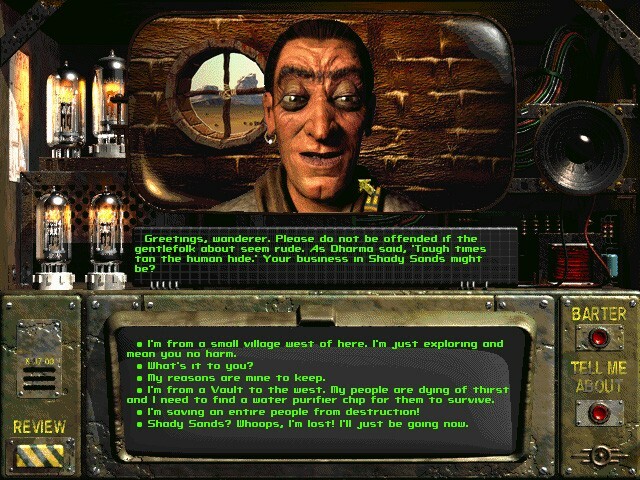
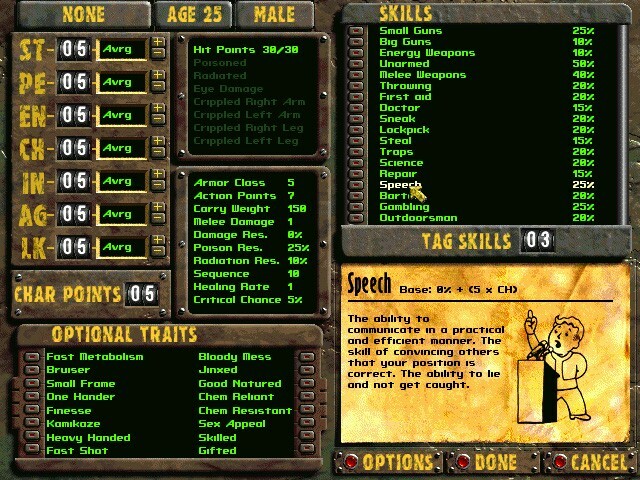
Fallout 2 builds its characters from seven SPECIAL attributes, skills and optional traits. Speech, Science and Repair sit alongside combat skills on the same character sheet. There is plenty of room to shape a character beyond choosing a weapon. I still find the early games difficult to place in a personal ranking: I rate their quality highest, but their difficulty and turn-based combat get in the way of my enjoyment.
New Vegas is the Fallout I most enjoy
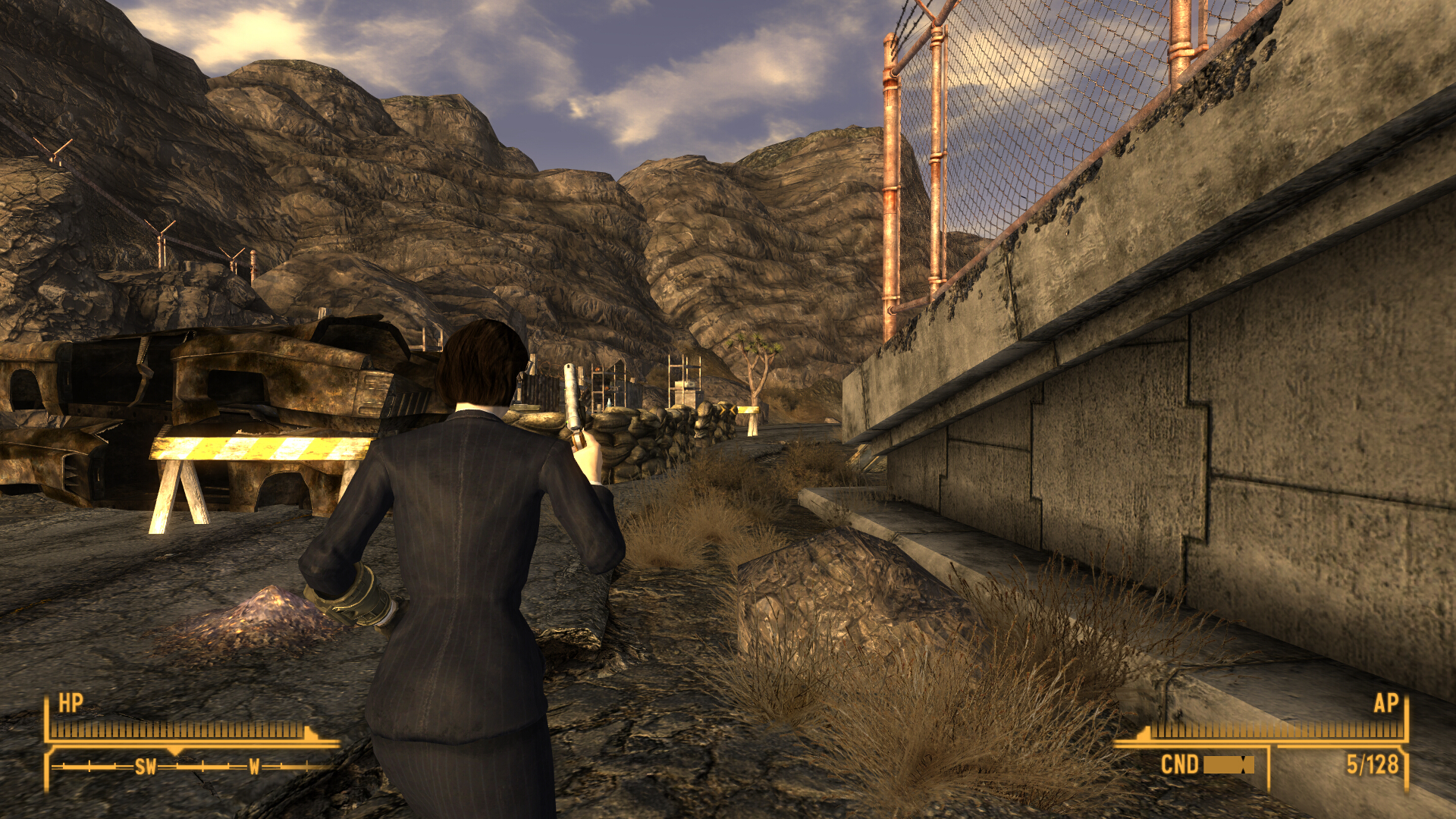
New Vegas is my favourite to play, and Fallout 3 comes next. Fallout 3 still felt like Fallout to me. Compared with New Vegas, it feels behind in some ways, but I still like it. New Vegas is the one that comes out on top when I put the games in order by personal enjoyment.
Obsidian developed New Vegas, while Bethesda Game Studios made Fallout 3. The later game returns the series to the western United States, with the Courier caught in the Mojave’s struggle for power. The official timeline puts their stories in 2281 and 2277 respectively.
Fallout 4 went in a direction I did not want
My problem with Fallout 4 is that it moved away from what made Fallout great and added base building. I wanted more of what I liked about Fallout. Settlements did not improve that experience for me.
Crafting and constructing settlements are a real part of the change: Bethesda itself identifies them among Fallout 4’s additions to the series. I can see what the building tools let people make, but that does not make them what I wanted from this game. Fallout 3 still felt like Fallout to me; with Fallout 4, I felt the direction moving further away.
Fallout 76 is at the bottom
Fallout 76 is the worst Fallout game I have played. After the direction of Fallout 4, 76 pushed the series even further away from the games I rate most highly.
There is also a concrete difference in how much control the player has over access. Bethesda’s support page confirms that Fallout 76 has no offline mode. Playing solo is possible, but solo play still depends on the online service. A private world is not an offline copy of the game.
Bethesda introduced private worlds through the paid Fallout 1st membership in October 2019. Its announcement explicitly presented the ability to play privately, including alone, as a membership feature. Selling that access while leaving the game dependent on servers is exactly the sort of consumer treatment I dislike. I want to be able to keep playing a game without waiting for a company’s service to let me in.
A New Vegas box can still come with an account lock
My physical collection includes a PC copy of Fallout: New Vegas whose disc edition requires Steam activation.
For the Steam PC release, Bethesda documents internet access for validating the CD key and installing Steam updates, followed by offline play once everything is installed. Steam’s retail-key instructions explain activation into an account. Offline mode after activation still leaves the copy tied to that account system. Passing the disc to somebody else does not transfer an already-redeemed activation.
That deserves criticism even when the game is my favourite. Bethesda’s choice to use Steam activation for this PC edition limits what the physical purchase gives its owner. A box and disc should not leave the next player dependent on an activation already attached to somebody else’s account.
There is an official alternative: GOG’s New Vegas Ultimate Edition is sold DRM-free, with no activation or online connection required to play. GOG offers offline installers and makes Galaxy optional. An account for buying and downloading that installer is different from compulsory account binding when playing the installed game. This is a separate release, not evidence that my boxed copy loses its Steam requirement, and paying again is not a fix for the restriction on the copy I already own.
Morrowind is also in my physical PC catalogue, listed under the original game title. GOG’s separate DRM-free Game of the Year release includes Tribunal and Bloodmoon.
We still have power as consumers, but we undermine it when we keep paying for restrictions we hate. Refusing another purchase, preorder or subscription is something we can actually do. I want games that I can keep, install and play independently. The existence of a DRM-free New Vegas release shows that account locking was not the only possible way to sell it.
I grew up playing far more games than I can remember
The games I have written about so far are nowhere near half of what I have played. My dad gave me one console after another. I had a PlayStation when it came out and a PlayStation 2 the year after that came out, and it continued from there.
I have played so many games that I cannot remember even a fraction of them off the top of my head.
Sources and image credits
Magazine source: my six photographs of Carsten Skov Teisen’s Fallout 2 preview, CD-ROM Spil, third year, no. 11, 15 October–11 November 1998, p. 26. Recreated text panels are labelled individually; all untouched photographs are retained above.
- Fallout: Vault Dweller’s Survival Guide — Pip-Boy water-supply note, action points and ending combat.
- Fallout 1: Find the Water Chip — community walkthrough cross-check for the 150-day mission, Vault 15 ropes and Necropolis route.
- Fallout 2 manual — party control, character systems and design credits.
- Matthew J. Norton, Fallout 2: Official Strategies & Secrets — opening mission and documented weapon conversions.
- Bethesda’s Fallout timeline — settings, developers and settlement-building context.
- Bethesda’s New Vegas installation support, Steam retail activation, GOG New Vegas Ultimate Edition and GOG Morrowind GOTY — edition and access information checked 15 October 2026. Physical entries checked against my catalogue, pp. 10 and 32.
- Fallout 76 offline-mode support and Fallout 1st’s October 2019 announcement — online dependence and the introduction of private worlds.
- Additional screenshots: Fallout, Fallout 2, New Vegas Ultimate Edition and Fallout 4 GOTY product galleries. They are external game images, separate from my embedded YouTube gameplay. Copyright remains with the respective rights holders.