

I used to be much more involved in the anime community than I am today. One of the videos I made back then was a Danish guide to spotting bootleg anime DVDs, using boxes and discs from my own collection. I had bought copies that I later recognised as bootlegs, and I wanted to show people what I was looking at.
The version on YouTube was uploaded on 12 January 2021, but the recording is older. In it, I talk about purchases from around 2008. The camera spends a lot of time refusing to focus on the small print, but the boxes, the discs and the experience behind them are real.
The copies I kept as a warning
Two of the sets I go through are Hunter × Hunter and Blood+. I turn the boxes over, look at the information panels and stickers, open the cases and hold the discs up to the light. By the time I recorded the video, I was keeping those copies as a reminder of what I had bought rather than regularly watching them.
At one point I realise I have mixed the two sets up while showing them. Good going. That also explains why looking at the case and looking at the disc have to be part of the same inspection: the sleeve sitting in front of you and the disc inside it may not even belong together.


When I challenged the shop about the copies, it insisted that it had the rights to sell them and offered a return. Sending the bloody things back would have cost a fortune, and I did not trust the refund enough to take that gamble. I kept them and reported the shop to the FBI. By the time I made the video, its website was gone.
Why these boxes needed a closer look
The suspicious details were scattered across the packaging. I pointed out the huge episode ranges, the way “Vol” and “End” were used, the language lists, the small print and the stickers. On the Blood+ set, I also drew attention to a sticker referring to The Last Vampire, even though Blood+ was the title on the box.
Those details are worth comparing with a documented release of the same title. Who published it? For which market? Does the catalogue number match? Do the advertised episodes, audio tracks and subtitles match that edition? A familiar anime title on the front does not answer those questions.

The difference is the permission to release the programme. An official distributor licenses a title and produces an edition for its market. AnimEigo’s archived FAQ describes the work after licensing: translation, subtitles, disc authoring, replication and distribution. It also explains that territorial restrictions could prevent the company from selling a title outside North America.
Bootlegs can have their own artwork, a neat box and a convincing-looking company name. In a March 2002 column, AnimeNation’s John Oppliger described unauthorised anime DVDs made in factories with professionally pressed discs and attractive packaging. The sources he described included copies of official DVDs and recordings of Japanese television. This problem was already being discussed years before my purchases.
DVD-9 is a disc format
DVD-9 does not mean bootleg. It is the name for a single-sided, dual-layer DVD. The familiar DVD-5 is single-sided and single-layer. Disc manufacturer Disc Makers lists the formats as follows:
| Format | Layers | Nominal capacity |
|---|---|---|
| DVD-5 | One | 4.7 GB |
| DVD-9 | Two | 8.5 GB |
The DVD-9 badge on a suspicious box needs to be considered alongside its other details. It cannot settle the question by itself. Genuine releases use dual-layer discs too.
In its counterfeit guide, updated on 22 October 2025, Shout! Factory says that most of its DVD releases use dual-layer media, while counterfeit copies of its sets often squeeze the content onto cheaper single-layer discs. That is a comparison with a known original edition. It is not a rule that every small disc is fake or every large disc is genuine.
Regions, languages and the word “import”
I spend quite a while on the language lists in the video. The combination of Japanese audio with English and Chinese subtitles was a familiar feature of the suspect imports I was discussing. A language list still needs to be checked against the release territory and the publisher’s actual edition. A Chinese subtitle track is not, on its own, an authenticity test.
The same applies to “Region 0”, “All” or “region-free”. Sony’s DVD region guide explains that some commercial DVDs are not region-coded. It lists Japan and Europe in DVD Region 2 and the United States and Canada in Region 1. Region coding concerns playback and distribution territories; it does not certify the licence behind a disc.
There are also clearly documented licensed region-free anime releases. AnimEigo’s Dagger of Kamui Blu-ray page identifies the licensor, sets out the territories it can supply and says that the disc is not region-locked. That example is a Blu-ray, but it makes the broader point plainly: compatibility and distribution rights are separate details.
PAL or NTSC markings are another playback consideration. The PAL label I point out on the UK Resident Evil DVD belongs to that technical information. It is not an authenticity seal. “Import” is equally unhelpful without a named edition: both licensed releases and unauthorised copies can arrive from another country.
What the disc can tell you
In the video I look at the printed surface, turn the discs over and try to show the tiny markings around the centre. Some of my suspect discs have dull printing, and the cases do not hold everything securely. Those are useful observations about the copies I had, but a matte label or a loose disc does not identify the rights holder.
The small numbers and manufacturing marks can help you compare a disc with a known copy of the same pressing. A barcode on a sleeve, a catalogue number, a manufacturing mark and copy protection do different jobs. None should be treated as a magic mark that makes the whole release legitimate.
Picture and sound matter too. I complained about the poor audio on the Hunter × Hunter set despite its prominent Dolby Digital branding. A printed format logo does not tell you how well the material was sourced or encoded. Shout! Factory’s guide also describes playback faults and degraded picture and sound in counterfeit versions of its own sets.
The seller matters as much as the listing
My old buying advice was strongly against eBay. The practical check now is the actual seller and the actual item, including when the listing sits on a familiar marketplace. Shout! Factory specifically warns about third-party vendors selling counterfeits through Amazon Marketplace, Walmart Marketplace and eBay. A recognisable website name around the listing does not authenticate the box being sold.
Ask for photographs of the particular copy: front, back, spine, discs and identifying numbers. Compare them with the publisher’s release information. Check the episode list and included material, and read the seller’s return terms before paying. With a sealed set, exterior photographs and the documented edition become especially useful.
At a convention, ask the dealer before opening a sealed item. If something looks wrong, raise it with the dealer and the event organisers. Keep the advert, messages, invoice and photographs if a purchase later becomes a dispute.
The Danish rules need their own distinction
Owning a counterfeit product for private use and selling unauthorised copies are different issues under Danish guidance. The authorities’ Jeg vælger ægte FAQ says that a private buyer who discovers a product is counterfeit may keep it, while resale of copyright-protected counterfeit goods is unlawful. It also warns that goods ordered from outside the EU can be stopped and destroyed by customs, including purchases intended for private use.
For an online purchase from a business in Denmark or another EU country, Forbrug.dk explains the usual 14-day withdrawal period. Sealed audio and video recordings have a specific exception once the consumer breaks the seal, described in the Consumer Ombudsman’s webshop guidance. A complaint that an item was sold as genuine but is counterfeit is a different matter from simply changing your mind about a genuine DVD.
That is why I would agree with the seller about an inspection before opening anything. A demand to inspect a disc is not a reason to tear open someone else’s sealed stock. If a delivered item turns out to be a counterfeit, complain to the seller promptly and in writing; Forbrug.dk’s counterfeit-goods guidance explains the complaint routes.
Cheap packaging can still be legitimate
One of the more useful comparisons in the video is the set I cannot confidently identify as genuine or bootleg. Its printing looks cheap, but I can find details that make me hesitate. I leave that uncertainty in the comparison. A poor-looking copy needs a proper edition check.
I also bring out a UK Resident Evil DVD as a legitimate comparison, then an inexpensive anime edition with very basic presentation. The point of having both on the table is that production quality and authenticity are not the same question.
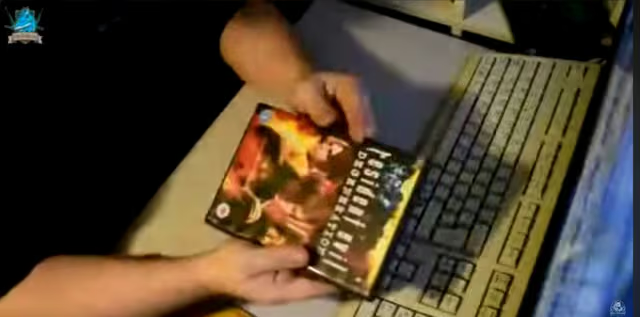

The last budget edition goes too far for my taste. There is hardly any disc artwork, and I show a piece of plastic broken off inside the case. It was extremely cheap, but I want a decent cover and a proper-looking edition when I put something in my collection. I say in the video that I would end up buying it again in another edition for that reason.
Video and frame captures: Kiba Snowpaw. The frames retain the limitations of the original 360p recording.