
CS:GO was a good game with problems. I spent years playing it, got annoyed with it, kept coming back, and spent far too much money on the things surrounding it.
I have played Counter-Strike since it was a mod for Half-Life, and I have played every Counter-Strike since. My main Steam account dates from 2 July 2008, but my time with the series started before that. By the time CS2 replaced Global Offensive, I would put my GO playtime somewhere around 2,600–3,000 hours, possibly more.
That is a lot of time to spend with a game. There were reasons I stayed, and there were things I hated about it.
From Source GunGame to GO
I preordered CS:GO on 17 August 2012, just before its 21 August launch. Buying it did not mean I immediately abandoned Source. I stayed with Source for a long time because I played GunGame constantly. That was the version I wanted to play, and I thought GO’s equivalent was shit.
Arms Race had the weapon progression and the final knife kill, but having a similar idea did not make it a replacement for the Source GunGame I was spending my time in. I already had something I enjoyed.
What eventually moved me over was the people I hung out with. They were playing GO, so I followed them, and then I got into Competitive. That became a much bigger part of my time with the game.
I have never particularly liked the naming. Playing against other people was multiplayer to me. Co-op was going through missions together with a friend, like in Far Cry. GO called its ranked mode Competitive, so that is the name I ended up using.
Why I kept playing
The basic game had enough going on without needing a constant stream of new weapons or rewards. In a normal long Competitive match, two teams of five played up to 30 rounds, with 16 needed to win and a possible 15–15 draw. You bought equipment with the money available, worked around what the other team could afford, and tried to make your way through the map without throwing the round away. Valve’s GO mode guide describes that older ruleset.
A rifle was only part of it. Positioning, movement, recoil, sound, flashes, smoke and what your teammates knew all mattered. Saving a weapon could be more useful than chasing a hopeless last kill. Spending everything could leave you badly equipped in the next round. A familiar map still gave people room to play differently.
That was the good game underneath the frustration. I could dislike Valve’s decisions and still want to play another match with the people I knew.
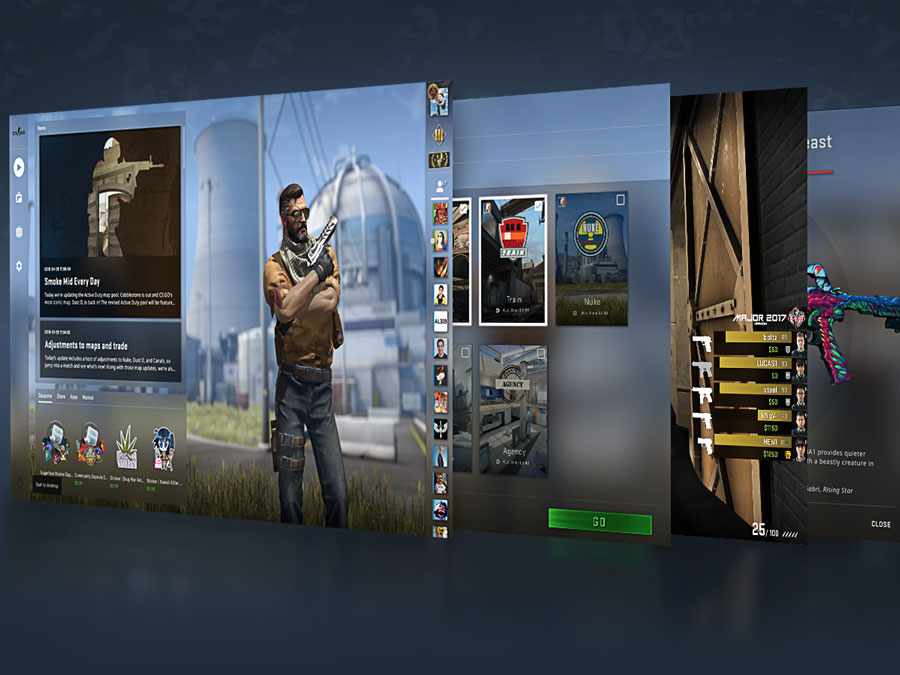
GO also changed considerably over its life. The Arms Deal update in August 2013 brought the silenced M4A1-S and USP-S alongside the skin economy. Panorama’s preview arrived in June 2018. By late GO, there were more options around the main mode, including Wingman, Retakes and shorter Competitive matches. Operation Riptide added the short format in September 2021, with a maximum of 16 rounds, as well as more deathmatch options and droppable grenades.
Some updates were badly handled. In December 2015, Valve changed rifle and pistol behaviour during the Winter Update, then rolled those changes back and admitted mistakes. Its attempt to encourage tapping and bursting had also hurt the accuracy of players already doing that. When people spend so much time learning how a weapon behaves, changes to it affect a lot more than a line in the patch notes.
My gameplay recordings
My Counter-Strike gameplay recordings are collected in the playlist below.
Watch the full gameplay playlist on YouTube.
64 tick, cheating and losing trust in a match
The feel of GO’s 64-tick matchmaking was one of my biggest problems. Too often I was left trying to work out whether somebody was better than me, whether the game had behaved strangely, or whether something suspicious had happened. That gets tiring in a game where the result of one duel can change the round.
The difference between GO’s 64- and 128-tick environments was real. Valve later acknowledged that tick rate affected grenade simulation and weapon spray behaviour, and that players had difficulty moving between them. Tick rate was also only one part of the networking: prediction, interpolation and lag compensation all contributed to what appeared on screen. The practical problem for me was the uncertainty it left behind.
I suspected people of cheating in Source too. Unless it was blatant, I generally left it to the server owner, admins and anti-cheat to deal with. In GO I found myself becoming more suspicious and reporting more people. Once you start doubting what happened, it follows you into the next encounter. You spend more time wondering about the opponent and less time thinking about what you could have done better.
It felt worse to me after GO went free to play in December 2018. Valve had Prime and later Trust Factor to separate players using more than just their rank, but those systems did not give me back the confidence I wanted in a match.
In June 2021, Valve itself said that free access to drops, ranks, Skill Groups and progression towards Prime had created incentives for bad actors to damage the experience. It removed the free route to Prime and made XP, drops and ranked progression Prime-only. Free players could still play, but the terms had changed again.
I wanted to be able to lose a match and accept that the other team had played better. GO too often made that harder than it should have been.
I wanted the map selection to grow
One thing I hated was maps being added and then removed. I wanted to keep the maps we already had when new ones arrived, so the choice became bigger over time.
I can understand a tournament having a limited map pool. What annoyed me was losing choices in the normal official selection. On 2 October 2019, for example, Mirage and Cache were added to Scrimmage while Breach was removed from it, and Ruby was removed from official servers. An update could give you something and take something else away at the same time.
Community servers and Workshop maps offered other routes, but I wanted those maps to remain available in the official game modes too. I did not want every new addition to become another rotation where something disappeared.
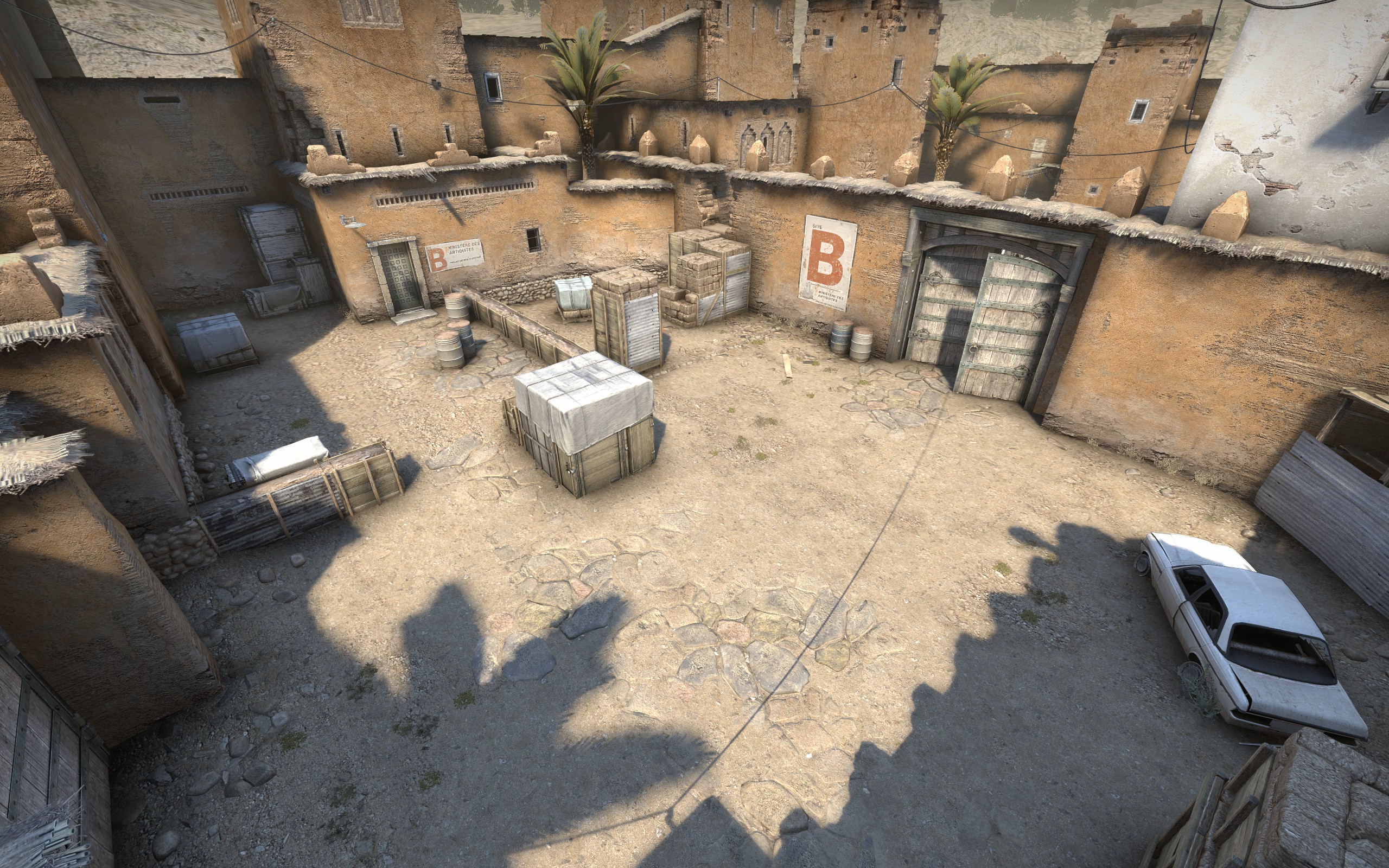
There was useful work on the maps themselves. Valve’s 2017 Dust II remake widened the window at B, adjusted the car and simplified obstacles, alongside lighting and visual changes. Improving a map and making movement less awkward is useful. I wanted that sort of work alongside a lasting choice of places to play.
The skin economy became far too much of the game
The Arms Deal update was the turning point. Weapon finishes could be collected, traded and sold, and cases could be opened with paid keys. Part of the eSports case revenue went towards tournament prizes. Alongside the shooter, Valve had built a reason to keep buying chances at items.

I hate loot boxes, and I spent money on them myself. Looking at the history makes that fairly difficult to brush aside. The small purchases keep adding up, and showing off something valuable does not tell anybody what it cost to get there.
The odds published by the official Chinese operator put the rare special-item category in standard keyed weapon cases at about 0.256%, roughly one in 391 openings. That category can mean knives or gloves depending on the case. It does not promise a particular item or a particular sale value. Buying hundreds of keys does not make the next case owe you something good.
Someone can get lucky. What I object to is presenting that luck as a sensible way to earn money, then leaving out all the failed openings and earlier spending. A valuable item on screen is only one part of the calculation. You have to count what went in as well as what came back.
France’s X-ray Scanner, introduced in September 2019, changed the order in which the result was shown. It consumed a container and revealed the item before the key purchase, but the revealed item had to be claimed before another container could be scanned. You could not keep scanning until a result appeared that you liked.
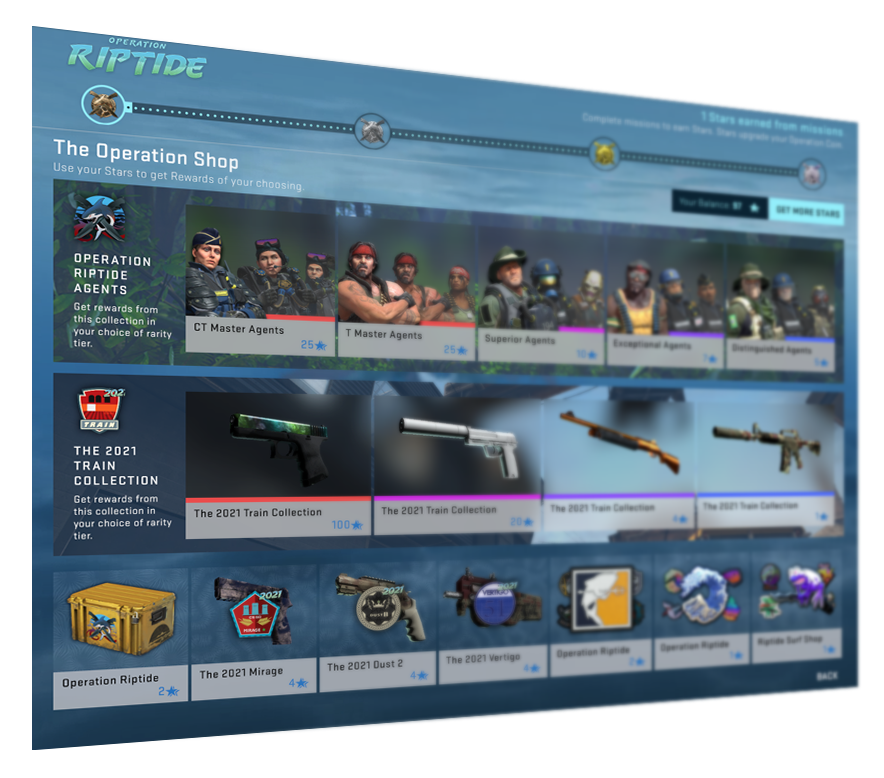
Operations added more layers. With Shattered Web and Riptide, there were passes, reward systems and additional stars to buy. My own history includes buying the Riptide pass and 100 stars on the same day, 6 December 2021. There were plenty of opportunities to spend after buying the game.
What I spent against everything I sold
My GO-era purchase history alone contains 1,366 case keys. The keys cost more than three thousand euros before counting the other in-game purchases.
| Counter-Strike purchases | Paid in EUR | Approx. USD | Approx. GBP |
|---|---|---|---|
| GO-era case keys, included in the next row | €3,048.28 | US$3,430.23 | £2,572.29 |
| All GO-era in-game purchases, before 27 September 2023 | €3,529.75 | US$3,972.03 | £2,978.58 |
| CS2-era in-game purchases | €140.20 | US$157.77 | £118.31 |
| All Counter-Strike in-game purchases | €3,669.95 | US$4,129.79 | £3,096.89 |
I also wanted to count everything I had sold on Steam: cards, booster packs, drops and other market items, across the whole account. Put all those sales against all my market purchases and Counter-Strike in-game spending, and this is the result:
| Whole-account market comparison | EUR | Approx. USD | Approx. GBP |
|---|---|---|---|
| All Steam Community Market purchases | €2,542.58 | US$2,861.17 | £2,145.56 |
| Market purchases plus all Counter-Strike in-game purchases | €6,212.53 | US$6,990.96 | £5,242.44 |
| All Steam Community Market sales credited to my wallet | €4,279.28 | US$4,815.47 | £3,611.07 |
| Spent more than I received from sales | €1,933.25 | US$2,175.49 | £1,631.37 |
Conversions use one common reference date for these multi-year totals: ECB rates, 16 October 2026, with €1 = US$1.1253 or £0.84385. They are approximate comparisons, not the exchange rates paid on each purchase date.
Even after crediting every market sale on the account, I had spent €1,933.25 more than I received. That includes the cards and other drops from games outside Counter-Strike. Those sales brought money back into the wallet, and the total still came out behind.
Steam sales also give you Steam Wallet credit. Steam does not let you withdraw that balance as cash. I could use it to buy games and other things on Steam, but money arriving in that wallet was not money arriving back in my bank account.
These days I sell the free drops and care much less about skins. Selling a drop without paying to open it is a very different calculation from repeatedly buying keys and hoping the next result covers the previous ones.
The people selling the dream
I am especially suspicious when somebody promoting a skin website also has a financial relationship with it. A video of them winning tells me very little about the experience an ordinary customer is going to have.
CSGO Lotto is a documented example. In 2017, Trevor “TmarTn” Martin and Thomas “Syndicate” Cassell settled FTC charges over promoting the gambling site without disclosing that they jointly owned it. The FTC also alleged that other influencers had been paid to promote the site and were forbidden from saying anything negative about it.
That is a serious problem with the whole picture being sold. Someone can look successful while the cost, sponsorship or ownership arrangement stays out of view. It reminds me of someone who looks rich until you find out the whole lifestyle is paid for with loans. Seeing the expensive stuff does not tell you what they owe. I want to see the spending and the relationship behind the promotion before I take a claim about earning money seriously.
What happened to the game I played
On 27 September 2023, CS2 replaced GO as the live game. I hated that decision. After all those years, I wanted the choice to keep playing the supported version of GO.
Valve said that putting everyone into the same game accelerated work on networking, performance and gameplay. I do not accept that as a good reason to take away the live GO experience people already had. I would have preferred to choose when, or whether, I moved on.
There is still a legacy client, and GO received its own unlisted Steam page in 2026. That makes it easier to launch the old game, but official matchmaking has not returned with it. The supported game I spent those years in has not been restored.
From Source through CS2, Counter-Strike became an addiction for me. CS2 being as bad as it was for me pushed me to work hard at getting out of that habit. I am more or less out of it now. I still play once or twice a month, but nowhere near the way I used to.
I still remember GO as a good game with problems. I miss being able to choose it.