
Lost at Birth starts with a marriage that is already in trouble. Mark has a stable job, a comfortable home, and a wife who still wants him. He has stopped drinking, calls the marriage loveless, and looks for sex elsewhere. Justine still drinks heavily and knows more about his cheating than he seems to think. Both of them say they love each other. Neither seems to know how to live with the person the other has become.
Then Kailey arrives. She is twenty, she is searching for her birth family, and her original birth certificate names Mark Collins as her father. They have never met before. Now they have to work out what that connection means while Mark already has a household full of dishonesty.
What interests me here is the psychology of that situation. Mark and Kailey meet as adults without a shared upbringing. She wants answers, family, and somewhere she belongs. He enjoys feeling useful and wanted. The game puts those needs together with attraction, uncertainty, and a marriage that still matters to both people in it.
Story spoilers follow. This review follows the affair storyline in the Chapter 10 – Part 1 build and discusses infidelity, possible close relatives, housing insecurity, workplace sexual coercion, and heavy drinking. The story screenshots show the opening chapters.
Justine knows, and still wants the marriage
Justine knows Mark cheats, but she still wants the marriage. When she discovers Kailey in their home, her anger is about more than finding another woman there. She has been left out of a decision that changes her own household. Mark has brought someone in, given her a bedroom, and moved Justine’s belongings before even telling her.
The confrontation at home makes that visible. She finds a young woman in the house and assumes Mark has brought another affair into their shared home. Given his behaviour, that suspicion has a history behind it. Mark has failed to tell her Kailey is staying; his own thoughts acknowledge that he forgot to send a message.
Justine lashes out at Kailey and calls her names. That is cruel to someone who has arrived needing somewhere safe to stay. Her anger at Mark is understandable, and Kailey still ends up receiving some of it. Mark has put both women into this confrontation without preparing either of them for the other.
The line that stands out to me is Justine saying, “I’ve failed.” Her reaction includes turning the situation against herself. I read that as the damage reaching her sense of worth: something Mark is doing becomes another reason to question herself.

The National Domestic Violence Hotline describes emotional abuse through behaviours such as humiliation, manipulation, intimidation, and control, including the way repeated mistreatment can erode confidence. That gives a useful vocabulary for the harm here. Cheating, hurtful conflict, and coercive control still need to be examined as behaviours rather than treated as interchangeable labels.
Justine’s clearest explanation comes in the conversation afterwards: she wants to come first in his life. She even says she would tolerate him sleeping around if she still held that place. My reading is that she is trying to preserve her position in the marriage while accepting treatment that hurts her. The National Domestic Violence Hotline describes love, hope, and shame among the reasons people remain in harmful relationships. Those emotional ties are useful to think about here.
Jennifer J. Freyd and Pamela J. Birrell’s Blind to Betrayal explores the difficulty of recognising and responding to betrayal within relationships people depend on. Freyd’s own explanation of the theory includes betrayals such as adultery. Justine explicitly knows about the cheating, so the useful connection here is the conflict between acknowledging the hurt and preserving the relationship. Her silence can help keep the household going while leaving the underlying problem untouched.
There is more behind her reaction than jealousy. The guest room holds belongings from her deceased father and brother. She has also been unable to have children, while he has apparently discovered a daughter. The room, the family connection, and the way he has made the decision all land on her at once.
The marriage still has moments of warmth. In Chapter 3 they talk about her drinking and his absence, admit that things are wrong, and plan a night out together. Justine agrees to try drinking less. Mark acknowledges that he has been a poor husband. They have history, desire, routines, and reasons to keep trying.
Chapter 6 gives that another layer through their fertility appointment. Justine is afraid of receiving more bad news after earlier treatment difficulties, and Mark accompanies her. The scene makes their hope for a child part of an ongoing relationship. It also makes his secret involvement with Kailey more painful: he is promising Justine a future while hiding something that could tear it apart.
The World Health Organization describes emotional distress and damage to self-esteem among infertility’s possible effects. In that context, Justine’s earlier self-blame carries another possible layer. Mark’s apparent daughter arrives while the family she has wanted with him remains uncertain. I read some of her hurt through that disappointed hope, alongside her very concrete complaint that he has made a major decision without her.
The birth certificate changes what they expect from each other
Kailey initially approaches Mark at the café and then backs away. The papers she leaves behind include an old prom photograph and a birth certificate. Her mother is Claire Smith; the father named on the certificate is Mark Collins. Mark recognises the connection to his past, searches for more information, contacts Kailey, and meets her.

Kailey grew up as Kailey Coleman with adoptive parents. She says she felt deeply loved when she was little, then increasingly unwanted as she got older. Their divorce after her graduation, her discovery of the original birth certificate, and the lack of contact after she left all feed into her search for her birth family. She has a family history before Mark enters the story.
Mark remembers Claire and the prom, but his recollection of the night is incomplete. He also uses Justine’s work access to investigate the certificate without explaining what he is doing. The document gives him a reason to take Kailey seriously; biological paternity remains uncertain in the scenes discussed here.
That uncertainty comes into the household conversation too. Mark introduces her as his daughter, while Kailey supplies the qualification: probably. Even the words they use for each other are unsettled.
I find that an interesting starting point because the information arrives before the relationship does. A name on a document can suddenly change what someone thinks they owe another person. It cannot supply twenty years of familiarity, shared memories, or trust.

A safe home changes the balance
Kailey has been sleeping in her car inside an abandoned warehouse after repeated burglaries at her previous place. Mark becomes concerned, follows her from work, watches where she goes, and confronts her at the laundromat. He treats her lack of awareness of him as proof that she cannot keep herself safe. She is furious that someone she barely knows has followed her.
Her reaction makes sense to me. Mark knows he should probably talk to her first, then does the following anyway. When she objects, he initially treats her anger as something less important than the danger he has identified. His concern and his refusal to listen are both present in that scene.
Later, people enter the warehouse, party around her car, and start a fire. Kailey escapes with a bag; her car and most of her belongings are lost. She calls Mark because she does not know who else to contact. He collects her and offers the guest room.
He also apologises for how he handled the earlier confrontation. When he starts insisting that she stay, he stops himself and says she can choose somewhere else and he will take her there. That matters to how I read him. He can recognise a boundary and offer a choice. The later question is how consistently he respects that freedom once his own feelings are involved.
Her job situation is worse than having an unpleasant boss. At the dealership, her manager demands sexual compliance, humiliates her, and makes keeping her job conditional on accepting it. She refuses and leaves. Mark later tells her he is proud that she stood up for herself and that she can stay with him while she recovers. That is a substantial act of support at a moment when losing work also means losing options.
Mark and Justine can afford to have her stay. The immediate household cost is manageable. For Kailey, however, her home, possible birth-family connection, and developing romance all start to centre on the same person. A disagreement with him carries the possibility of losing several things at once.
Evan Stark’s Coercive Control: How Men Entrap Women in Personal Life centres the restriction of freedom and autonomy. That is a useful question to bring to this situation: how much room does Kailey have to make choices of her own? Giving her shelter is not, by itself, evidence that Mark has trapped her or made support conditional on intimacy. The tension comes from the growing overlap between care, dependence, and his personal desires.
Kailey keeps looking for work. In Chapter 6 she explicitly connects having her own money with being able to move out. Later, Mark encourages her to consider the bartending opportunity Cassidy offers. That gives the story an actual discussion of independence alongside the rescue fantasy. The job search is also tangled up with Kailey’s discomfort about being the third person in Mark and Justine’s home.
Meeting as adults leaves a relationship to build
The lack of a shared upbringing is the part I wanted to examine most closely. Mark did not raise Kailey. He has no memories of caring for her as a child or watching her grow. She knows her adoptive father, but has no childhood relationship with this particular man. They are trying to attach family words to someone they have only just met.
Mark’s attraction is present early, even while he is trying to find out who she is. He also enjoys feeding her, sharing family stories, and teaching her to cook. Kailey responds to those ordinary acts of care as well as the flirting. The cake recipe is a good example: passing down something from his family gives her a place in that family before the scene starts drifting into romantic closeness.

In Julee Browning and Grant Duncan’s study of twenty adoptees in long-term reunion, family roles and expectations remained varied and sometimes difficult after years of contact. That is useful background for Kailey’s search. Discovering a biological relative leaves people with a relationship to build, including expectations about who the other person will become in their life.
Mario Mikulincer and Phillip R. Shaver’s Attachment in Adulthood offers another useful lens. In the publisher’s sample chapter on emotion regulation, they describe how threat can activate the wish to be close to someone protective, and how reliable support can help restore security. That fits the importance of Mark collecting Kailey after the warehouse incident. He becomes associated with relief from a frightening situation.
The story makes its mixture of roles explicit. Kailey calls Mark her hero, protector, rescuer, and long-lost father. Later she also wants him as a boyfriend. Mark keeps promising to give her whatever she needs, then treats refusing romance as though it would mean refusing care. Those are different decisions, but he repeatedly slides from one into the other.
The missing shared childhood helps explain their unfamiliarity, but the attraction belongs to this story’s particular characters. A 2019 study by Pullman, Babchishin, and Seto involving 632 fathers found no association between childhood proximity and the measures of incest propensity or disgust that it examined. For Mark and Kailey, the story offers more immediate things to examine: her search for belonging, his enjoyment of being needed, their attraction, and the boundaries they keep crossing.
What Justine thinks she is accepting
Justine eventually accepts Kailey staying in the house when the situation looks like Mark taking care of his possible daughter. Once she understands why Kailey needs help, having her there becomes more reasonable. They can afford it, and Mark appears to be stepping into a family responsibility.
That makes the later secrecy worse. Justine has accepted an explanation for the household arrangement. Mark and Kailey then develop a relationship behind her back while she understands their closeness through that family explanation.
There are two different kinds of trust involved. Justine is already trying to live with a husband who cheats. She also comes to trust that the young woman in their home is there because Mark may be her father. The affair takes place inside the arrangement she has gradually accepted.
Kailey is an adult with choices of her own. Her vulnerability still gives Mark a responsibility to think carefully about what he is offering and what he wants in return. He is the established person in the household, the possible parent, and the husband. Those roles give him several reasons to set clear limits.
Kailey is afraid of being left behind
By Chapter 6, Kailey is already upset about hearing Mark and Justine together. She asks what their own intimacy makes them, and explains that she cannot simply talk to friends about this relationship. Mark offers to return to a normal father-and-daughter relationship, but she is frightened by that suggestion. The person she needs to complain about has also become the person she turns to for reassurance.
The Chapter 8 argument is one of the more revealing scenes. After the club visit, she accuses Mark of treating her as replaceable. She compares him with people who tire of their toys and leave. Her fear of abandonment is in the dialogue itself: she says she is tired of being left behind and considers leaving before he can do it to her.
That gives much more weight to her earlier family history. My reading is that the attention from other women threatens the security she has started to find with him. Her jealousy involves wanting a romantic partner to herself, but it also touches her fear that the home and family she has found will disappear.
Shaver, Schachner, and Mikulincer’s research on reassurance seeking connects persistent requests to be told one is loved with attachment anxiety. That offers a useful way to read Kailey’s repeated requests for promises. Each reassurance briefly settles the question, then another sign of divided attention brings it back. Her doubts also have real evidence behind them: Mark is keeping secrets and, depending on the choices, continuing other affairs. The insecurity develops inside an unreliable arrangement.
Mark responds with a promise that it will be just the two of them from now on, then immediately adds Justine. Kailey knows about the marriage and accepts that arrangement. Justine is still being kept outside the decision. The couple can agree between themselves while leaving the third person with a different understanding of her own household.
Some of his reassurance is uncomfortable too. He tells Kailey he would chase after her and bring her back if she left. The scene presents that as a promise not to abandon her. Beside her earlier insistence that he had no right to follow her, it also raises a question about whether she is free to leave. That is the sort of tension Evan Stark’s work on autonomy helps bring into focus.
Chapter 9 does give Mark a better response when he says they need to talk about problems instead of sweeping them aside. There is some development here. The frustration is how quickly major arguments settle into reassurance, kissing, and the next opportunity to be alone. They discuss the feelings more readily than they change the arrangement producing them.
Keeping the relationship secret
Kailey’s difficulty talking to friends is one of the most useful details in the later dialogue. An ordinary relationship problem might be discussed with someone outside it. Here she would first have to explain that her partner is married, may be her birth father, and provides the home she is living in. That makes getting another perspective much harder.
In Secret Romantic Relationships, Justin J. Lehmiller found associations between greater concealment, reduced commitment, lower self-esteem, and more reported health symptoms. The study gives some background for the strain of keeping a relationship hidden. Applied to this story, I am more interested in what secrecy prevents them from doing: openly asking for support, agreeing on their place in the household, and discussing a future that includes everyone affected.
Mark does find an outsider in Cassidy. She hears his confession, gives advice, and later meets Kailey. She is also involved in his secrets and can be another affair partner. Kailey’s reassurance still comes mainly from Mark, the person whose behaviour is upsetting her. The circle of people they can speak to openly remains very small.
The domestic scenes make that secrecy more uncomfortable. Justine shops with Kailey, watches television with her, and eventually calls her family. Those moments create a believable place for her in the household. They also make every private romantic promise depend on Justine continuing to understand their closeness differently. Kailey wants to be recognised as a real partner while accepting a situation that keeps that recognition hidden.
Uncertainty can become a convenient excuse
The uncertainty about paternity gives Mark something to think around. He can call Kailey his daughter while caring for her, then tell himself that they are strangers when he wants to justify attraction. As the relationship develops, he increasingly recognises that the problem includes his responsibilities towards both women, regardless of what a paternity test might eventually say.
Ziva Kunda’s paper The Case for Motivated Reasoning describes how desired conclusions can shape the explanations people find convincing. Mark repeatedly thinks that he cannot refuse Kailey, that events have become inevitable, or that rejecting a romantic advance would hurt her. My reading is that those explanations let him present his own choices as something happening to him.
He can also see the contradiction. In the Chapter 4 bedroom scene, he recognises that Kailey has been drinking and that he should stop. He continues anyway. Afterwards he understands that he has betrayed Justine in their shared bed. Those thoughts make him more interesting than someone who never notices the harm. They also become repetitive when noticing it leads straight back to the same behaviour.
Early on, Mark even wonders whether he has replaced drinking with sex and pornography as his response to stress. He briefly thinks he needs help, then decides he can manage everything himself. By Chapter 5 he is still dismissing professional help while looking to Cassidy for relief and advice. The game gives him enough self-awareness to recognise a pattern, but he keeps choosing the quickest way to feel better. That fits the excuses running through his inner monologue.
Cassidy’s role is more complicated than simply supplying another affair. Mark asks her for advice. She suggests distance and professional help, while he dismisses the idea of seeing a psychiatrist. Later she normalises what is happening and offers to mediate. She becomes a confidante who can challenge him and also help him keep the relationship going.
Her claim that confusing feelings after reunion is common belongs to her dialogue. It works as something Mark is relieved to hear. It is a poor substitute for understanding why these two people are making these choices. On the affair route, their conversations can also lead straight back into another encounter with Cassidy.
The early café conversation also gives Cassidy a history of involvement with much older men while she was underage. Mark condemns the adult’s behaviour. The NSPCC explains how exploitation can involve trust, affection, and complicated feelings towards the adult. That history deserves serious treatment. It also makes responsibility an explicit subject in the opening, before Mark has worked out how to handle his own new responsibilities towards Kailey.
Reading, choices, and presentation
Lost at Birth is a Ren’Py visual novel built around reading dialogue, choosing responses, and watching relationships develop through rendered scenes. The presentation uses 3D characters, domestic locations, close-ups, and changing camera positions. Justine’s expressions and posture during the confrontation carry much of the anger and discomfort before the dialogue explains it.
The dialogue interface places the character’s name above the text, with a quick menu underneath. The captured build includes Mute, Hide, Back, Auto, Skip, Load, Save, Preferences, and Main Menu. An optional walkthrough displays point changes beside choices. It is enabled in my screenshots, where the early decision to investigate the birth certificate shows a Caring bonus.

Choices feed into Love, Caring, and Corruption, with Dominant and Cautious responses also appearing in the office storyline. There are meaningful scene differences. Mark can decline Cassidy’s first invitation and have a different conversation at the café. He can refuse Alice’s proposal. In Chapter 6 he can stop an encounter with Kailey, and a sufficiently high Caring score skips a later sexual scene in Chapter 7.
The amount of control varies. In Chapter 4, the choice to say things cannot go any further appears after the intimate boundary has already been crossed. That option adds Caring and changes Mark’s thoughts, but the scene still ends with Justine returning and both of them hiding what happened. A cautious label can give the impression of a bigger change than the immediate outcome delivers.
The Chapter 8 jealousy argument also follows both accepting and refusing Cassidy at the club. Mark’s response changes to reflect what he did, but the confrontation still happens. That can work as a story about suspicion and an already unstable relationship. It also shows how several choices feed back into a shared plot rather than producing entirely different stories.
Steam’s description advertises more than 2,100 static images, animated scenes, music, and sound effects. Its old six-chapter description also gives a two-to-three-hour estimate, which belongs to that earlier stage of development. English interface text and subtitles are listed, with no full-audio language listed. Steam provides Windows and Linux requirements; the developer’s other releases also list macOS and Android.
For this kind of game, I care about whether a choice changes how people treat each other. Some of these choices do. Elsewhere, Mark thinks about stopping while the next scene carries him back towards the same relationship. The gap between his stated concern and his behaviour is interesting as character writing; it becomes frustrating when the player has just tried to act on that concern.
The dialogue could also use a firmer edit. There are grammatical slips and awkward lines, and some conversations spend too long moving between teasing, apologising, and teasing again. The domestic humour and small routines help the characters feel familiar. The repeated guilt needs more movement from one scene to the next.
Native Linux support
Linux is an officially listed platform. The Linux package includes Lost_at_Birth.sh as its launcher, and V19 Games lists the Chapter 10 Part 1 desktop download as Windows/Linux. This is a native Linux release. The developer also lists separate macOS and Android versions.
The chapters arrived, but the story remains unfinished
V19games develops and publishes Lost at Birth. Public Patreon records show the project being discussed in 2022. The Steam launch announcement dated 18 June 2023 introduced Chapter 6, alongside additional animations, extra content, and music. The Early Access explanation describes a solo developer releasing the story in chapters and seeking player feedback.
The original plan described roughly fourteen chapters, an intended two-to-three-month chapter schedule, and no firm full-release date. The developer’s public post history lists Chapter 7 in October 2023, Chapter 8 in December 2023, Chapter 9 in May 2024, and its Complete Edition in July 2024. Chapter 10 Part 1 followed in June 2025.
The June 2025 Steam announcement, preserved by SteamDB lists six added animations, new music, bug fixes, a reworked interface and new-game screen, twenty-four save slots, and scene and chapter unlock buttons. It also promised Part 2 before the end of July 2025.
There has been a significant save-compatibility problem during development. In a developer reply on itch.io, V19 Games says saves from before Chapter 9 are incompatible with that release and directs players to the chapter-selection system under New Game. Returning players with those older saves may need to use that selection system.
On 21 October 2026, my Steam store page warned that the last developer update was more than sixteen months earlier. The installed menu identifies the build as Chapter 10 Part 1, and the developer’s itch.io page also lists that build. The discontinued free Chapter 5 version there is a separate release with reduced content and no animations.
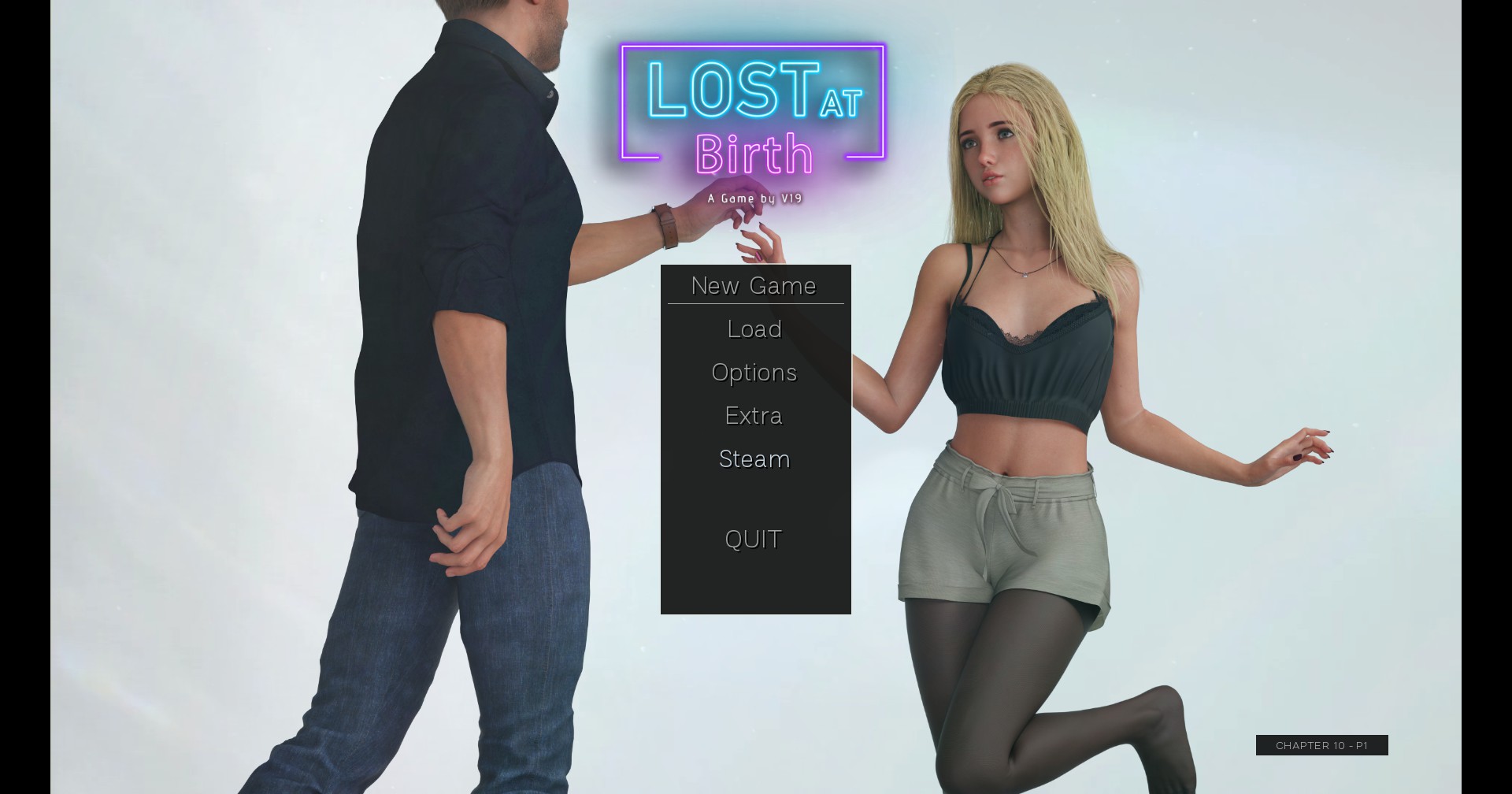
The developer did publish a Chapter 10 Part 2 preview on 23 December 2025. That post describes plans to conclude Chapter 10. The build being reviewed here still leaves the story unfinished, with no completed resolution to the relationships at its centre.
Other players see the potential and the problem
My Steam store snapshot on 21 October 2026 showed Mostly Positive, with 73% positive from 102 reviews.
There is praise for the story, characters, graphics, and animations. One positive Steam review also asks for choices with greater depth and impact. Another recommends the story and animation work. Those reactions show why the game has kept an audience despite the wait.
The negative reviews include people who liked the game itself. One review praises the story and characters but objects to the delays and partial Chapter 10 release. Some players call the project abandoned. The practical problem for me is already clear in the available build: there is still no finished story to judge as a whole.
My rating: 6/10
Lost at Birth has enough going on between its characters to hold my interest. Kailey’s adoption history and fear of abandonment, Justine’s wish to keep the marriage and have a child, and Mark’s habit of finding excuses for himself give the story more substance than the basic setup suggests. The later arguments put some of those feelings directly into words.
The writing is uneven about what happens after those admissions. A difficult argument can turn into another reassuring embrace before the underlying problem moves very far. Some choices alter scenes, while others make little immediate difference to the central relationship. The unfinished Chapter 10 Part 1 build leaves the wider consequences and the future of the household unresolved.
My rating: 6/10. Complicated characters and some effective relationship drama, held back by repetitive conflicts, uneven choices, and an unfinished story.
Books and research behind the discussion
- Mario Mikulincer and Phillip R. Shaver, Attachment in Adulthood: Structure, Dynamics, and Change, second edition (2016), with the publisher’s Chapter 7 excerpt.
- Jennifer J. Freyd and Pamela J. Birrell, Blind to Betrayal (2013), alongside Freyd’s explanation of betrayal trauma theory.
- Evan Stark, Coercive Control: How Men Entrap Women in Personal Life, second edition, published online in 2023 and in print in 2024.
- Julee Browning and Grant Duncan, Family Membership in Post-Reunion Adoption Narratives.
- Lesleigh E. Pullman, Kelly Babchishin, and Michael C. Seto, An Examination of the Westermarck Hypothesis and the Role of Disgust in Incest Avoidance Among Fathers (2019).
- Ziva Kunda, The Case for Motivated Reasoning (1990).
- Phillip R. Shaver, Dory A. Schachner, and Mario Mikulincer, Attachment Style, Excessive Reassurance Seeking, Relationship Processes, and Depression (2005).
- Justin J. Lehmiller, Secret Romantic Relationships: Consequences for Personal and Relational Well-Being (2009).
- World Health Organization, Infertility, updated 28 November 2025.