
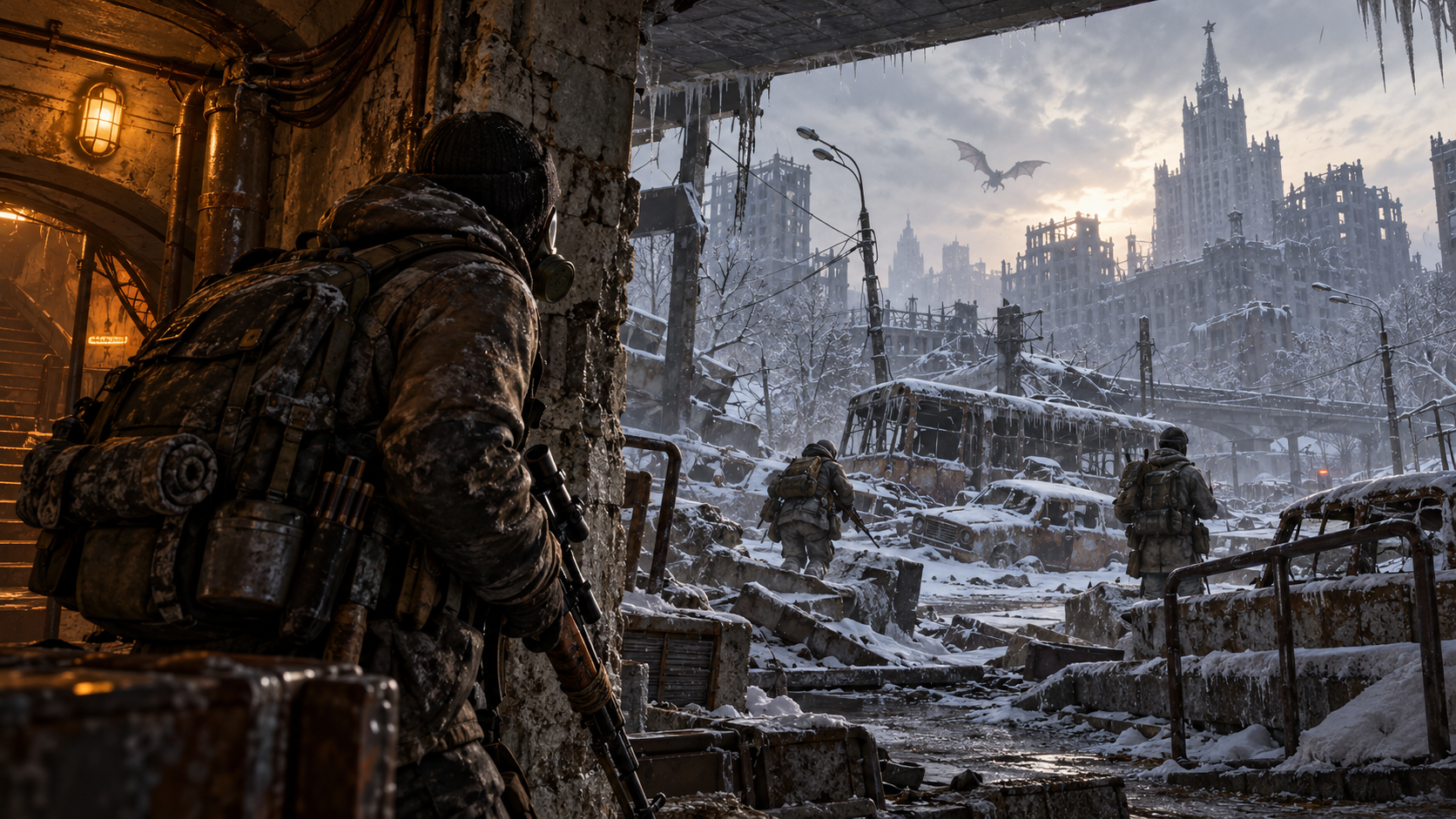
I like Metro 2033, and I like Redux about the same. I keep coming back to the tunnels, the stations and the ruined surface, even though there are fights I would happily skip every single time. My score for Metro 2033 Redux is 7/10.
I play on Easy. If there are other people around who can handle a fight, I will usually try to find somewhere to stand and let them get on with it. I can have ammunition and still prefer not to shoot. That is how a lot of my Metro footage ends up looking: me tucked behind something, waiting to see whether the game will let the others finish the job.
These screenshots come from my Redux recordings on Linux and PS5. My experience with the original 2010 game is part of the comparison, but the galleries show Redux throughout. There are spoilers below, including the library, D6 and the ending.
The world I keep returning to
The basic situation is easy enough to understand. Nuclear war has wrecked Moscow, the surface is poisonous, and the survivors have made homes in the underground stations. Artyom leaves Exhibition with a message for Miller at Polis because his home is threatened by the Dark Ones. Getting the message there turns into a journey through other people’s territory, beliefs and wars.
The stations give that journey its shape. There are traders, children, drinking tables, little living spaces and people talking while you pass. Then you leave the light and head into another tunnel. A railway map is still useful, but most of the places it connects have become small, suspicious worlds of their own. Even a little shrine beside the tracks tells you something about the people trying to live down there.


Metro’s equipment belongs in that world. You check your watch for filter time, keep the flashlight charged, use a lighter in the dark and wipe muck from the gas mask. A cracked or dirty mask gets between you and the place you are trying to see. The outside air keeps the surface from becoming a leisurely walk through the ruins.
The guns look as though people have kept them working with whatever parts survived. There is a difference between carrying another modern rifle and carrying something whose gauges, exposed workings and pressure system you have to pay attention to. Metro gets a lot of its character from those things you keep touching and maintaining.
My preference now is Russian voices with English subtitles. It suits the setting for me. The older recordings here also include English audio; they cover different sessions and setups.
How the original became Redux
Metro began with Dmitry Glukhovsky’s fiction, rather than a game that later received a tie-in novel. In Jon Bloch’s account of the series’ origins, creative director Andrey Prokhorov read the early online story, contacted Glukhovsky and began a collaboration. The prototype reached THQ at the Leipzig Games Convention in 2006. The author continued working with the team on the story and dialogue.
The developer is Ukrainian. 4A Games dates its founding to Kyiv in 2005 and its headquarters’ move to Malta to 2014. Metro 2033 first arrived on PC and Xbox 360 in March 2010, published by THQ.
There was always adaptation involved. Huw Beynon’s 2010 interview explains how the team used the characters and major story moments while inventing encounters and developing the improvised weapons for the game. That helps explain the mixture Metro ended up with: a young man travelling through a frightened society, interrupted by things that need to work as shooter levels.
The 2014 Redux version rebuilt 2033 using the later technology and gameplay work developed for Last Light. 4A’s original PlayStation announcement described the new lighting and the transfer of AI, gunplay and other gameplay improvements. It also brought 2033 to PlayStation for the first time. The Metro Redux collection contains both 2033 Redux and Last Light Redux; the two games were also sold separately.
Redux changes more than the surface detail. The Last Light-style weapon handling, close stealth takedowns and gas-mask wiping sit alongside reworked environments. The 2014 Xbox overview describes Dead City’s previously separate sections being joined and expanded, including an added defence encounter. The remake can change the rhythm of a route as well as how it looks.
There are also two broad play styles. Survival puts more pressure on resources and uses slower reloads; Spartan moves toward Last Light’s more forgiving action balance. Those sit alongside the difficulty choices and Ranger options. Easy suits how I want to play.
I would need the original and Redux running side by side to give a confident personal verdict on every visual and mechanical change. What stayed with me from playing both is much the same journey. One added Redux encounter does stand out in a very practical way for me: the library courtyard battle.
I am trying to avoid the fights
Some of the most useful screenshots in my recordings are the ones where almost nothing changes. They show where I stand. If I stay behind a support or beside a piece of metalwork for a long time, I am usually trying to avoid getting dragged into the fight while the people travelling with me deal with it.
On the broken bridge with Bourbon, I use the support and the edge of the walkway as cover. The pair below is thirty seconds apart. Later, with Khan’s group, I stand beside the rusted structure while the mutants come down the tracks. A minute later I am still using the same position.


That does not work everywhere. The first defence with Hunter, where I get the revolver at the home station, is one fight I have not found a way around. The table is the best place I have found, but the mutants still attack me. I have tried leaving the work to the others there, and I still end up having to shoot.


The Market gate is another example. There are people helping, there is the gate and the railway support, and I still have to contribute. I use the corner by the pillar, but it is not a complete escape from the battle. In the opening I can often keep out of the way too, although hiding around the car is more hit-or-miss.


I do this around human enemies as well. Being able to see me shooting in a recording does not mean I went into the encounter wanting a firefight. A lot of the time it is the result of trying to get through without one and having that fail. I prefer the moments where Metro lets me decide how much to get involved.
When the script has already decided
Metro opens with a dramatic glimpse of the end, then goes back to the beginning and takes you through the journey to that point. I understand the idea. Films and games use it because it makes you wonder how everything went so badly wrong. It can still be disappointing when I reach the scene and find how tightly the game has already decided what must happen.
The urgent rescue around the vehicle is a good example. I can run straight away, while he is still almost at the door, and the scene still puts him in the same danger. The Demon attack follows the script too. Those things have to happen for the next part of the game to happen. The apparent emergency gives me less influence than it first suggests.


There are smaller versions of it in the repeated interactions: hold a button, operate the mechanism, wait for the other person or the scene to finish. I am pressing something, but that does not always make the moment feel any less like a cutscene. After several playthroughs I know where the urgency ends and the trigger begins.
I am not going to list every scripted event. There are too many, and some of the spectacle works perfectly well as spectacle. The problem for me is how often the game presents a desperate situation that always resolves through the same compulsory sequence.
The first railcar chase and that knife QTE
The attack after leaving the colony is one of the clearest examples. The others are knocked out, I have been fighting the nosalises from the railcar, and then the last close attacker forces the knife struggle. I have tried shooting it. That does not let me avoid the scripted attack and carry on normally; I still have to do the QTE.


I hate QTEs. I think they are the worst mechanic anyone has added to a game. At that point I want to use the controls I have already been using, rather than have the game stop the fight and demand its particular button sequence.
Riga, Bourbon and the faces already in the bar
There is a small detail in Riga that I like noticing on a return visit. While I sit drinking with the others, a woman walks past the table, and Bourbon is already sitting at the bar. I can see people who are about to become part of the next stretch of the game before I have been properly introduced to them.


Riga also has the optional encounter with Nikki, who offers to take Artyom somewhere private and sets up a robbery. The money being stolen is the Metro’s military-grade ammunition. It is an optional detour, rather than part of the deal that takes me out of the station with Bourbon. The child offering to show the way is another small choice: I do not pay him, because I already know where to go.
The first trips onto the surface were less straightforward for me. I was confused about where to go the first couple of times. Now I know the route better. There are ruined rooms and snow-covered gaps that look as though they might be the route until I remember which way actually leads through.


Meeting up with Bourbon outside brings another fixed fight, followed by the escape back underground. Later I go through all the trouble of rescuing him, only for him to die and for Khan to appear almost immediately as my new guide. That handover is abrupt. I have barely finished trying to get Bourbon back before the journey has put somebody else in his place.
Khan changes the kind of journey it feels like. Ghosts, strange sounds and the electrical anomaly pull it away from Bourbon’s practical business. He seems comfortable with a side of the Metro that everyone else is trying to explain away or survive by instinct.


Further on, after the Armory section and Andrew’s help, I am hiding under a railway wagon. This is where Artyom’s journey starts feeling more like being a spy hiding from everybody than somebody going on an adventure. I am underneath the wagon, listening to people above and waiting to get through another controlled space.


Give me a gun with a scope
For somebody who spends so much time trying not to fight, I do like putting a scope on a gun. I like being able to zoom in and get a proper look at what I am aiming at. It is a recurring preference in my Metro gameplay, and it carries on through the other games in the series too.

The attachment choices let the same basic weapon serve different purposes. A sight, suppressor, stock or barrel change can make more sense for the way I want to use it than simply replacing the gun at every opportunity. The revolver and the improvised weapons have enough character that those changes feel like work being done to an object I have been carrying.


The ammunition economy is a particularly good fit for this setting. Military-grade rounds are money, but I can also load them into a compatible gun. Buying filters, ammunition or an attachment means using a supply that also has direct fighting value. The ordinary dirty rounds and the military currency rounds need to stay distinct when I manage what I am carrying.

Filters, medkits, batteries and pneumatic pressure add other things to keep track of. Metro often makes those systems visible through the equipment rather than asking me to stare at a large permanent overlay.
The human stretches also put the ruined world’s politics in the way of the journey. Front Line has soldiers, captives and fortified positions; people have carried their old divisions underground with them. Elsewhere the route passes through a ruined station and the rescue of Sasha, then takes him back to his mother. The campaign keeps alternating between organised violence and people just trying to get home.


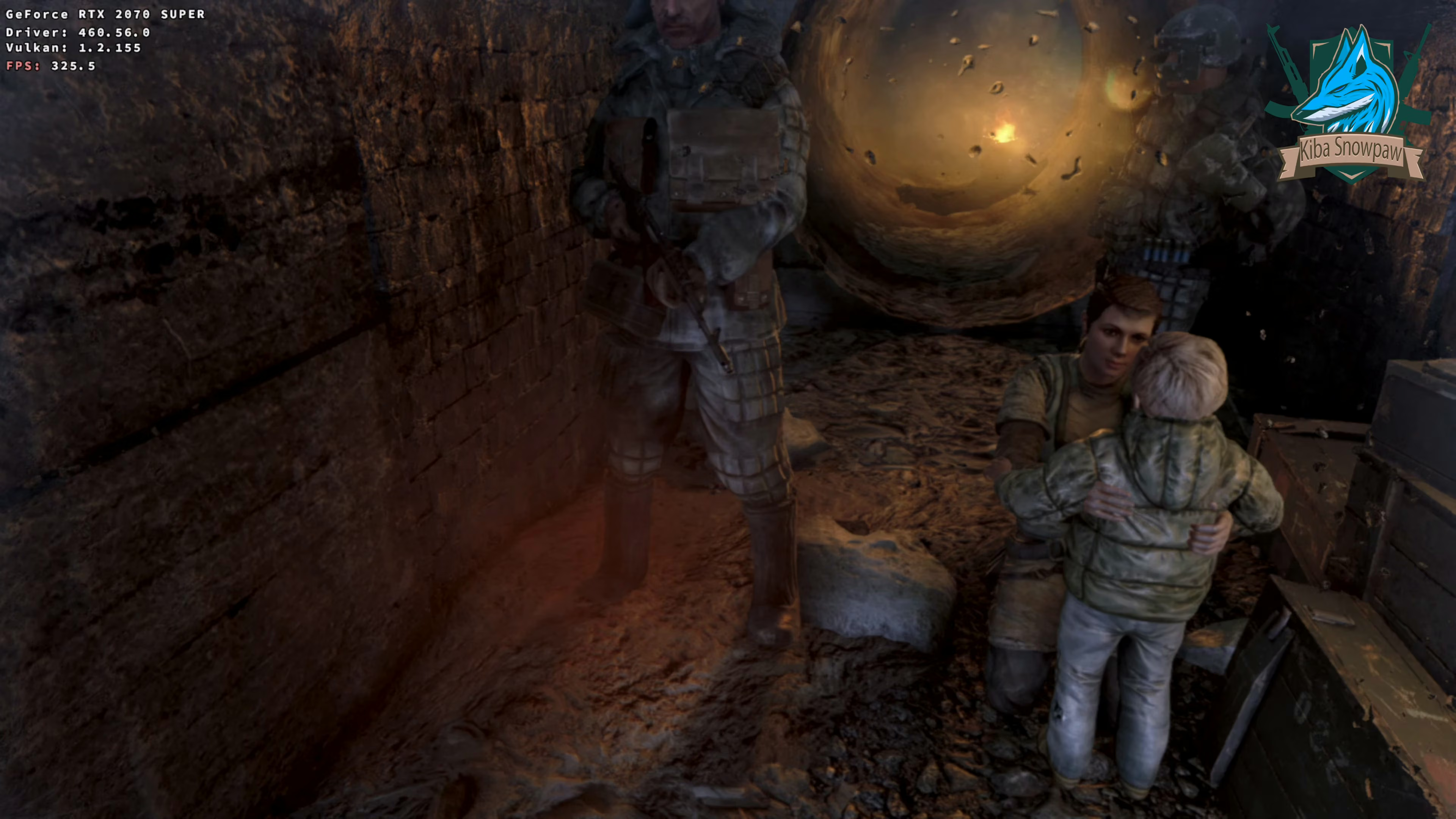
The library is the part I would skip
I hate the area in front of the library. I meet up with the others, we are supposed to get into the archives, and first there is that courtyard fight. I always dislike it. There is a large open approach, the Watchmen keep coming, and I am stuck dealing with the encounter before I can get on with the reason I came there.


This is one place where the original-versus-Redux distinction matters. The prolonged courtyard defence was added in Redux. The walkthrough’s separate original and Redux routes document the difference. An extra battle is not automatically an improvement for somebody who would rather get through without another battle.
Then the game makes it worse for me with the Librarians. I already dislike sneaking, and slowly trying to get past these huge creatures is a pain in the ass. You watch them, use eye contact and back away without provoking them. It is a different kind of encounter from just emptying a gun into the next mutant, but I would skip this whole section if I could.


The shelves, wrecked floors and close passages give them plenty of room to make the route uncomfortable. There is more to pay attention to than a distant enemy marker. That works for the intended encounter; it does not make it one I enjoy playing.
Getting the documents and reaching the pickup finally moves me out of the library. Miller is there in this part of the story, the man who will eventually become Artyom’s father-in-law. I like him best in 2033. Last Light makes him more abrasive for my taste, and my problems with his writing and animation in Exodus belong in that game’s review.


The Dark Ones and what the journey is saying
I understand that the Dark Ones’ attempts at communication can overwhelm people, and that Artyom has an unusual connection to them. I still find parts of the way the game tells that story confusing. Having the explanation in mind and enjoying how it is communicated are different things.
The catacomb scene with Bourbon is one of the moments I keep thinking about. He is struggling at the door and caught in the vision, and the strange intervention helps move us through it. Later appearances make it harder to treat the Dark Ones as simply another kind of mutant to shoot. The childhood connection becomes clearer through Last Light, but 2033 leaves a lot of the feeling of that relationship inside visions and interruptions.


Metro also has its hidden moral-point system and alternative ending. Listening, exploring and particular acts of help or restraint contribute to a route the game does not present as a conventional dialogue-choice menu. That suits the attention it asks you to give the world, though the connection between a small action and the eventual result can be obscure. Bloch’s retrospective discusses the team’s original intention to leave some systems, including karma, for players to discover.
The ending in the recorded run here is the missile strike. It puts all that military effort beside the much less straightforward question of whether Artyom has understood what he has been sent to destroy.

D6 feels a little like Fallout, then Dead Space
Going through the old bunkers gives me a little Fallout feeling. A place has been closed off for so long, and I do not know what is down there now. There are old control rooms and machinery built for people who expected it to keep serving a purpose. Then I have to find out what has survived, moved in or gone wrong.

The Biomass encounter takes me in another direction. I am operating the crane arm over this thing, removing the rods while it attacks from below. That is a Dead Space job. It reminds me of the sort of machinery task Isaac would be sent to do while something horrible makes sure it cannot be a simple repair.


The later expedition also gives me another place to use my usual approach to fighting. I get up onto the high position and stay there while the others handle as much as possible. The screenshots below are three and a half minutes apart. In my commentary I explain why I use that spot, and that attacks can still damage the gas mask. It is useful cover, not complete immunity.

In that same recorded section, the group stops moving the journey forward. I wait, try to work out what is holding things up, then reload the checkpoint and continue. I suspect an enemy stuck somewhere during the recording, but the visible result is a stalled sequence and a reload.


Linux, loading screens and one very specific FPS problem
My older Linux experience with Redux had two quite different sides. Getting it working on Pop!_OS took trouble, and the startup video and menu could be extremely laggy. Once I was actually playing, Linux ran better for me than Windows did at the time. The loading could finish before the prompt to continue finally appeared.
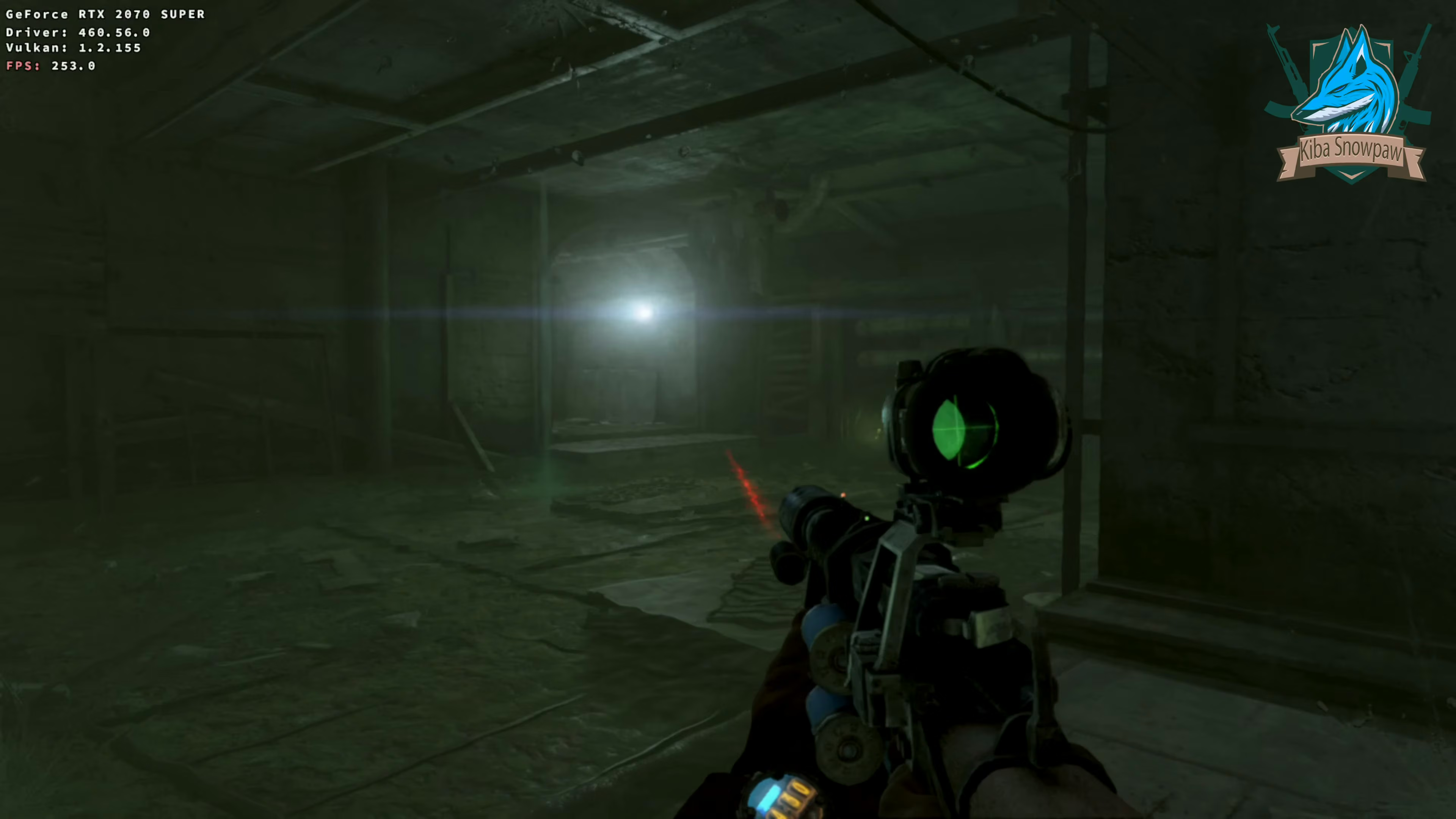
Those recordings cover older systems and drivers, including an RTX 2070 SUPER and NVIDIA 460-series information visible in the Story Rich footage. The Pop!_OS captures have a different performance overlay. Some sessions used Windows Steam inside Wine; the Pop!_OS Steam setup also used the Windows game through Steam Play/Proton. Redux has a native Linux version too, which is a separate route from those Windows compatibility setups.

The older PS5 recording is the PS4 release running through backward compatibility. The original PS4 target was 1080p at 60 FPS. My 3840 × 2160 screenshot files are the recording/export frames. In the tower recording, the game’s own menu shows 1920 × 1080 with Very High quality and 0.5× SSAA. The file dimensions and the game’s rendering settings describe different parts of the capture.
High frame rates generally worked for me through repeated runs. The one recurring exception was the collapsing metal catwalk near the top of the tower. When I tried the jump at high FPS, I hit my head before clearing it and fell. I knew it was coming, which is why I announce that I am going to turn the FPS down before reaching it.
In Part 10 at 11:17 I say I am going to turn down the FPS. A little later I say I am turning on V-sync or I am going to die. The video carries my own warning at the gap, and afterwards I go back into the menu and turn V-sync off again.


That workaround got me across the jump in these runs. I am not describing the whole game as unplayable above 60 FPS. It is one particular place that kept causing me trouble. My video also notes that changing V-sync stopped the microphone recording for the rest of that session.
What changed in 2026
Update status checked on 28 October 2026. There are two separate developments to know about if you are choosing a version now.
First, the original 2010 Metro 2033 returned permanently to GOG on 14 May 2026. 4A’s announcement lists preservation work for modern Windows systems, more resolutions, modern controller support, a new frame-rate limiter and V-sync. That is the original game, rather than another name for Redux.
Second, the free Redux Next-Gen update launched on Steam, Epic and GOG on 22 October 2026. Plaion’s FAQ schedules PS5, PS5 Pro, Xbox Series X|S and the Windows Store version for 29 October. The upgrade is available to most existing owners, with platform and version exceptions noted by the publisher. It is a quality-of-life upgrade to Redux; the FAQ explicitly says it is not a move onto the current engine and does not add ray tracing.
The official patch notes list uncapped PC frame rates, upscaling support, revised lighting and material work, more detail, audio improvements and a long set of community-reported fixes. They include high-FPS bugs, stalled scripted sequences and D6’s crane mechanisms. The notes do not identify my particular tower jump. My gameplay account and screenshots above come from the older builds.
The rollout also needed a PC hotfix on 23 October, including resolution detection and Steam Overlay fixes. The official Steam news feed provides the update and hotfix announcements, plus the legacy-version option for players whose hardware does not meet the new requirements. The Steam branch is named metro_2033_redux_legacy.
Other players do not all want the same Redux
The older Steam reviews show why there is no single answer to whether the remake improved everything. The Horror Network’s positive review, posted in June 2017, praises the atmosphere, presentation and survival equipment. lincpark’s negative review, first posted in October 2014, prefers the original’s warmer lighting and objects to Redux feeling more action-led. That reviewer also points out that the companions can do useful fighting, something I certainly make use of.
My own reaction is less of a split between the two versions. I like both about the same. I care more about the particular encounter I am playing than deciding that every newer asset or every older lighting choice must win. The library battle is a much more direct issue for me than a comparison screenshot of a wall.
The October 2026 Steam reviews add a separate argument about the new update. Players including Archangel and predator complain about menu promotions, repeated telemetry-consent prompts and display options. Others, including Gman1255, amended an initially negative account of resolution problems after the fix arrived.
My copy and my 7/10
I also have the physical PC Metro Redux copy, which is tied to Steam. Having the discs does not remove that account requirement. My collection record now shows 7/10 and a completion date of 11 March 2021. The Redux box includes Last Light Redux as well, but this review is about 2033; I will deal with Last Light’s own strengths and problems separately.
A lot of what brings me back is still here: the stations, the equipment, the ruined city, the old bunkers and the stranger things in the tunnels. I like having scopes, I like learning my way through, and I like finding places where I can let the companions deal with a fight.
The compulsory battles, QTEs and library section are also still a large part of my experience. I can understand why the game uses a scene and still hate having to play through it. 7/10.
My recordings
The Metro 2033 Redux playlist keeps the supplied videos in their existing order. Part 10 is the tower recording discussed above. The screenshot credits identify the individual session and time, including the separate PS5 and Pop!_OS captures.
Open the complete playlist on YouTube
All 14 playlist entries, in their existing order
- Metro 2033 Redux – Part 01 – |FPS|Linux|Story Rich|Gore|
- Metro 2033 Redux – Part 02 – |FPS|Linux|Story Rich|Gore|
- Metro 2033 Redux – Part 03 – |FPS|Linux|Story Rich|Gore|
- Metro 2033 Redux – Part 04 – |FPS|Linux|Story Rich|Gore|
- Metro 2033 Redux – Part 05 – |FPS|Linux|Story Rich|Gore|
- Metro 2033 Redux – Part 06 – |FPS|Linux|Story Rich|Gore|
- Metro 2033 Redux – Part 07 – |FPS|Linux|Story Rich|Gore|
- Metro 2033 Redux – Part 08 – |FPS|Linux|Story Rich|Gore|
- Metro 2033 Redux – Part 09 – |FPS|Linux|Story Rich|Gore|
- Metro 2033 Redux – Part 09 – |FPS|Linux|Story Rich|Gore|
- Metro 2033 Redux – Part 10 – |FPS|Linux|Story Rich|Gore|
- Metro 2033 Redux – Part 01 – |Linux|FPS|Casual|Steam|
- Kiba Snowpaw’s HowlStrom Chronicles – Delving Deep into Metro Redux: A Furry Perspective Review
- Metro 2033 Redux – Live – part 01 – |Linux|Steam|FPS|Shooter|
Gameplay and screenshots: Kiba Snowpaw. The galleries retain the original frame and recording overlays, with full-resolution images linked for closer viewing. Metro 2033 Redux was developed by 4A Games and published by Deep Silver.