
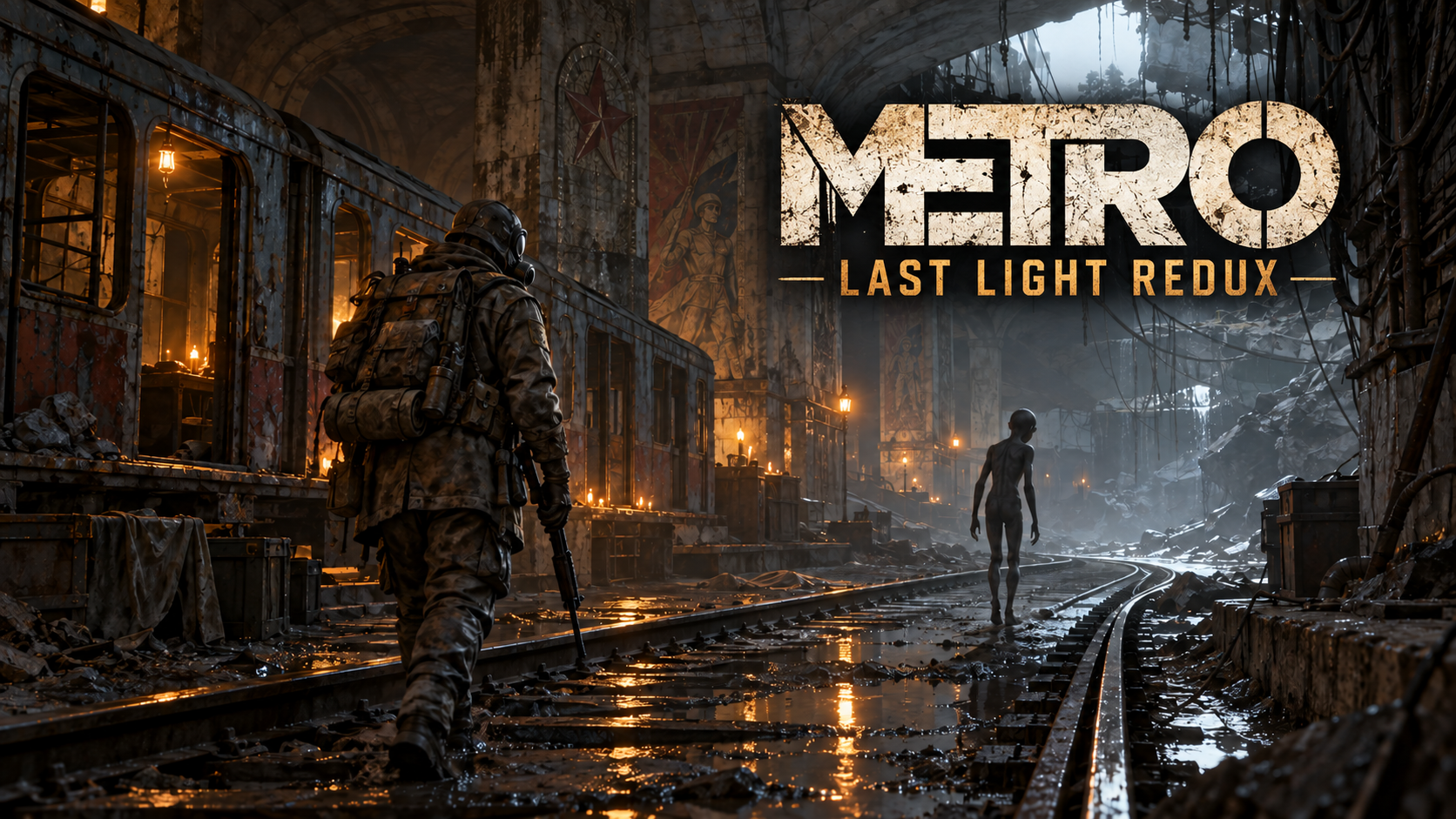
I like Metro: Last Light more than Metro 2033 as a game, and I like its lore more too. I also hate several of the people I have to spend the story with. Miller comes across as more arrogant, Anna starts by talking down to me, and their behaviour gets in the way of a game I otherwise enjoy.
My rating is 7/10. This review is about Metro: Last Light Redux on PC, using my older Pop!_OS recordings. It contains story and ending spoilers, plus a brief comparison with Anna in Metro Exodus.
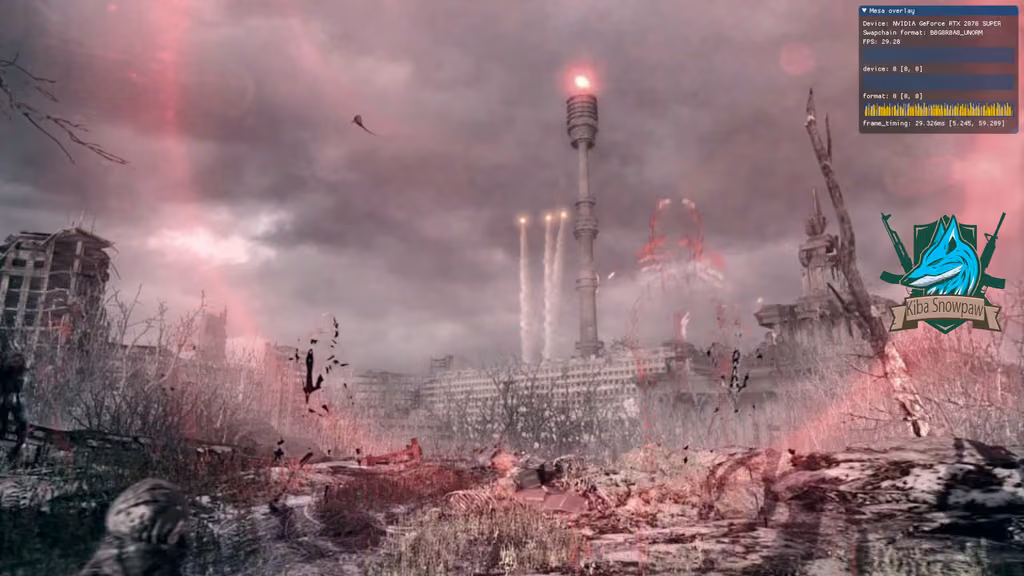
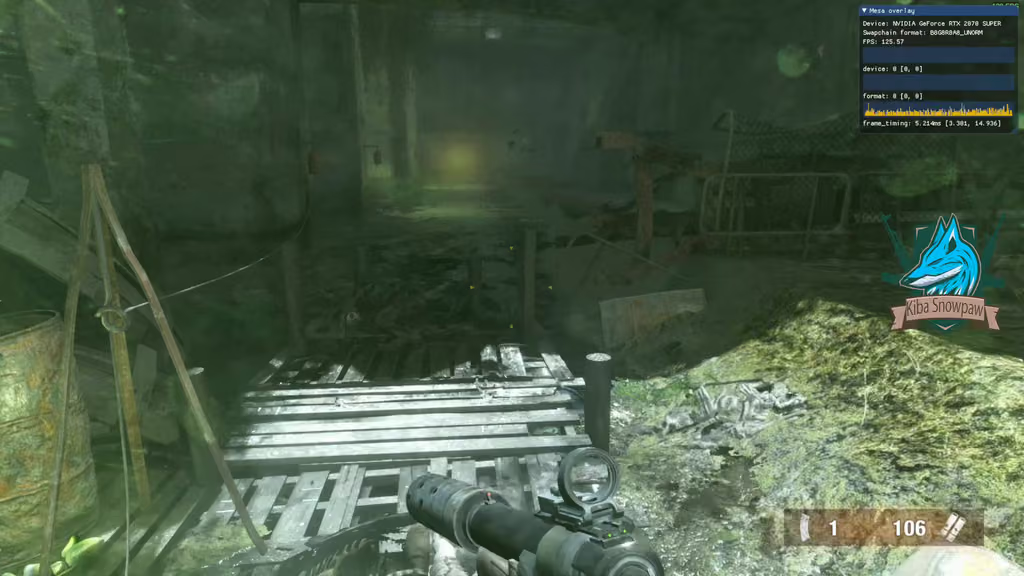
2. Flooded tunnels give the journey a different atmosphere from the occupied stations. Part 04, 01:15:50.
Back in the Metro, with something worth fighting over
Last Light takes place in 2034, after the missile strike that destroyed the Dark Ones at the end of Metro 2033. Artyom is now a Ranger, the Order occupies D6, and the discovery that seemed to offer humanity a future has given the Metro’s factions another reason to fight.
That is a part of the sequel I find more interesting. The tunnels are still dangerous, but the story spends more time on what people are doing to each other. The Red Line, the Fourth Reich, the Order and Hansa have different interests, and the contents of D6 could change the balance between them. Supplies, weapons and rumours become political power.
The stations also give that conflict somewhere to live. Theatre has performances, traders and people trying to carry on with ordinary life. Venice has boats moving through flooded tunnels, fishermen, stalls, gangsters and a shooting range. These places have their own activities rather than existing only to hand over the next objective.


2. Theatre has performances and an audience alongside the traders and guards. Part 04, 00:19:10.
3. The approach to Venice takes the journey onto the water. Part 04, 01:23:00.
Above ground, the ruined city supplies a different kind of history. The crashed passenger plane is one of the clearest examples: walking through its wreckage brings the final moments of its passengers and crew into the present. The Metro’s supernatural scenes can still be strange, but putting them inside a place where people actually died gives them something concrete to connect to.
The lighting does a great deal of the work. Small pools of warm light make inhabited stations feel different from the wet tunnels, while the surface opens into damaged buildings, fog and empty sky. A lighter, a headlamp and a distant light in a passage all have practical uses as well as changing what the scene looks like. Voices, machinery, dripping water and movement in the dark keep those spaces occupied even when very little is visible.
A sequel made through a publisher’s collapse
4A Games was founded in Kyiv in 2005. Metro 2033 adapted Dmitry Glukhovsky’s novel, but Last Light continued Artyom’s story through a new plot rather than adapting the separate novel Metro 2034. In a contemporary interview, publisher representative Huw Beynon described Glukhovsky supplying the plot and contributing story work and dialogue while 4A developed the game around it. 4A’s studio history and the Last Light development interview give the background.
THQ originally published and promoted the project. Its bankruptcy put Last Light through a change of publisher close to release, with Deep Silver taking it to market in May 2013. The original release reached PC, PlayStation 3 and Xbox 360; Redux followed in August 2014, bringing the campaign to the newer console generation as well as PC.
There were difficult production conditions behind it. Former THQ president Jason Rubin described cramped working space, equipment problems and periods without adequate heating. He also said its budget was a fraction of that of competing productions. Creative director Andrew Prokhorov acknowledged the difficult conditions while insisting that the finished game should earn its reviews on its own merits. Their accounts are covered in the contemporary Rubin report and Prokhorov response.
An announced multiplayer component also disappeared during development. In October 2012, 4A said its multiplayer work had remained at the prototype stage and that the team had been folded back into the single-player production. The finished game and its DLC are single-player. The October 2012 announcement explained that decision.
Guns, attachments and keeping yourself alive
I like putting scopes on my guns. That is something that turns up throughout my Metro recordings, and Last Light gives me plenty of opportunities to do it. The opening armoury lets me choose weapons and attachments before trying them on the range, and later traders offer further changes along the route.
Outside Ranger Mode, the campaign allows three weapons. That makes the choice broader than simply finding a stronger rifle: a scoped weapon covers a different job from a shotgun, while a suppressor changes how a gun can be used around human enemies. Attachments can change range, visibility and handling, rather than just supplying a higher number on an inventory screen.


2. The silencer description explains its effect on sound, spread and projectile speed. Part 04, 00:17:40.
3. The selection overlay shows weapons, ammunition and throwing equipment together. Part 02, 00:45:30.
Military-grade ammunition continues to serve as money. It can also be fired from compatible weapons, so the same stock of rounds can become either buying power or ammunition spent in a fight. The armourer’s opening explanation makes that clear: spending those rounds on guns, attachments, ordinary ammunition and equipment is another use for them.
Weapons are only part of the equipment you manage. The gas mask needs usable filters, and its glass can become dirty or damaged. The watch helps track the remaining filter time. Your headlamp and other powered equipment need charging, and pneumatic weapons introduce their own pressure management. These are small actions you perform while moving through the world, rather than everything being dealt with through a detached inventory menu.
Light is especially important around spiderbugs. A beam can force one to recoil or expose its vulnerable underside, while the lighter clears cobwebs that obstruct a passage. The equipment you use to see where you are going also becomes part of how you deal with what lives there.

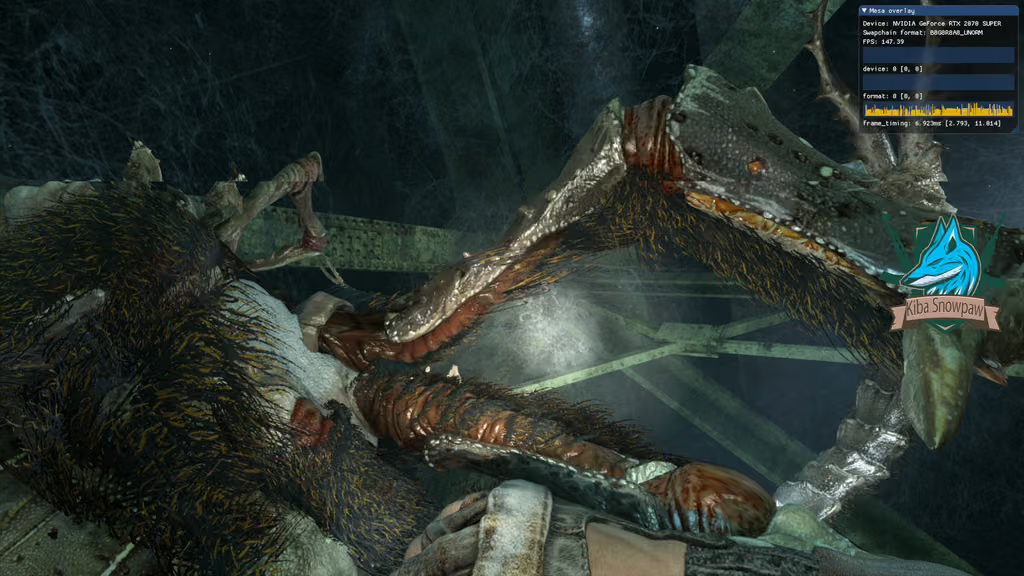

2. The spider tunnels bring the creatures uncomfortably close. Part 03, 00:25:20.
3. Light becomes a practical part of getting through these passages. Part 03, 00:26:10.
Stealth, combat and a very controlled journey
I already dislike sneaking, so a game putting more stealth in front of me is not automatically a positive. Last Light repeatedly sends Artyom through guarded stations and occupied facilities, with lights, patrols and passages arranged around staying out of sight.
The light indicator helps show when Artyom is visible. Lamps can be switched off or broken, and approaching an enemy quietly opens up a choice between a lethal takedown and knocking him unconscious. Suppressed weapons and throwing knives provide other ways through an encounter. Shooting openly is possible in many of these areas, but it changes how the guards respond and how much ammunition a passage can consume.


2. Bright rooms and guarded routes make positioning matter. Part 02, 00:36:40.
3. A scoped view of the industrial passages during the escape. Part 03, 00:08:00.
The journey is still tightly directed. Companions open routes, wait at doors, tell you where to stand and lead you into staged emergencies. During the escape from the Reich, the danger is presented through a mixture of movement, required interactions and fixed scenes. The player participates, but the story controls where those sequences end.
That matters when judging the game as a shooter. There are spaces in which to choose a route or approach, but Last Light is not a branching adventure where every urgent situation can be prevented by reacting faster. The game saves at checkpoints. If a checkpoint leaves you in a poor position, replaying the chapter may be the practical way out. The Chapters menu returns you to the beginning of a previously played level.

Miller: authority without enough willingness to listen
I liked Miller more in the first game. In Last Light, his confidence comes across as arrogance much more often. He gives orders as though his judgement settles the matter, while dismissing someone who is offering knowledge he does not have himself.
The first briefing with Khan shows the problem. Khan reports that a Dark One has survived and argues that Artyom could establish contact. Miller agrees to send Artyom to find it, then assigns Anna to eliminate it. When Khan objects, Miller has him restrained and escorted away. He then suggests that Khan has lost his mind through getting too close to the creature.
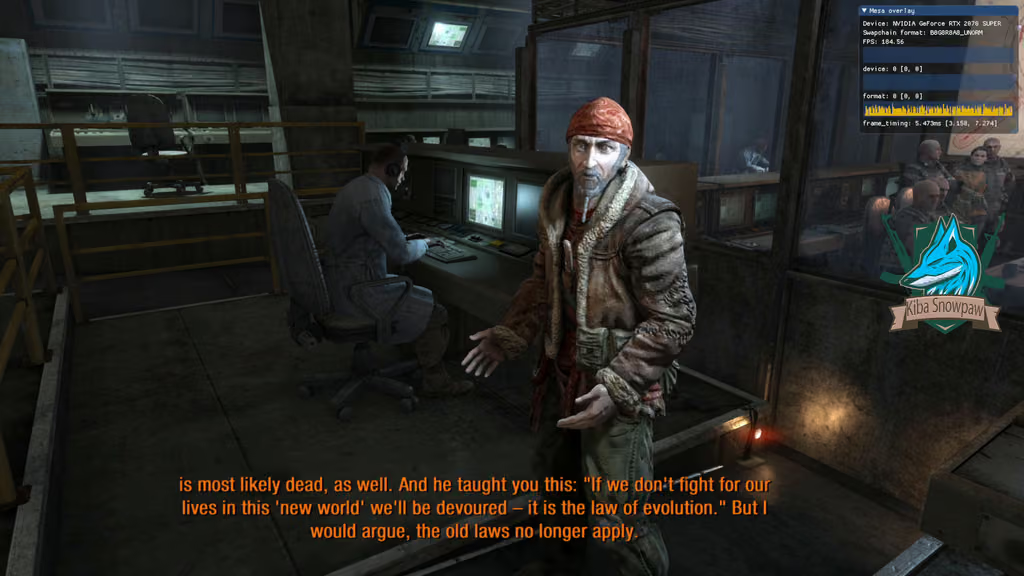

2. Miller’s briefing makes Artyom’s connection conditional, then builds the hunt around it. Part 02, 00:14:40.
Miller is not completely certain about Artyom’s connection. His instruction begins with if it is true that the Dark Ones can sense him. He is nevertheless prepared to use that possibility to draw the survivor into Anna’s sights. He also warns that Anna could have two targets if the Dark One gets inside Artyom’s mind.
That is the selective trust that annoys me. Khan’s information is useful enough to act on, and his understanding is useful enough to build a hunt around. When he argues that killing the creature would repeat the earlier mistake, he is treated as someone whose judgement no longer deserves a hearing.
Accepting the existence of a connection does not establish that a Dark One is friendly. I can understand Miller considering it dangerous. What bothers me is how quickly that concern becomes a reason to close down the discussion. An experienced leader should be able to distrust a conclusion, gather information and still take precautions. Being the loudest person in the room does not do that work for him.
Miller later orders D6 onto its highest alert and prepares demolition as a final contingency. He can take precautions. I wish that same willingness to consider what could go wrong extended to listening to Khan. His behaviour makes an established commander feel much less convincing to me than he did in Metro 2033.
Anna starts on a very high horse
Anna is the character who makes the worst first impression on me. Calling Artyom a rabbit, questioning whether he is a man and throwing in the ladder comment come across as plain nasty. I do not find that a pleasant way to introduce the person who is supposed to be working beside me.
She is also openly hostile to the idea of making peace with the Dark Ones. On the way out, she talks about wanting to have watched the missiles burn them. Her attitude is established before the player has spent much time with her, and Artyom’s silence leaves those comments hanging without a conversation in which he can respond.


2. Anna and Artyom work together on the way to the surface. Part 02, 00:22:10.
3. The gardens put Artyom’s shooting in front of Anna early in their partnership. Part 02, 00:24:20.
Even a grudging acknowledgement that he can shoot can retain that high-horse feeling. It sounds as though she is reluctantly handing him a little approval. Recognising someone’s ability after watching him fight is understandable; it does not give the relationship much depth on its own.
There is a psychological reading of her behaviour that makes sense to me. She is Miller’s daughter and an accomplished sniper inside a military organisation. I can imagine that position bringing both security and pressure: she belongs there, but she may also want her ability recognised separately from her father’s rank.
Then a newer Ranger arrives with a reputation and an unusual ability that makes him important to the mission. From her point of view, that could feel like someone being given significance before he has earned her respect. Talking down to him establishes a hierarchy with her on top. Keeping control of the conversation could also keep her from having to admit uncertainty or show vulnerability.
That is how I read her attitude. Later, she describes feeling alone while her father was away on missions. There is something more vulnerable behind the attitude, but it needs room to become part of the relationship.
Respect, trust and affection happen too close together for me
At the church reunion, Anna acknowledges that she did not take Artyom seriously and asks forgiveness for what happened in the gardens. He has survived a long journey by then. The player, however, has spent much of that journey away from her.
Their reunion is soon followed by the attack on the church, her capture and Artyom rescuing her. In quarantine, facing the possibility that they might die, she describes her loneliness and wants to feel alive. The scene supplies a reason for sudden vulnerability and physical closeness.
I still find the relationship rushed. Her recognising that Artyom can aim, trusting him as a partner, opening up emotionally and becoming intimate are different changes. I would have preferred more time seeing those changes happen through conversations and shared experiences. Several major events occur between their meetings, but that does not give them the same effect as spending that time together.
Her pride could have remained a source of friction while they became closer. She could accept that he is capable while still struggling to ask for help or admit she was wrong. That would fit the guarded person introduced at the beginning without making every step toward affection depend on another rescue or emergency.
A brief comparison with Exodus makes this more noticeable to me. Anna remains capable of going off to investigate alone, and afterward she keeps insisting she is fine as her condition worsens. She accidentally falls into the Volga storage facility while investigating what she thinks is an American flag; the stubborn behaviour is clearer in how she minimises the aftermath. The later coughing of blood makes the seriousness impossible to ignore. That is a woman who can resist admitting vulnerability. I wanted to see more of that resistance worked through when Last Light first developed the relationship.
Pavel and the factions give the journey a different kind of conflict
Pavel spends a substantial part of the early journey working alongside Artyom. They escape imprisonment, save each other and cross the surface together before reaching Theatre. The player gets to see the partnership through things they actually do.
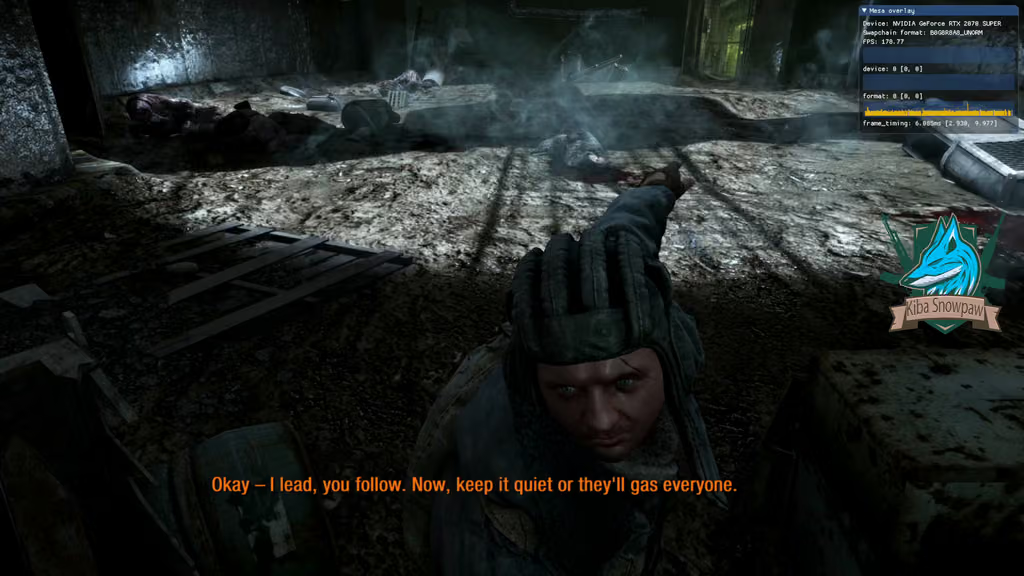

2. Pavel explains how to deal with the creatures in the tunnels. Part 03, 00:21:50.
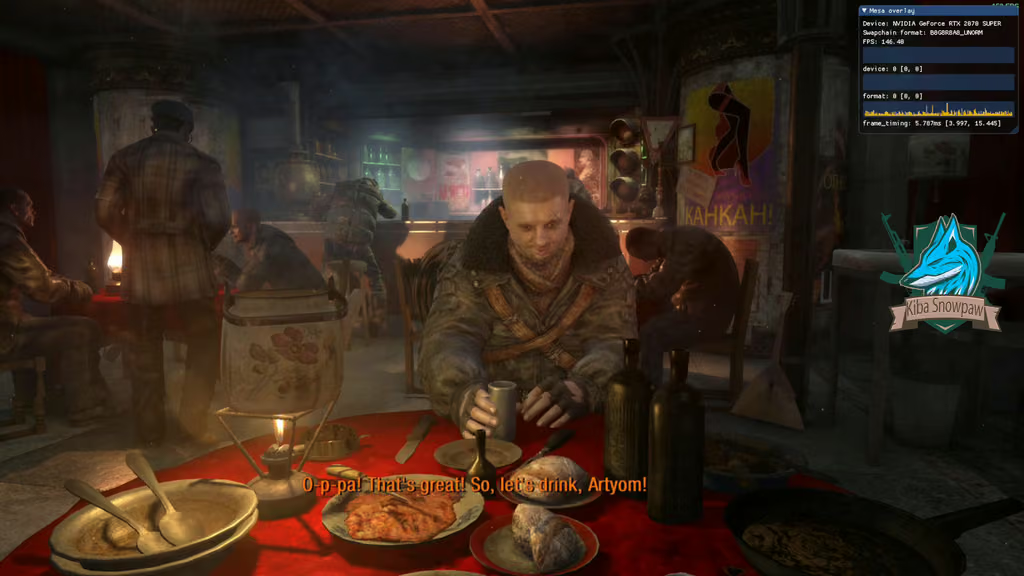
3. The drinking scene turns that apparent friendship into a trap. Part 04, 00:21:00.
His betrayal then connects that partnership to the larger faction conflict. His talk about friendship sits beside his loyalty to the Red Line, and the drinking scene leads directly into Artyom being handed over. The political identity is not a badge that disappears because two people have helped each other survive.
Korbut’s plans make that conflict much uglier than a dispute over a bunker. The infected station, the operation presented as containment, and the attempts to control the Dark One connect military power with the treatment of ordinary people. The game gives the player witnesses, overheard conversations and eventually access to memories that expose what happened.


2. Artyom’s memories connect the political conflict with what happened to the Dark Ones. Part 04, 00:29:20.
That is part of why the lore keeps my interest even when I cannot stand the people involved. D6 is not simply another underground location full of enemies. Its contents affect the decisions of people who think they can use them to decide the future of the whole Metro.
The little Dark One makes the connection more personal
Last Light develops Artyom’s connection to the Dark Ones further than the first game did. The childhood memories give the link a history, while travelling with the young survivor gives Artyom someone to protect after helping destroy his home.
Khan’s River of Fate sequence takes the story back through memory and the missile strike. Later, the childhood encounter shows that the connection existed long before Artyom became a Ranger. The survivor is dealing with what Artyom did, while Artyom is learning more about what he misunderstood.
The child also changes how some encounters are presented. He can distinguish fear from hostility and draw attention to creatures that do not need to be attacked. His observations put another perspective beside the usual instruction to aim a weapon at whatever appears in front of you.
The bear encounter uses that perspective too: the creature is protecting her young. Later, the discovery of other Dark Ones sleeping behind a sealed D6 door expands the situation beyond finding one supposedly final survivor. Artyom has been living above a group of the people he thought he had destroyed.
What my ending actually shows
The political story reaches its public confrontation in Polis. The little Dark One exposes Moskvin’s memories, including his brother’s poisoning and Korbut’s control over him. The peace conference cannot prevent the attack that is already underway.
My final recording continues through the defence of D6. The Rangers face successive assaults, Miller’s demolition plan becomes the remaining option, and Artyom destroys the facility. Anna later tells their son how his father saved the Metro. This is the C’est la Vie ending.
Last Light’s other ending, Redemption, has the little Dark One return with his kin and stop the detonation. That is the outcome continued by Exodus. The difference is tied to the game’s hidden moral system, built up through earlier actions, rather than an ordinary final dialogue selection between two outcomes.
The moral system takes account of more than the fate of a couple of named antagonists. My fourth recording includes sparing Lesnitsky and helping Pavel out of the vision, yet the final recording still reaches the sacrifice ending. Exploration, listening, helping people and decisions in encounters contribute to that wider system. Sparing those two men alone does not settle the ending.
What Redux changes, and what it includes
Last Light Redux is a much smaller transformation of its original game than Metro 2033 Redux was. The 2013 game already supplied much of the technology and handling used for the Redux project. The re-release adds features and collects the extra content, while retaining the main campaign and its character writing.
The publisher’s Redux description lists revised animations, checking the watch and ammunition on the fly, the included Ranger Mode and the previously released DLC. It also introduces the two play styles:
| Play style | Emphasis |
|---|---|
| Survival | A slower survival-horror approach, with tighter resources and more pressure on equipment management. |
| Spartan | The more action-oriented Last Light approach, with a more generous supply of resources. |
The additional content includes the Faction, Tower, Developer and Chronicles packs. Those offer extra combat challenges, equipment and character perspectives rather than a replacement main campaign. The Chronicles material includes Anna’s view of the opening mission, showing her attempt to reach Artyom after the Dark One encounter.
There is also an older purchasing issue behind the package. At the original game’s launch, Ranger Mode was tied to the Limited Edition and sold separately to other buyers. In a 2013 interview, Huw Beynon defended the choice through retail demands for exclusive content while saying the mode was not recommended for a first playthrough. Redux includes it. A difficulty mode marketed as the intended experience being withheld from ordinary buyers was an ugly way to sell the original release.
The older PC recording and the October 2026 update
The opening recording shows Redux launching from Steam on a Pop!_OS desktop. Its graphics menu is set to 1920×1080 and Very High quality, with SSAA off and 16× texture filtering. The overlay identifies an NVIDIA GeForce RTX 2070 SUPER and Direct3D through DXGI. Those are the settings and device visible in this archive.

Redux also has a native Linux release, dating from December 2014. At its launch, 4A described using OpenGL 4.0 to bring it closer to the Windows version’s graphical features. My recordings show the older game running on Pop!_OS with a DXGI overlay. See the contemporary Linux release report.
There is now another build to consider. The October 2026 patch notes list modern upscaling, lighting, geometry, texture, audio and input improvements, alongside fixes for high frame rates. Last Light-specific entries include the bear encounter, stealth actions from Revolution onward, an RPK purchase crash, the Khan DLC and falling out of bounds in Nightfall. These changes arrived years after the build in my recordings.
The console upgrade announcement dated 29 October 2026 says existing owners can upgrade free, with the PC update already available. The published PC guidance also provides the metro_last_light_redux_legacy branch on Steam and GOG for returning to the older version.
A 23 October PC hotfix followed, addressing resolution detection, the Steam overlay, the account reward, Epic achievements and Ukrainian text.
The update has attracted a separate set of complaints. Steam reviews dated 22–27 October report marketing-telemetry prompts and Metro 2039 advertising in the updated game. The update also adds Deep Silver Account integration for a comic-book reward, according to the official announcement.
Other players do not all value the same parts
The positive Steam reviews I read praised the atmosphere, ruined environments, lighting and the way the game combines surface exploration with the tunnels. One positive review from August also criticised the limited development of character relationships and awkward checkpoint situations. Enjoying the game does not require liking every part of its writing.
A negative September review put more weight on stealth, checkpoints, hit reactions and the process of pursuing the good ending. That is why I find the explanation behind a review more useful than its score alone. The relevant positive reviews and critical reviews give those experiences in the players’ own words.
The 2014 PC Gamer Redux review preferred the first game’s survival-horror emphasis and questioned the value of buying Last Light again if the original was already owned. My preference between the two games is different: I enjoy Last Light’s game and lore more, even though its main cast gives me more to complain about.
My copies and the account requirement
My collection has an original Last Light Limited Edition entry and a Metro Redux bundle entry. Both list a Steam account requirement. The bundle contains the Redux versions of both Metro 2033 and Last Light.
There are independent alternatives. GOG offers Last Light Redux with offline installers and optional Galaxy. On 14 May 2026, 4A also announced the permanent return of the original Last Light Complete Edition through GOG’s preservation programme. Those releases matter when discussing access and preservation; a Steam-bound copy is not the only version that exists.
A better game for me, with a cast that gets in the way
The lore, places and game itself keep me interested. I like the expanded conflict around D6 and the way Last Light gives Artyom’s connection to the Dark Ones more history and a surviving person to deal with.
Miller’s arrogance and Anna’s introduction work against that enjoyment. Her later affection comes too quickly for me after the way she starts, and his treatment of Khan makes him harder to accept as an experienced leader. I can like Last Light more in some important ways and still find its central relationships worse. I want to spend more time in its world. I would enjoy that time more if Miller listened and Anna’s relationship with Artyom had room to develop.
My complete gameplay playlist
The playlist contains all five supplied parts, including the final D6 battle and ending. Part 1 covers the opening setup and briefing, Part 2 restarts the opening and continues into the early campaign, Part 3 continues the escape with Pavel and enters the spider-infested tunnels, Part 4 is the long central session, and Part 5 reaches the ending.
Open my complete five-part Last Light playlist on YouTube.
All five individual recordings
Screenshots are from my gameplay recordings. Metro: Last Light Redux and its game imagery are © their respective rights holders, including 4A Games and Deep Silver.