
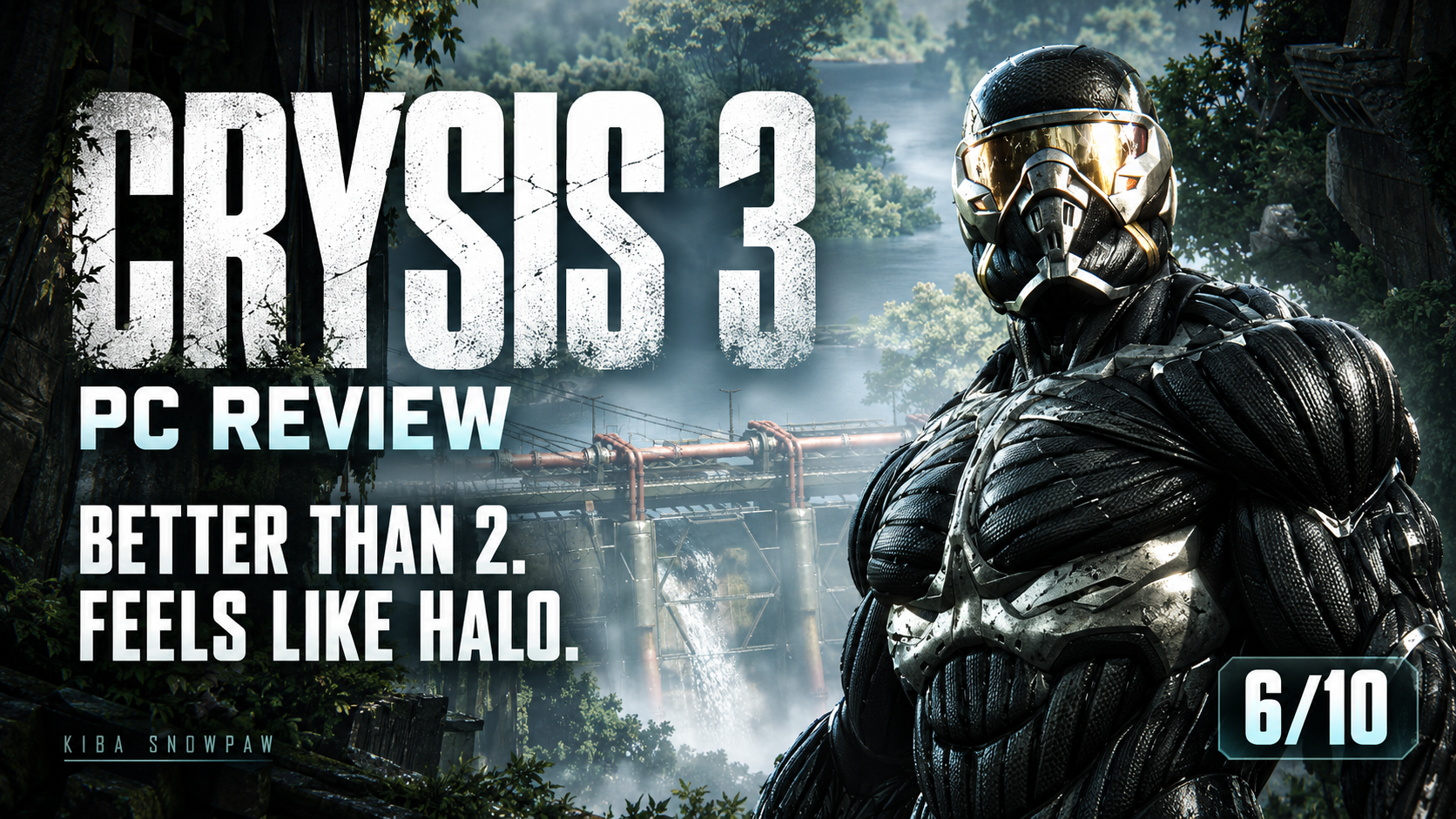
Crysis 3 is better than Crysis 2 for me. The action has more drive, the graphics are better, and some of its Halo-style spectacle works. I still found a lot of it boring.
By the end, it felt closer to Halo than to what I associate with Crysis. The buggy, the aircraft gunner section, the voices in my head and the increasingly powerful man inside the suit all pushed it in that direction. The ending could have carried Master Chief and Cortana without feeling particularly out of place.
I finished the original Steam version on 21 October 2026. This is the 2013 game, not Crysis 3 Remastered. My campaign time was roughly five to eight hours. I play on the easiest setting, and I often pass enemies when killing them serves no purpose. Near the end, I ran past most of the fights I could avoid.
My earlier experiences are in my Crysis review, Warhead review and Crysis 2 review. This one was much easier to get running than my Crysis 2 disc installation.

What Crytek wanted to bring back
Crytek and EA announced Crysis 3 on 16 April 2012, calling it the “premier sandbox shooter” of 2013. The setting combined New York with a rainforest: the city enclosed inside CELL’s Liberty Dome, divided into seven distinct environments. The original PC, Xbox 360 and PlayStation 3 release arrived on 19 February 2013 in North America and 22 February in Europe.
The return to vegetation and larger spaces was deliberate. In a February 2013 interview with Strategy Informer, Crytek’s Cevat Yerli acknowledged the criticism of Crysis 2’s direction and said the team wanted more expansive gameplay. He described Crysis 3 as “a true sequel to Crysis 1.”
The development team had less time and fewer people. In their FMX 2013 presentation, Pierre-Yves Donzallaz and Tiago Sousa put Crysis 3 at roughly 100 developers and 23 months of production, compared with around 150 and 38 months for Crysis 2. The presentation also describes rebuilding environment assets to suit the destruction, moss, rust and wet surfaces of the new setting.
The change is easy to see. Buildings, industrial equipment, water and vegetation are mixed together throughout the city. Visually, that combination is one of the things I liked most.
Large areas, but little reason to explore
The spaces can look open in the way a Halo level looks open. There is room around the route, but the next mission marker still pulls me through the same sequence. I never felt much reason to wander off and inspect everything.
The game offers different approaches to encounters. That did not give me much motivation to stay in them. If I could get to the next objective without killing another group of enemies, I often did. I was not interested in clearing an area just because the enemies were there.
Yerli specifically described bypassing enemies as part of the intended freedom. A player could spend half an hour experimenting in an area or get through it in a few minutes. I mostly wanted to get through it. The fights and exploration were not interesting enough to make me choose the longer route.
The enemy behaviour could be strange too. Some enemies seemed to know where I was without a clear line of sight and kept firing. A guard above a ladder made getting up there annoying. In a separate encounter, a suppressed shot hit the wall behind a guard and he went to inspect the wall. Other enemies were passive enough that I could line up headshots without much trouble.
Crytek had talked about more coordinated CELL soldiers and better alien hunting behaviour. Those were much stronger promises than the reactions I was seeing.

I spent most of the game with a rifle
Most of my campaign was spent using a SCAR in single-shot mode. I fitted a magnifying scope for distance and changed to a red-dot sight in close quarters. When I found a sniper rifle, I took that too. Those two weapons handled most of what I wanted to do.
I mainly changed to something else when I ran out of ammunition or when an encounter seemed to want a particular weapon, including the last boss. Having a larger arsenal did not make me want to keep swapping through it.
The Predator Bow is the signature addition, with different arrow types and the ability to fire while remaining cloaked. Alien weapons add another set of options. My own playthrough stayed much more ordinary: a rifle, a useful sight and a sniper rifle when one was available.
Changing attachments with X was one control I liked. It let me change the rifle for the distance I was fighting at without making the weapon itself disposable. The PC manual also lists 2 for changing fire mode.


The suit menu, four modules and timed hacking
The suit controls still lean toward the Crysis 2 approach: Q for armour, E for cloak and N for Nanovision. Holding the middle mouse button opens a radial menu. That felt a little closer to the original suit controls, although I still preferred how the first game handled the suit.
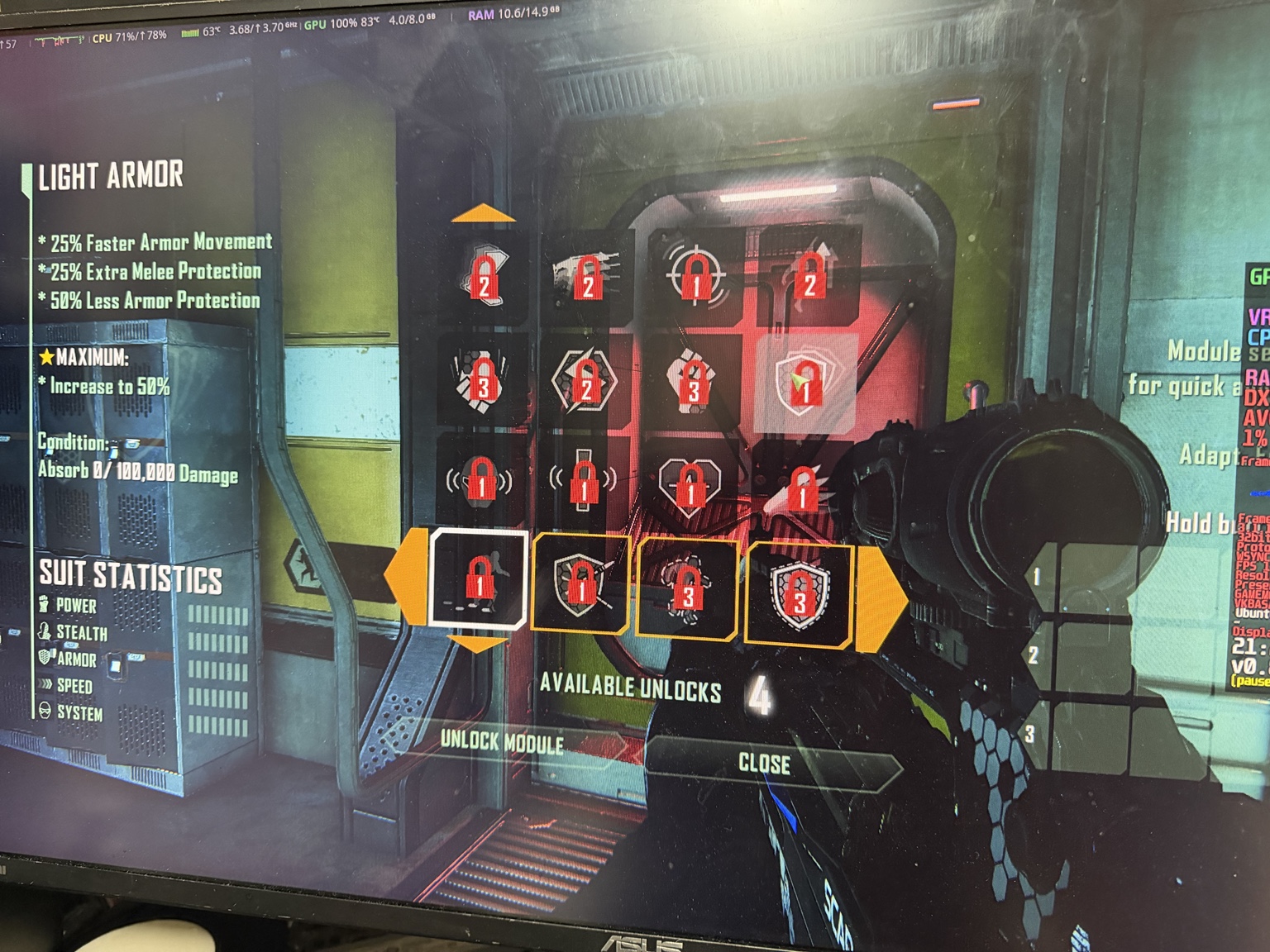
The energy felt less restrictive than in Crysis 2. The upgrade system was also an improvement over collecting alien catalyst, but I still disliked being limited to four equipped modules.
You collect upgrade kits, spend them to unlock modules, then select up to four to equip. Modules can improve further through related tasks. Buying more gives you alternatives to put in those slots. The manual explains the module system and saved packages, but I had little interest in collecting a long list of alternatives that I would leave inactive.
Hacking is another thing I found stupid. You target the device, start the hack and time your inputs against a moving waveform. Press F or click at the right moment, repeat the sequence, and carry on. It can turn security equipment to your advantage, but the minigame itself was just a timing interruption.

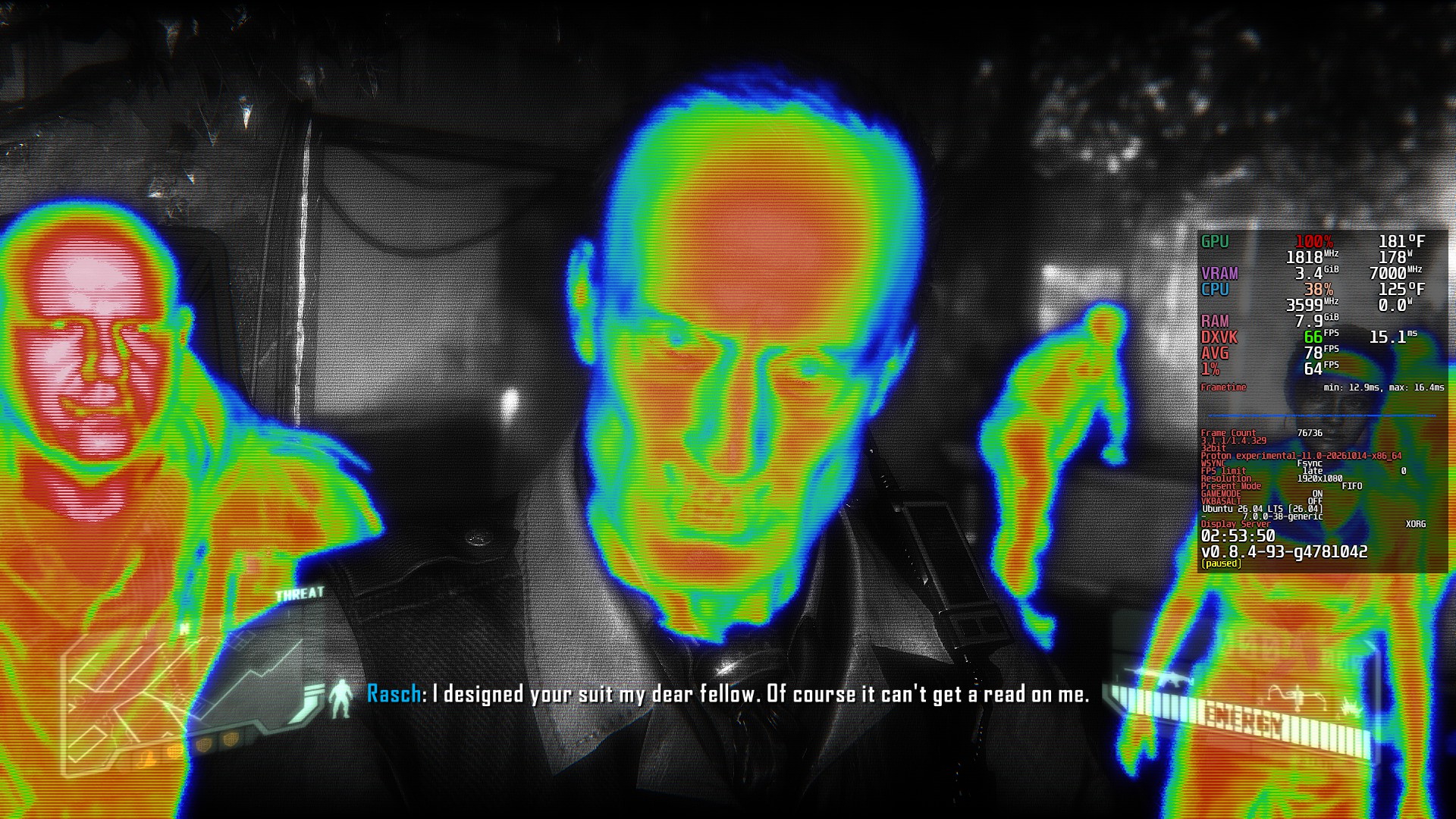
I could also activate suit modes during in-engine conversations. Nanovision turned the characters into brightly coloured thermal figures while they kept talking. I tried the other modes too; they remained available. It was odd watching an important conversation carry on through the suit’s filters.


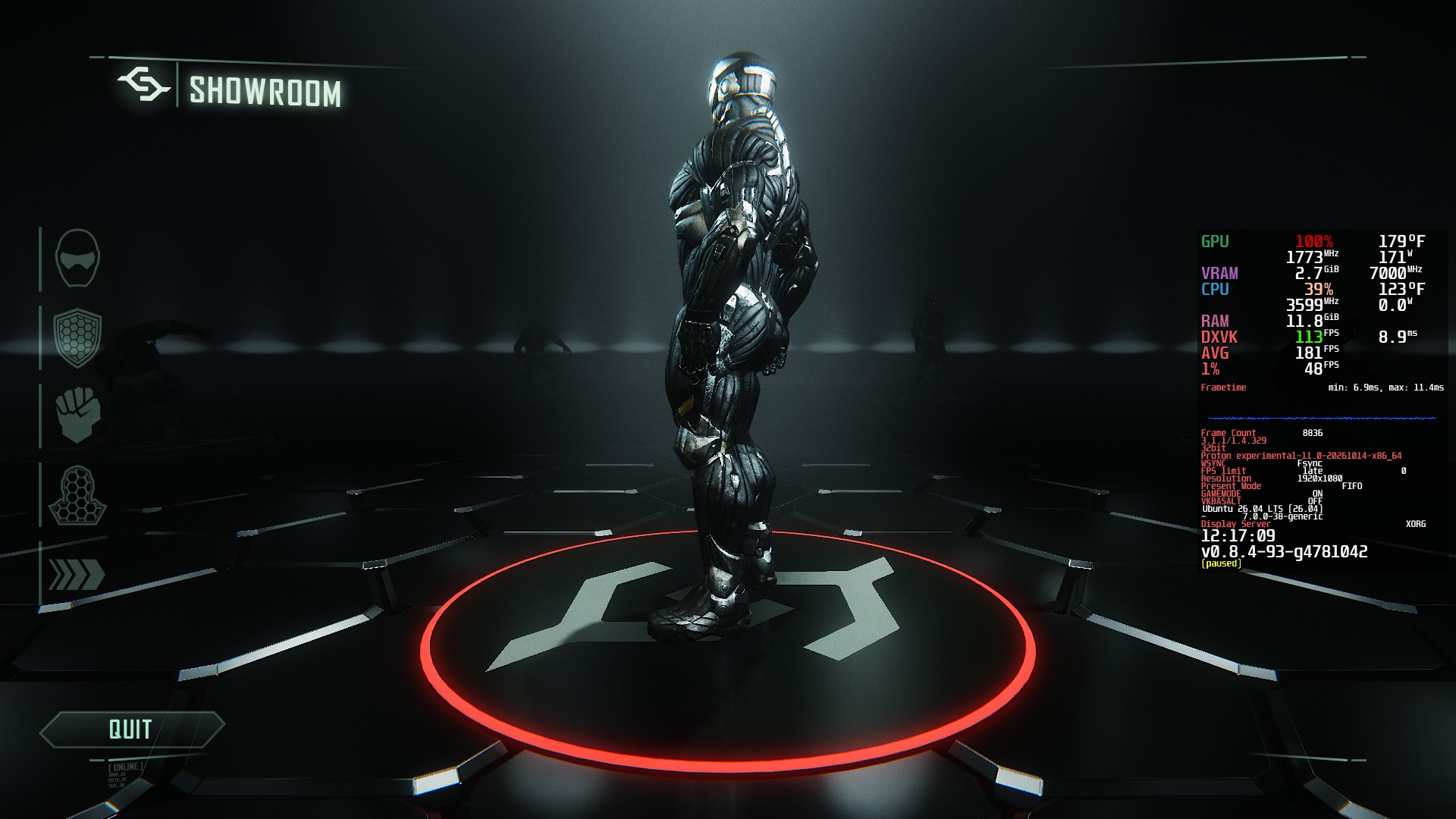
Then there is the Nanosuit Showroom, with the suit standing on a lit platform. Are they trying to sell me one?

The buggy and the aircraft felt like Halo
The buggy section felt like a Halo vehicle arena. Driving around that space was another point where the game stopped feeling much like Crysis to me.
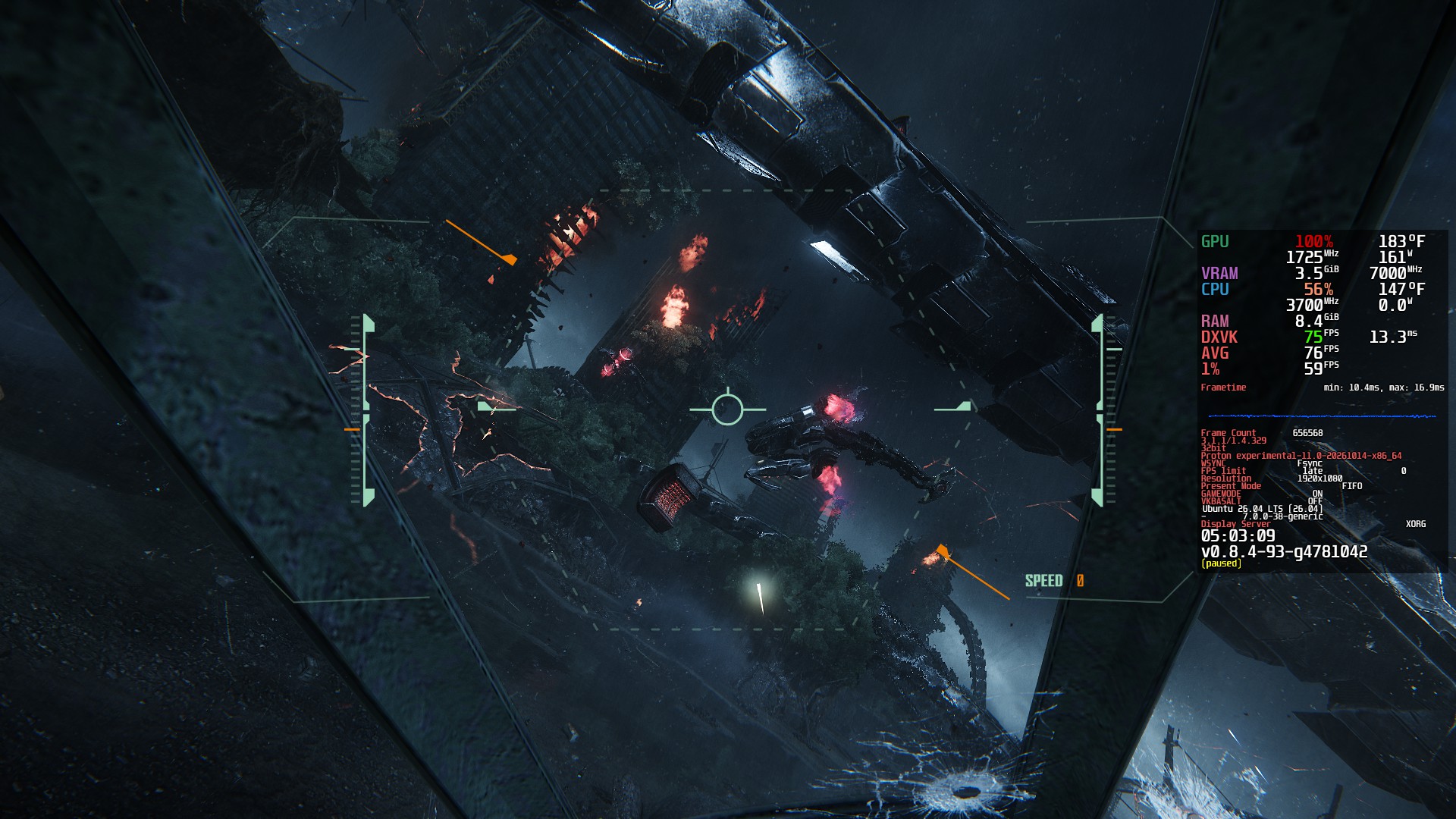
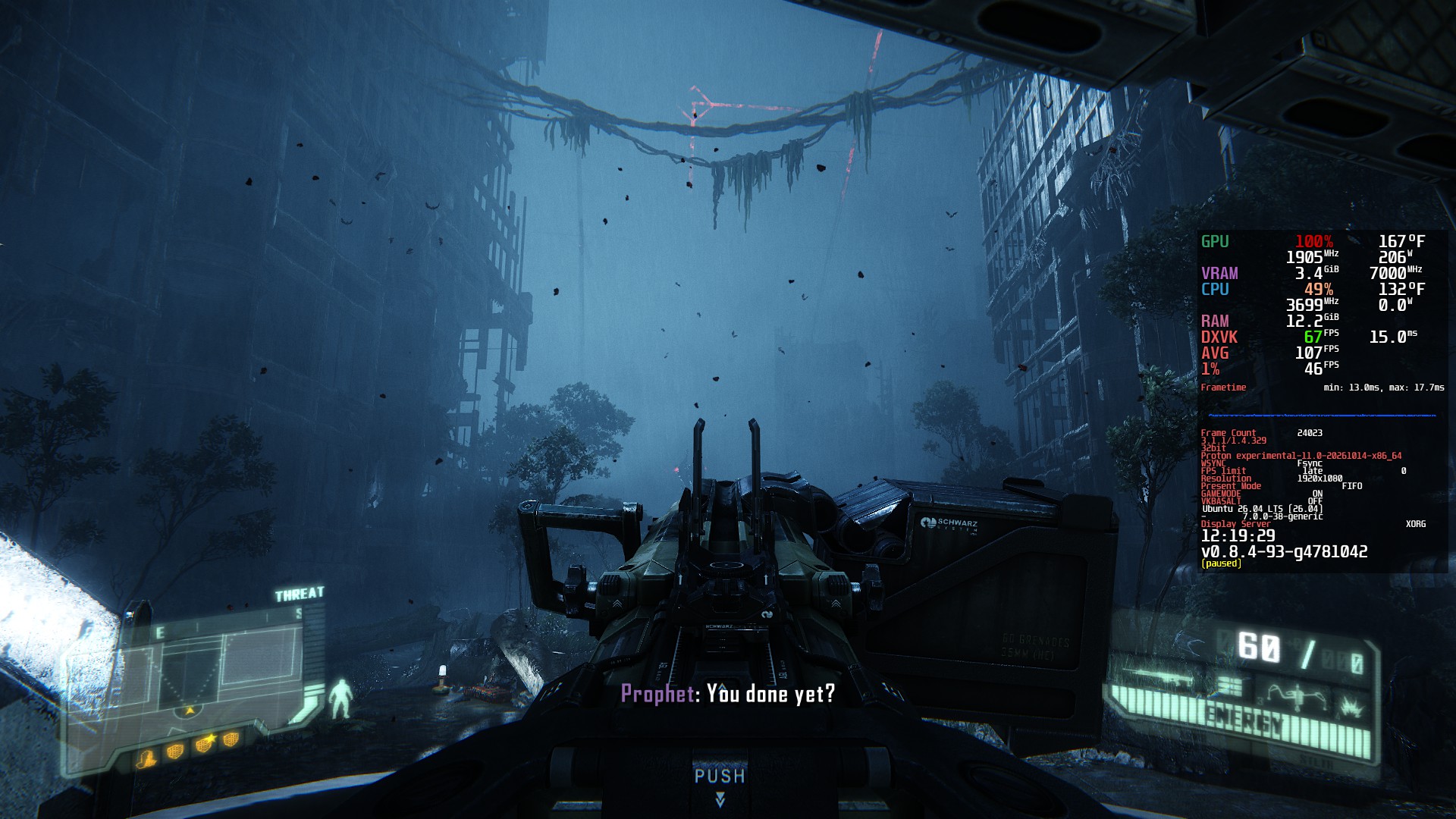
The aircraft gunner sequence was ordinary point-and-shoot action. The gun did not overheat while I used it, so I could keep the trigger held down. There was little reason to stop firing and little to manage beyond pointing at the next target.
Those sections add action, and I preferred the overall drive of this game to Crysis 2. They also made the Halo resemblance harder to ignore.


Good graphics, softer videos and Enter again
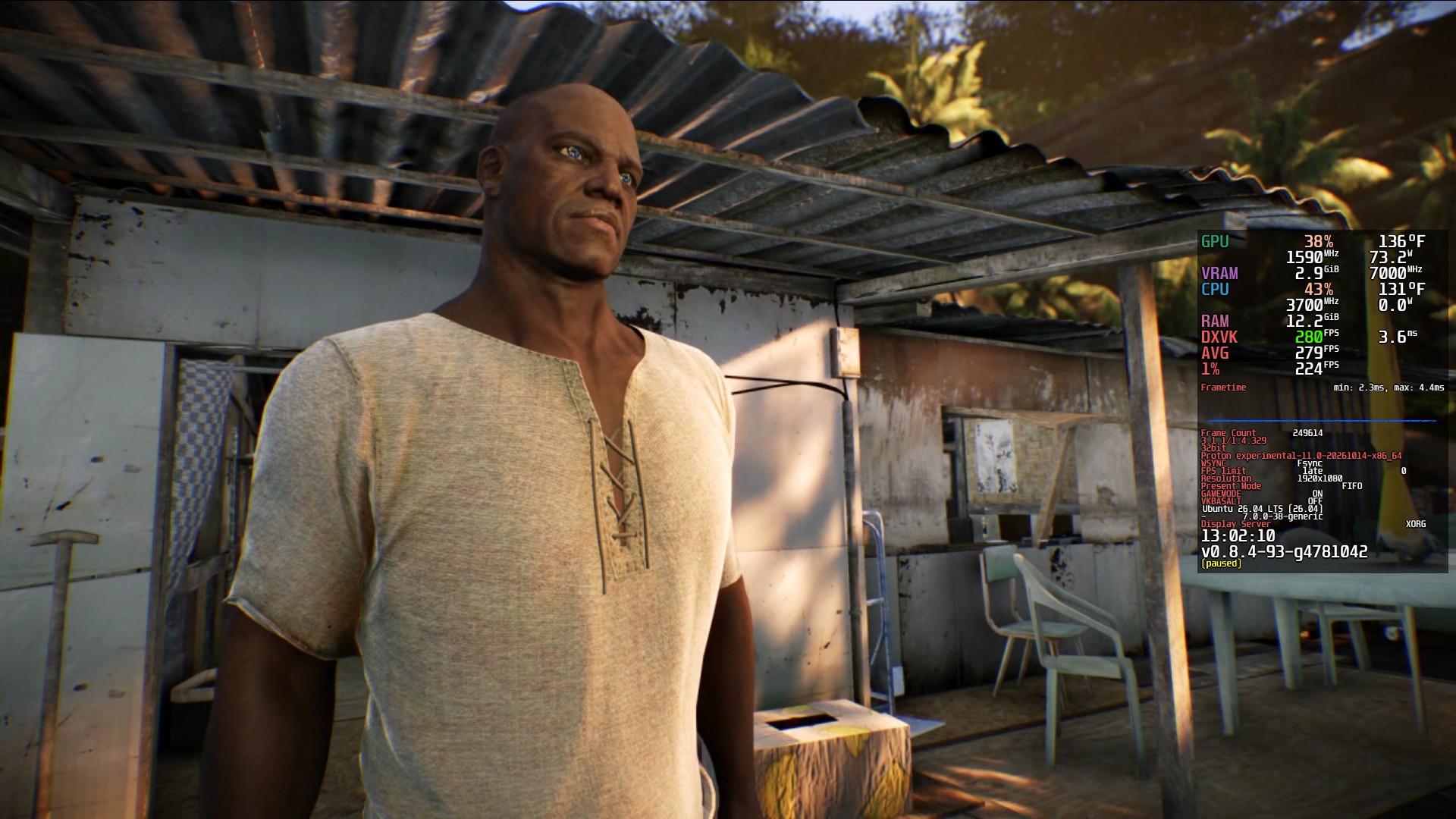
The live game looks good. The vegetation, water, lighting and detail in the overgrown buildings give it much more visual appeal than Crysis 2 had for me. The in-engine faces can look detailed too.
The prerecorded videos were noticeably softer and more compressed-looking than the game around them. The difference stood out with the graphics turned up. Sharp subtitles over a softer video made it particularly obvious.
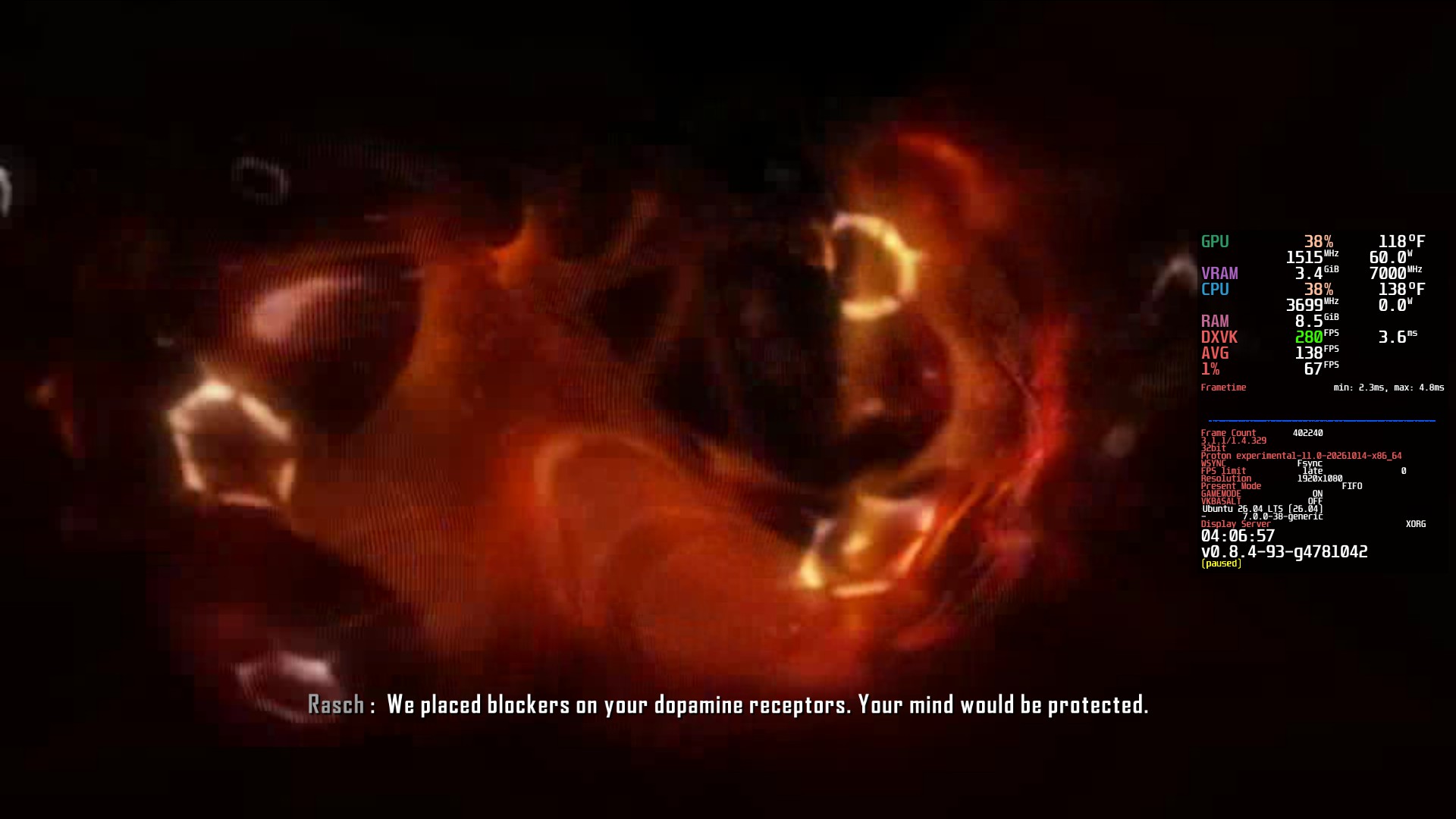

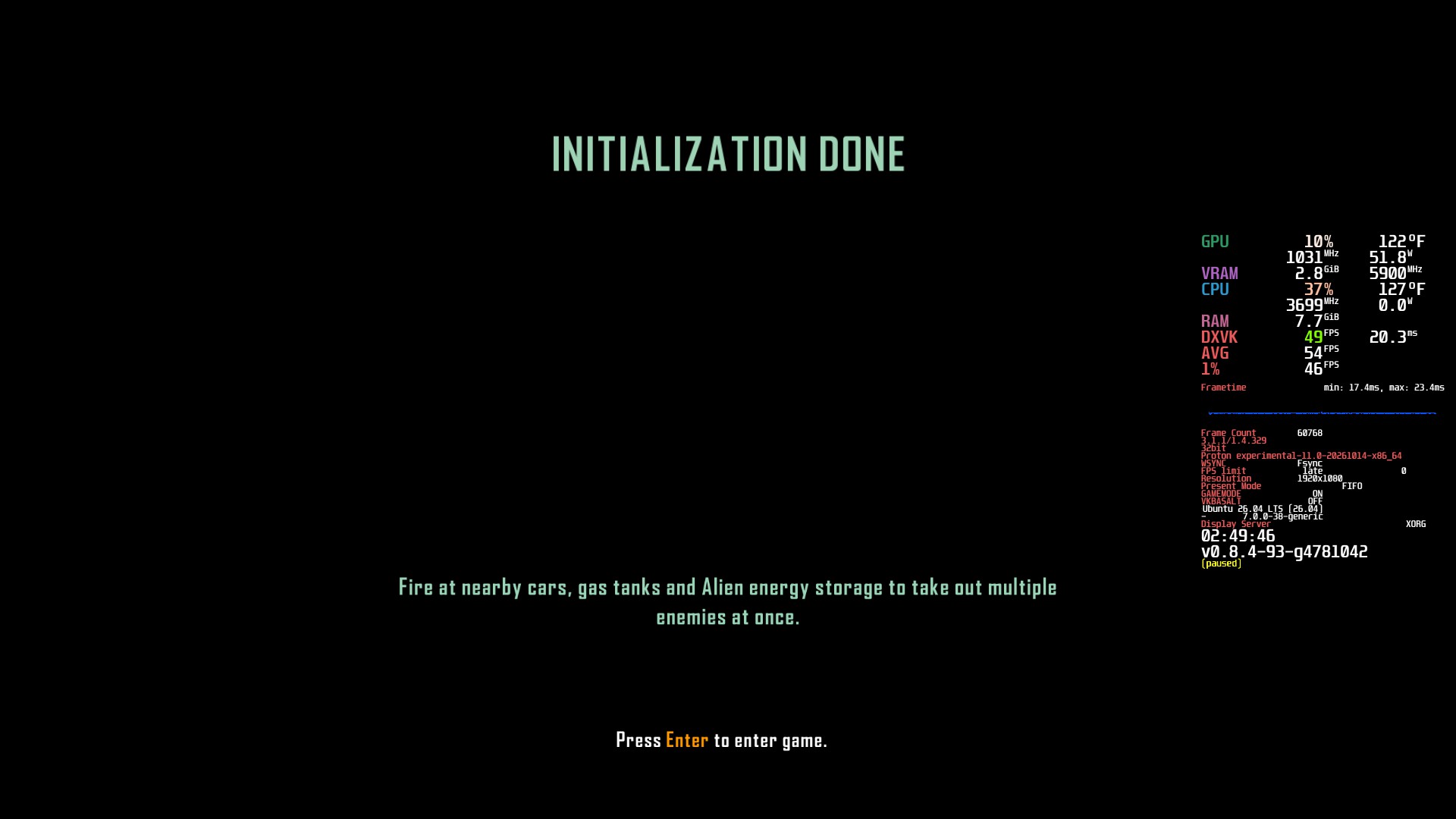
Having to press Enter to enter the game between missions got on my nerves. I wanted the next mission to start when it was ready. Instead, that extra prompt remained part of the routine, including over cinematic material.

Linux was not the problem this time
I installed the game through the native Linux Steam client and played using the compatibility setup Steam selected. I did not install a third-party Proton build or manually force a version. The performance overlay identifies Proton Experimental 11.0-20261014, one of Valve’s official Proton versions.
| Game | Original Crysis 3 on Steam; default public branch |
| Steam identifiers | App 1282690; build 10351611 |
| Operating system | Ubuntu 26.04.1 LTS, 64-bit; X11 |
| Processor | Intel Core i7-6850K |
| Graphics card | NVIDIA GeForce RTX 2070 SUPER, 8 GB VRAM |
| Driver | NVIDIA 595.99.02 |
| Game resolution | 1920 × 1080 |
| Graphics options | Very High; 16× anisotropic filtering; motion blur disabled |
| Background music | Disabled throughout the playthrough |
These were the Steam launch options I used:
gamemoderun mangohud DXVK_HUD=compiler DXVK_ASYNC=1 DXVK_STATE_CACHE=1 __GL_SHADER_DISK_CACHE=1 __GL_SHADER_DISK_CACHE_SKIP_CLEANUP=1 PROTON_NO_ESYNC=1 PROTON_ENABLE_NVAPI=1 STAGING_SHARED_MEMORY=0 __GLX_VENDOR_LIBRARY_NAME=NVIDIA %command%I do not know how much that launch string changed the performance. With it in place, the game ran smoothly. I did not notice lag or feel that the computer was struggling, even when hardware usage was high. Gameplay captures include readings in the 40s, 60s, 70s and 90s, depending on the scene.
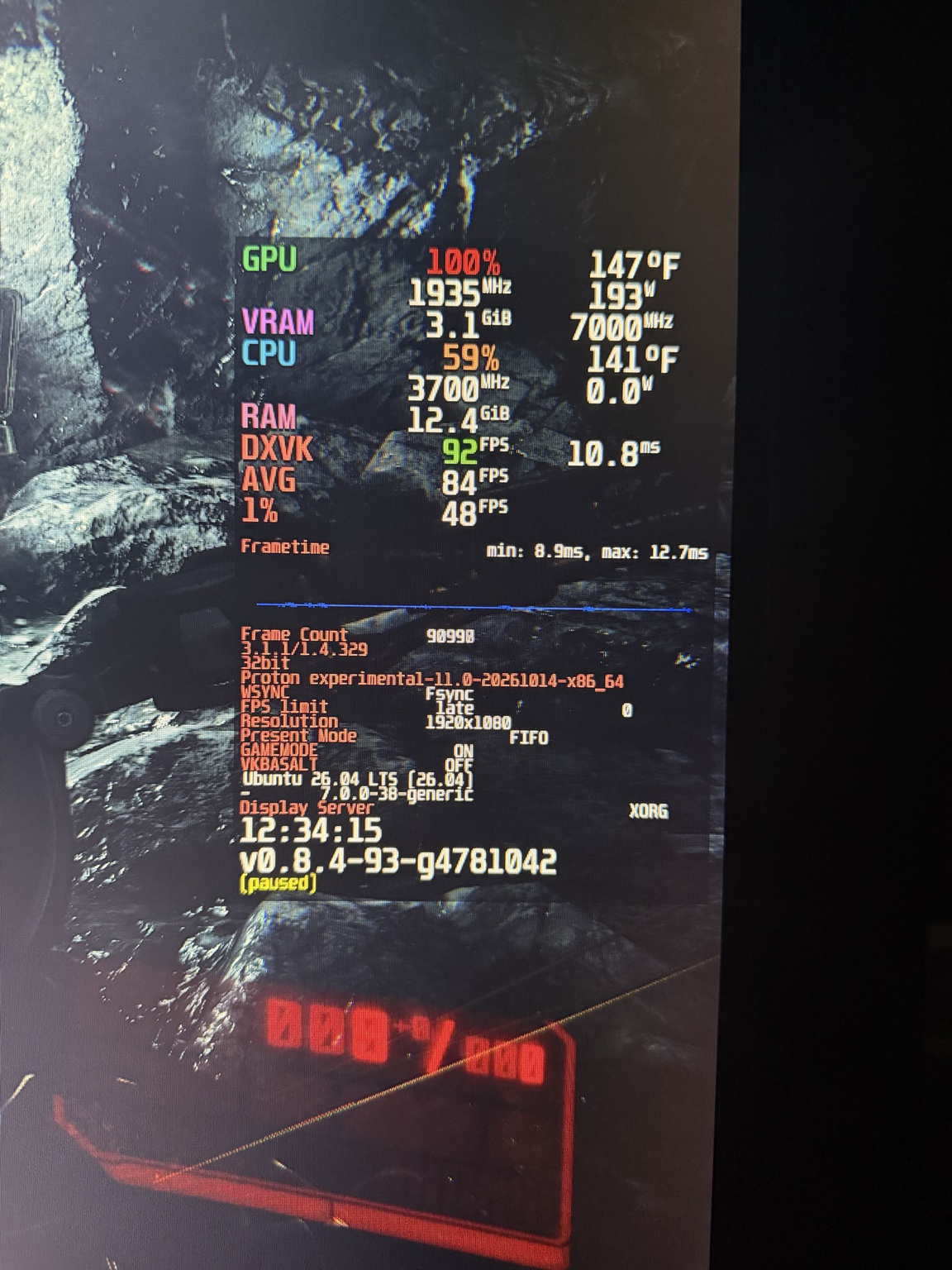
The main bug I ran into was at a narrow train doorway. I tried to squeeze through, got wedged, and had to exit and resume. That was annoying, but the rest of the playthrough ran well.
The original release had its own patch history. The April 2013 patch 1.3 notes include fixes for a boss failing to appear, freezes after the boss fight, SCAR ammunition being lost after death, custom weapon-menu bindings and V-sync not applying on the first launch. Those are historical fixes; the Steam build above is the one I played.
The suit used to be a tool
Open the story and ending discussion — major spoilers for Crysis 2 and Crysis 3
Crysis 3 takes place in 2047, twenty-four years after Crysis 2. Psycho and the resistance free Prophet from CELL captivity. CELL has turned alien technology into an energy monopoly, and the resistance wants to break its control.
That becomes tangled up with System X and the captured Alpha Ceph being used as a power source. Breaking CELL’s system releases the alien threat. Rasch’s use of Ceph material in his own body leaves him vulnerable to their control. Claire’s forced work for CELL, including the removal of Psycho’s suit, adds another conflict inside the resistance.
I found the story difficult to care about. There is the rebellion, the energy system, Rasch, Claire and Psycho, the Alpha Ceph, and Prophet worrying about what he is becoming. The Psycho and Claire scenes did not pull me in. At one point my reaction was simply: just kiss her already.

For me, the first Crysis was about discovering and fighting the aliens. The suit was a tool the soldiers used. Crysis 2 made the suit and its relationship with the person inside it central to the plot. Crysis 3 pushes much further into Prophet becoming the suit.
Writer Steven Hall described that change directly in his 2013 Starburst interview. Prophet’s original body is gone. His memories and personality survive through the Nanosuit, while Alcatraz’s body is incorporated into the new entity. Hall described Alcatraz as the “ultimate physical upgrade” and explained that his personality became corrupted, leaving Barnes as the surviving personality.
I hate reducing another person to a replacement body so the same character can carry on. Prophet died, yet the series brings him back through Alcatraz and then gives him his old appearance again. It makes the suit feel like a parasite: it keeps a host alive, takes over his identity and ends up looking like somebody else.
Psycho asks the question that bothered me throughout the game:
“Whose face are you wearing under that helmet these days, Prophet? Do you even have a face anymore?”
“Whose” is the important word there. This is another person’s body carrying Prophet’s identity. By the ending, even the face becomes Barnes’s again. Alcatraz has almost disappeared from the story.
It reminded me of the personality replacement in Cyberpunk 2077. Master Chief still feels more human to me at this point. So does Adam Jensen from Deus Ex, despite all his machinery. Having a modified body does not stop a character feeling like a person.
This escalation happens across Crysis 2 and Crysis 3. Crysis and Warhead provide the earlier baseline. Within those two sequels, the suit moves from the soldier’s equipment to something carrying a personality, replacing a wearer and changing its own form.
The Ceph hive-mind connection also links alien thought and power, and temporarily removes the normal suit-energy drain. Once the suit keeps absorbing alien material and evolving, I start wondering what limit will survive the next upgrade. Another host, more regeneration, more power: it becomes easy to imagine the story continuing to remove whatever gets in Prophet’s way.

The ending could have been Halo
The final stretch reinforced the Halo comparison. There is the huge alien threat, the armoured hero, voices cutting into his experience and the enormous last attack. It reminded me particularly of Halo 4 and Halo Infinite, with the kind of Cortana interruptions I remember from Halo 3. At least Crysis 3 did not slow my movement down for those voices in the same way.
Change Prophet to Master Chief and replace the people talking to him with Cortana, and much of the ending’s presentation could fit Halo. The resemblance was strong enough that I could have believed the same people had made it.

After the Alpha Ceph, Prophet ends up in orbit and uses Archangel against the alien ship. Then he falls back to Earth. The ending returns him to Lingshan and gives him Laurence Barnes’s appearance through the transformed suit.


I would have left him in space. Let him find a small ship or get aboard a surviving part of the larger one. End with Earth saved and Prophet being carried away from it. That gives another game somewhere to go and makes winning cost him his return home.
By this point, he feels closer to the kind of solo, overpowered protagonist I associate with Halo or Doom. Sending him into alien territory would follow that direction. Keeping him on Earth feels restrictive after making him this powerful so quickly.
Hall described Crysis 3 as the final act of Prophet’s story. If the series had ended there, I could accept the homecoming as the final goodbye. With another entry in view, I would have preferred the ending that leaves him stranded in space.
Crytek announced the next Crysis in January 2022. In its February 2025 statement, the studio said development had been on hold since the third quarter of 2024 while developers were being moved toward Hunt: Showdown 1896. That leaves the next game’s future uncertain.
More screenshots from the campaign — includes story spoilers






The original game, its accounts and what remains available
The original release also included multiplayer, with modes such as Hunter. The Lost Island DLC arrived in June 2013, adding four maps, two modes and two weapons. It was multiplayer content, not another single-player campaign.
EA dates the retirement of Crysis 3’s official online services to 8 December 2023, covering Steam and the EA app as well as the console versions. On 21 October 2026, the original Steam listing still displayed Online PvP among its features. Buyers should be told plainly when a listed service has closed.
That Steam page also lists an EA account, online activation and Origin client software as requirements. My catalogued PC DVD copy is marked as requiring an EA/Origin account too. A compulsory account still stands between the files and the ability to use what was bought.
The original Steam game is now unlisted from store search at the publisher’s request. There is an official DRM-free alternative for the campaign: Crysis 3 Remastered on GOG. GOG lists it without activation or an online connection required to play. It is a separate release; the remastered trilogy contains the single-player campaigns.
I want games I can keep and use without another company’s account system being attached to them. Giving the next edition a different label does not make paying again an attractive answer for someone who already owns the game.
Better than Crysis 2, but still often boring
The Steam page’s English-language review summary showed 82% positive from 1,452 reviews when checked on 21 October 2026. Positive player reviews praise the bow, stealth, graphics and opportunities to explore. AviaRa’s detailed negative review criticises the restrictive structure, AI and story, while later negative reviews also raise weapon balance and launcher complaints.
I preferred Crysis 3 to Crysis 2. It looked better, ran well on my Linux PC and had more action that appealed to me. The Halo-like style was part of that improvement, even while it pulled the game further away from what I wanted from Crysis.
I still spent too much of the campaign wanting to reach the next objective instead of fight or explore. The suit’s transformation never convinced me, and the ending finished a story I had become tired of following.
My rating: 6/10.
Screenshots and monitor photographs by Kiba Snowpaw. Game imagery © Crytek / Electronic Arts. The featured image is an unaltered screenshot from this playthrough.